Ceratopteris cornuta
Ceratopteris cornuta
27 views
A fast fern that floats or stands rooted. The leaves are coarsely lobed and take up a lot of nutrients.
- Temperature
- 22 – 28 °C
- pH
- 6 – 7.5 pH
- Lighting
- Medium light
- CO₂
- No CO₂
- Growth rate
- Fast
- Placement
- Floating
2 min read · 270 words
Care profile
Growth form
Floating plantsPlacement in the aquarium
Highlighted are the areas where the species is typically used.
- Water surface Floats at the surface and dims the light below.
Home & range
Hatched countries are where the species occurs. It lives in particular waters there, not across the whole country. The points name known waters for orientation, not collection sites.
- Country of origin
- Water for orientation
Native
Botanical overview
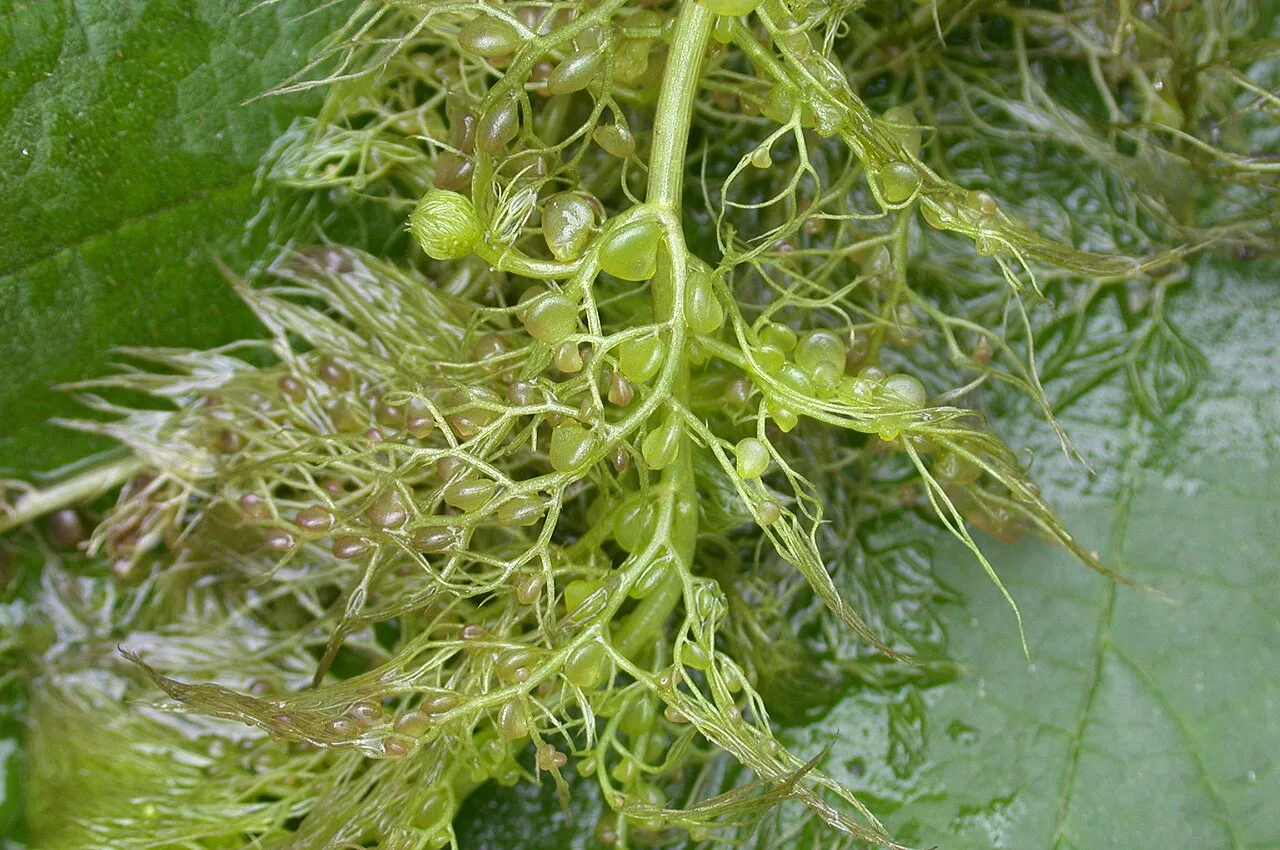
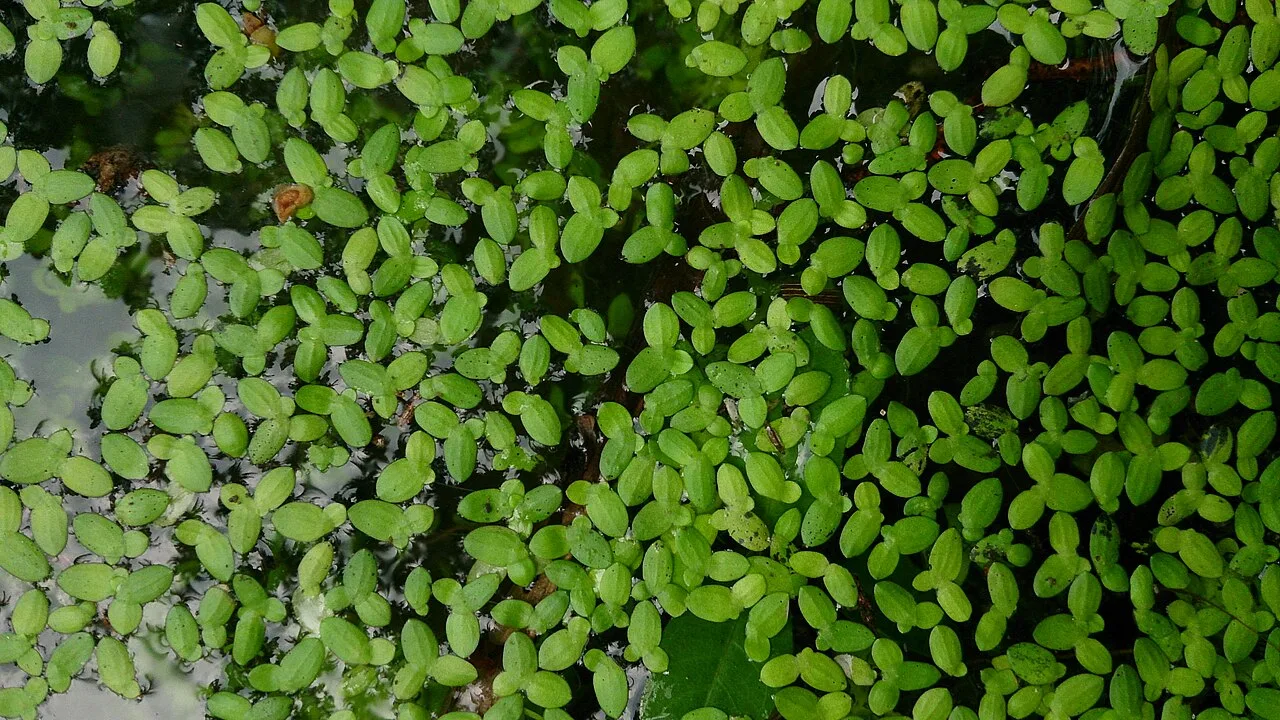
Ceratopteris cornuta forms rosettes of broadly lobed leaves. Floating, they become tougher. Rooted, they become finer and taller if the light is enough. Daughter plants form on the leaves. The species is not Ceratopteris thalictroides, the finely divided water sprite. The coarse lobes separate them.
Both take nitrate and can green a new tank. Both shade the tank once they close the surface or the background.
Natural origin
This describes the origin, not how to furnish the aquarium.
Still and slow waters of tropical Africa and Asia, now found further. The origin stays coarse. The plant must not be released.
Light, CO₂ and position
Two ways
Medium to high light, CO₂ not required, 22 to 28 °C. As a floater in a limited corner, or as a rosette in the background. An open water surface for gas exchange stays mandatory. Under a closed cover, ground covers lose the light.
Company
Labyrinth fish use the floating leaves. Plant-eating large cichlids eat the soft new growth. In a planted tank with tetras the fern stays, and still has to be limited.
Layout and neighbours
Like water sprite it can root in the substrate or float at the surface. Floating, it shades sensitive plants and gives gouramis space for bubble nests.
Common mistakes
The plant is set too deep. The crown needs air at the ground.
Growth and trimming
Divide or remove rosettes that are too large. Yellow, glassy leaves come with an iron shortage, or when the plant stands in its own shade. Thin it first, then fertilise. Shorten the roots of floating plants when they grow into the filter.
Propagation
Take young plants off the leaves once they have a leaf and a root of their own. Surplus belongs in the waste.