Common bladderwort
Utricularia vulgaris
1 view
A native carnivorous aquatic plant without roots. Catches small crustaceans with traps and flowers bright yellow.
- Temperature
- 5 – 25 °C
- pH
- 6 – 8 pH
- Lighting
- Medium light
- CO₂
- No CO₂
- Growth rate
- Medium
- Placement
- Floating
1 min read · 159 words
Care profile
Growth form
Floating plantsPlacement in the aquarium
Highlighted are the areas where the species is typically used.
- Water surface Floats at the surface and dims the light below.
Home & range
Hatched countries are where the species occurs. It lives in particular waters there, not across the whole country. The points name known waters for orientation, not collection sites.
- Country of origin
- Water for orientation
Native
Botanical overview
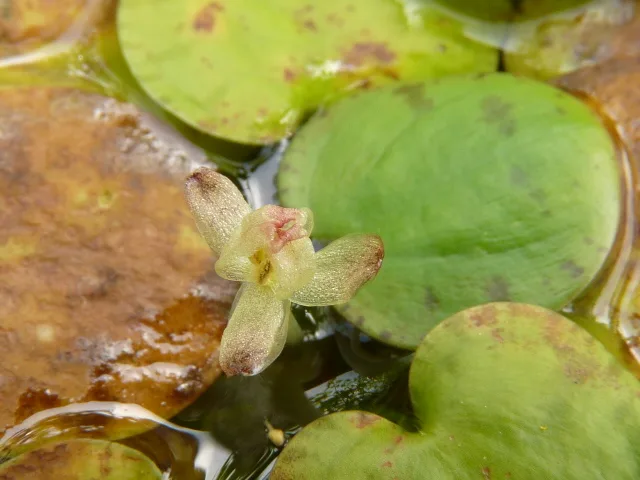
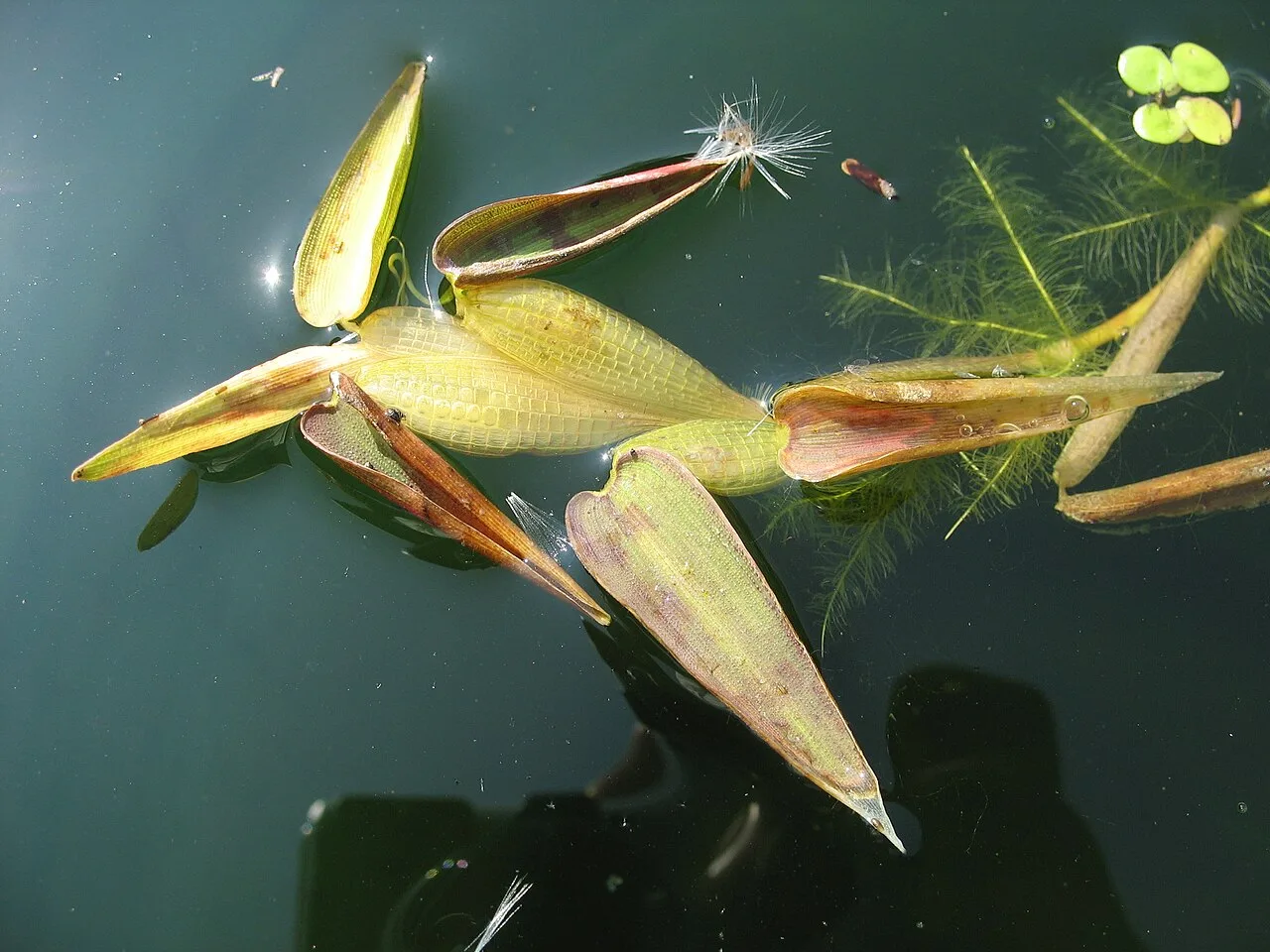
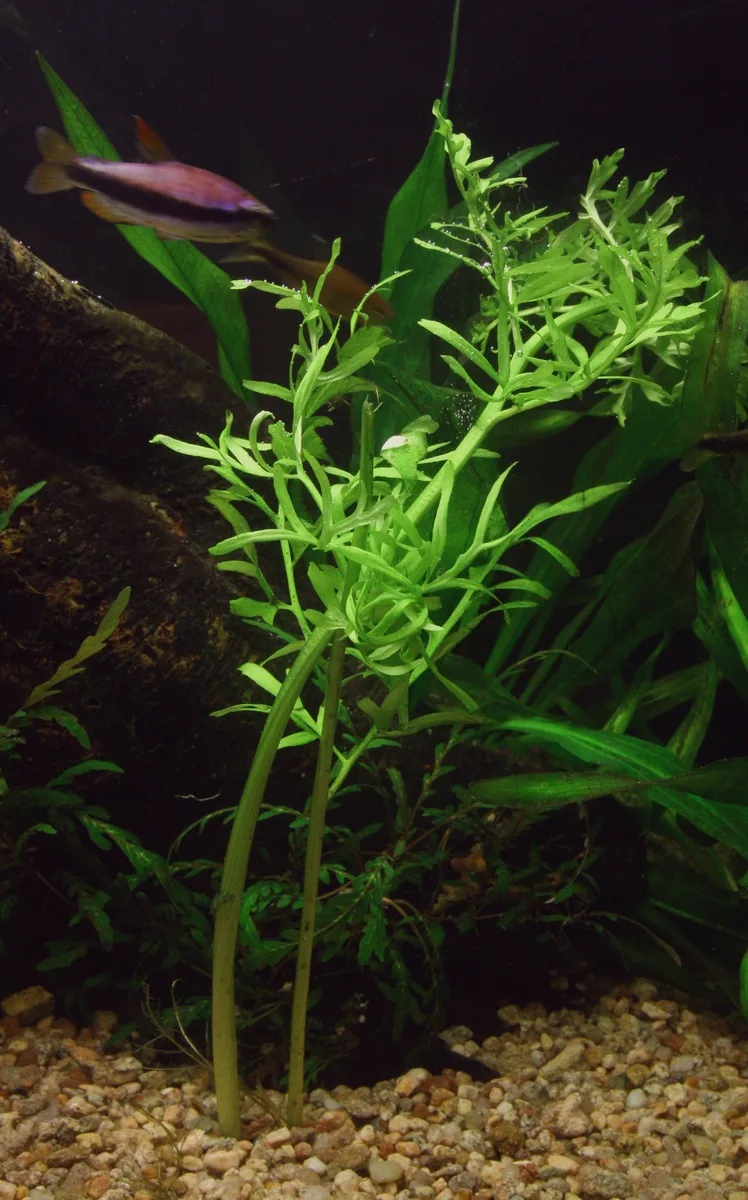
Common bladderwort floats freely in the water. Its stems carry finely divided leaves with many traps. When a water flea touches the bristles at the opening, the bladder sucks it in within a fraction of a second. In summer bright yellow flowers rise above the water. In autumn winter buds form and sink to the bottom.
In a cold-water tank it is a fascinating display plant. It does not mix with fish larvae.
Natural origin
This describes the origin, not how to furnish the aquarium.
The species is distributed in the temperate zones of Europe and Asia. It grows in still, nutrient-poor to moderately nutrient-rich waters, in peat cuttings, ditches and ponds.
Light, CO₂ and position
Light
Medium light.
Temperature
5 to 25 °C. Keep cool in winter.
Position
Free-floating.
Layout and neighbours
A display plant for cold-water and bog tanks without fish larvae. The yellow flowers appear in summer.
Common mistakes
In a breeding tank: the traps catch freshly hatched fish larvae.
Growth and trimming
Moderate growth. Not for breeding tanks with fish larvae.