Clasping-leaf pondweed
Potamogeton perfoliatus
1 view
A pondweed whose roundish leaves clasp the stem with a heart-shaped base.
- Temperature
- 8 – 24 °C
- pH
- 6.5 – 8.5 pH
- Lighting
- Medium light
- CO₂
- Low CO₂
- Growth rate
- Medium
- Placement
- Background
1 min read · 134 words
Care profile
Growth form
Stem plantsPlanting and propagation
- Rhizome The creeping rhizome stays free above the substrate. Buried, it rots.
- Cuttings Cut off shoot tips and replant them. This keeps the stand dense and propagates it at the same time.
Placement in the aquarium
Highlighted are the areas where the species is typically used.
- Background Along the back wall and the sides. Forms the tall, dense backdrop.
Home & range
Botanical overview
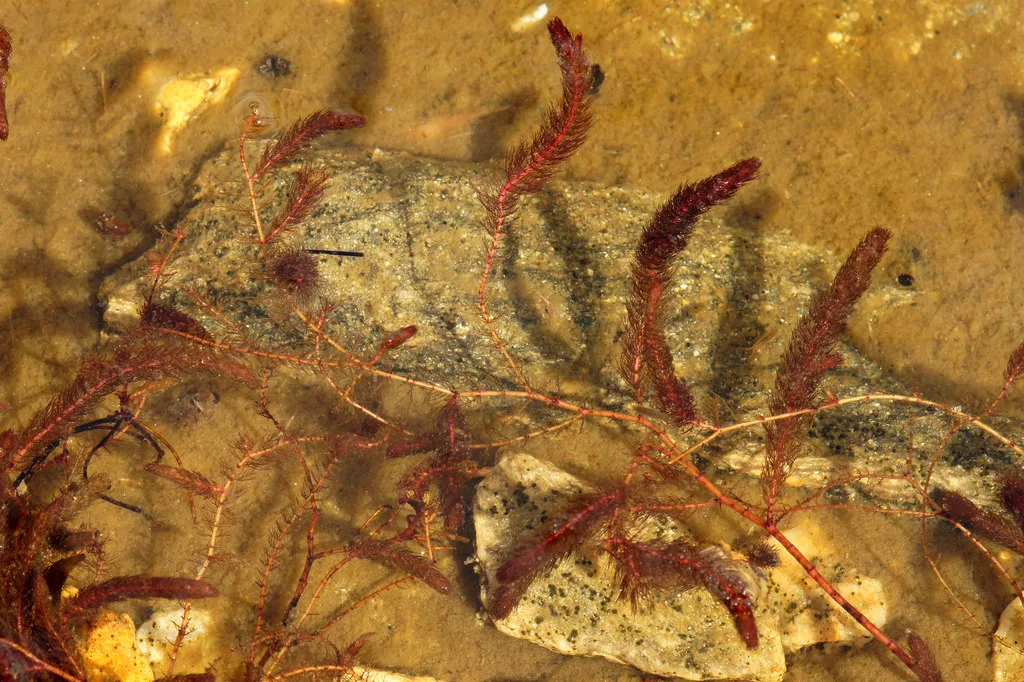
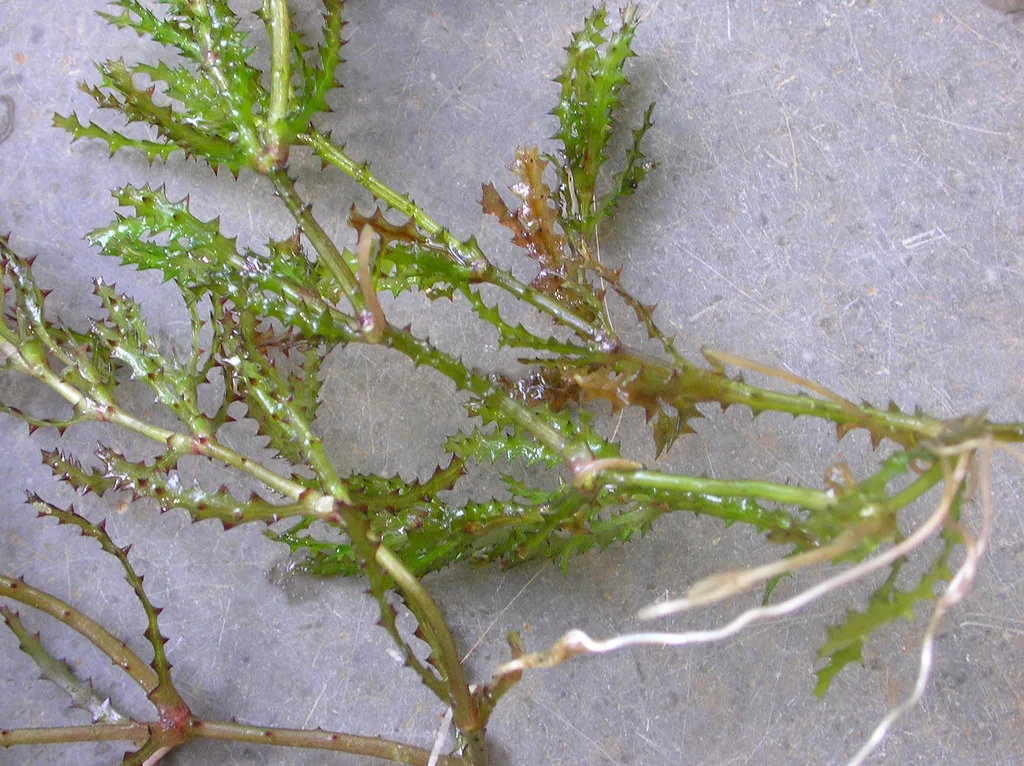
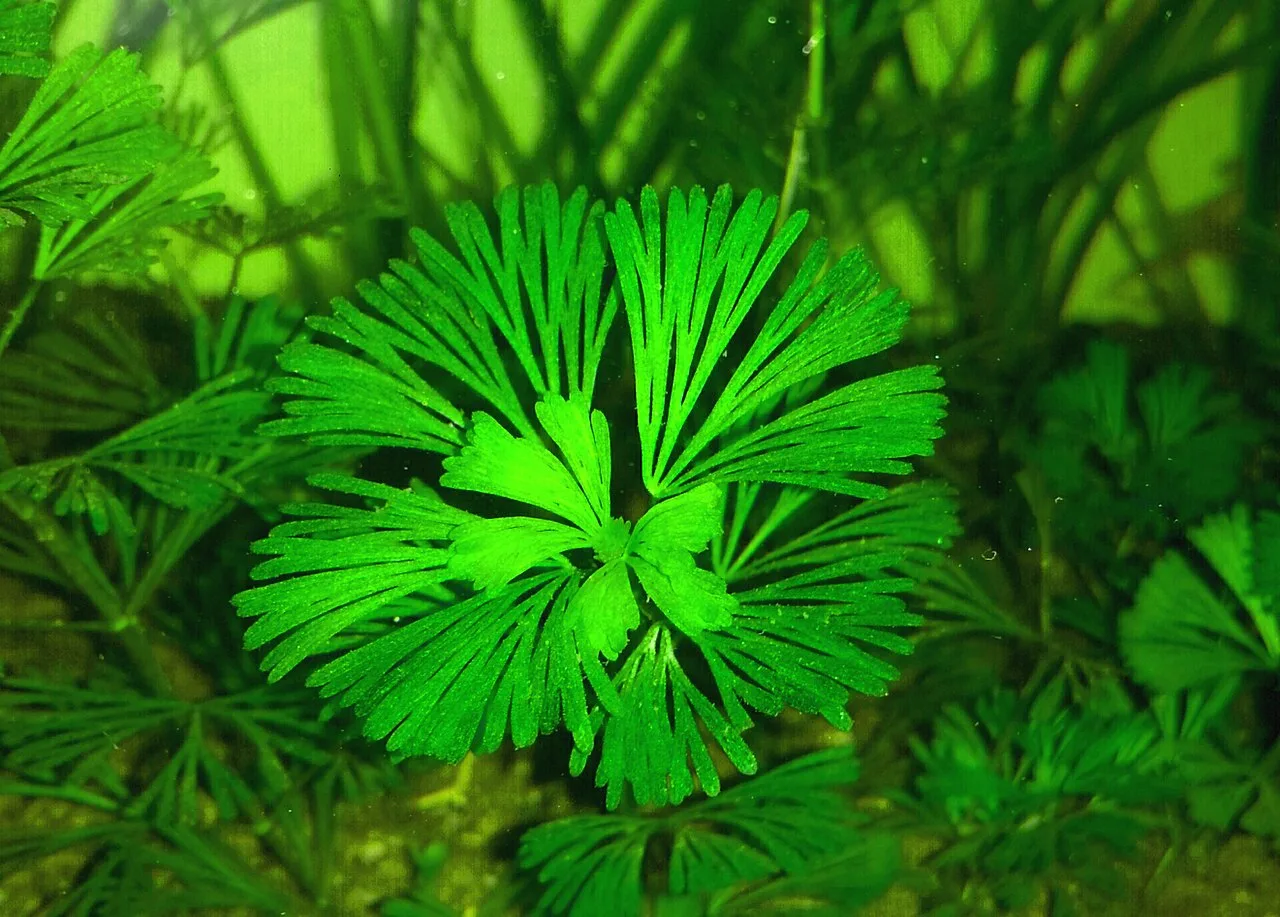
Clasping-leaf pondweed carries ovate to roundish leaves 2 to 6 cm long that fully embrace the stem with their heart-shaped base, so the stem seems to grow through the leaf. The leaves are thin, dark green and slightly wavy.
In a cold-water tank it forms an unusual, dense background.
Natural origin
This describes the origin, not how to furnish the aquarium.
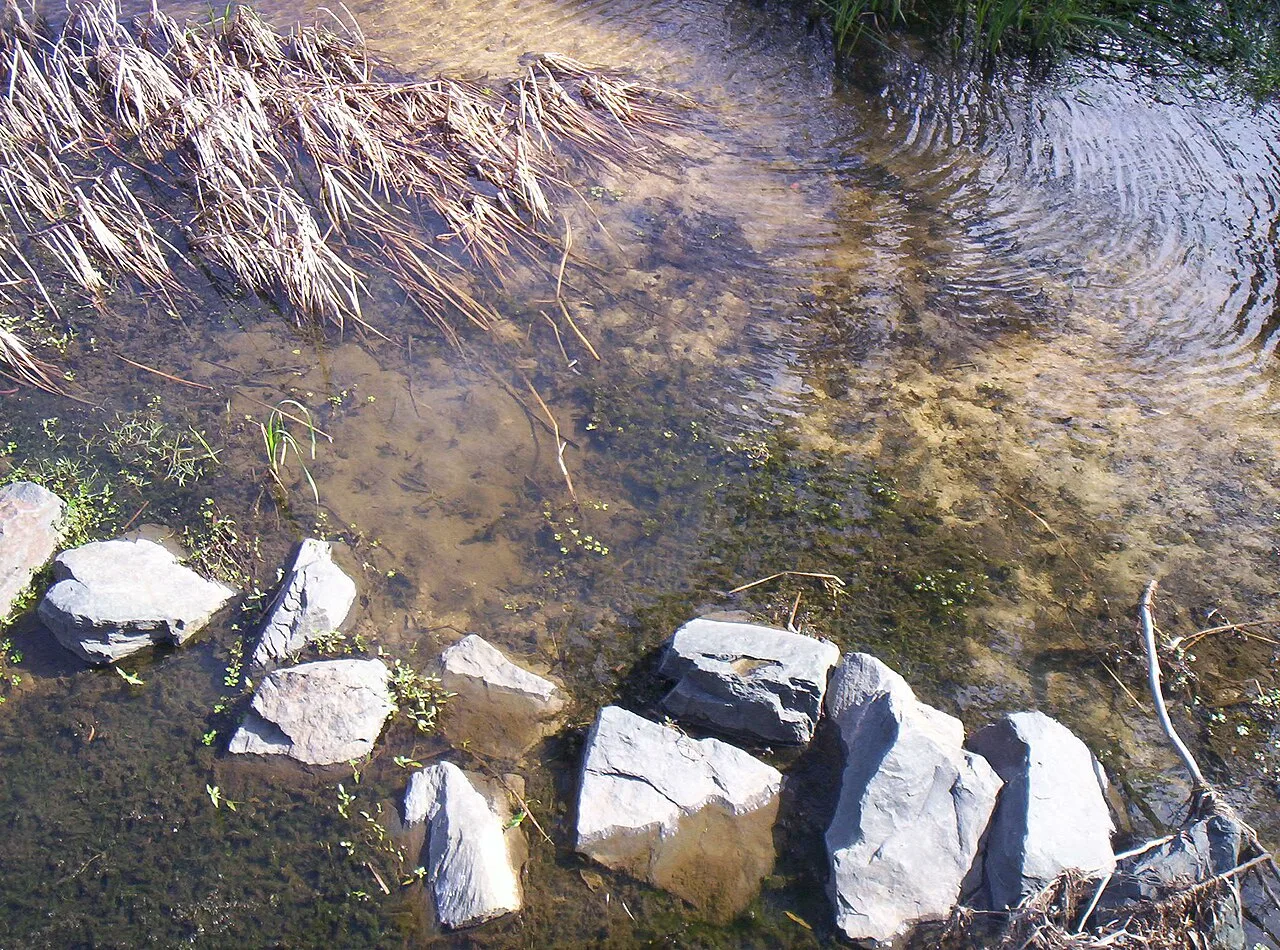
The species is distributed almost worldwide, in Europe, Asia, Africa, Australia and North America. It grows in lakes, rivers and canals, also in slightly brackish water.
Light, CO₂ and position
Light
Medium light.
Position
8 to 24 °C. Background, nutrient-rich substrate.
Layout and neighbours
The clasping leaves create an unusual texture in the background. Water-milfoil and water-starwort fit with it.
Common mistakes
In tanks that are too small: the shoots soon reach the surface and lie there.
Growth and trimming
Moderate growth. In winter it partly retreats to the rhizome.