Crystalwort
Riccia fluitans
17 views
A floating liverwort that, under strong light and CO₂, is also kept as a tied cushion under water. Untied, it forms a closed cover.
- Temperature
- 18 – 28 °C
- pH
- 6 – 7.5 pH
- Lighting
- High light
- CO₂
- Medium CO₂
- Growth rate
- Fast
- Placement
- Floating
3 min read · 341 words
Care profile
Growth form
Floating plantsPlacement in the aquarium
Highlighted are the areas where the species is typically used.
- Water surface Floats at the surface and dims the light below.
Home & range
Botanical overview
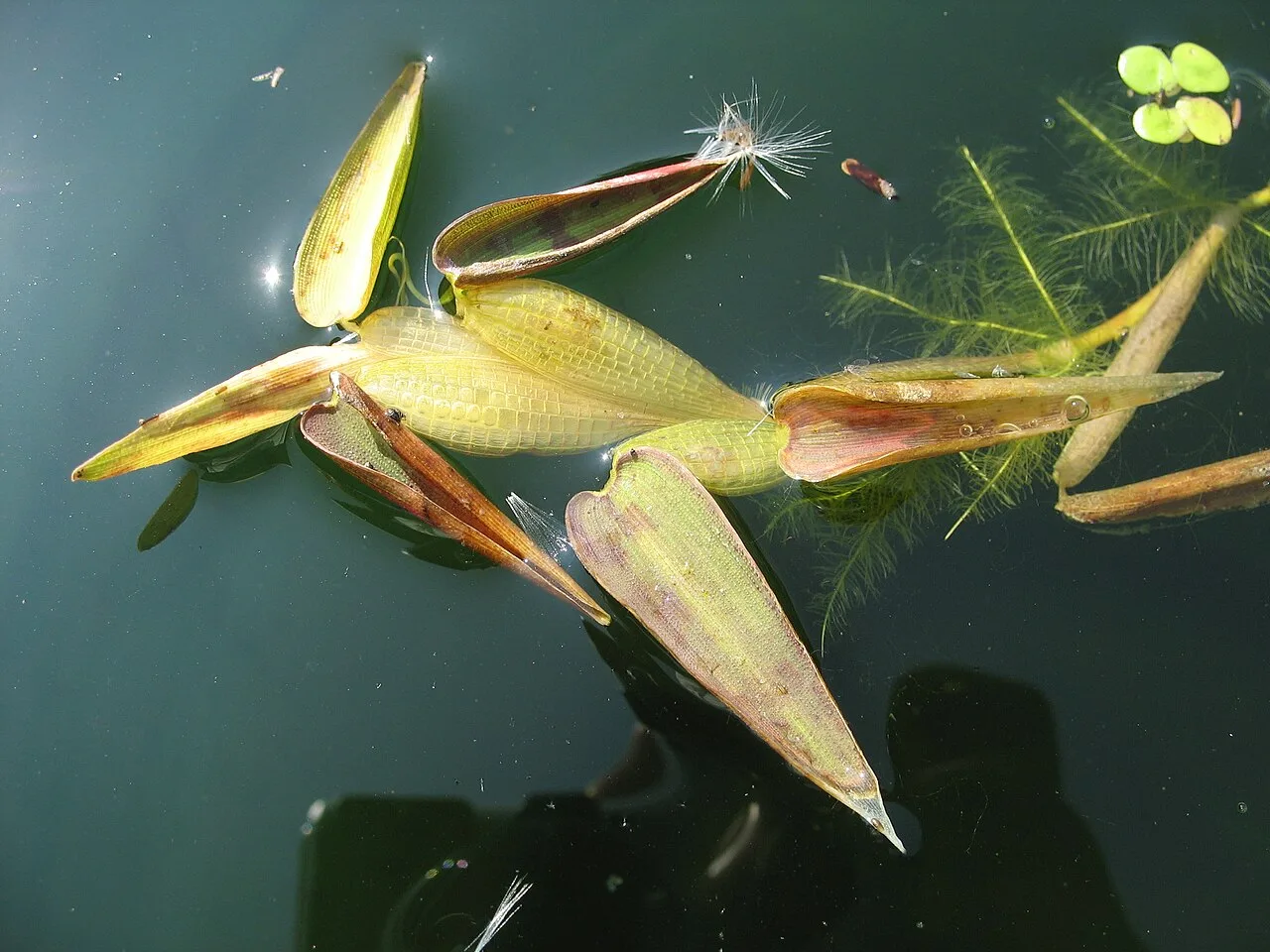
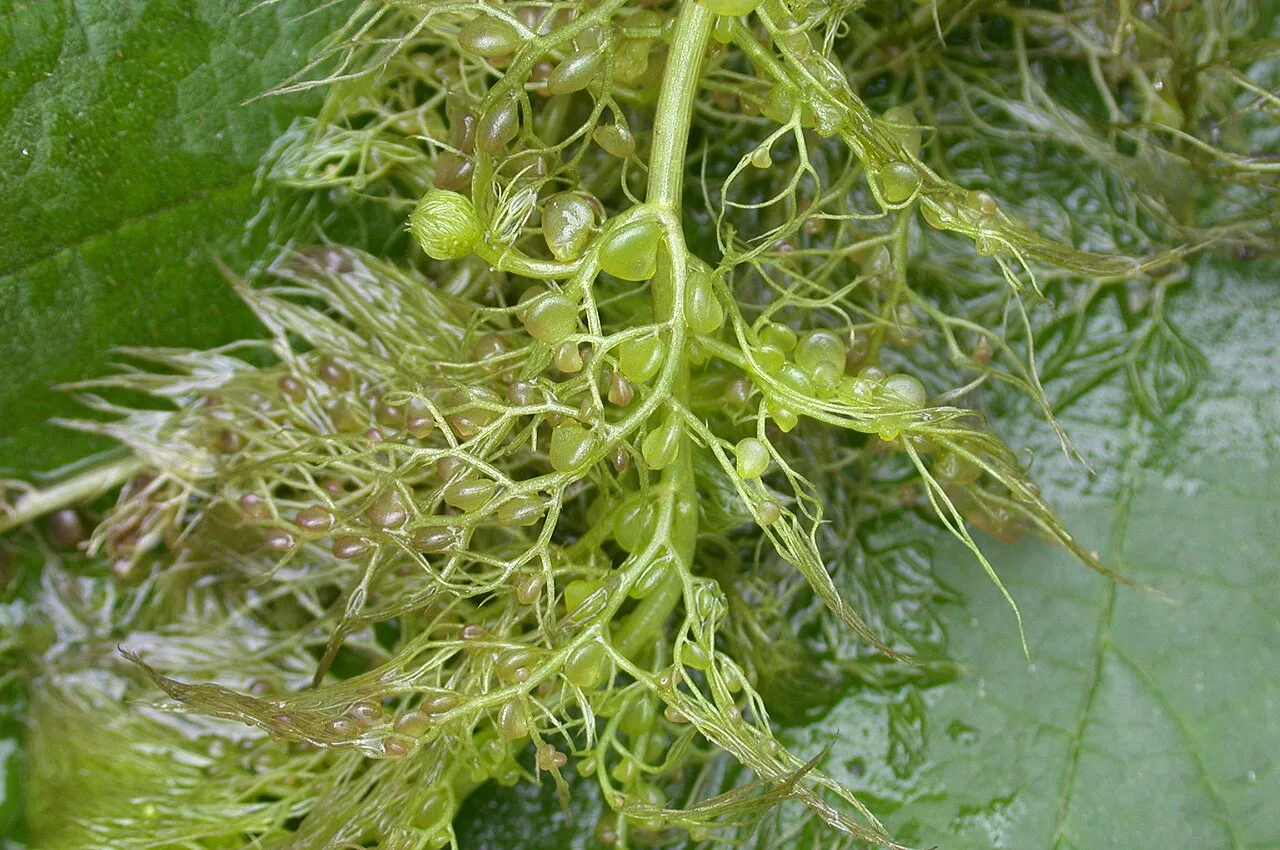
Riccia fluitans is a liverwort without true leaves. The thalli fork and trap air, which is why it floats. Under water, tied to a stone, it stays a firm, bright green cushion only with CO₂ and light. Without those conditions it comes loose and floats again.
The species is not Java moss. It has no threads that claw into wood. A thread or a mesh has to hold it until it is dense enough to carry itself.
Natural origin
This describes the origin, not how to furnish the aquarium.
Still and slow, nutrient-rich waters worldwide in temperate and warm zones, at the surface. The wide distribution is not a licence to release aquarium material. For the tank the floating form matters, and the more demanding tied form.
Light, CO₂ and position
Two ways of keeping
Floating: medium light, no CO₂ required, 18 to 28 °C, thin it regularly. Tied: high light, CO₂, thin under a mesh on stone, or the cushion rises and takes the planting with it. Moderate current, or the moss wanders into the filter.
Fish
Labyrinth fish use the floating cover for the bubble nest. Ground covers lose their light under it. Plant-eating barbs pull the thalli apart. In a scape with tied Riccia those fish are the most common reason the cushion is at the surface every morning.
Layout and neighbours
Floating, it forms green cushions at the surface; tied under mesh onto stones, a glowing carpet. In breeding tanks it shelters fry.
Common mistakes
On stones it comes loose and floats up. Re-tie regularly.
Growth and trimming
Floating covers are halved weekly. Tied cushions are kept flat. If the cushion grows thicker than a centimetre, the underside rots and the whole thing rises. Then tie it on thinly again. Do not press the rotten layer down.\n\nRiccia pulls a lot of nitrate from the water. In a young tank that helps. In a tank of already hungry stem plants it competes with them.
Propagation
Division. Every piece of thallus keeps growing. That is the reason for the thinning, and the reason not to put leftovers into a drain that leads to a natural water.