Eared watermoss
Salvinia auriculata
24 views
A floating fern with hairy leaves that closes an area quickly. It has to be limited and must not be released.
- Temperature
- 18 – 28 °C
- pH
- 6 – 8 pH
- Lighting
- Medium light
- CO₂
- No CO₂
- Growth rate
- Fast
- Placement
- Floating
2 min read · 247 words
Care profile
Growth form
Floating plantsPlacement in the aquarium
Highlighted are the areas where the species is typically used.
- Water surface Floats at the surface and dims the light below.
Home & range
Hatched countries are where the species occurs. It lives in particular waters there, not across the whole country. The points name known waters for orientation, not collection sites.
- Country of origin
- Water for orientation
Native
Botanical overview
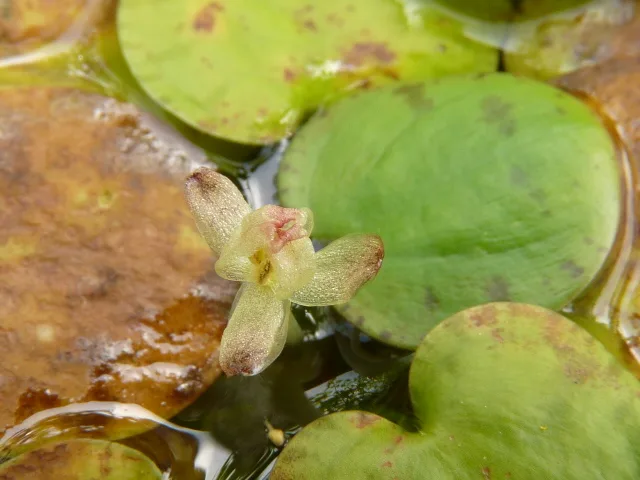
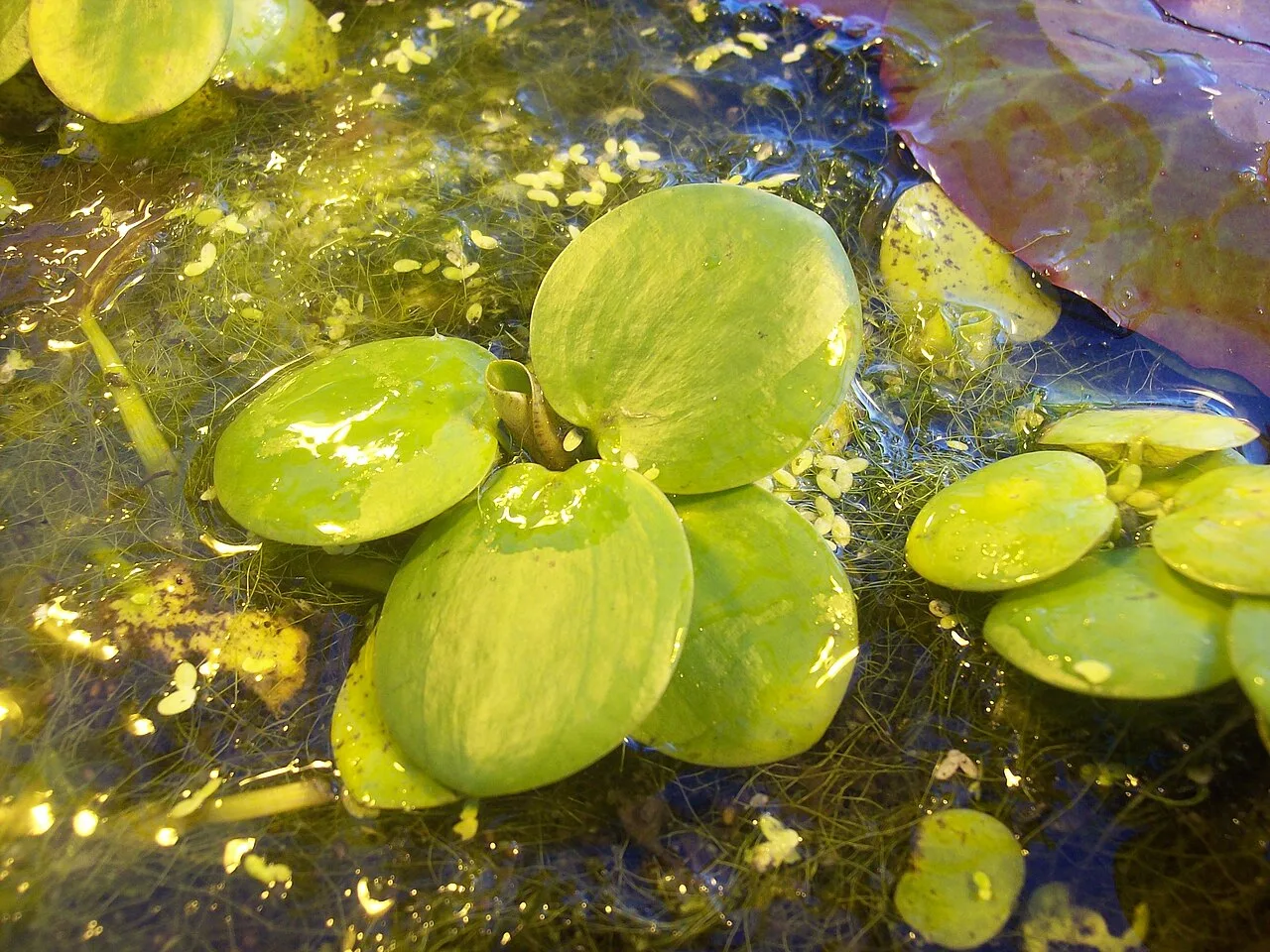
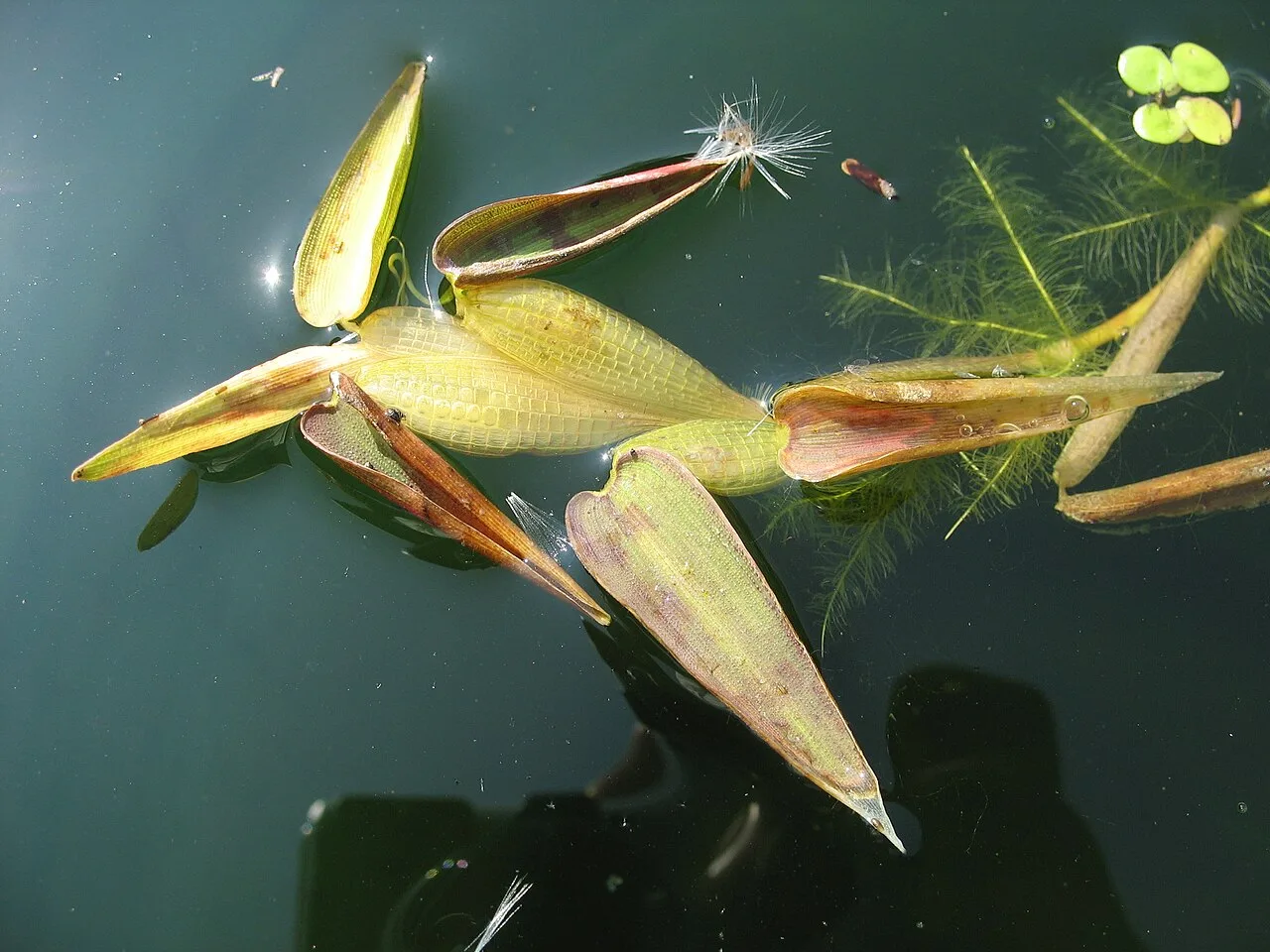
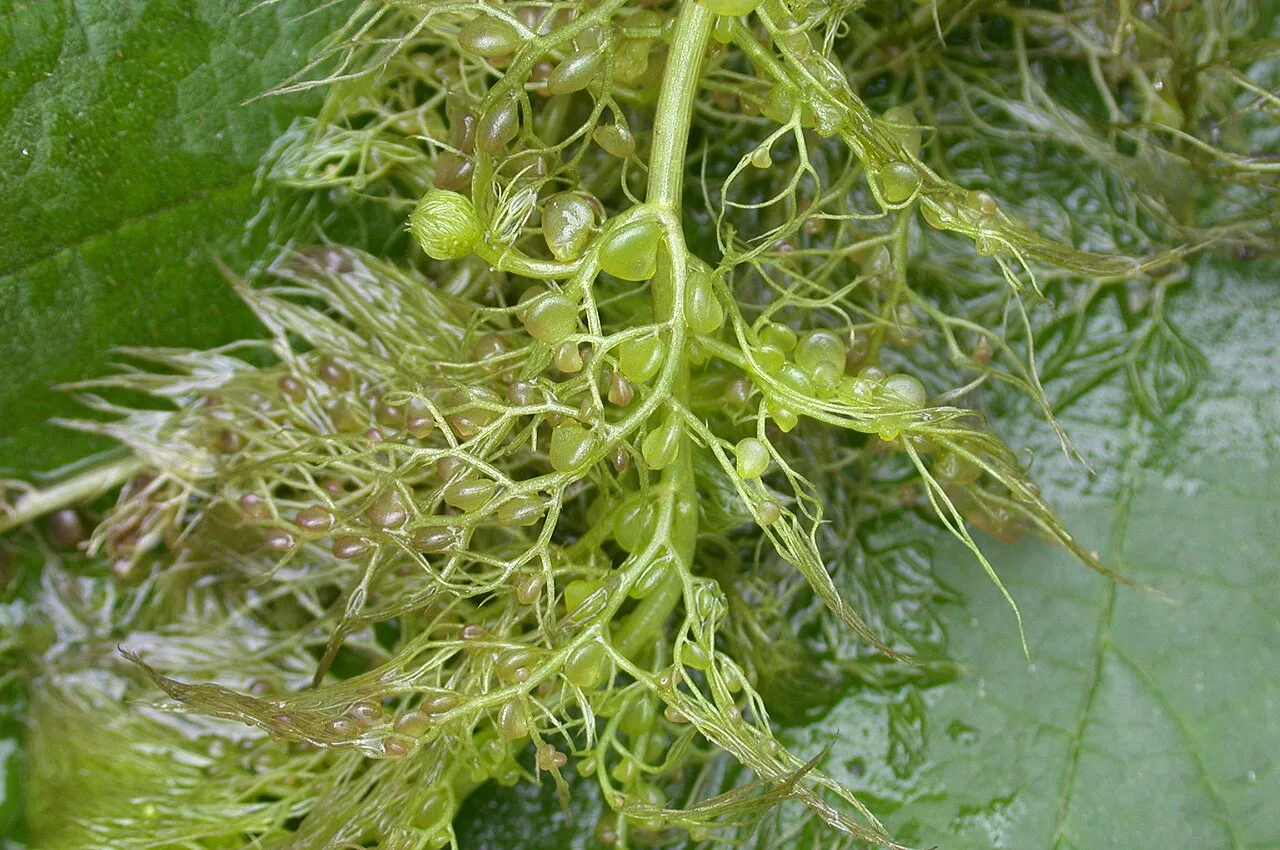
Salvinia auriculata carries paired, rounded floating leaves with water-repellent hairs and one submerged leaf divided like a root. The hairs stand in small groups and give the surface a velvety look. The species multiplies by division and can darken a tank in a short time.
It is larger and coarser than Salvinia natans. Both are floating ferns and not mosses. The cover is a nest site for labyrinth fish and a light problem for the bottom.
Natural origin
This describes the origin, not how to furnish the aquarium.
Still and slow waters of South America, now introduced further. The origin stays coarse. Aquarium leftovers do not belong in natural waters.
Light, CO₂ and position
Surface
Medium to high light, no CO₂ required, 18 to 28 °C. A quiet corner, no strong filter outlet. An open zone for gas exchange stays mandatory. Wet leaves on the cover rot.
Limiting
Harvest weekly. Under the cover, epiphytes tolerate the dimmed light for a while. Ground covers and red stems do not.
Layout and neighbours
The hairy, ear-shaped floating leaves dim the light and protect shy fish. Good for dwarf cichlids and gouramis.
Common mistakes
Too dense a cover takes the light from submersed plants.
Growth and trimming
Yellow leaves in a bright place are often an iron shortage in the water. The plant has no substrate. Liquid fertiliser reaches it. Take off black leaves. Shorten the underwater leaf when it grows into the filter.
Propagation
Pull the shoots apart. Every piece with a few leaves keeps growing. Dry the surplus and discard it. Do not put it into a pond.