Greater duckweed
Spirodela polyrhiza
3 views
The largest native duckweed, with several roots per frond. Fast-growing, shading, a nutrient consumer.
- Temperature
- 10 – 28 °C
- pH
- 6 – 8 pH
- Lighting
- Medium light
- CO₂
- No CO₂
- Growth rate
- Fast
- Placement
- Floating
1 min read · 127 words
Care profile
Growth form
Floating plantsPlacement in the aquarium
Highlighted are the areas where the species is typically used.
- Water surface Floats at the surface and dims the light below.
Home & range
Botanical overview
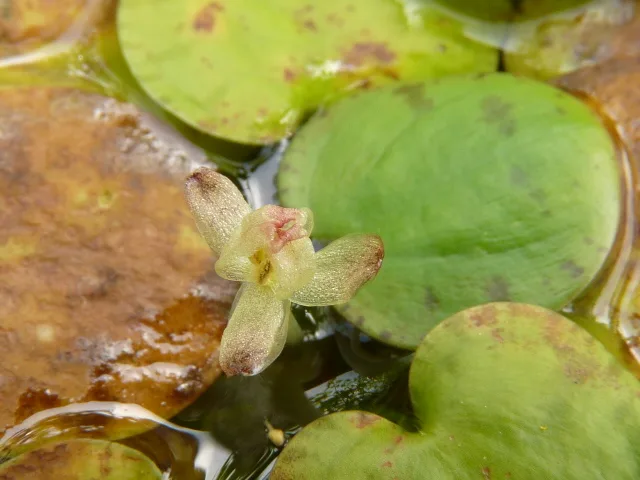
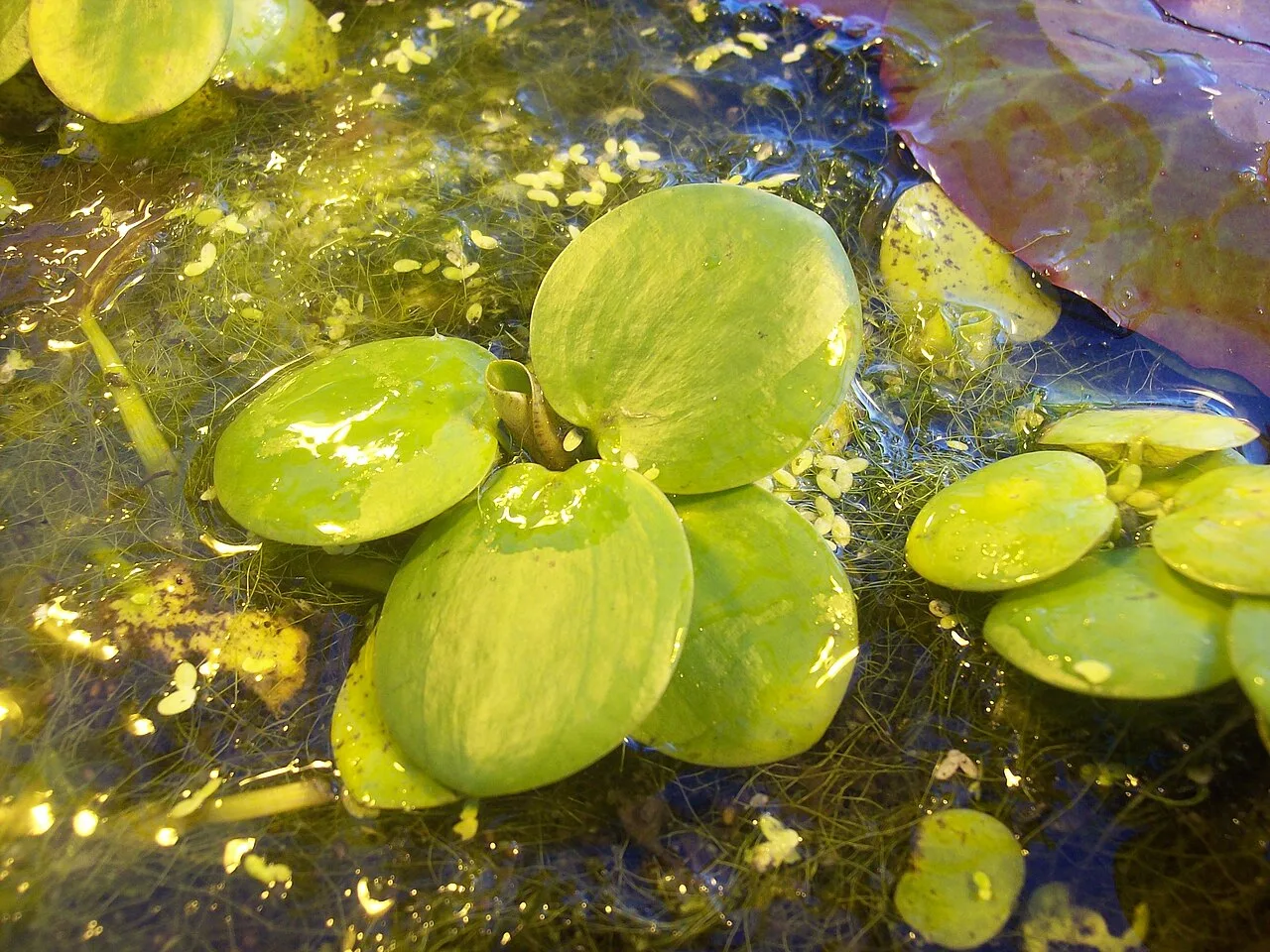
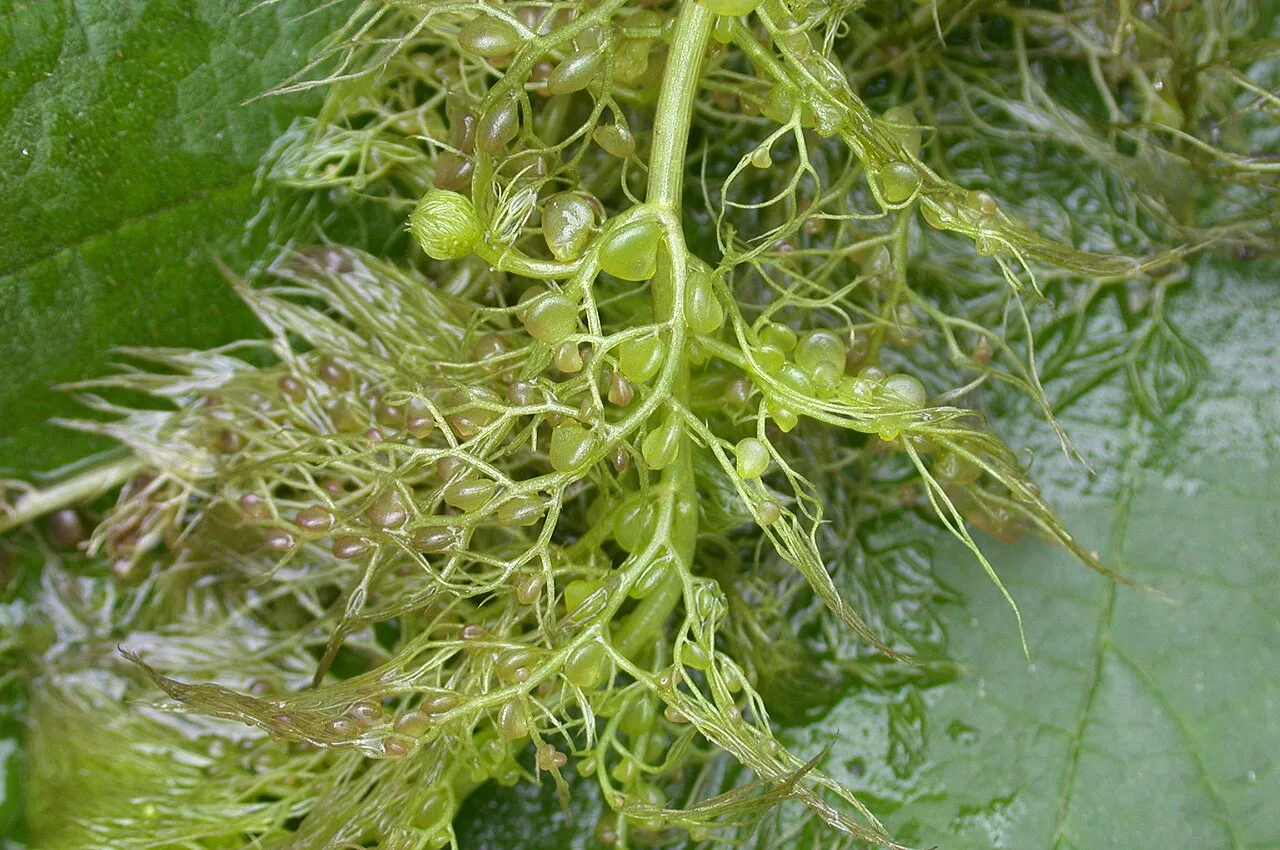
Greater duckweed forms flat, roundish fronds 5 to 10 mm across, green above and often red-violet below. Several roots hang from each frond. It multiplies very quickly by budding and can form a closed cover.
In the aquarium it dims the light and takes up nutrients. It has to be skimmed regularly.
Natural origin
This describes the origin, not how to furnish the aquarium.
The species is distributed almost worldwide, in Europe, Asia, Africa, the Americas and Australia. It grows on still, nutrient-rich waters such as ponds, ditches and oxbows.
Light, CO₂ and position
Light
Medium light.
Position
10 to 28 °C. Water surface, gentle flow.
Layout and neighbours
As a shade provider and nutrient filter. A small floating ring keeps it in one place.
Common mistakes
Not skimming until it covers the whole surface.
Growth and trimming
Very fast. Skim weekly so submersed plants get enough light.