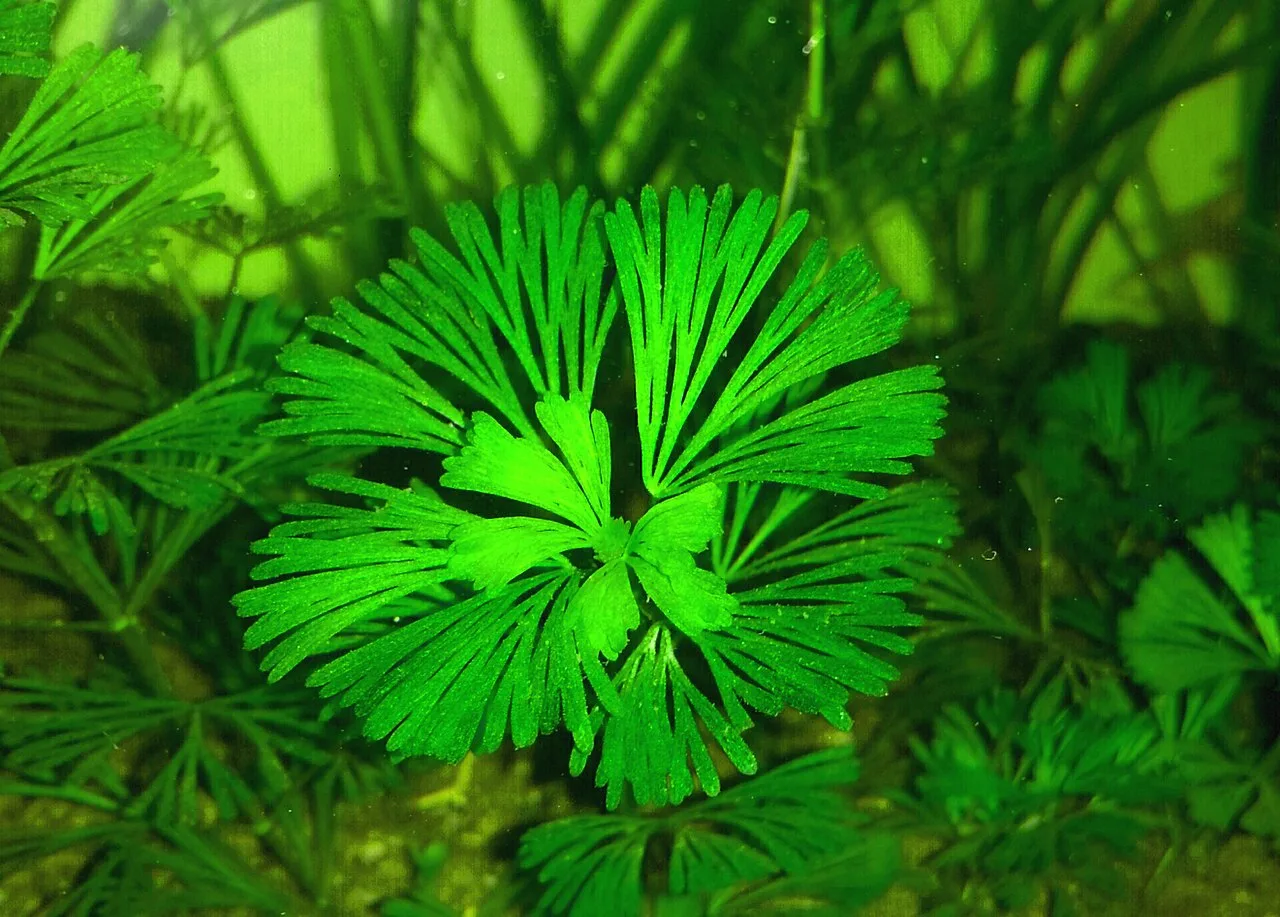
Horned pondweed
Zannichellia palustris
3 views
A thread-fine submersed plant with hair-like leaves. Inconspicuous but robust, even in slightly saline water.
- Temperature
- 10 – 25 °C
- pH
- 6.5 – 8.5 pH
- Lighting
- Medium light
- CO₂
- Low CO₂
- Growth rate
- Medium
- Placement
- Midground
1 min read · 120 words
Care profile
Growth form
Stem plantsPlanting and propagation
- Cuttings Cut off shoot tips and replant them. This keeps the stand dense and propagates it at the same time.
Placement in the aquarium
Highlighted are the areas where the species is typically used.
- Midground Between foreground and background. Hides transitions and frames stones and wood.
Home & range
Botanical overview
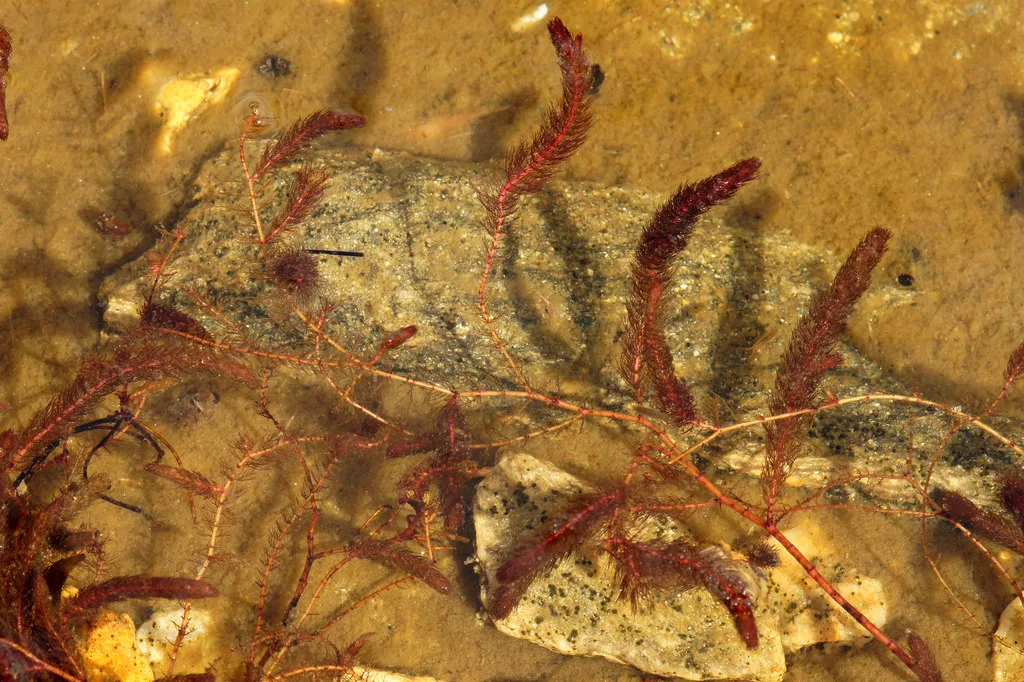
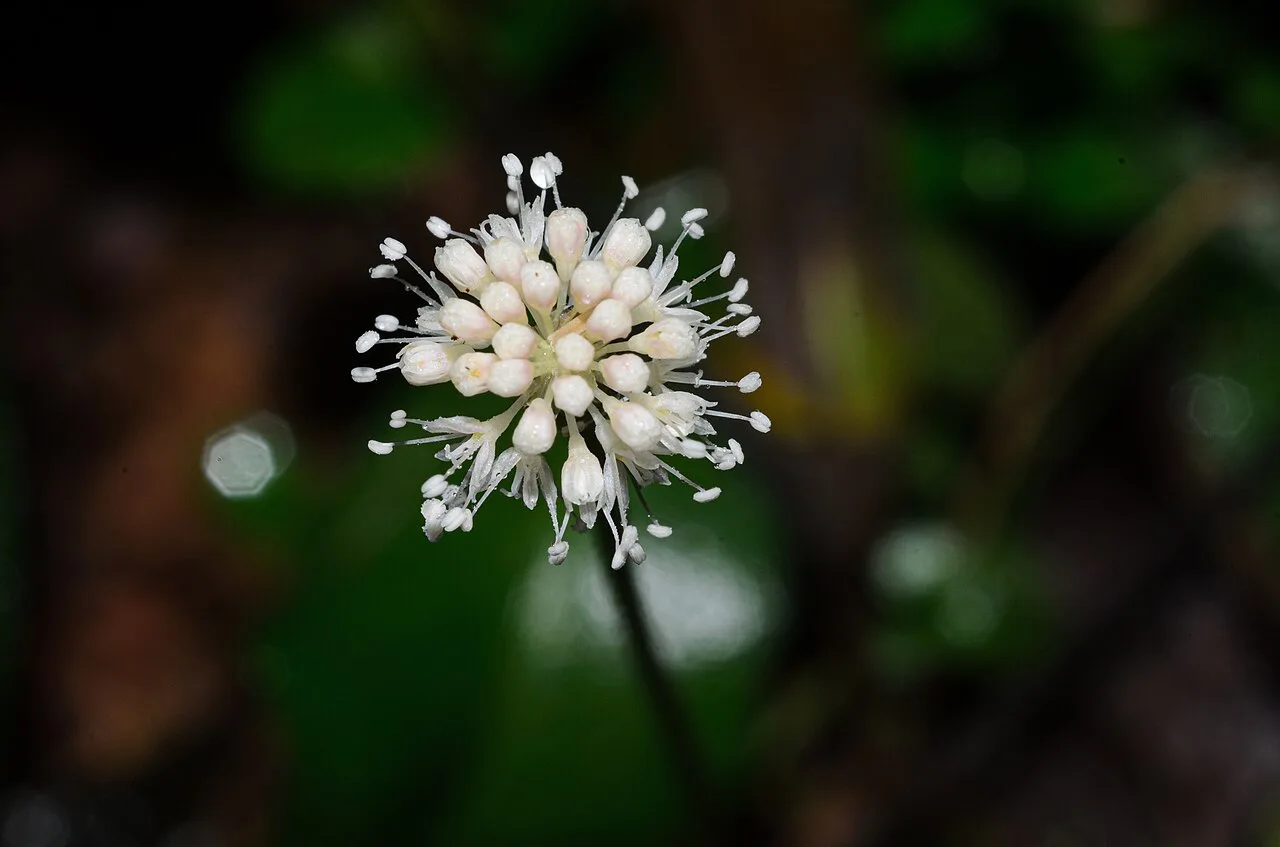
Horned pondweed forms thin, branched, creeping stems with thread-like, opposite leaves 2 to 10 cm long. The tiny flowers sit in the leaf axils; the small fruits are slightly curved and recall little horns, hence the English name.
In the aquarium it forms fine, pale green cushions that recall hairgrass but fall more softly.
Natural origin
This describes the origin, not how to furnish the aquarium.
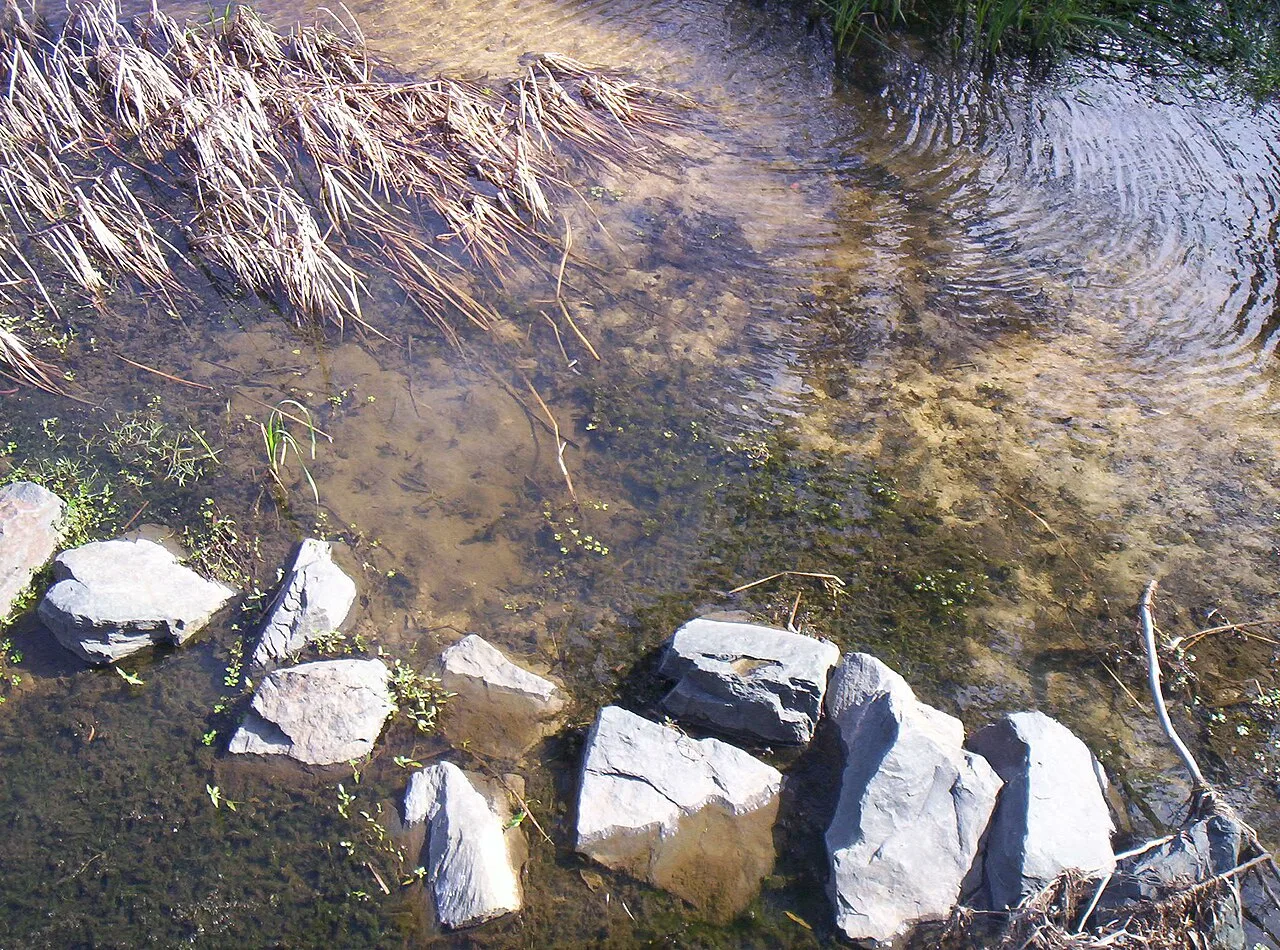
The species is distributed almost worldwide. It grows in ponds, ditches, slow streams and in brackish water along coasts.
Light, CO₂ and position
Light
Medium light.
Position
10 to 25 °C. Midground.
Layout and neighbours
Fine cushions in the midground, a soft alternative to hairgrass in cool and slightly brackish tanks.
Common mistakes
Planted between vigorous plants: the delicate horned pondweed gets overgrown.
Growth and trimming
Moderate growth. It may die back and reappear from seed.