Hornwort
Ceratophyllum demersum
26 views
A rootless stem plant that floats or is laid in loosely. It grows fast, draws nutrients and has to be limited.
- Temperature
- 15 – 28 °C
- pH
- 6 – 7.5 pH
- Lighting
- Medium light
- CO₂
- No CO₂
- Growth rate
- Fast
- Placement
- Floating
3 min read · 351 words
Care profile
Growth form
Floating plantsPlacement in the aquarium
Highlighted are the areas where the species is typically used.
- Water surface Floats at the surface and dims the light below.
Home & range
Botanical overview
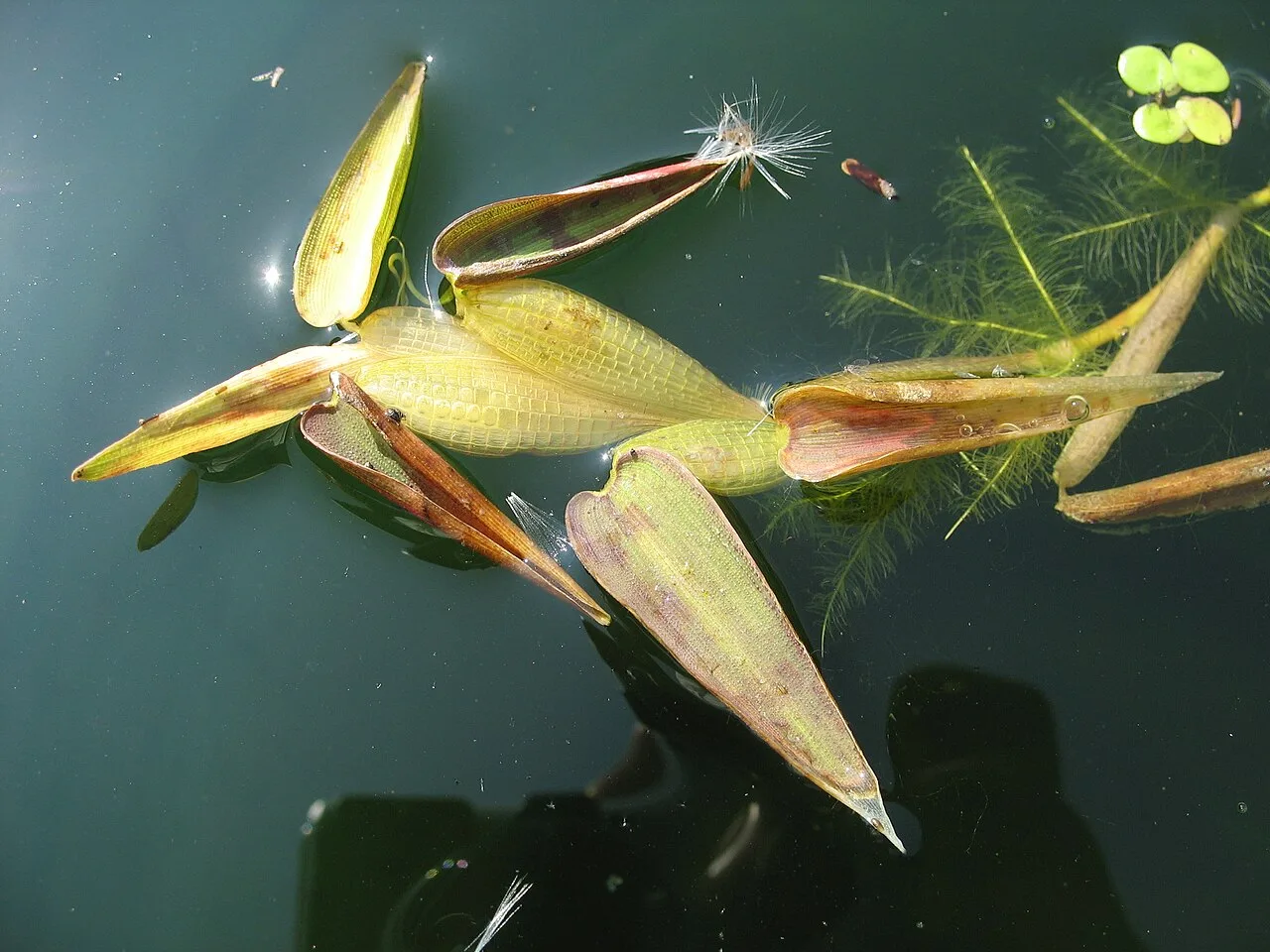
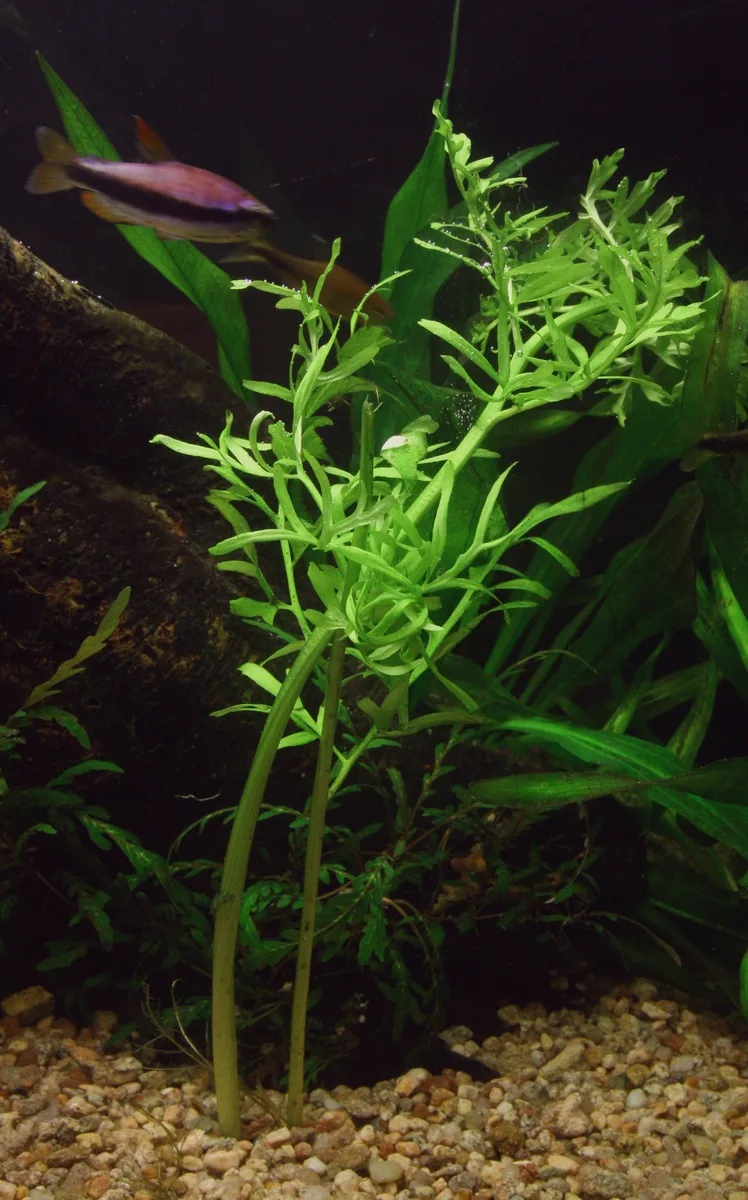
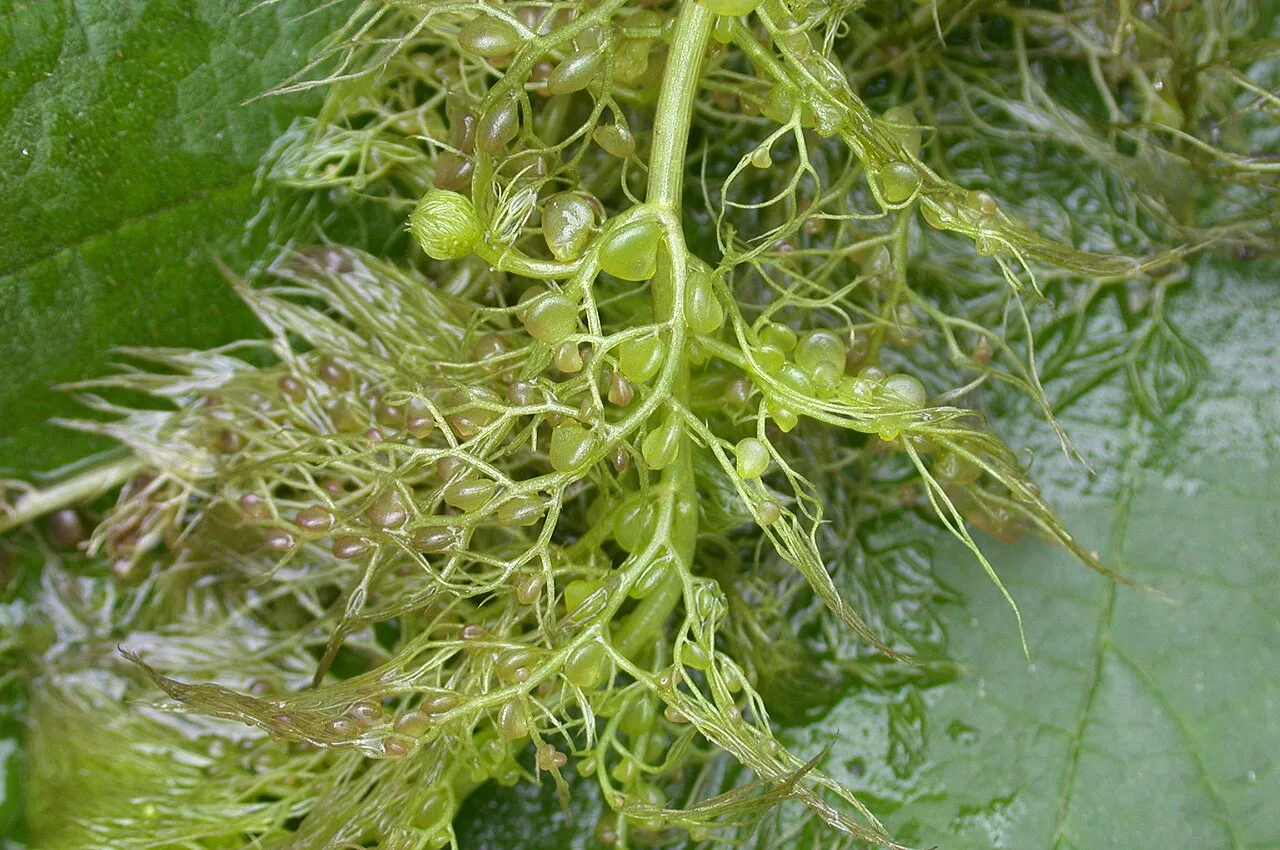
Ceratophyllum demersum carries stiff, forked whorls on a brittle stem. True roots are missing. The plant takes everything from the water and can be kept as a floater or as a shoot stuck loosely into the substrate. In the substrate it forms no lasting root. It only holds until it grows or rots.
It is one of the fastest plants in cool as well as warm water and therefore useful while a tank matures. The same speed lays it over everything that is slow, and makes it a plant one does not release outside the aquarium.
Natural origin
This describes the origin, not how to furnish the aquarium.
Still and slow, nutrient-rich waters worldwide in temperate and warm zones. The wide distribution is not a licence for aquarium leftovers. For the tank the floating, fast habit matters.
Light, CO₂ and position
Keeping
Medium to high light, no CO₂ required, 15 to 28 °C. As a floater or as a bunch in the background, the lower end only lightly tucked in. Moderate current, or the plant wanders into the filter. A dense mat at the surface takes the light and the gas exchange from ground covers and red stems.
Use
In a new tank it uses nitrate and gives young fish cover. Once the tank is established, the mass is limited. Labyrinth fish use the cover. A lawn below it does not.
Layout and neighbours
Hornwort is the work plant for new tanks, rearing and shrimp: free-floating or wedged loosely between stones. It takes up nutrients, gives fry cover and checks algae.
Common mistakes
Buried in the substrate, the stem rots. After moving it often sheds needles; it recovers.
Growth and trimming
Thin it weekly, not only when the tank is dark. Pull brittle, brown sections. The healthy tips stay. The whorls collect mulm. Blow them out at the water change or remove the silted parts.\n\nThe plant shows nutrient shortage as pale, then collapsing tips. In a very lean tank it too needs a fertiliser, although it is treated as undemanding.
Propagation
Every broken piece with a healthy tip keeps growing. That is the propagation and the reason not to put leftovers down a drain. Surplus belongs in the waste.