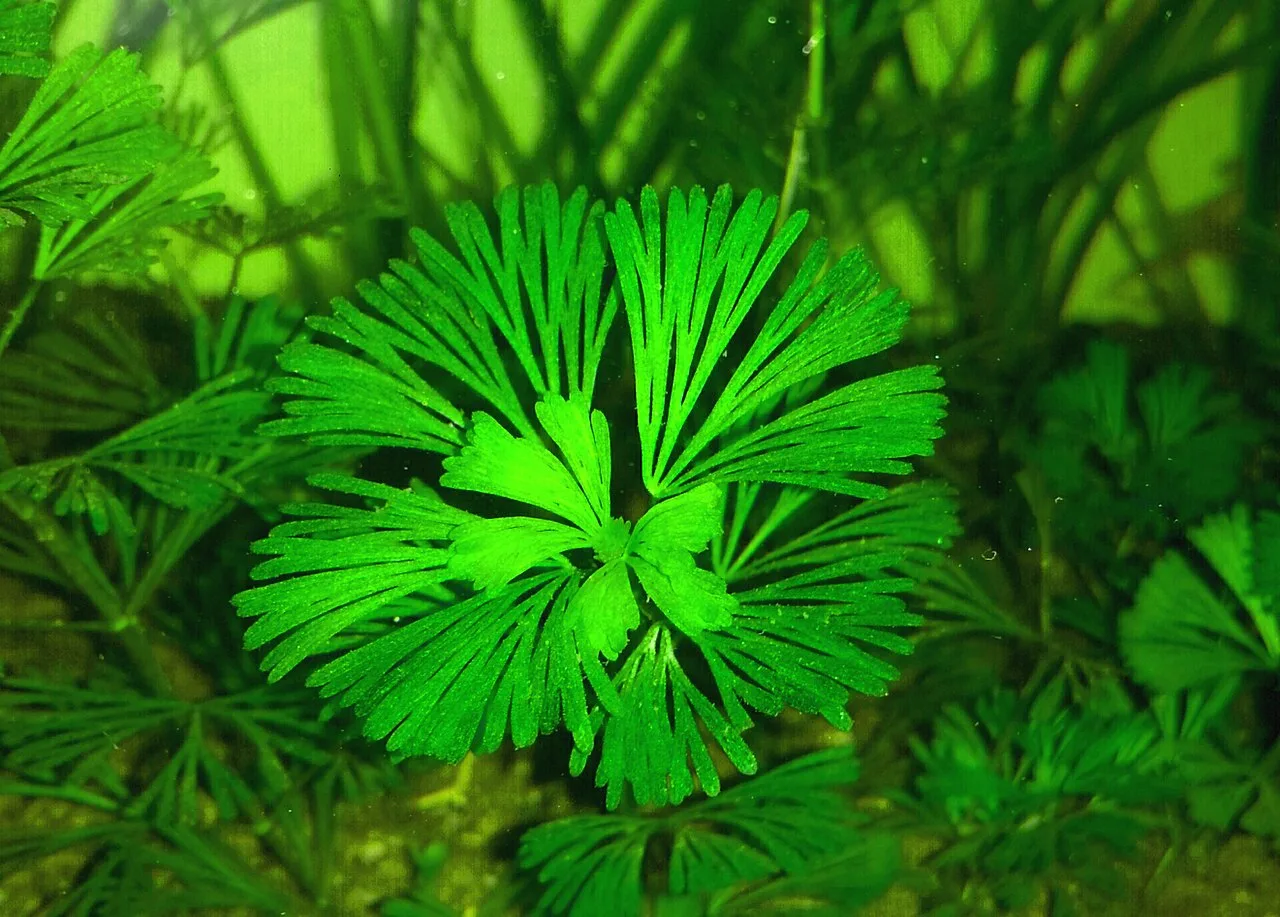
Ludwigia glandulosa
Ludwigia glandulosa
24 views
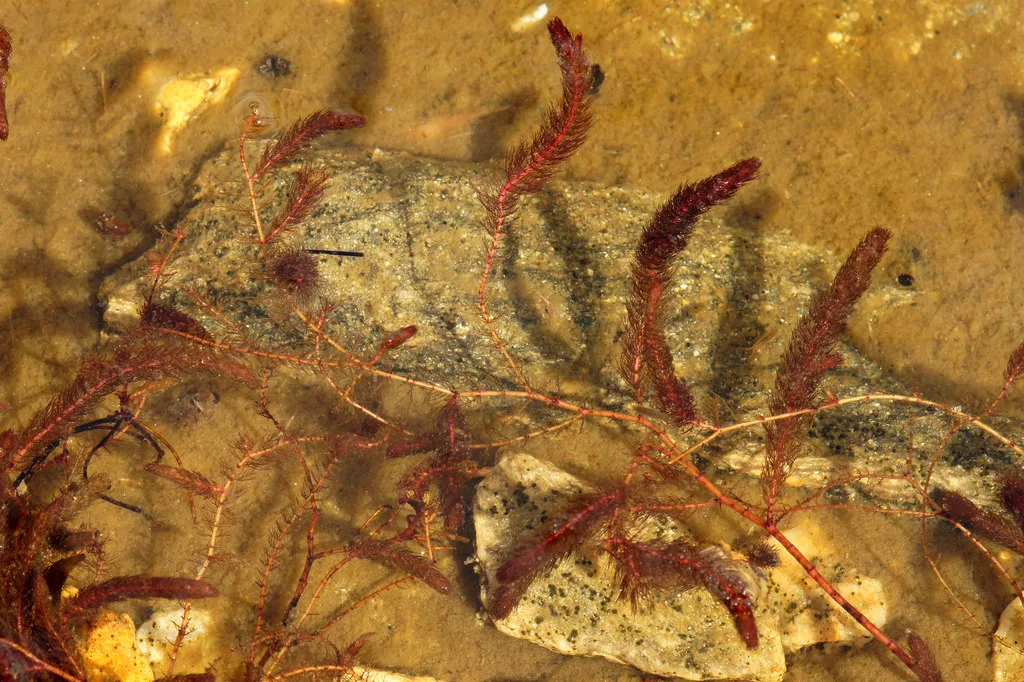
A dark red stem plant that holds the colour only under strong light and CO₂. In shade it turns green and drops the lower leaves.
- Temperature
- 22 – 28 °C
- pH
- 5.5 – 7.5 pH
- Lighting
- Very high light
- CO₂
- High CO₂
- Growth rate
- Medium
- Placement
- Midground
2 min read · 270 words
Care profile
Growth form
Stem plantsPlanting and propagation
- Cuttings Cut off shoot tips and replant them. This keeps the stand dense and propagates it at the same time.
Placement in the aquarium
Highlighted are the areas where the species is typically used.
- Midground Between foreground and background. Hides transitions and frames stones and wood.
Home & range
Hatched countries are where the species occurs. It lives in particular waters there, not across the whole country. The points name known waters for orientation, not collection sites.
- Country of origin
- Water for orientation
Native
Botanical overview
Ludwigia glandulosa carries elongate, opposite leaves that become wine-red to almost black-red under good conditions. The stems are dark as well. In light that is too weak, or at very high nitrate without enough light, the plant becomes olive and stretched. It is more demanding than Ludwigia repens and Ludwigia palustris.
The leaves are brittle. A rough move or a hard replanting costs the leaf mass. Afterwards the group stands bare for weeks, even if the values are right.
Natural origin
This describes the origin, not how to furnish the aquarium.
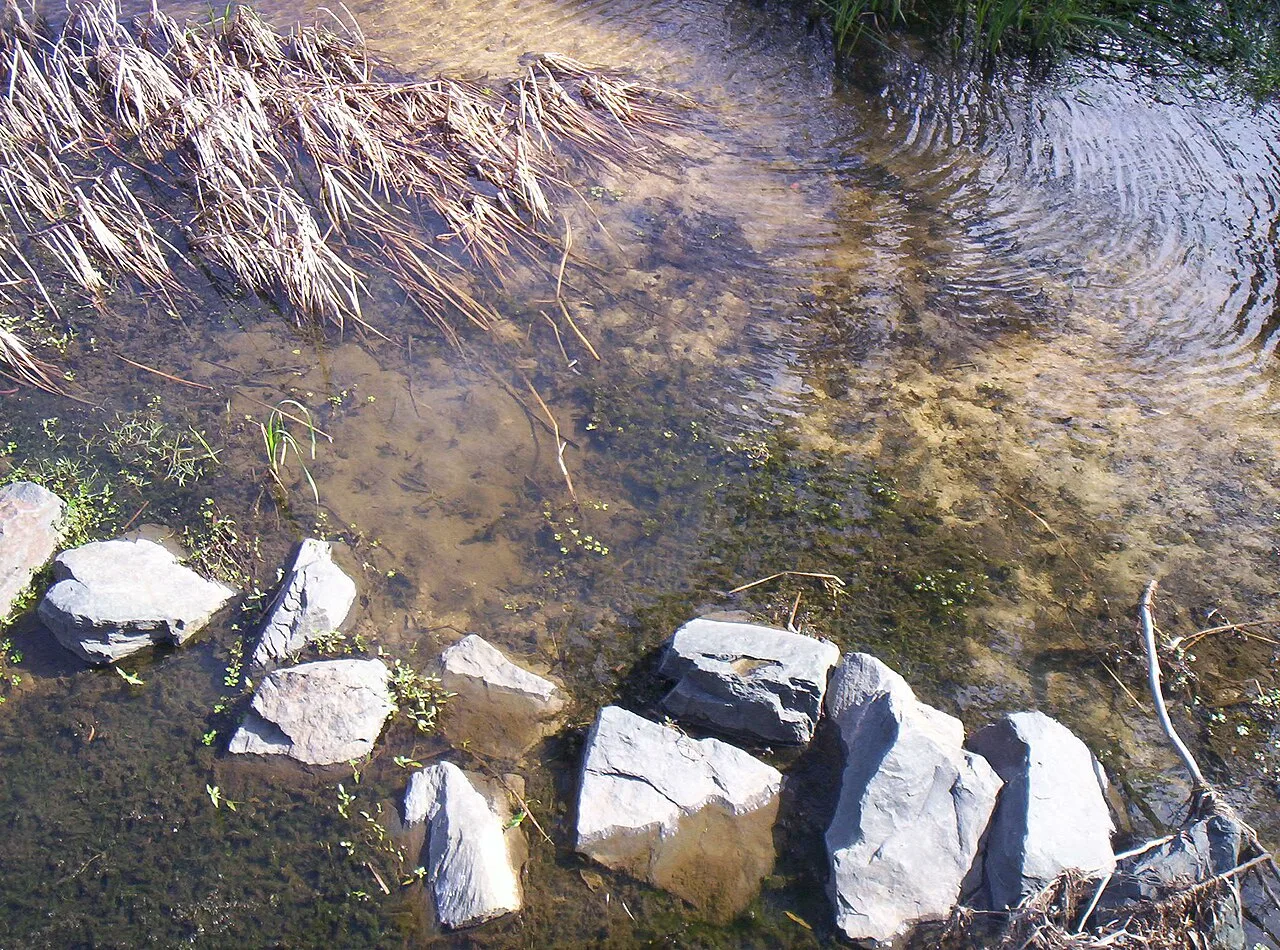
Swamps and ditches in the southern United States. Bright, warm, nutrient-rich. The origin stays coarse. The dark aquarium colour is the high-light form, not a cultivar that can be kept in the shade.
Light, CO₂ and position
Conditions
High light, CO₂, 22 to 28 °C, steady fertilising with iron and a moderate nitrate supply. Midground, stems spaced. A bundle in one hole stays dark red only at the top. Floating plants overhead take exactly the light that makes the colour.
Without CO₂
The plant struggles. Anyone who runs no system takes another Ludwigia. Using this species as a test object ends in bare stems.
Layout and neighbours
The narrow, wine-red leaves form dense bushes in the background. Good next to green hygrophila species.
Common mistakes
Iron deficiency: the tips stay pale.
Growth and trimming
Cut the tips before the lower leaves fall, and replant the tips that are still red. Pull bare stumps. Do not crush the leaves. Soft, green lower leaves are a light or nutrient problem, not normal ageing alone.
Propagation
Tip cuttings. Remove the lower leaves, two nodes into the substrate. They root if light and CO₂ were already right before the cut.