
Bucephalandra motleyana
Bucephalandra motleyana
14 views
An epiphyte from Borneo with tough leaves. The rhizome stays free, growth is slow, and many trade names are forms.
2 min read · 237 words
Care profile
The care profile is backed by one source.
Lighting
Low lightThe profile says low light.
CO₂
Low CO₂Added CO₂ is stored as helpful, not mandatory.
Growth rate
SlowThe profile describes slow growth.
Nutrient demand
LowNutrient demand is low.
Beginner friendly
Beginner friendlyThe published judgement is suitable for beginners.
- Attach
- Rhizome
- The rhizome must not disappear into the gravel.
Placement in the aquarium
Only the stored position or growth form is highlighted, not every possible layout.
- Foreground
- On rock or wood
Home & range
Every named country gets a frame and a circle around known waters in or near that area. Hotspots are orientation, not collection sites. A filled area is the range only when the source names a particular water body.
Botanical overview
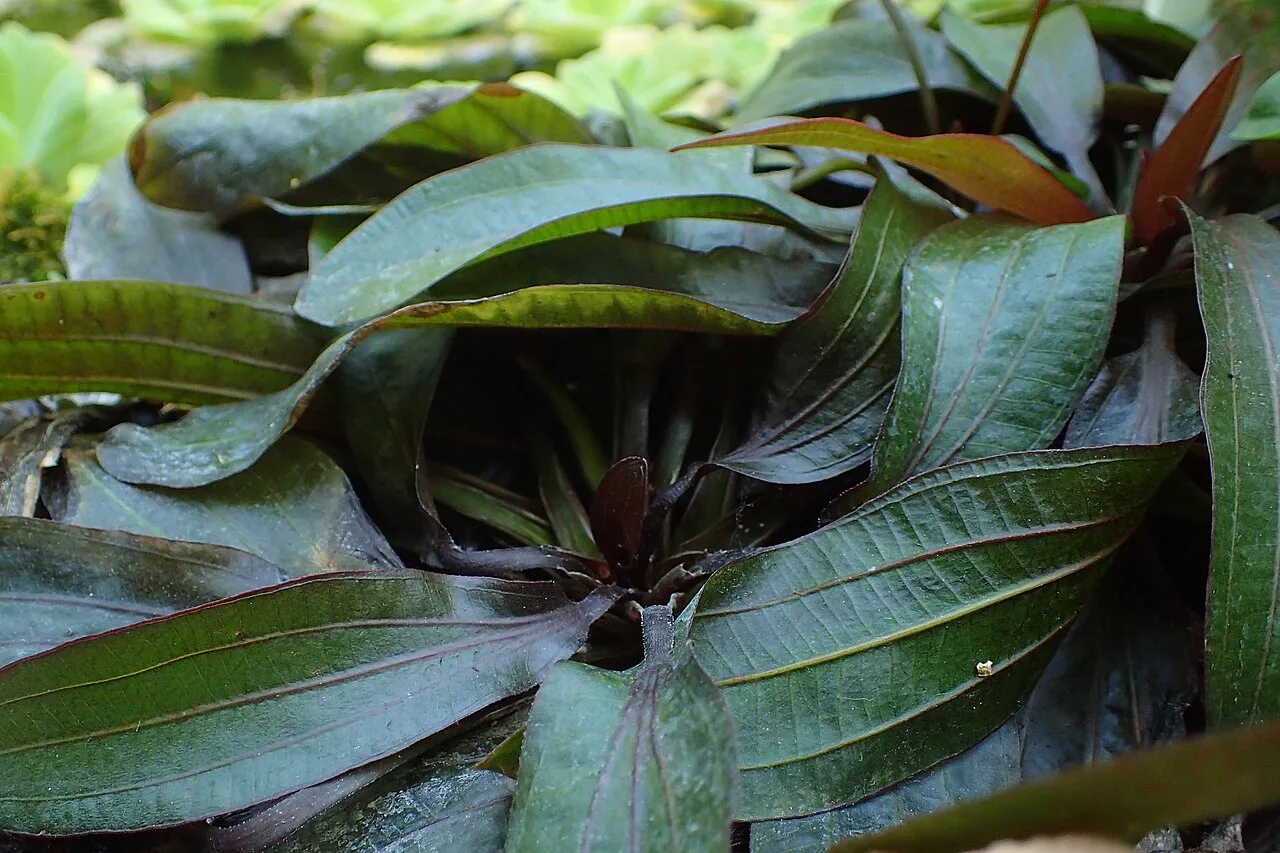
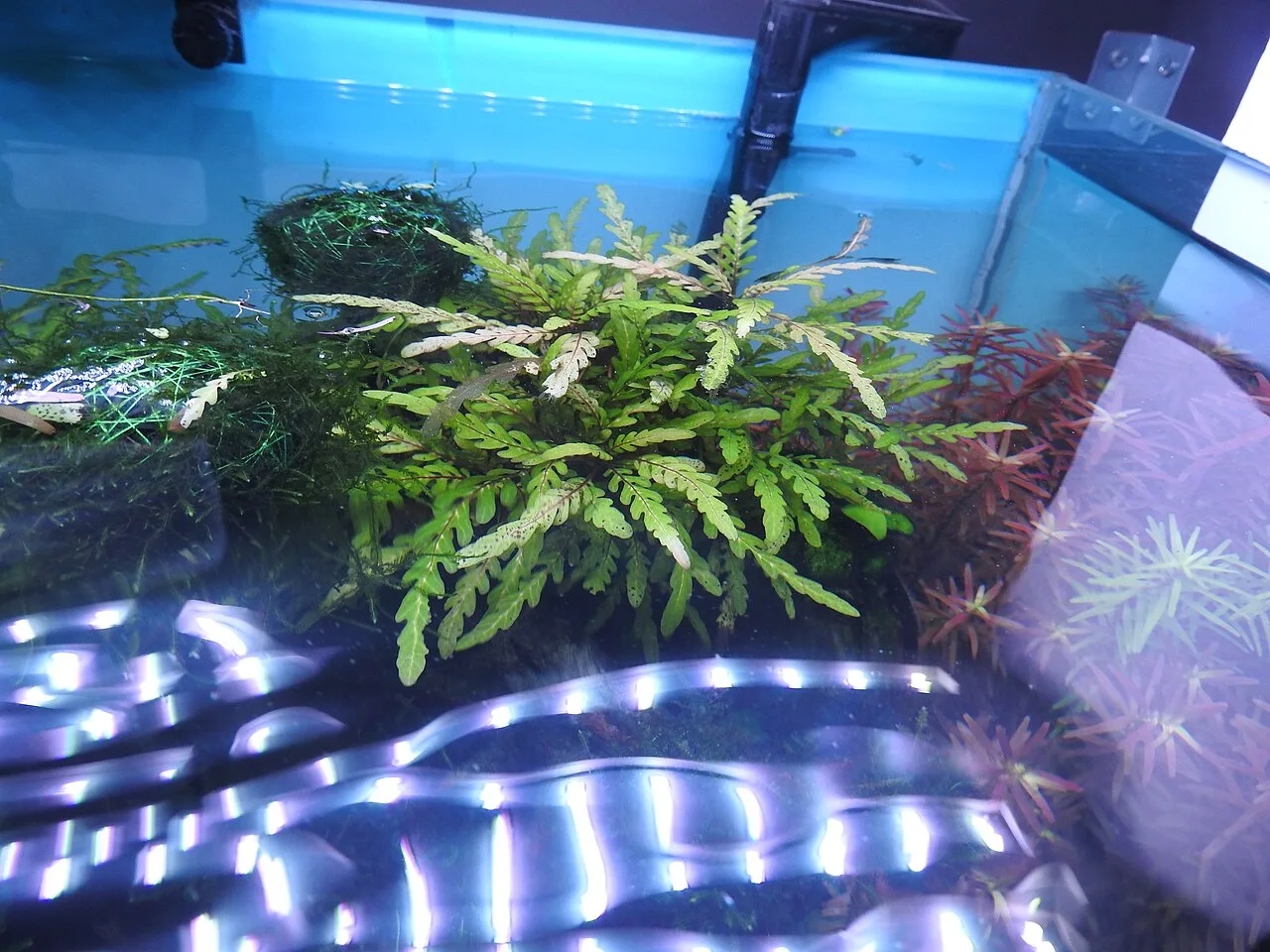
Bucephalandra motleyana sends a creeping rhizome and firm, often slightly waved leaves that can shimmer green, brown or bluish. The colour changes with light and nutrients and is not a certain species mark of every plant that is sold. Many names in the trade are localities, not cleanly separated care profiles.
It is tied on like Anubias. The rhizome must not disappear into the gravel. Under strong light without cover, algae settle and stay, because the leaves last for months.
Natural origin
This describes the origin, not how to furnish the aquarium.
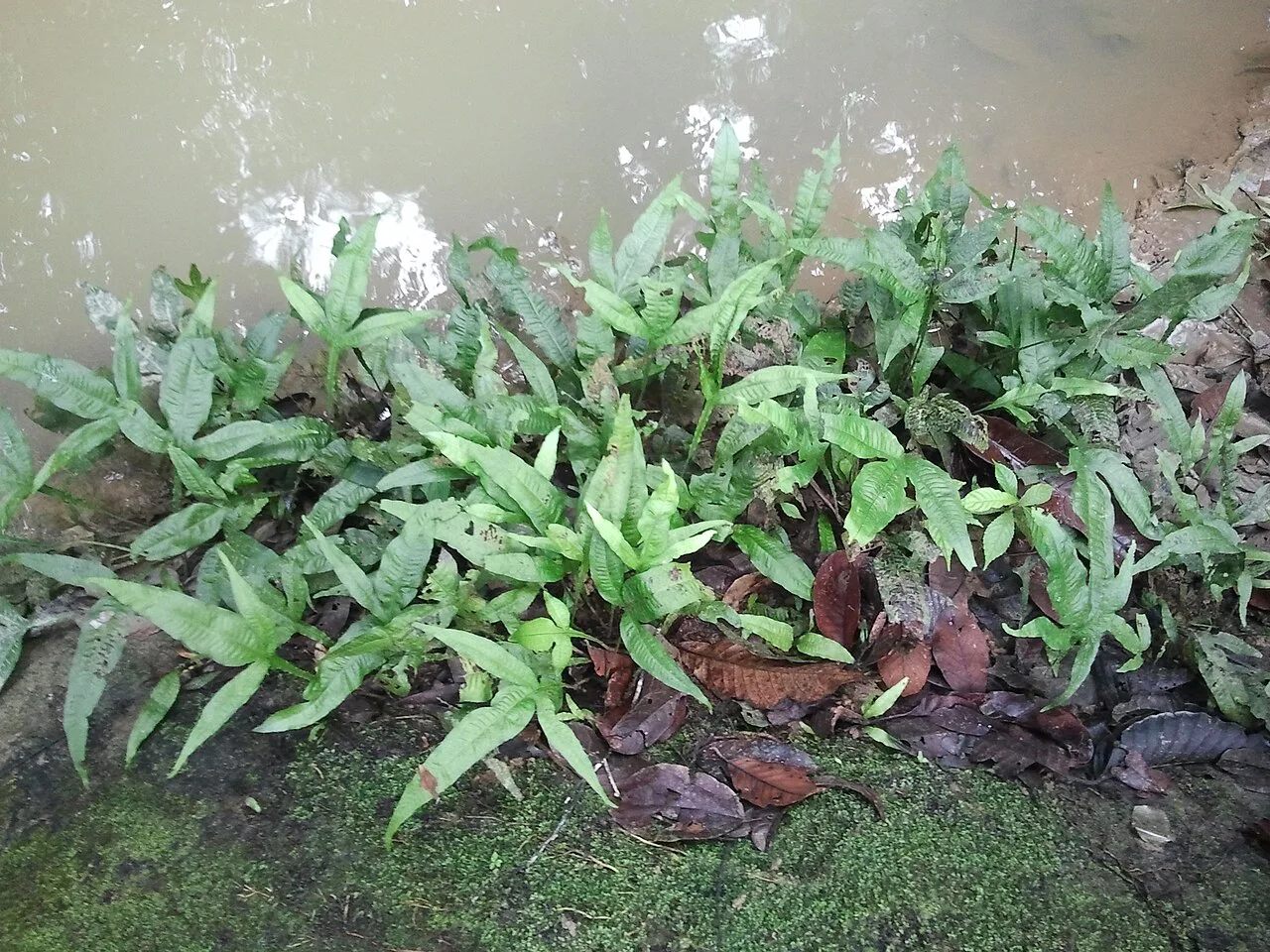
Streams on Borneo, on stone, often in the current and in half-shade. Borneo stays the coarse origin. The rhizome attaches. The roots look for cracks.
Light, CO₂ and position
Tying on
Low to medium light, CO₂ helpful but not the condition for survival, 22 to 28 °C. Tie it to stone or wood, rhizome free, some current. After tying on, little increase for weeks. That is the attaching.
Do not move it
Every removal tears the rhizoids. Choose the place once.
Growth and trimming
Cut old, holed leaves at the rhizome. Wipe algae off carefully or sacrifice the leaf. The plant rarely starves. Yellow leaves are often old leaves or a buried rhizome. Fertiliser in the water column is enough.
Propagation
Divide the rhizome outside the tank, rinse the cut, and put it back only when it no longer bleeds milky sap. Every piece needs a shoot. Rhizomes cut in the tank have been linked with losses of shrimp. The cautious way is to divide outside.
More species in this group
Sources & assertions 1
Wikipedia (deutsch)
Texte in Aquarisma sind eigenständig formuliert. Zahlenbereiche folgen den verlinkten Wikipedia-Artikeln, Lizenz CC BY-SA.
- Haltungsbereich nach https://de.wikipedia.org/wiki/Bucephalandra_motleyana