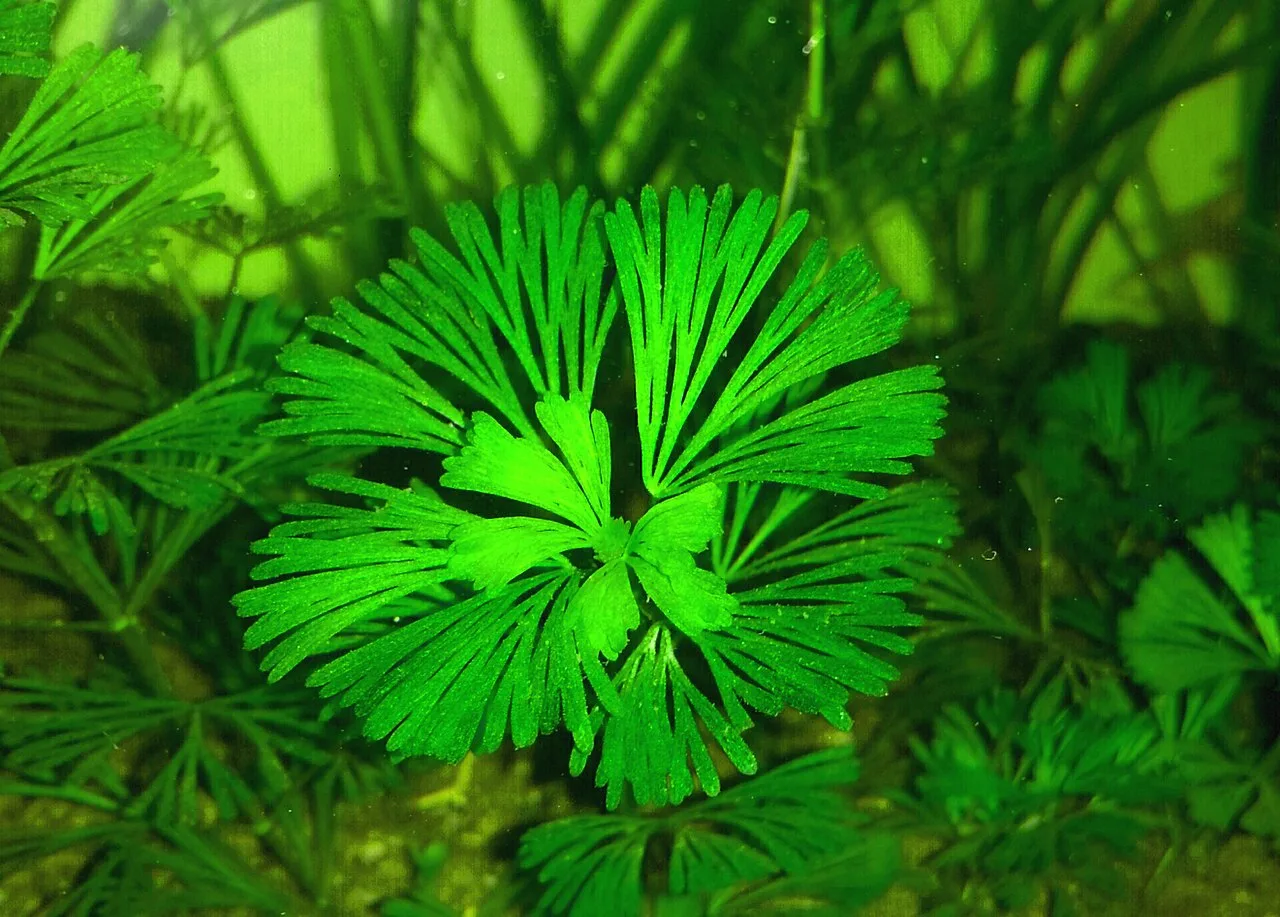
Tonina fluviatilis
Tonina fluviatilis
25 views
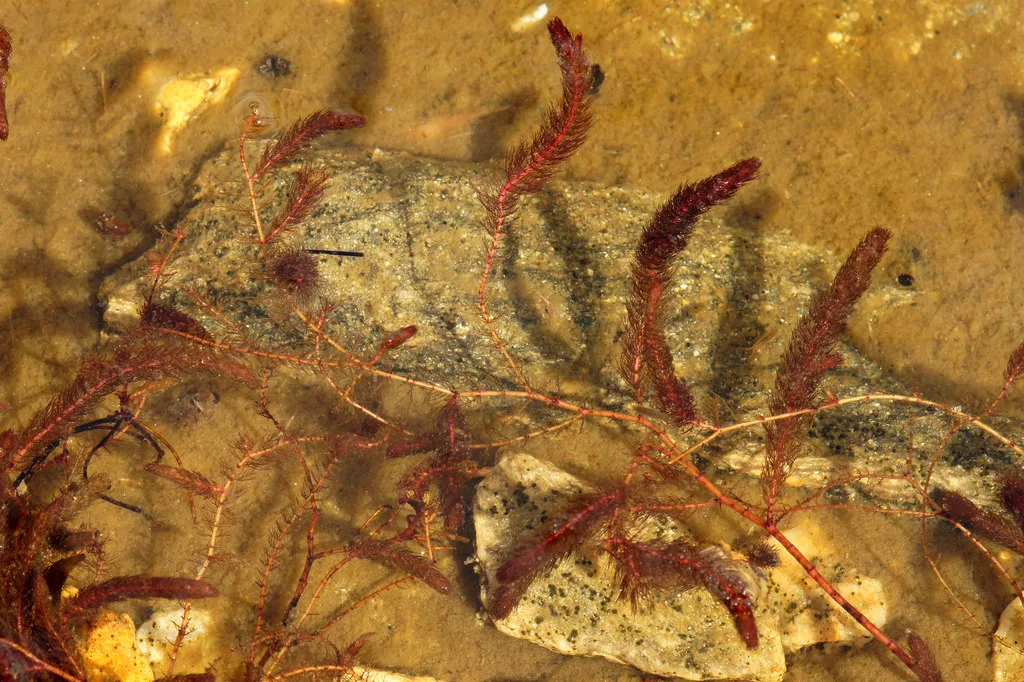
An upright stem plant with star-shaped whorls. It stays dense only in soft water, with a lot of light and CO₂.
- Temperature
- 22 – 28 °C
- pH
- 5 – 6.8 pH
- Lighting
- Very high light
- CO₂
- High CO₂
- Growth rate
- Medium
- Placement
- Background
2 min read · 276 words
Care profile
Growth form
Stem plantsPlanting and propagation
- Cuttings Cut off shoot tips and replant them. This keeps the stand dense and propagates it at the same time.
Placement in the aquarium
Highlighted are the areas where the species is typically used.
- Background Along the back wall and the sides. Forms the tall, dense backdrop.
Home & range
Hatched countries are where the species occurs. It lives in particular waters there, not across the whole country. The points name known waters for orientation, not collection sites.
- Country of origin
- Water for orientation
Native
Botanical overview
Tonina fluviatilis carries narrow leaves in dense whorls on an upright stem. In a group it looks like a column of small stars. The tips can become reddish under strong light. In hard water and without CO₂ the whorls grow thin, the tips turn white and the plant dies back from the top.
It is not an ambulia and not a Pogostemon. Anyone who sets it in ordinary tap water uses it up. The soft, acidic water is the condition, not a recommendation.
Natural origin
This describes the origin, not how to furnish the aquarium.
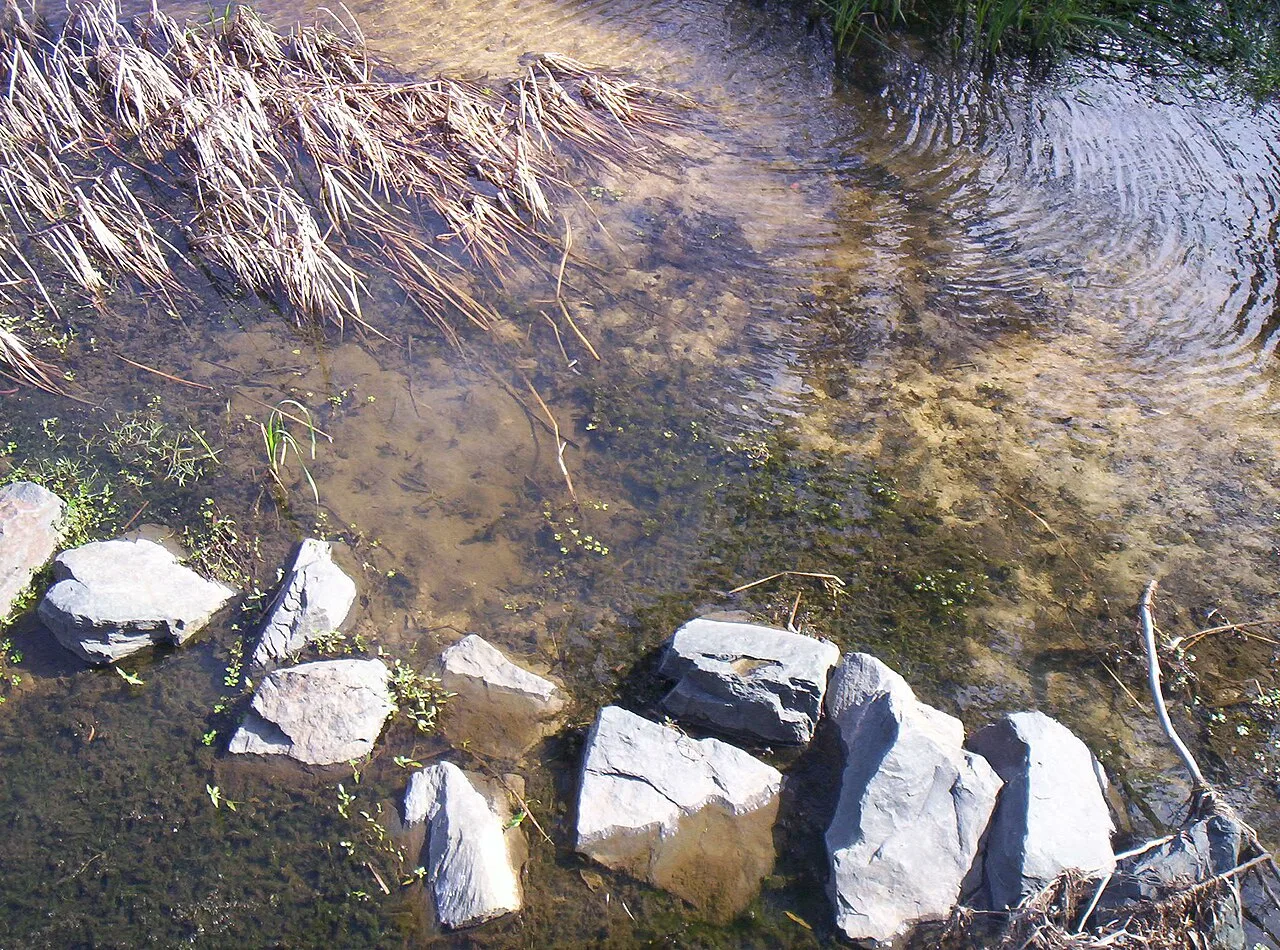
Clear, soft, acidic flowing waters in South America. The origin stays coarse. The place is bright and poor in nutrients in the water. The plant still takes CO₂ and a very clean fertiliser.
Light, CO₂ and position
Conditions
High light, CO₂, 22 to 28 °C, pH rather under 6.5, soft water, low carbonate hardness. Background, stems spaced. Reverse-osmosis water or very soft source water, or the tips burn despite fertiliser. Floating plants overhead take the light.
Do not mix it with hard-water plants
A tank for Tonina is not a tank for Vallisneria, which wants harder water. The layout has to fit this water.
Layout and neighbours
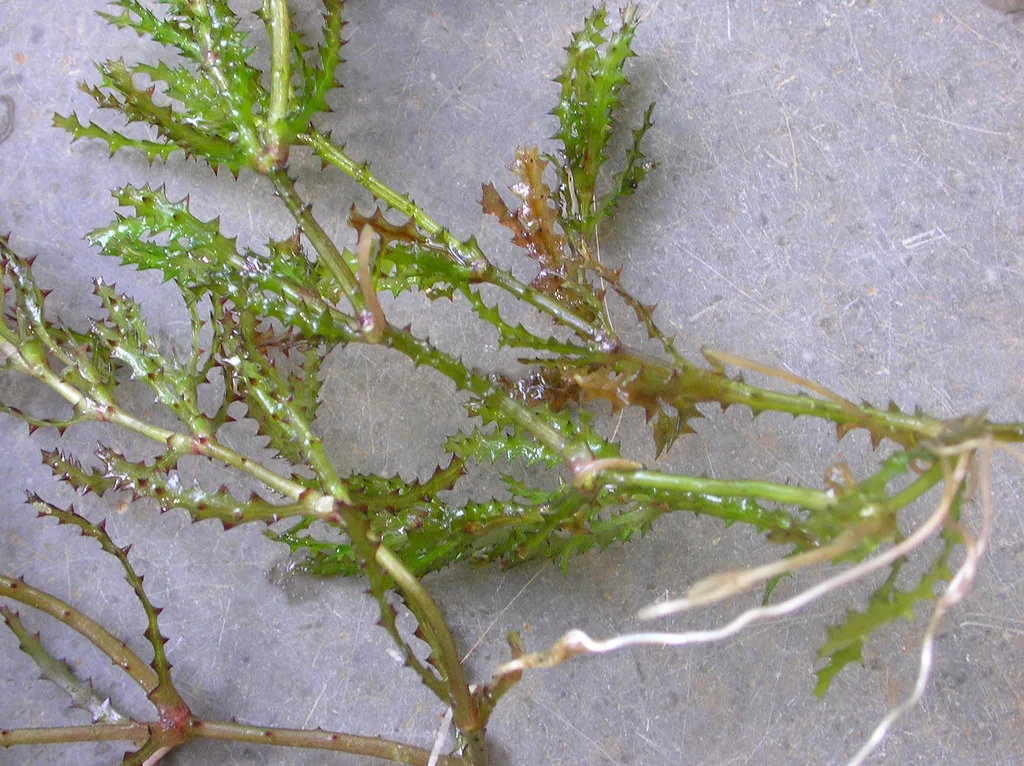
The spirally arranged, pale green leaves look exotic. Only in very soft, acidic water with CO₂.
Common mistakes
Hard water above 5 °dGH. It then falls apart.
Growth and trimming
Cut the tips while they are still green, and replant them at once. White, collapsing tips are lost. The lower whorls have to have light. A bundle in one hole stays alive only at the top. Fertilising sparing and steady, no shock doses.
Propagation
Tip cuttings in the same soft water. They root only if light and CO₂ are not switched on only after the cut.