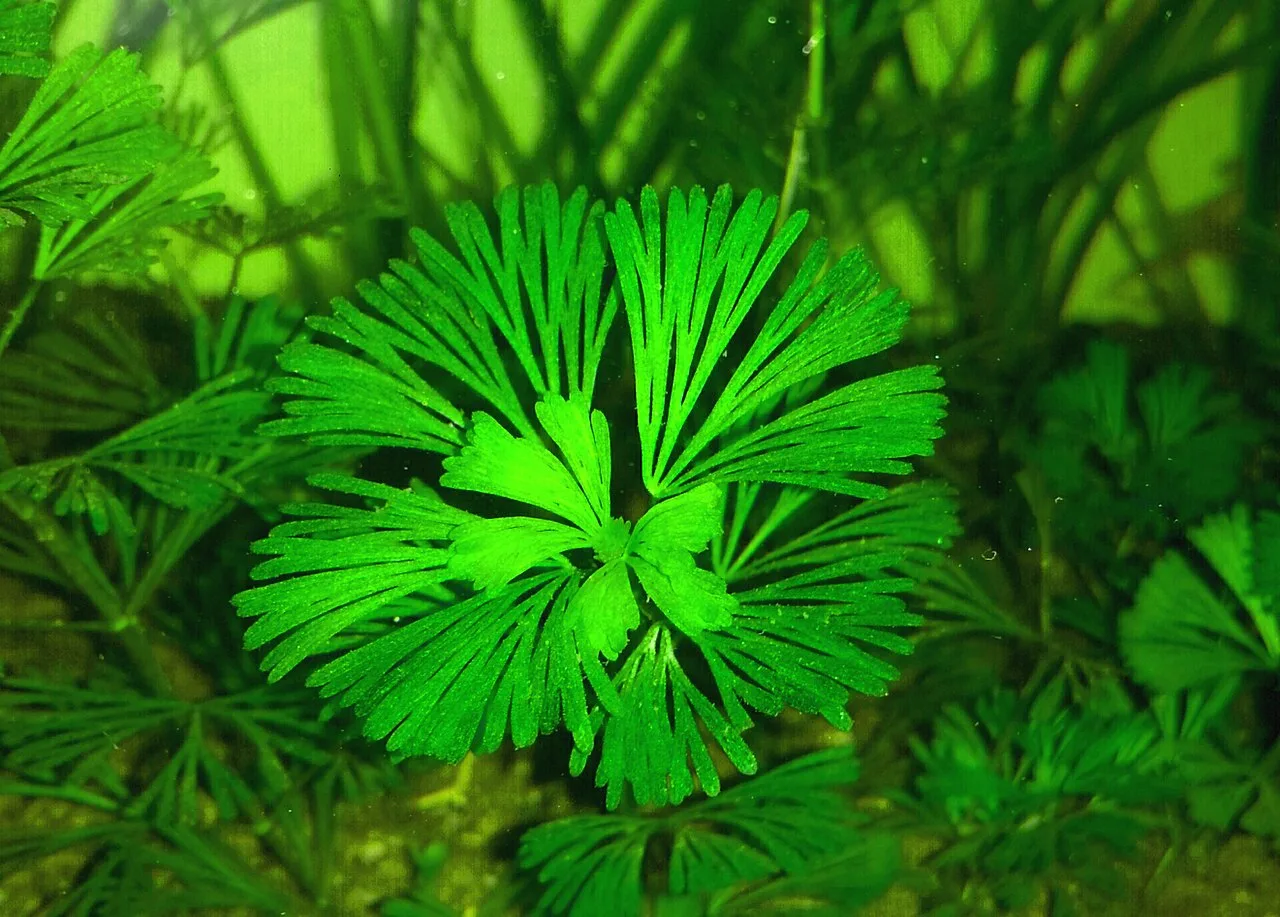
Water hedge
Didiplis diandra
30 views
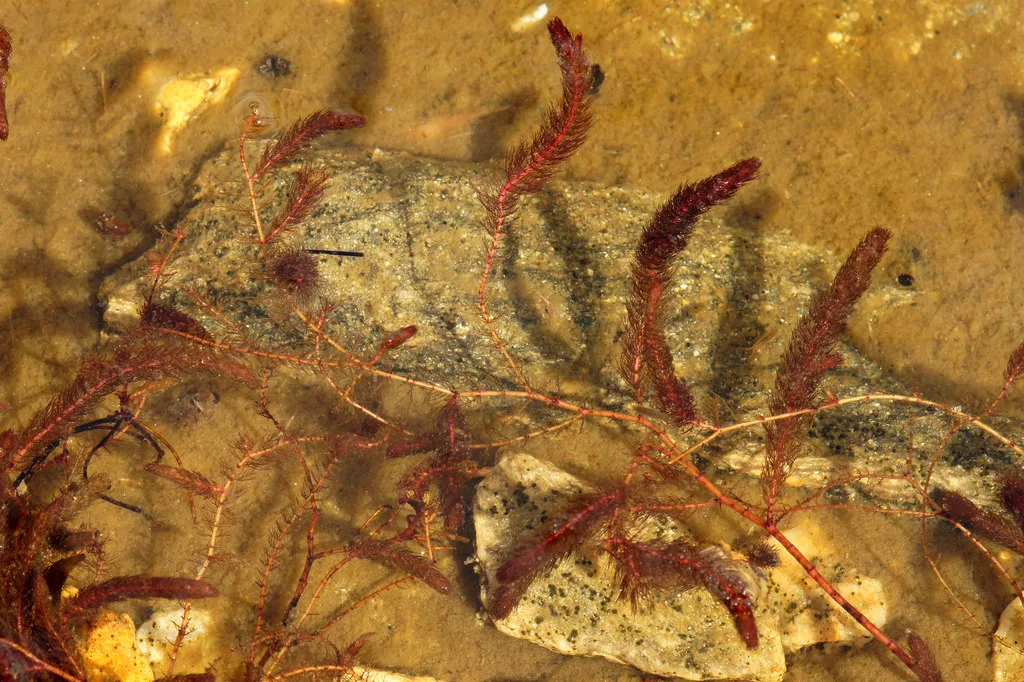
A fine stem plant with very narrow leaves. Under strong light it stays dense and can show copper tips.
- Temperature
- 20 – 26 °C
- pH
- 5.5 – 7.5 pH
- Lighting
- High light
- CO₂
- High CO₂
- Growth rate
- Medium
- Placement
- Midground
2 min read · 252 words
Care profile
Growth form
Stem plantsPlanting and propagation
- Cuttings Cut off shoot tips and replant them. This keeps the stand dense and propagates it at the same time.
Placement in the aquarium
Highlighted are the areas where the species is typically used.
- Midground Between foreground and background. Hides transitions and frames stones and wood.
Home & range
Hatched countries are where the species occurs. It lives in particular waters there, not across the whole country. The points name known waters for orientation, not collection sites.
- Country of origin
- Water for orientation
Native
Botanical overview
Didiplis diandra carries opposite, almost needle-fine leaves on a thin stem. With a lot of light and CO₂ the growth stays compact and the tips turn copper. In shade the gaps grow long and the plant falls apart. It is not a Rotala and not a milfoil. The leaves are undivided and sit in pairs.
The stems are brittle. A crushed cutting rots before it roots. A pot is split into single shoots.
Natural origin
This describes the origin, not how to furnish the aquarium.
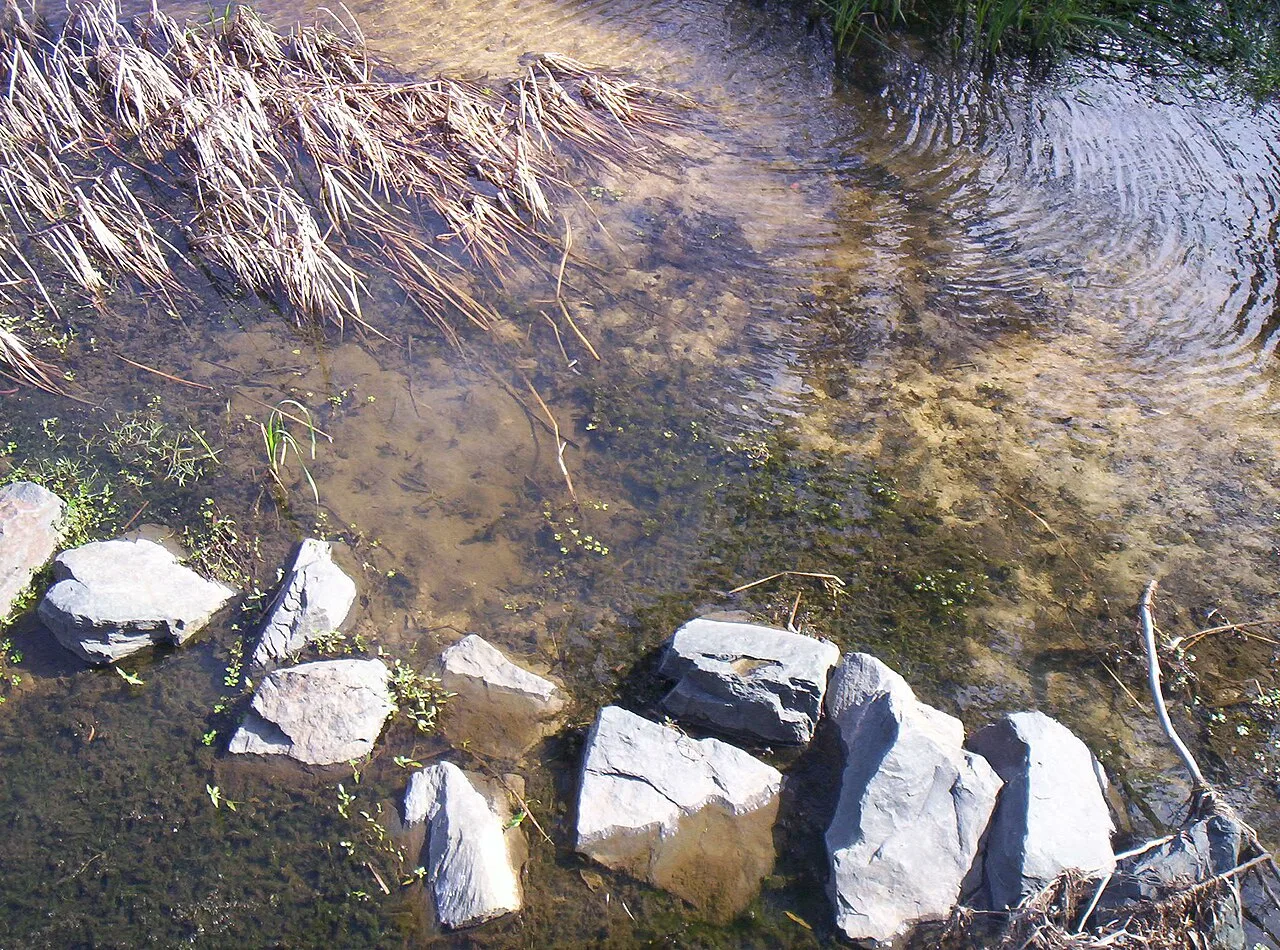
Slow streams and still waters in the east of North America, bright and shallow. The origin stays coarse. The dense form is the sunny side.
Light, CO₂ and position
Conditions
High light, CO₂, 20 to 26 °C, steady fertiliser. Midground, stems spaced. Without CO₂ it stretches or fades. Floating plants above take the light that keeps it short. Cooler tanks suit it better than a permanent discus tank.
Trim
Replant tips regularly, before the base goes bare. A stem with only a tuft left is pulled.
Layout and neighbours
Fine, needle-like leaves, copper-coloured under light. As a dense group in the midground it gives a warm contrast to green rosette plants.
Common mistakes
Too high a nitrate level turns it green, iron deficiency pale.
Growth and trimming
The fine leaves collect mulm. At the water change, blow it out gently. Do not squeeze the stems. Yellow tips under strong light are often a nutrient gap. Iron helps the copper tip only together with light.
Propagation
Tip cuttings with two nodes in the substrate, the lower leaves removed. They root when light and CO₂ are already right.