Water lettuce
Pistia stratiotes
21 views
A large floating plant with ribbed, hairy leaves. It closes the surface quickly, draws nutrients and must not be released.
- Temperature
- 20 – 30 °C
- pH
- 6.5 – 7.5 pH
- Lighting
- Medium light
- CO₂
- No CO₂
- Growth rate
- Fast
- Placement
- Floating
2 min read · 313 words
Care profile
Growth form
Floating plantsPlanting and propagation
- Runners Forms runners in the substrate that grow into new plants. Separate them once they have their own roots.
Placement in the aquarium
Highlighted are the areas where the species is typically used.
- Water surface Floats at the surface and dims the light below.
Home & range
Botanical overview
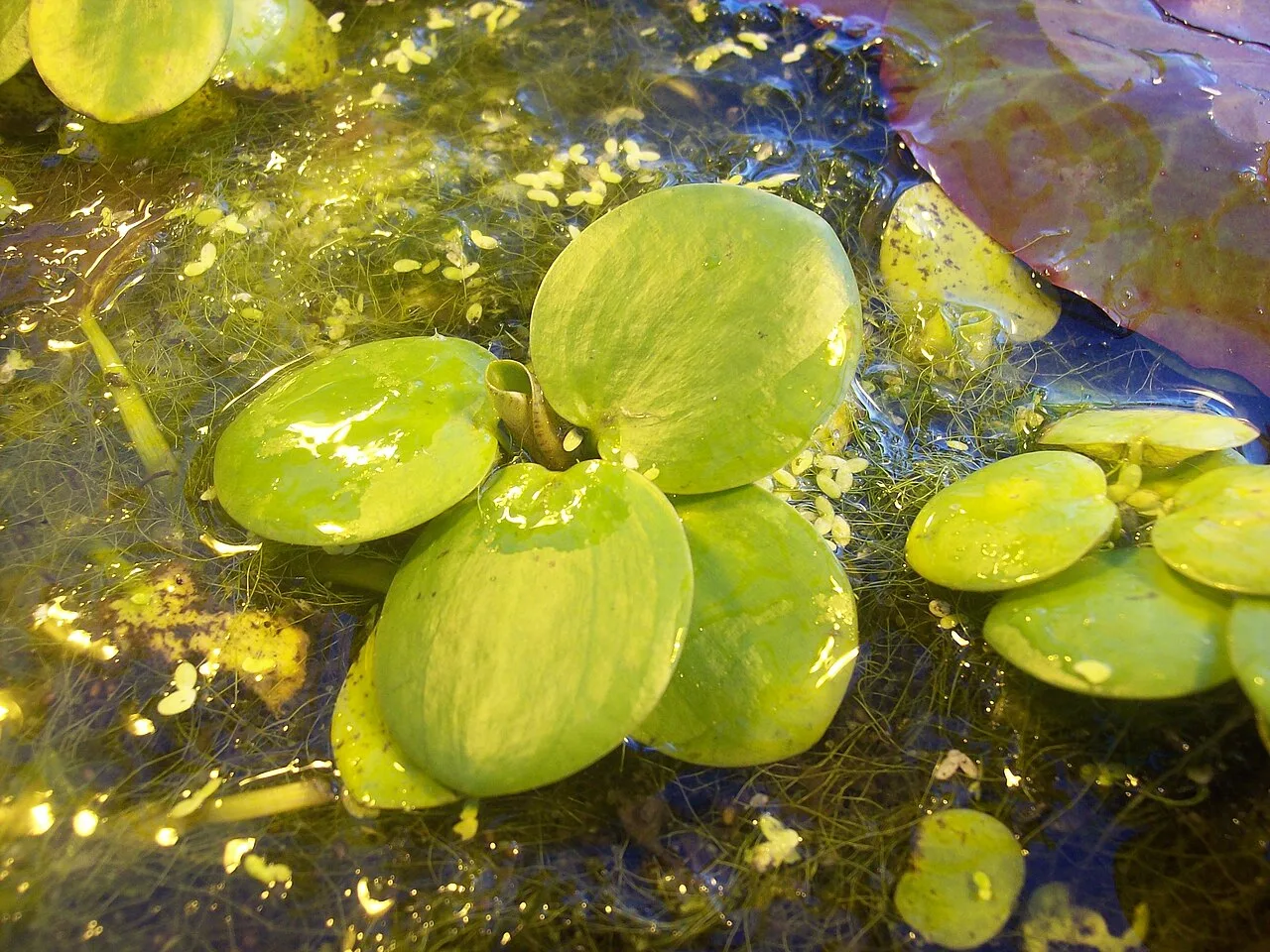
Pistia stratiotes forms rosettes of wedge-shaped, longitudinally ribbed leaves with water-repellent hairs. The roots hang down as a dense beard. Young plants appear on runners. The species is not frogbit and not Salvinia. The ribbed, hairy rosette separates it.
Under the leaves it becomes dim. That helps labyrinth fish and takes the light from ground covers. Both are the effect. In warm regions the plant is a problem in the wild and does not belong in a pond.
Natural origin
This describes the origin, not how to furnish the aquarium.
Still, nutrient-rich waters of the tropics, now widely introduced. A single country outline would be narrower than today’s distribution and is not offered here as an origin map. For the tank the floating rosette is what counts.
Light, CO₂ and position
Surface
Medium to high light, no CO₂ required, 20 to 30 °C. Plenty of nutrients in the water. An open zone for gas exchange stays mandatory. The filter outlet must not push the rosettes against the glass all the time. Wet leaves on the cover rot from above.
Limiting
Harvest weekly. A closed cover darkens the tank in a few weeks. Epiphytes set below tolerate the dimmed light for a while. Rotala and a lawn do not.
Layout and neighbours
The velvety, lettuce-like rosettes belong in open tanks or ponds. The species is on the EU list of invasive species. Never dispose of plants in natural waters.
Common mistakes
Under a tight lid it burns on the lamp or rots from condensation.
Growth and trimming
Yellow, soft rosettes in a bright place are often an iron shortage in the water. The plant has no substrate. Liquid fertiliser reaches it. Substrate capsules do not. Take off black, wet leaves before they infect healthy rosettes. Shorten the roots when they grow into the filter.
Propagation
Separate the runners. Every young rosette with roots is a new plant. Dry the surplus and put it in the waste, not into a natural water.