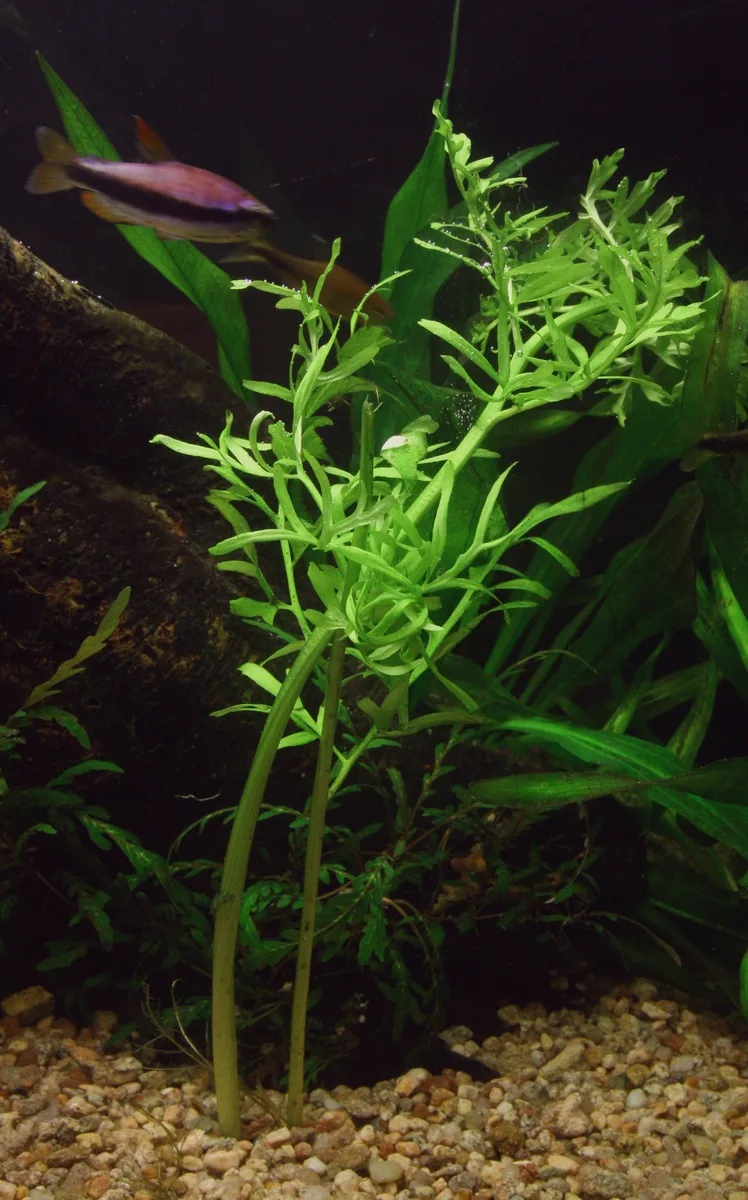
Water sprite
Ceratopteris thalictroides
21 views
A fast fern that roots or floats.
- Temperature
- 22 – 28 °C
- pH
- 6 – 7.5 pH
- Lighting
- Medium light
- CO₂
- Low CO₂
- Growth rate
- Fast
- Placement
- Floating
3 min read · 385 words
Care profile
Growth form
Floating plantsPlacement in the aquarium
Highlighted are the areas where the species is typically used.
- Water surface Floats at the surface and dims the light below.
Home & range
Hatched countries are where the species occurs. It lives in particular waters there, not across the whole country. The points name known waters for orientation, not collection sites.
- Country of origin
- Water for orientation
Native
Botanical overview
Ceratopteris thalictroides belongs to the pteridoid ferns. English names include water sprite and Indian fern. In the Philippines it is called pakung-sungay. Stipes of mature plants are 3 to 15 mm thick, spongy and air-filled, 4 to 60 cm long including the stipe. Fertile fronds reach 15 to 100 cm and more. Buds sit in the axils of fertile pinnae. Two chromosome counts are known, 2n = 126 and 2n = 154. Whether that splits the species internally is open.
Natural origin
This describes the origin, not how to furnish the aquarium.
Widespread in the tropics and subtropics, north to Korea and south to western Australia. Sites are still water, slow rivers, swamps and ponds, often on driftwood, from sea level to 1300 m, mostly below 500 m. Full sun to moderate shade. In some regions it matures in the dry season and loses the sterile fronds. It can renew from spores like an annual. In cultivation the lifespan is indefinite. Maturity can be reached in 29 days.
Light, CO₂ and position
In the aquarium it is used floating and rooted. Medium light, low CO₂ and 22–28 °C work well, and growth is fast. Floating plants shade the bottom.
Floating or rooted
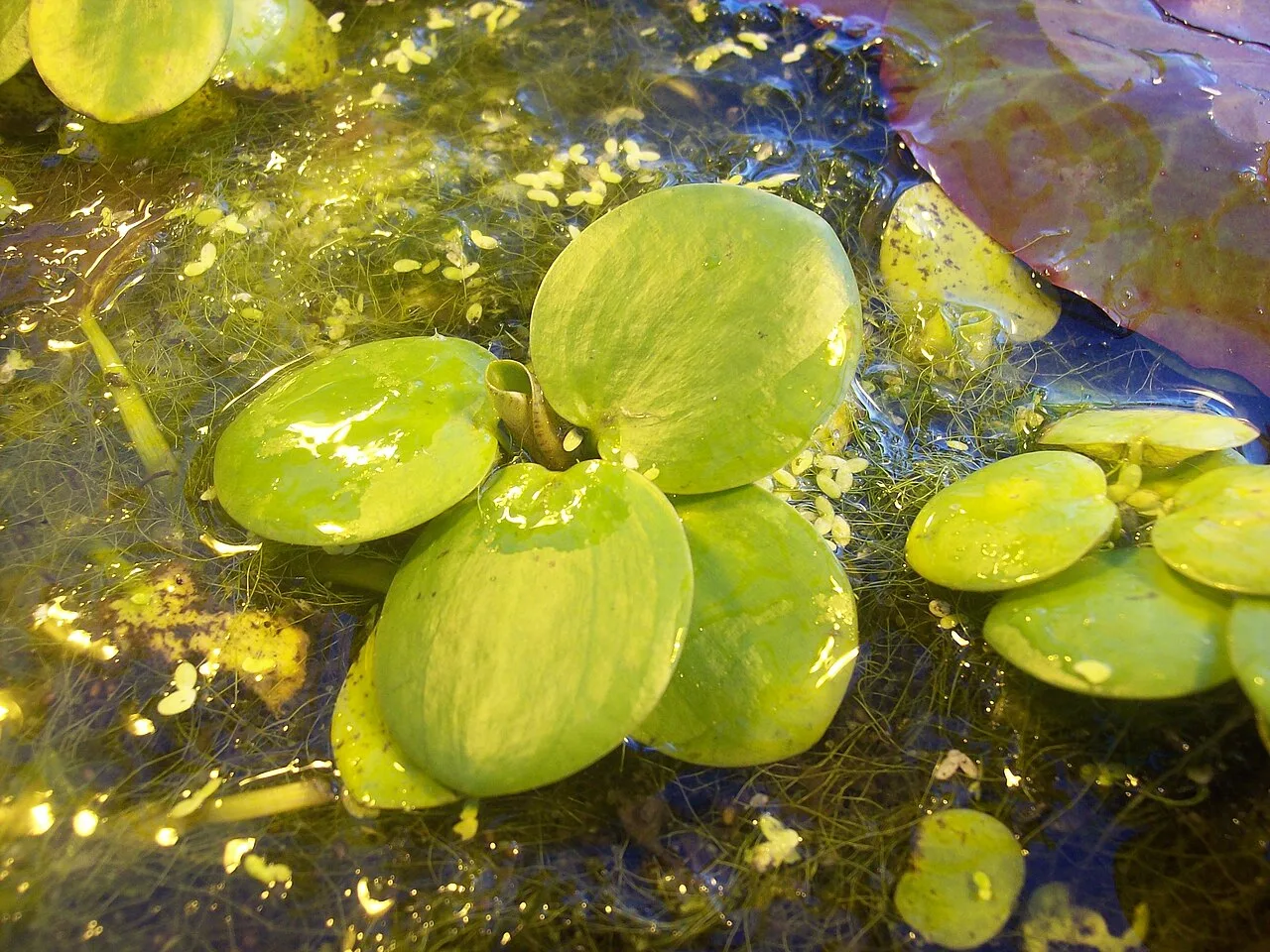
Water sprite can float on the surface or be set in the substrate. Floating, the leaves become tougher and the roots hang free. Rooted, it becomes finer and taller if the light is enough. Both forms draw a lot of nutrients and help a new tank. Both shade as soon as they close the surface or the background.
Daughter plants appear on the leaves. They are taken off when they have a leaf and a root of their own, and are replanted or left to float.
Growth and trimming
Oversized rosettes are divided or removed. It is used as green manure for rice. That is agriculture, not an aquarium dose. Young fronds are eaten in some countries. Some ferns are considered possibly carcinogenic when eaten, and that may apply here too. That is not a recipe.
Mass
Rosettes that are too large are divided or removed. A fern that covers half the tank is not a substitute for a filter. It is a light problem. Yellow, glassy leaves come with iron shortage or when the plant stands in its own shade. Thin it first, then fertilise.
Further care
Adventitious buds sit on the fertile fronds. That is vegetative propagation beside the spores.
Propagation
Adventitious buds and spores. In cultivation it lives longer than the seasonal wild form.