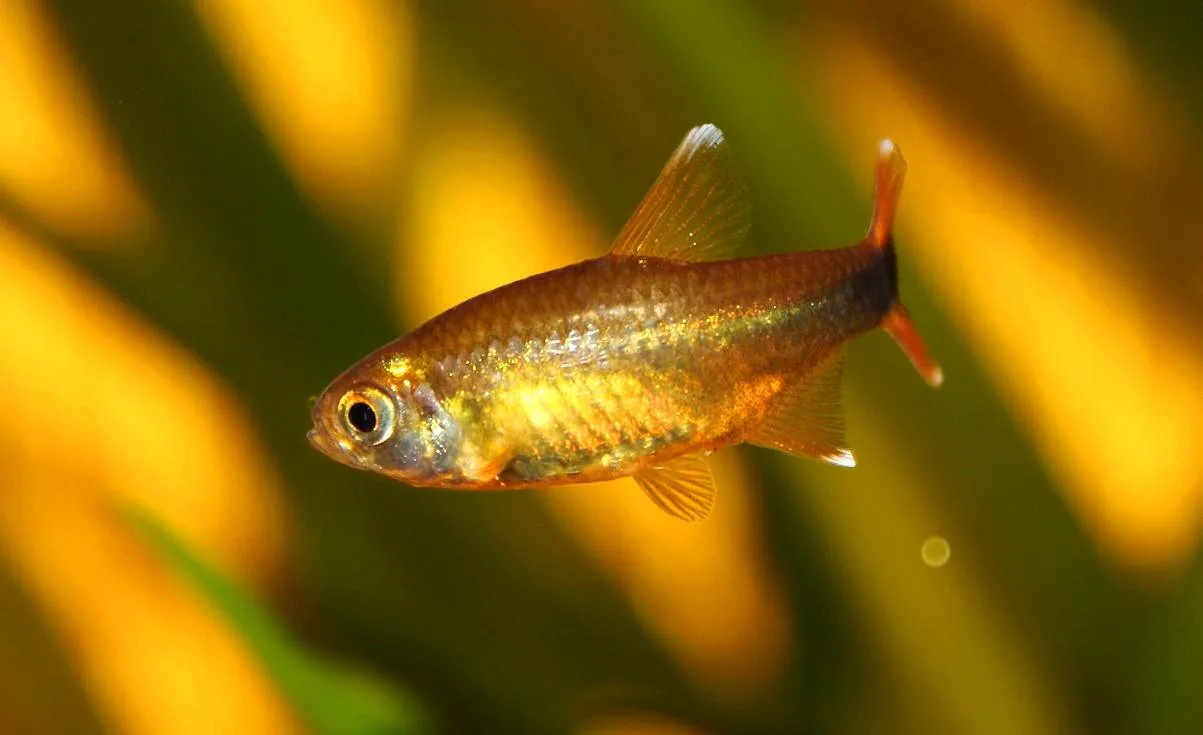
Empire gudgeon
Hypseleotris compressa
13 views
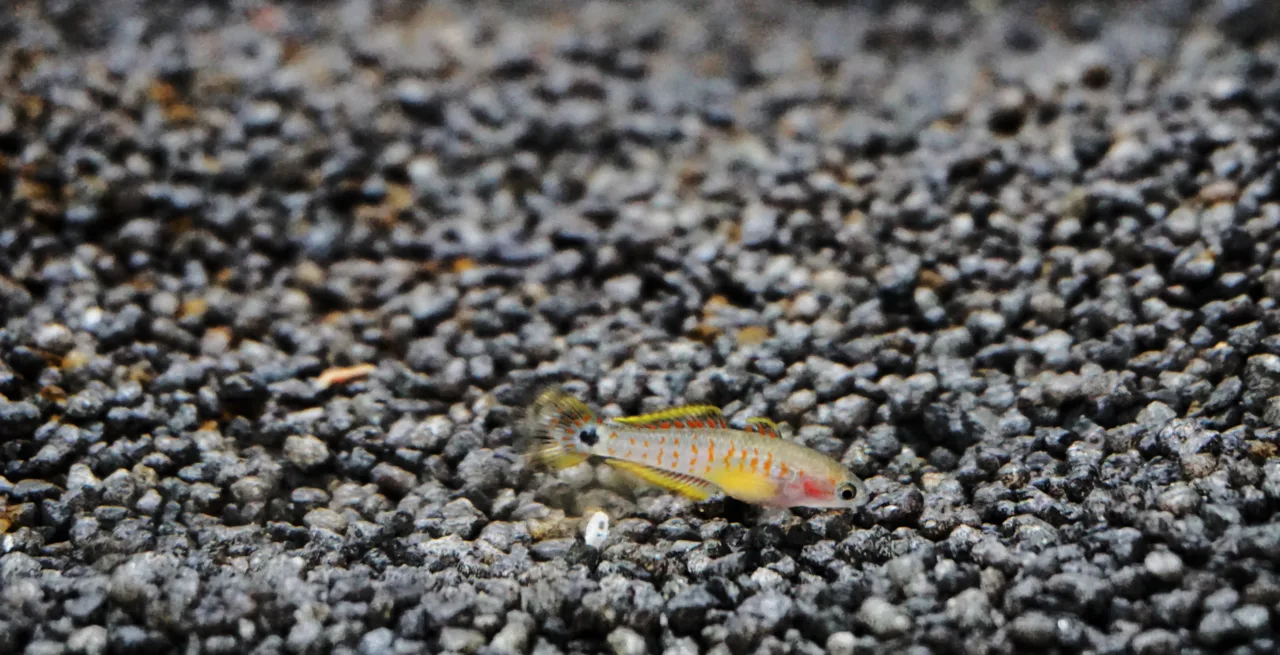
A goby from Australia and New Guinea whose males glow red and orange when courting. It lives on the bottom and on wood, not as a school in open water.
- Temperature
- 22 – 28 °C
- pH
- 7 – 8 pH
- General hardness
- 8 – 20 °dH
- Maximum size
- 10 cm
- Minimum tank size
- 100 L
4 min read · 611 words
Fresh water, larvae in salt or brackish water
Quick facts
Place in the aquarium
Highlighted are the water layer and the spots where the species usually stays in the tank.
- Middle water Usually stays in the middle of the tank, between bottom and surface.
- Near the bottom Mostly stays just above the bottom. Food has to reach the substrate.
- Dense plants Looks for dense planting as cover, retreat or grazing ground.
Shrimp in the tank
Dwarf shrimp at risk
- Not shrimp safe
- Dwarf shrimp at risk
- Shrimplets at risk
- Shrimp safe
- Adult dwarf shrimp
- At risk
- Shrimplets
- Get eaten
- Safe from shrimp size
- about 4 cm
The empire gudgeon is risky for dwarf shrimp. It grows to 12 cm and mainly eats small crustaceans and insects. Among plants, branches and stones it makes short dashes and so also reaches shrimp on the bottom. Young shrimp and adult Neocaridina or Caridina are therefore at risk. Larger shrimp from about 4 cm, such as Amano shrimp, are usually no longer overpowered. Anyone who wants to keep dwarf shrimp puts them in a separate tank and combines the empire gudgeon at most with larger shrimp species.
Home & range
Hatched countries are where the species occurs. It lives in particular waters there, not across the whole country. The points name known waters for orientation, not collection sites.
- Country of origin
- Water for orientation
Native
- Australia
- Range: northern and eastern Australia and the Torres Strait.
- Papua New Guinea
- Range: south-central New Guinea.
Overview
Hypseleotris compressa reaches about 10 cm, the males looking larger when courting because of the fins. Then the head and fins are patterned red, orange and white. Outside courtship the fish is plain olive. Females stay smaller and without this dress.
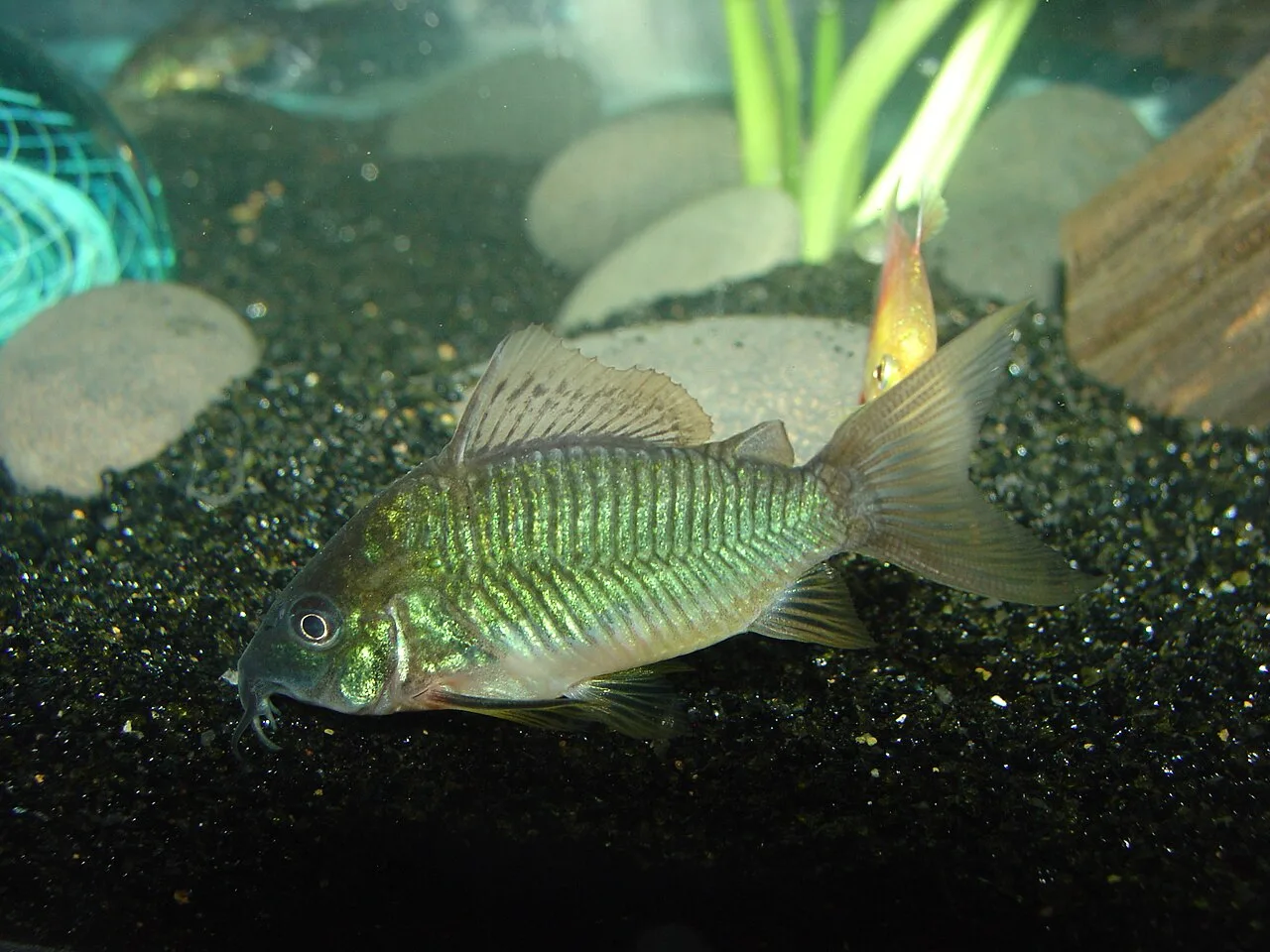
The species sits on roots, stones and the bottom and makes short dashes. It is not a loach and not a cory. The mouth is upturned enough to take food in the lower midwater.
Description and colour
There the species is called empire gudgeon and belongs to the sleeper gobies, the Eleotridae. Gerard Krefft described it in 1864 as Eleotris compressus from fish discovered by James F. Wilcox.
The body is elongated and can grow up to 12 cm, and males grow larger than females. There is no lateral line, and the scales are ctenoid. The head is usually yellowish tan to golden brown, occasionally dark brown, and the belly whitish red. Even outside the breeding season, males can be recognised by prominent, variously coloured bands in the anal and dorsal fins. The tail fin is dusky, and the pectoral and pelvic fins are colourless. In the breeding season males turn a bright red-orange and sometimes seem to glow. The species can change colour quickly.
Origin & habitat
This describes the origin, not how to furnish the aquarium.
Slow and still waters in northern Australia and southern New Guinea, often with wood and plants, sometimes with a brackish influence. The origin stays coarse. Pure, very acidic water is not necessary.
Habitat
The populations are concentrated in northern and eastern Australia and south-central New Guinea. There are also records from the Torres Strait near Muralag and Horn Island. The species mostly lives in flowing rivers and streams, but also occurs in still water and tolerates salinity up to the level of sea water. It mainly inhabits lower reaches but also lives further upstream. It swims among aquatic plants and branches and uses rocks as caves.
Care
Layout
22 to 28 °C, pH 7 to 8. From about 100 litres for one male with several females, with wood, stones, sand and hiding places. Several males only with visual barriers. A little salt is tolerated, but it is not mandatory.
Company
Calm fish that do not search every corner. Shrimp are eaten. Very small tetras as well. Medium-sized, peaceful fish above can fit.
Diet
Frozen food, brine shrimp, mosquito larvae and a granule that sinks. The fish do not feed hurriedly at the surface. Several feeds near the resting places.
The empire gudgeon is an omnivore. It mainly takes small crustaceans and insects but also eats algae and aquatic plants. In a study in Brisbane it ate larvae of the mosquito Culex annulirostris as effectively as the introduced eastern mosquitofish and is therefore considered a good candidate for mosquito control.
Behavior
The male holds a place and courts. The bright colour is that signal. A female needs room to get away. A second male without his own root is driven off. Outside courtship the fish are quiet.
Reproduction
The male guards the eggs on a surface, often under a leaf or on a root. The larvae are small. In a species tank with moss a few survive. The adults eat unguarded eggs.
Spawning and migration
Spawning usually takes place in fresh water in warm weather, and the season generally runs from spring to autumn. The female lays rows of about 3,000 adhesive eggs of around 0.32 mm on plants, wood, rocks or sand. The male fertilises them and guards them until they hatch after 10 to 14 hours. The young then drift downstream into estuaries and develop there. As adults they return to fresh water. This migration and the very small larvae make breeding for aquariums difficult. So far it has succeeded rather by accident in shrimp farming ponds.
More species in this group
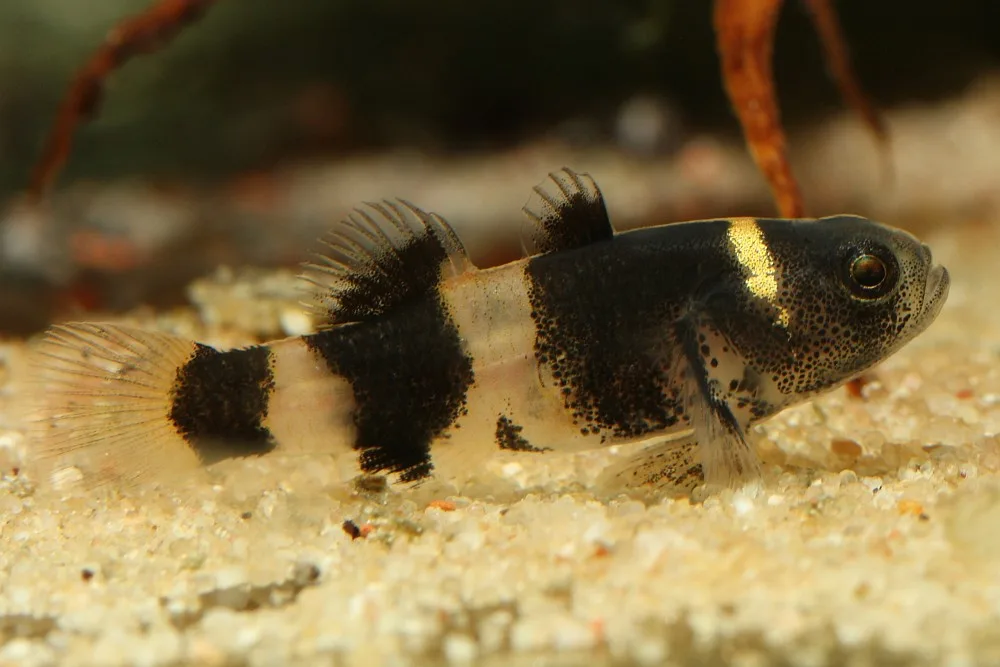
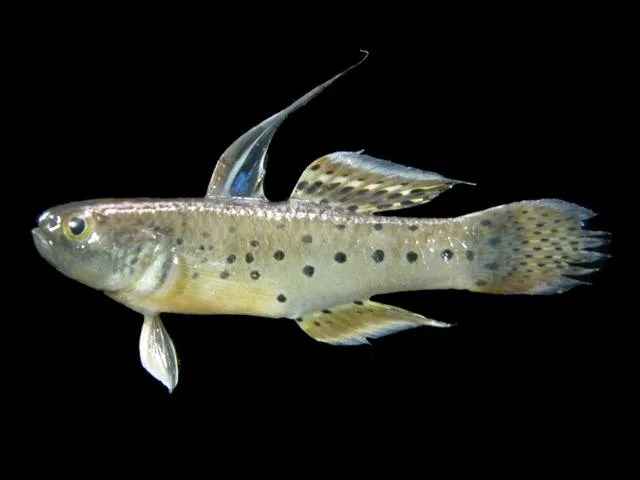
Similar water needs
Species with a similar temperature, a similar pH and a comparable adult size. Whether their behaviour fits as well is what the compatibility check is for.