
Neon green rasbora
Microdevario kubotai
3 views
A tiny rasbora with a glowing green back. It needs a large school, fine food and calm company.
- Temperature
- 22 – 26 °C
- pH
- 6.5 – 7.5 pH
- General hardness
- 5 – 12 °dH
- Maximum size
- 2 cm
- Minimum group size
- 10
- Minimum tank size
- 54 L
2 min read · 186 words
Quick facts
Place in the aquarium
Highlighted are the water layer and the spots where the species usually stays in the tank.
- Upper water Usually stays in the top third of the tank.
- Middle water Usually stays in the middle of the tank, between bottom and surface.
- Open swimming space Needs an open area without plants or decor to swim at length. Tank length matters more than height.
Shrimp in the tank
Shrimp safe
- Not shrimp safe
- Dwarf shrimp at risk
- Shrimplets at risk
- Shrimp safe
- Adult dwarf shrimp
- Safe
- Shrimplets
- Mostly safe
- Safe from shrimp size
- Any size
The neon green rasbora is harmless to shrimp. It reaches only about 2 cm, the mouth is tiny, and it eats fine food in midwater. Adult shrimp are far too large, and even juvenile shrimp on the bottom are hardly noticed.
The species is one of the best tankmates for a shrimp tank. Both like calm, clean water with many plants.
Home & range
Hatched countries are where the species occurs. It lives in particular waters there, not across the whole country. The points name known waters for orientation, not collection sites.
- Country of origin
- Water for orientation
Native
Overview
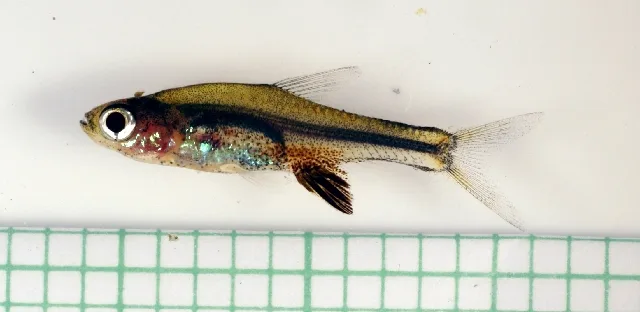
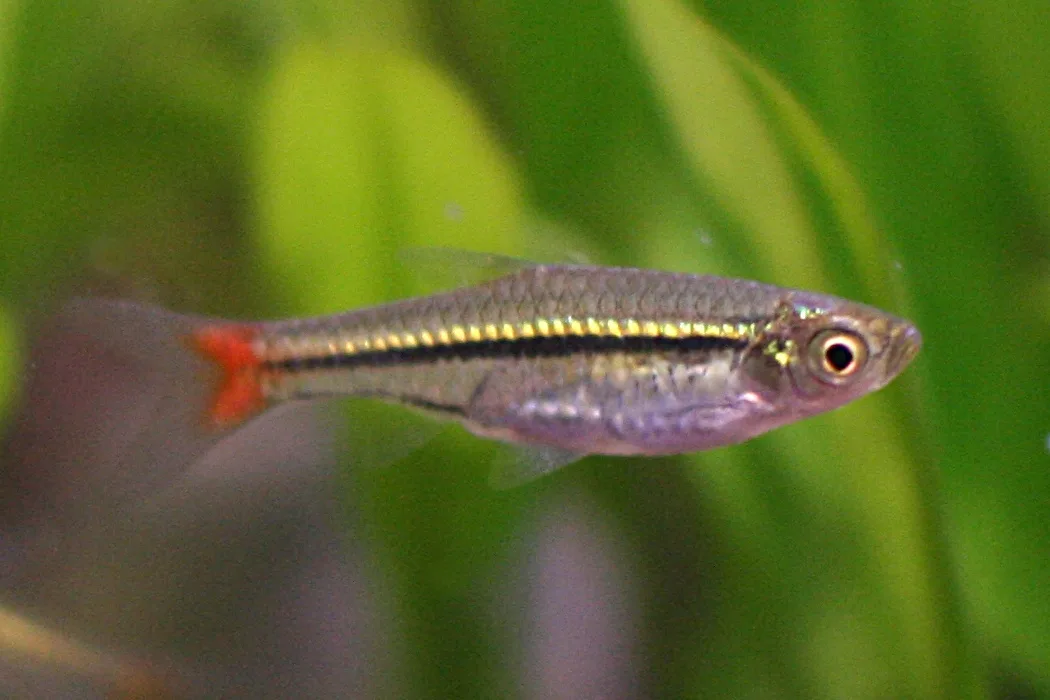
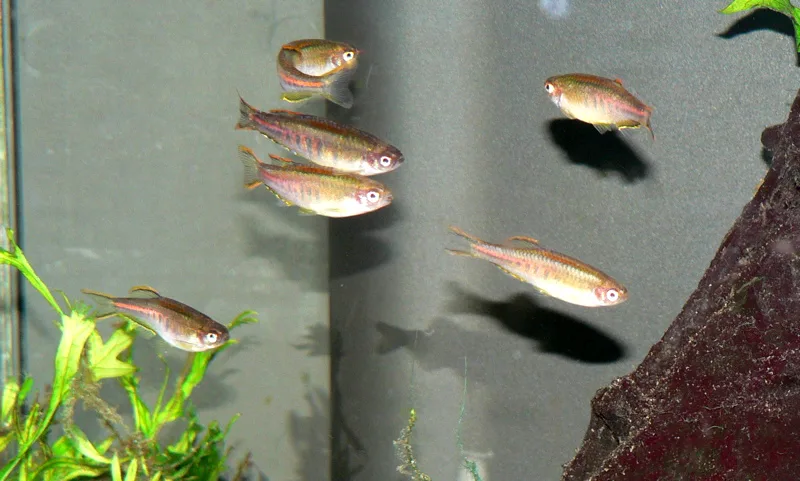
Microdevario kubotai reaches about 2 cm. The body is translucent, and the back and lateral line glow green to turquoise depending on the light. Males are slimmer, females deeper. In the trade the species long ran as Microrasbora kubotai. It is the same species.
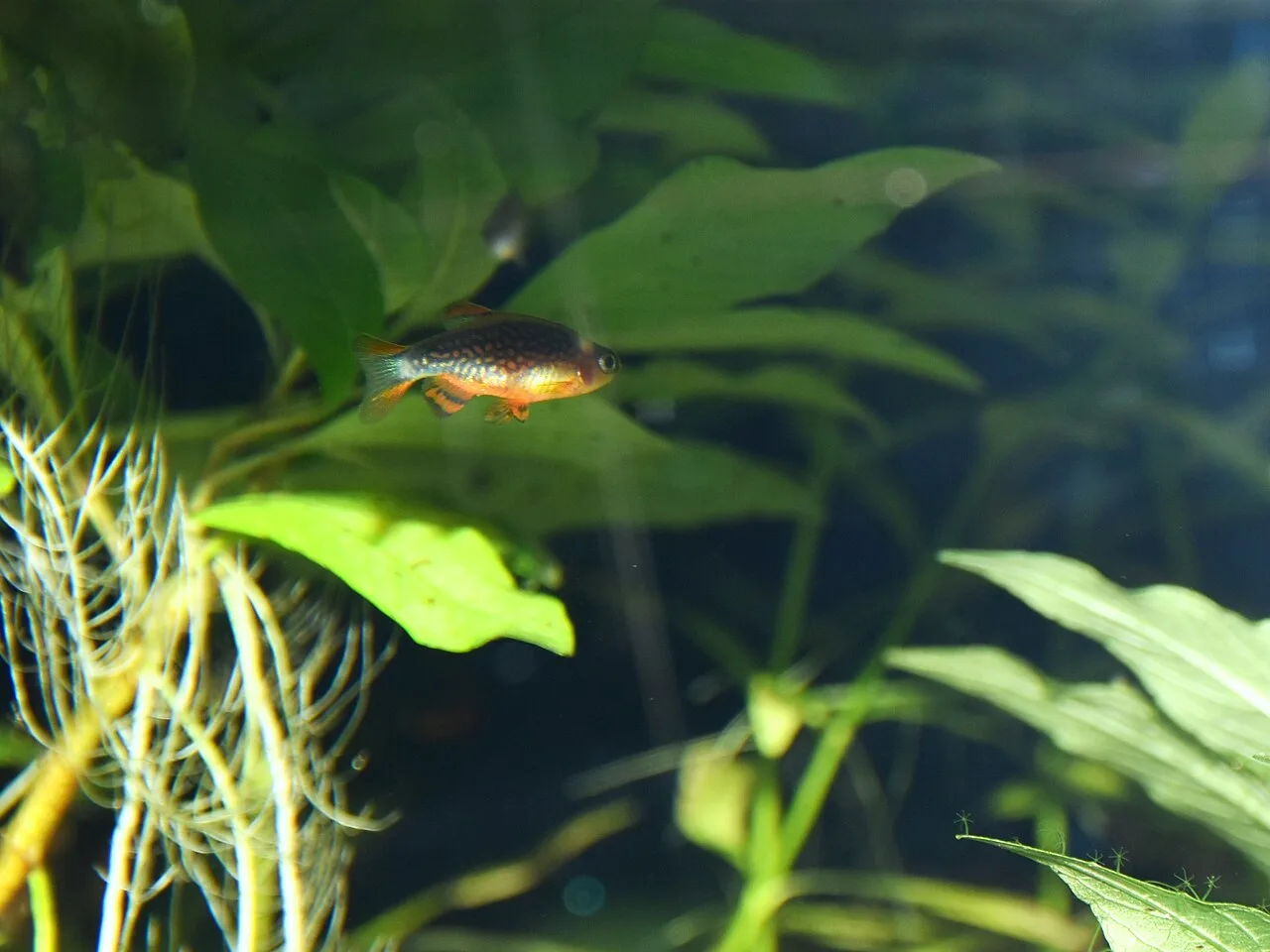
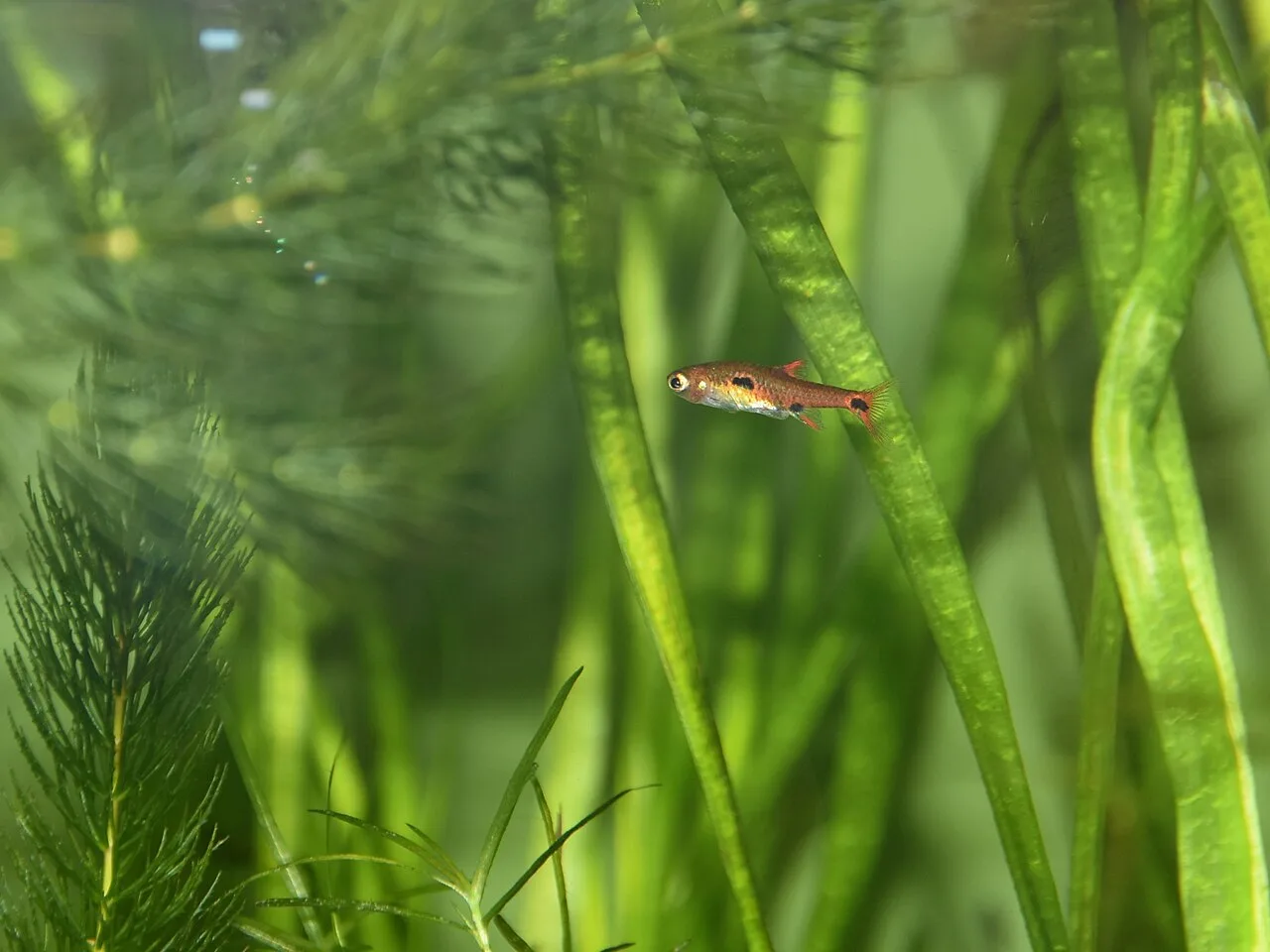
It is not the celestial pearl danio and not the red dwarf rasbora. Both wear spots or bars. The neon green rasbora shows only the green sheen.
Origin & habitat
This describes the origin, not how to furnish the aquarium.
Clear streams in Thailand and Myanmar. The countries stay a coarse origin. Moving, clean water with plants matches that.
Care
School
22 to 26 °C, pH 6.5 to 7.5. A group from ten, tanks from about 54 litres. Plants, gentle current, a dark bottom.
Company
Other very small fish and shrimp. Larger tetras, barbs and cichlids push it aside or eat it.
Diet
Very fine food. Brine shrimp nauplii, cyclops, fine flakes, micro granules. Several small feeds.
Behavior
A calm school in midwater. A few fish stay shy. The colour only comes in a larger group.
Reproduction
Egg scatterer without brood care in fine plants and moss. The parents eat only part of the spawn. In a well-established tank a few young get through.
Gallery
More species in this group

Similar water needs
Species with a similar temperature, a similar pH and a comparable adult size. Whether their behaviour fits as well is what the compatibility check is for.
