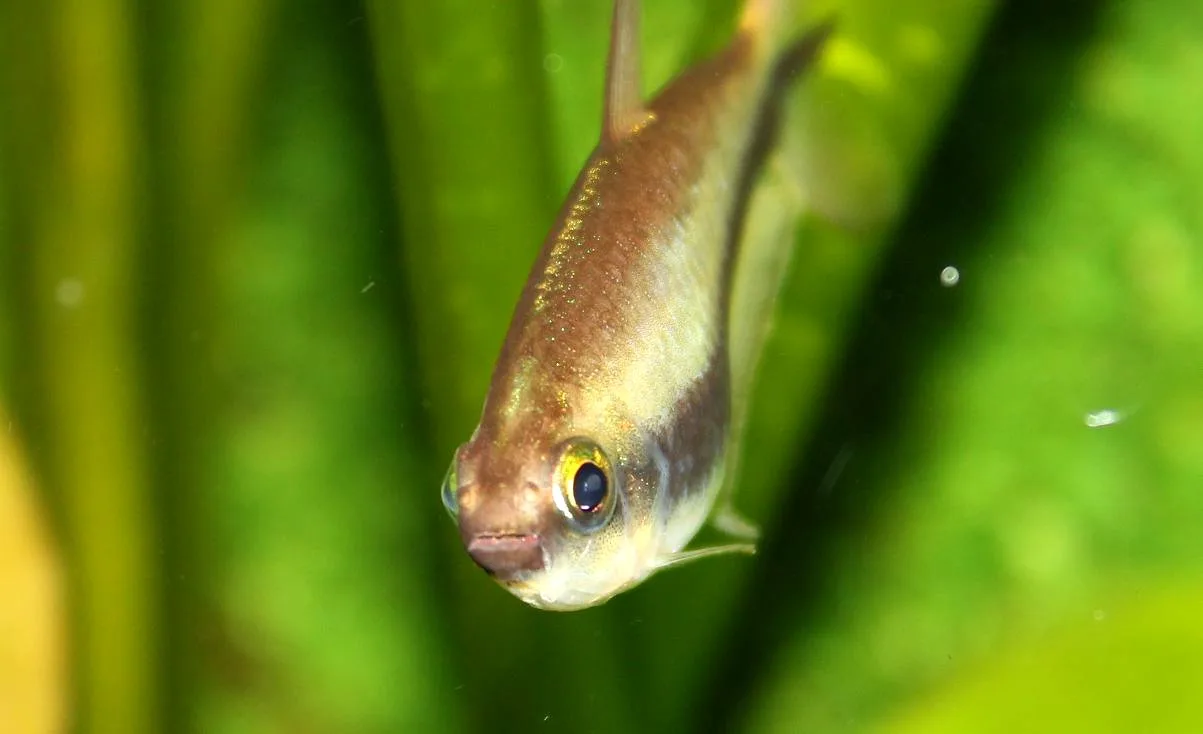
Red phantom tetra
Megalamphodus sweglesi
22 views
To 4 cm, from the Meta and the Muco. Not the black phantom tetra. Hyphessobrycon sweglesi is the synonym.
- Temperature
- 22 – 27 °C
- pH
- 6 – 7 pH
- General hardness
- 2 – 8 °dH
- Maximum size
- 4 cm
- Minimum group size
- 12
- Minimum tank size
- 60 L
3 min read · 461 words
Fresh water
Quick facts
Place in the aquarium
Highlighted are the water layer and the spots where the species usually stays in the tank.
- Middle water Usually stays in the middle of the tank, between bottom and surface.
- Dense plants Looks for dense planting as cover, retreat or grazing ground.
Shrimp in the tank
Shrimplets at risk
- Not shrimp safe
- Dwarf shrimp at risk
- Shrimplets at risk
- Shrimp safe
- Adult dwarf shrimp
- Safe
- Shrimplets
- Get eaten
- Safe from shrimp size
- about 1.5 cm
Adult dwarf shrimp are safe with the red phantom tetra. It grows to only about 4 cm, is very sociable and eats fine dry, live and frozen food. It does not take shrimp from about 1.5 cm.
Baby shrimp in open water can be eaten. In its preferred densely planted tank with shaded zones, however, they find many hiding places. Because the species likes very soft, acidic water, shrimp that tolerate such water fit best. The more fine structure lies on the bottom, the more young grow up, and food given in the evening distracts the fish as well.
Home & range
Hatched countries are where the species occurs. It lives in particular waters there, not across the whole country. The points name known waters for orientation, not collection sites.
- Country of origin
- Water for orientation
Native
Overview
The measurement at a pond near Puerto Gaitán was 28 °C, pH 5.5, hardness under 1 °dGH and °dKH, conductivity under 10 µS/cm. One point, not a care value. The literature disagrees on the preferred keeping temperature. Medium-hard, slightly alkaline water is named as possible, without a span.
Features
The red phantom tetra grows to 4 cm, by other figures 3.2 cm standard length. The body is delicate pink, reddish towards the back and golden towards the belly. Behind the head sits a very large, deep black, triangular to round shoulder spot. Depending on origin there are silvery transparent to red forms, and the red ones are thought to come from black water. Males have strongly red unpaired and pelvic fins and an enlarged, banner-like dorsal fin with a black tip. Females carry a smaller dorsal fin with a large black spot, a white upper edge and an orange lower edge.
Jacques Géry described the species in 1961. The name honours the American trader Kyle Swegle, who collected the holotype. Since 2024 the species has been in the genus Megalamphodus. The IUCN lists it as least concern.
The type locality is the Rio Muco in the upper Orinoco in Colombia. The body is shallow, its depth going 2.71 to 2.9 times into the standard length. Females can carry a black dorsal stripe with cream edges. Both 1961 and 1977 are given for the first description.
Origin & habitat
This describes the origin, not how to furnish the aquarium.
Rio Muco and upper Río Meta in Colombia. Colombia stays coarse.
The species comes from the Rio Muco and the upper Río Meta, Colombian tributaries of the Orinoco, and Venezuela is also named. It lives in ponds and small streams with clear or slightly stained, very soft, acidic water and densely vegetated banks. In a pond 80 km southeast of Puerto Gaitán pH 5.5, below 1 °dGH and below 10 µS/cm were measured at 28 °C. When threatened the species retreats into the plants.
Care
Groups from 12, with enough room for individual distance. The upper hardness for breeding is 4 °dGH and is a breeding limit, not a keeping span.
The species reached Germany in 1961. Groups from twelve fish and tanks at least 60, better 100 cm long are recommended, well planted, with open swimming room and shaded zones. It also tolerates medium-hard, slightly alkaline water. Temperature figures differ: 22 to 26 °C are given, but also 20 to 23 °C, and water that is too warm is considered the most common mistake. The species is undemanding and takes dry, fine live and frozen food.
Behavior
Very gregarious. The males in particular need distance.
The fish are very sociable. Males hold small, temporary territories and fight with fin displays.
Reproduction
Breeding conditions resemble those of the black phantom. A separate protocol is not copied from that.
Breeding resembles that of the black phantom tetra but is less productive. Hardness should not exceed 4 °dGH, and 20 to 22 °C is recommended.
More species in this group
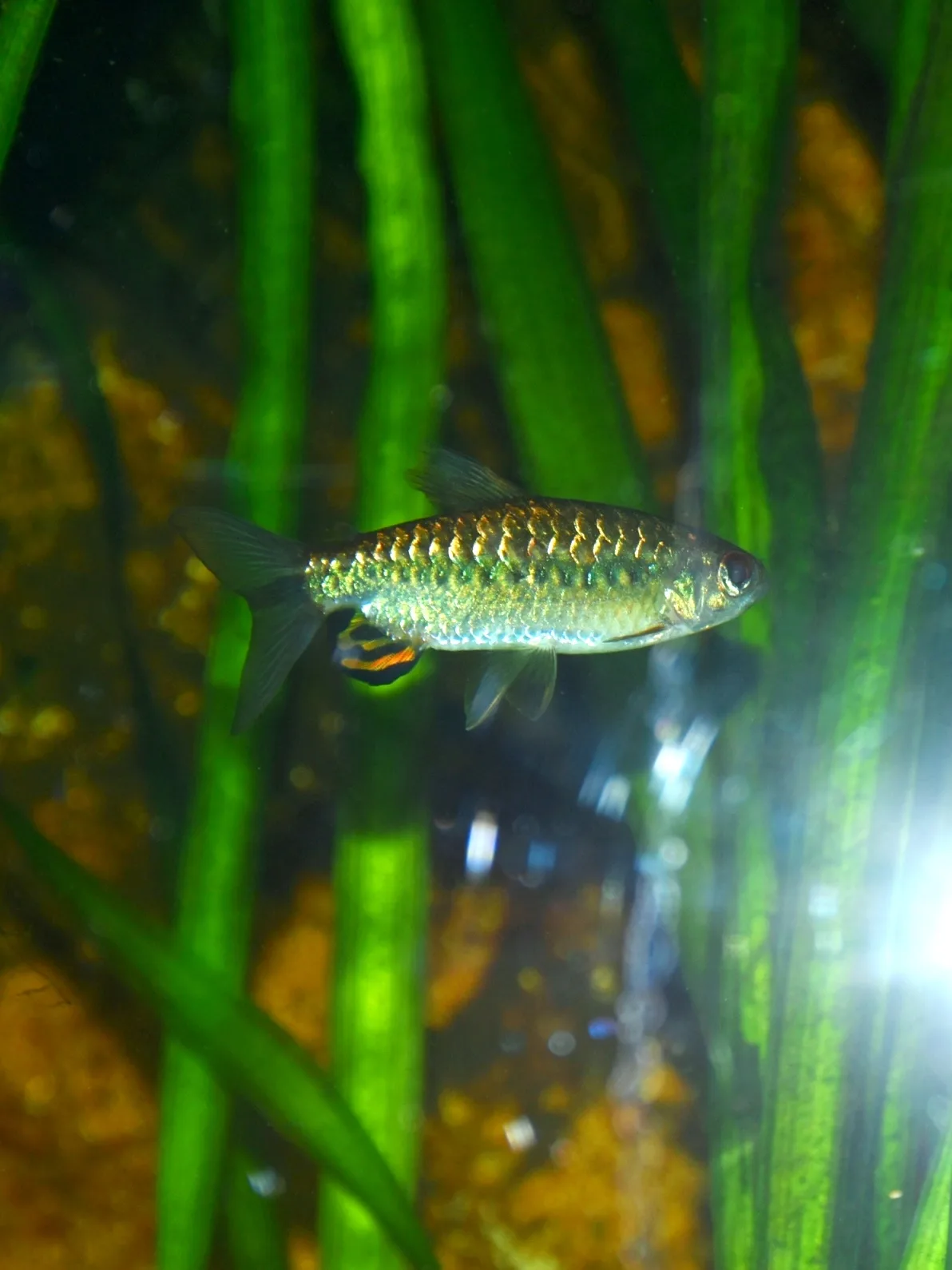
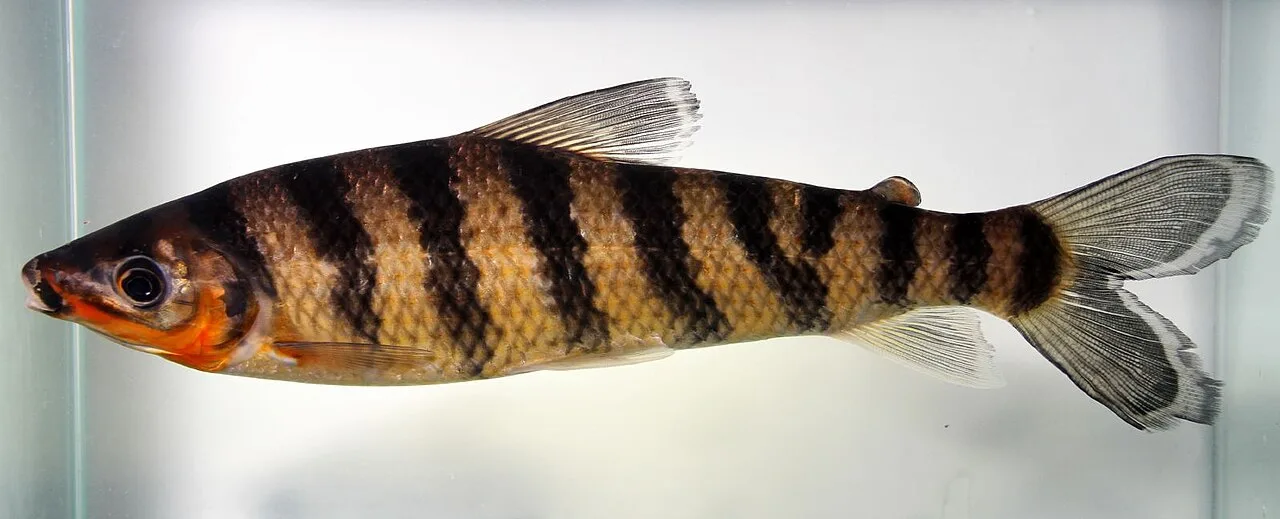


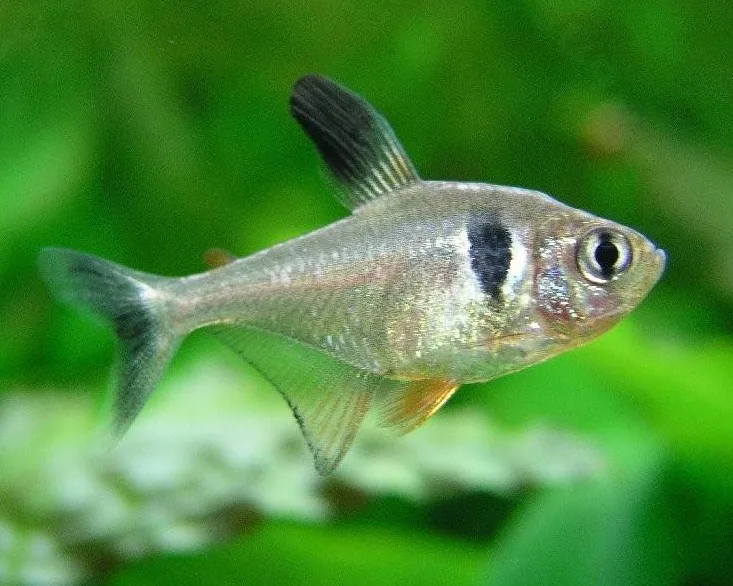

Similar water needs
Species with a similar temperature, a similar pH and a comparable adult size. Whether their behaviour fits as well is what the compatibility check is for.