Three-striped pencilfish
Nannostomus trifasciatus
24 views
A slender pencilfish with three dark bands and red patches. It stands quietly among plants and needs a group.
- Temperature
- 23 – 28 °C
- pH
- 5.5 – 7 pH
- General hardness
- 1 – 10 °dH
- Maximum size
- 5 cm
- Minimum group size
- 8
- Minimum tank size
- 70 L
4 min read · 604 words
Fresh water
Quick facts
Place in the aquarium
Highlighted are the water layer and the spots where the species usually stays in the tank.
- Upper water Usually stays in the top third of the tank.
- Middle water Usually stays in the middle of the tank, between bottom and surface.
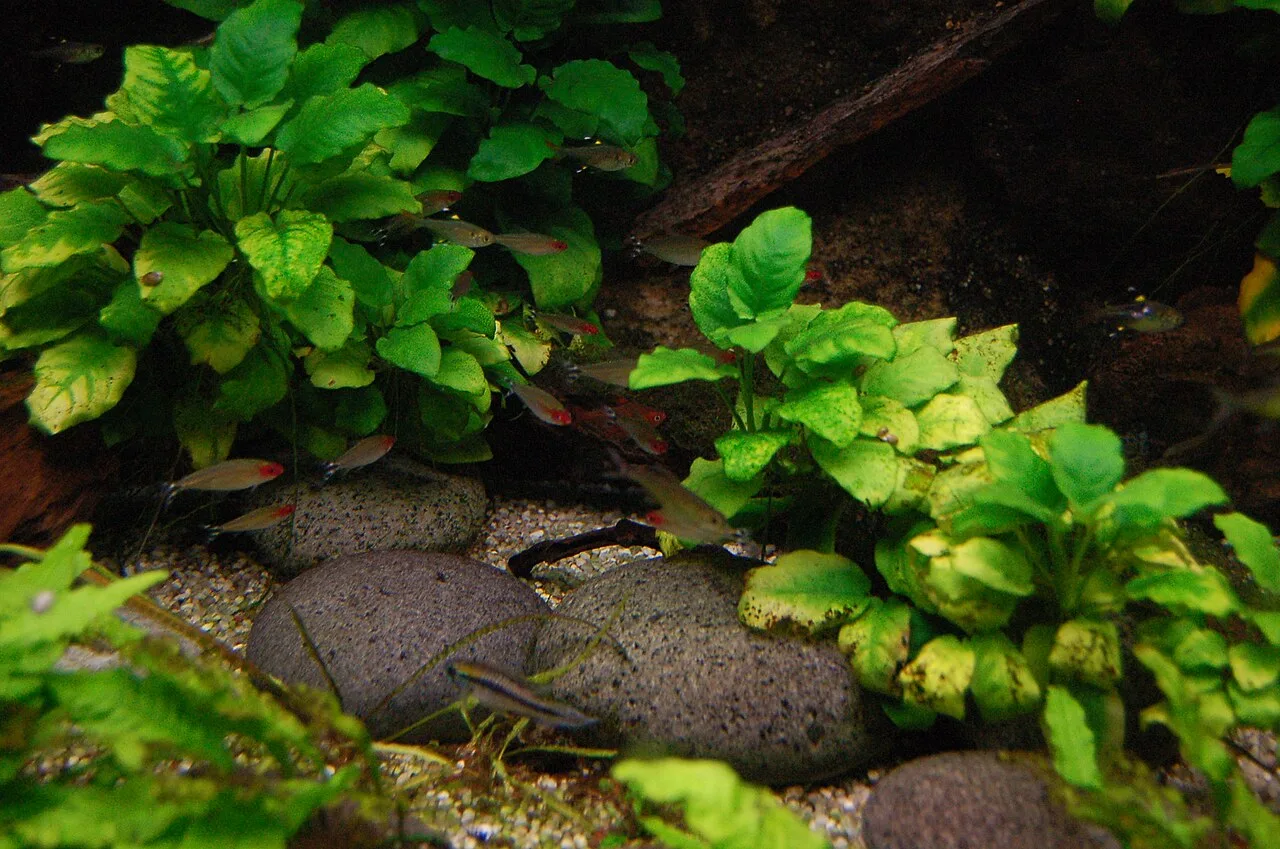
- Dense plants Looks for dense planting as cover, retreat or grazing ground.
Shrimp in the tank
Shrimplets at risk
- Not shrimp safe
- Dwarf shrimp at risk
- Shrimplets at risk
- Shrimp safe
- Adult dwarf shrimp
- Safe
- Shrimplets
- Get eaten
- Safe from shrimp size
- about 1.5 cm
Adult dwarf shrimp are safe from the three-lined pencilfish. It grows to at most 6 cm, is very slender and has a small, terminal mouth. It eats mainly insects near the surface and grazes biofilm, so shrimp from about 1.5 cm are too large for it. Freshly hatched young, however, can be caught.
Because it mostly stays in the middle and upper water, many young survive in a densely planted tank with moss on the bottom. For strong breeding a separate tank is still safer.
Home & range
Hatched countries are where the species occurs. It lives in particular waters there, not across the whole country. The points name known waters for orientation, not collection sites.
- Country of origin
- Water for orientation
Native
- Bolivia
- Range: northern Bolivia.
Overview
Nannostomus trifasciatus reaches about 5 cm. Three dark stripes run over the pale body, often with red fields between them. At night the pattern changes. Males are slimmer and more colourful, females deeper. The species holds itself level and is not the oblique hockeystick pencilfish.
In a school and against a dark bottom the colour comes. On pale gravel and as a single fish it looks pale and anxious.
Features
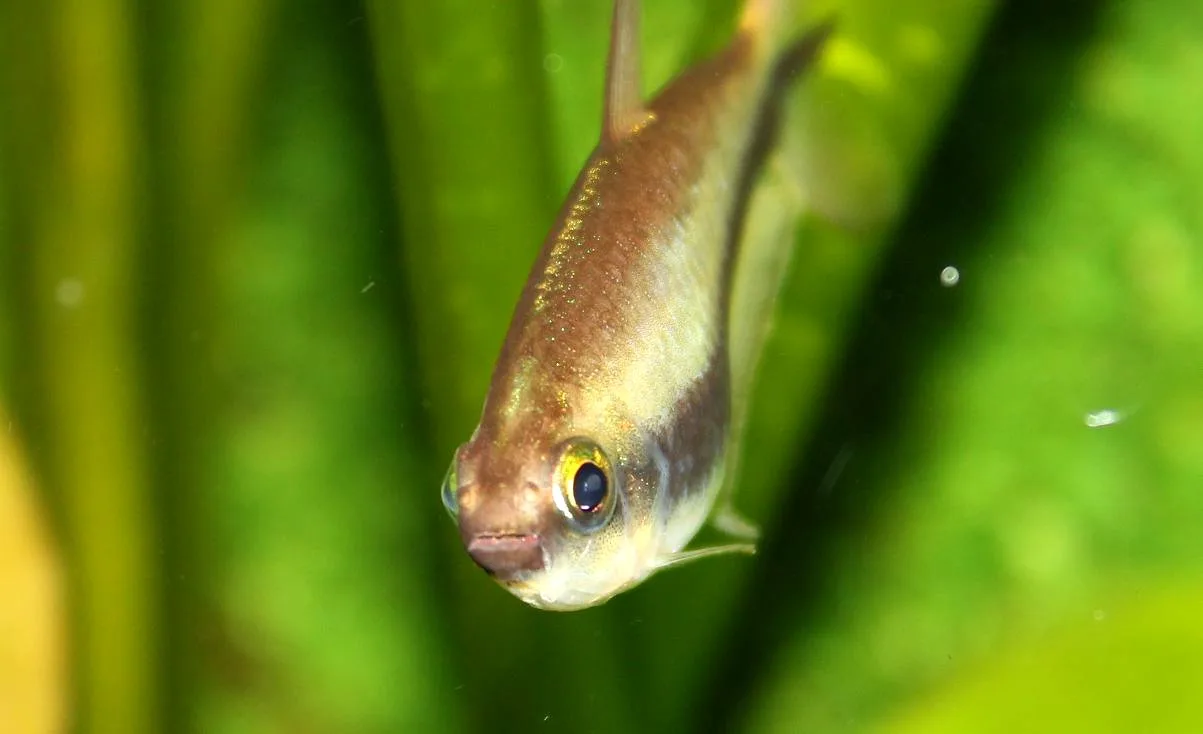
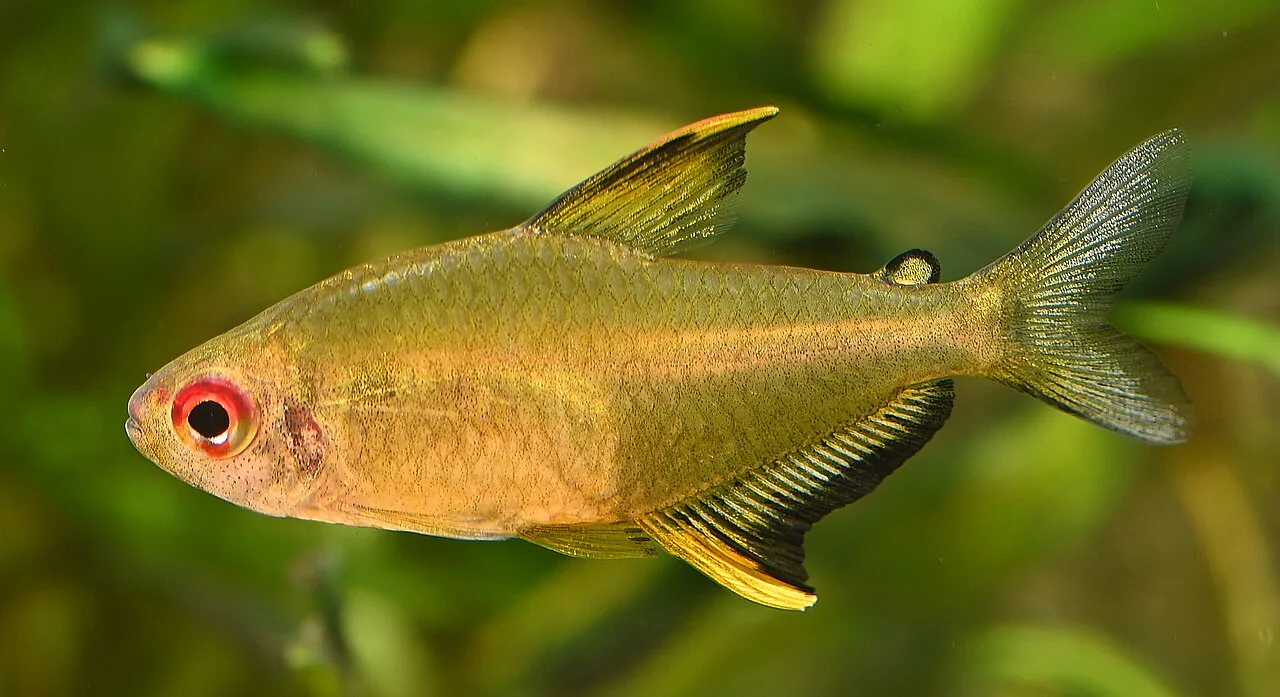
The three-lined pencilfish is one of the larger Nannostomus species and reaches at most 6 cm. The body is very slender and spindle-shaped, five times as long as deep, and the fish swim horizontally. The top of the head and the back are olive, the belly white. A black band runs from the tip of the snout to the lower caudal peduncle, and a second one starts above the eye. Between the upper and middle bands the fish are golden. Red spots sit on the dorsal, anal and pelvic fins and on the caudal peduncle. An adipose fin may be present or absent. At night the fish turn greenish grey to yellowish grey with three broad dark bars.
The pineal hormone melatonin controls the change to the night pattern. The sexes differ less than in any other species of the genus. The species is often confused with the smaller, stockier N. marginatus.
Name
Franz Steindachner described the species in 1876. Nannostomus means small mouth, trifasciatus with three bands. Because of its large range it is very variable, and Poecilobrycon erythrurus and P. vittatus are now synonyms.
Origin & habitat
This describes the origin, not how to furnish the aquarium.
Slow, plant-rich waters of the Amazon basin, often soft and slightly acidic. The origin stays coarse. Dim light, leaf litter and fine plants match that better than a glaring open area.
The species occurs in Brazil, Colombia, Peru, northern Bolivia and the Guianas. The species lives in slow-flowing, slightly acidic water. In the Rio Negro it inhabits large swamps where tributaries meet the main river, and in floods it moves into the inundated forest. In the dry season it is often trapped in small lakes left behind. By day it stays in the middle to upper water, at night it rests near the surface. The IUCN lists it as least concern.
Care
Tank
23 to 28 °C, pH 5.5 to 7. A school from eight, tanks from about 70 litres, densely planted, little current, with a cover. Large tankmates are too much. Calm small tetras and corydoras fit.
Night pattern
The bands can break into spots in the dark. That is normal and not a disease, as long as the fish show the longitudinal pattern again the next day and feed.
Diet
Fine food in midwater. Cyclops, brine shrimp, small granules, crushed flakes. Food that is too coarse is ignored. Several small feeds, because the fish do not compete with fast barbs.
Behavior
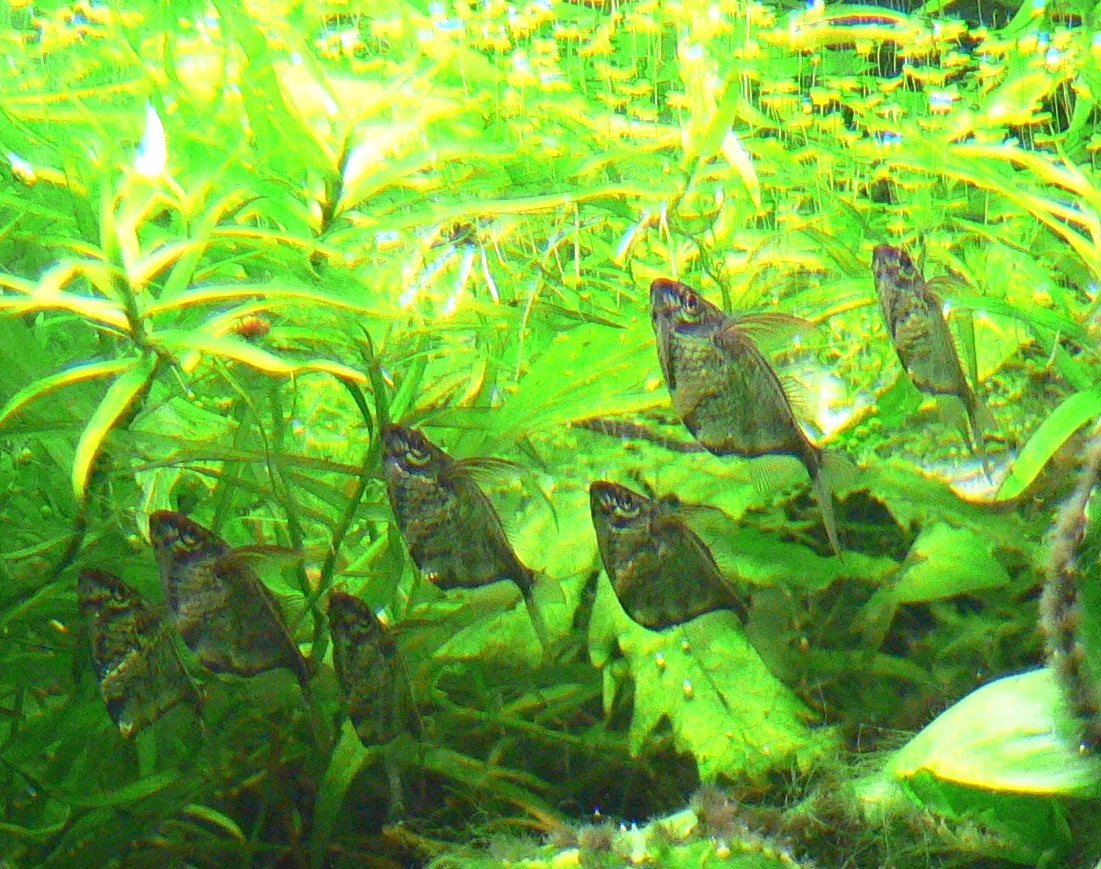
A quiet school with visual contact. The males show small territories among the stems, without ruling the tank. Too few fish stand singly at the glass. When startled they move into the plants.
Reproduction
Egg scatterer in fine plants. The eggs are small, the parents eat them. Breeding works in a separate, soft tank. In a community tank young are the exception.
Spawning takes place by day among plant leaves, and the adhesive eggs mostly stick to plants. Each spawning yields 30 to 100 eggs, which hatch after 24 to 72 hours. Well-fed parents with enough cover do not eat the eggs, and the young are found among floating plants. The species is seldom bred and never raised commercially, so the trade relies entirely on wild-caught fish. In the wild it feeds mainly on insects near the surface and grazes biofilm with microorganisms and algae.
More species in this group






Similar water needs
Species with a similar temperature, a similar pH and a comparable adult size. Whether their behaviour fits as well is what the compatibility check is for.