Bigclaw river shrimp
Macrobrachium carcinus
2 views
The largest freshwater shrimp of the American tropics, up to 30 cm long. Unsuitable for a community tank.
- Temperature
- 22 – 28 °C
- pH
- 7 – 8 pH
- General hardness
- 8 – 20 °dH
- Maximum size
- 30 cm
- Social behavior
- Solitary
- Diet
- Omnivore
1 min read · 167 words
Fresh water, larvae in salt or brackish water
Quick facts
Further published values
- Minimum tank size
- 300 L
Place in the aquarium
Highlighted are the water layer and the spots where the species usually stays in the tank.
- Near the bottom Mostly stays just above the bottom. Food has to reach the substrate.
- Rocks and caves Needs caves, crevices or rockwork as hiding place, territory or spawning site.
Home & range
Hatched countries are where the species occurs. It lives in particular waters there, not across the whole country. The points name known waters for orientation, not collection sites.
- Country of origin
- Water for orientation
Native
- Florida
- Northern edge of a range that reaches southern Brazil.
Overview
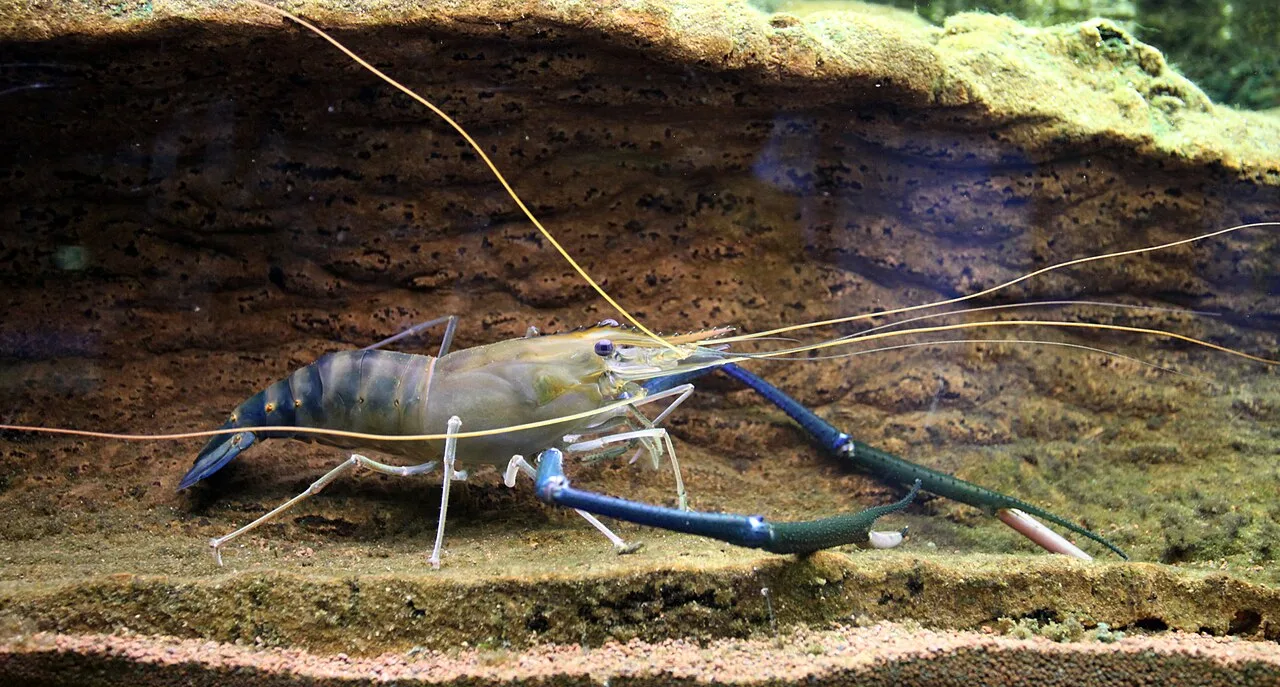
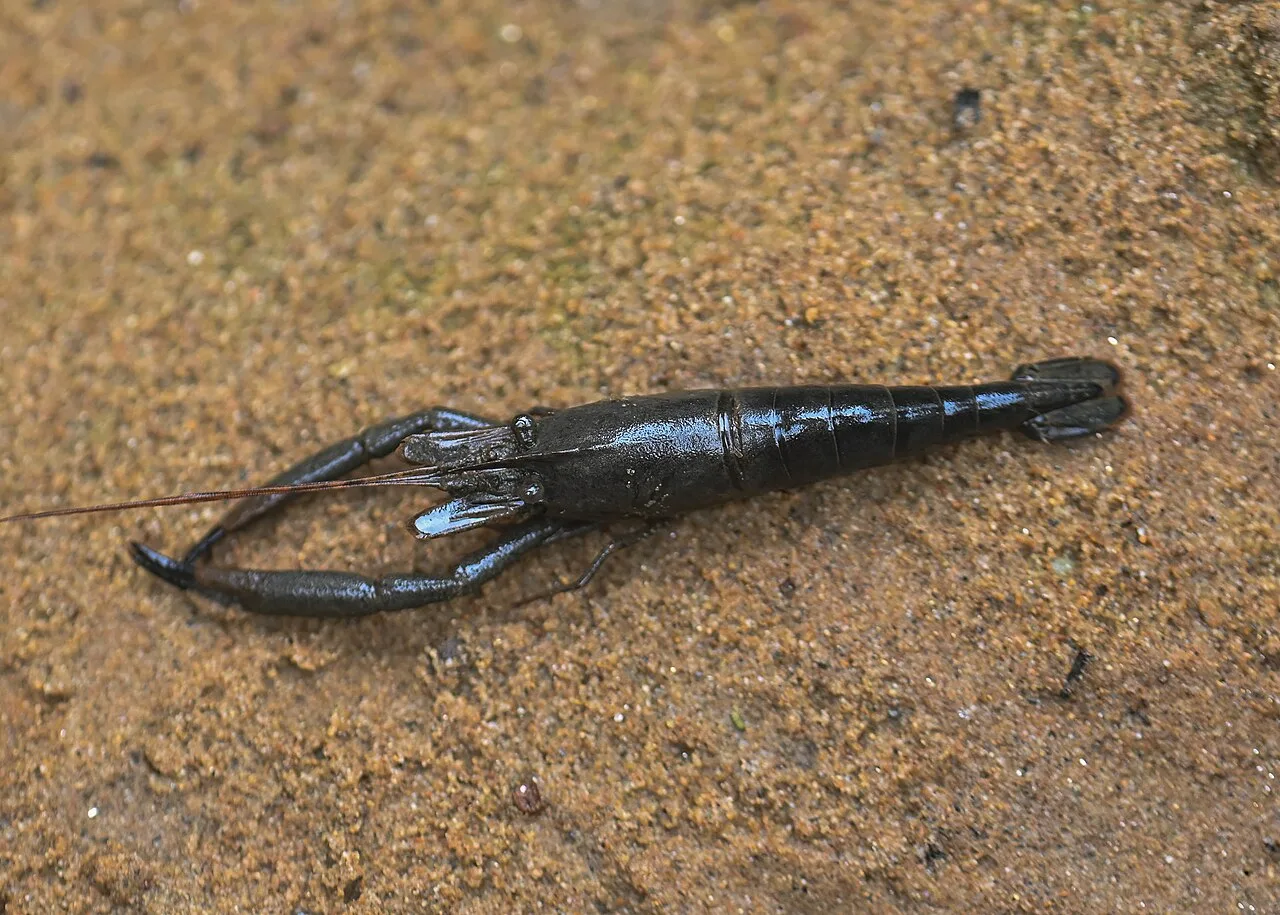
Macrobrachium carcinus reaches up to 30 cm and 850 g; even larger animals have been reported. The body is light brown to yellowish with dark brown stripes. The claws are unusually long and narrow so that it can reach into crevices for food. They can be blue or green.
Range and habitat
This describes the origin, not how to furnish the aquarium.
Streams, rivers and creeks from Florida to southern Brazil. In the São Francisco basin it is an important food prawn under the name pitu.
Keeping
Tank
Only for very large tanks from about 300 litres, kept singly, with caves and current. The animals climb and escape; the cover must be heavy and tight.
Water
22 to 28 °C, pH 7 to 8, GH 8 to 20 °dH.
Companions
On its own. Fish, shrimp and snails are eaten.
Diet
Omnivore: molluscs, small fish, algae, leaf litter and insects. In the tank food tablets, mussel meat, fish and vegetables.
Behaviour and moulting
Solitary and territorial. With its long claws it can grip hard.
Reproduction and larvae
The larvae need brackish water to develop and later migrate up the rivers. There are no offspring in a freshwater aquarium.
Gallery
More species in this group
Similar water needs
Species with a similar temperature, a similar pH and a comparable adult size. Whether their behaviour fits as well is what the compatibility check is for.