Kaira river prawn
Macrobrachium dayanum
3 views
A medium-sized long-armed prawn from northern India, also sold as ringhand or red-claw shrimp. It breeds in fresh water.
- Temperature
- 20 – 27 °C
- pH
- 6.5 – 8 pH
- General hardness
- 5 – 15 °dH
- Maximum size
- 9 cm
- Social behavior
- Territorial
- Diet
- Carnivore
2 min read · 268 words
Fresh water
Quick facts
Further published values
- Minimum tank size
- 60 L
Place in the aquarium
Highlighted are the water layer and the spots where the species usually stays in the tank.
- Near the bottom Mostly stays just above the bottom. Food has to reach the substrate.
- Dense plants Looks for dense planting as cover, retreat or grazing ground.
- Rocks and caves Needs caves, crevices or rockwork as hiding place, territory or spawning site.
Home & range
Hatched countries are where the species occurs. It lives in particular waters there, not across the whole country. The points name known waters for orientation, not collection sites.
- Country of origin
- Water for orientation
Native
Overview
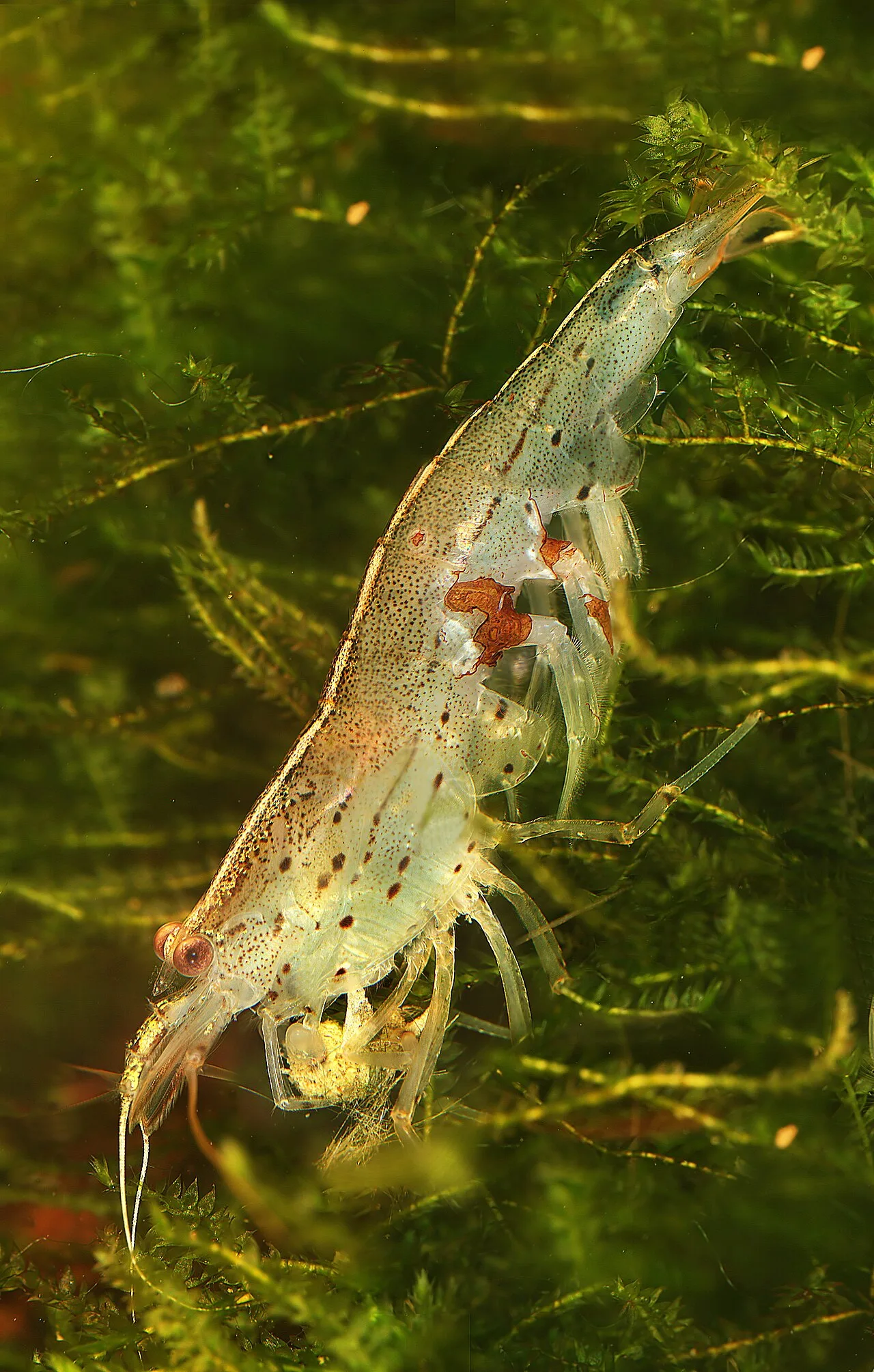
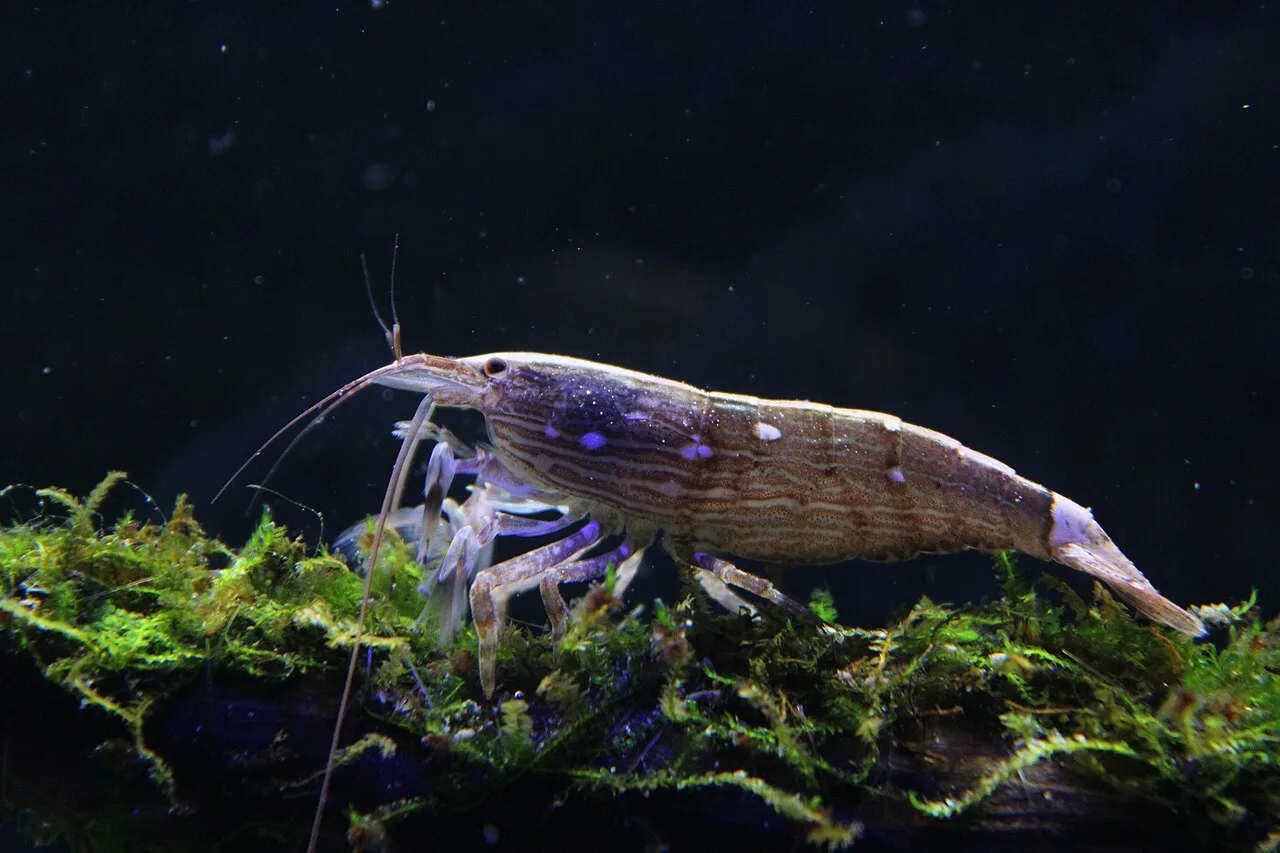
Macrobrachium dayanum reaches 7 to 9 cm. Adults are brownish grey with clear stripes on the legs and antennae. Subadults carry red-brown rings on the claw legs and often a red-brown stripe on the rostrum. In captivity the brown colour often fades after moults, probably because natural food is missing.
Name
In the trade it is called ringhand shrimp, like Macrobrachium assamense, as well as chocolate or red-claw shrimp.
Range and habitat
This describes the origin, not how to furnish the aquarium.
Widespread in northern India, plus one record from southern Nepal. Whether it is native to Myanmar is open. In Germany it was found in the Erft, a river warmed by power plant water, and in the Gillbach, probably after aquarium animals were released. Animals from the tank must never reach natural waters.
Keeping
Tank
From about 60 litres, many caves, stones and wood. Several hiding places for each animal.
Water
20 to 27 °C, pH 6.5 to 8, GH 5 to 15 °dH. Do not forget a cover.
Companions
Not with dwarf shrimp, snails or fish that rest on the bottom at night. Best in a species tank or with fast fish in the upper water.
Diet
Omnivore with a preference for animal food. It prefers small invertebrates such as worms, snails and aquatic insects. In the tank frozen food, tablets, granules and some vegetables.
Behaviour and moulting
Nocturnal and territorial, especially the males. Small tank mates are regarded as prey.
Reproduction and larvae
Freshly laid eggs are olive green, then turn pale yellow, brownish yellow and finally dull white when the yolk is used up. The larvae hatch in groups, are yellowish brown, about 6 mm long and already almost resemble finished juveniles. They need no salt water. Breeding succeeds in fresh water.
More species in this group
Similar water needs
Species with a similar temperature, a similar pH and a comparable adult size. Whether their behaviour fits as well is what the compatibility check is for.