
Bamboo shrimp
Atyopsis moluccensis
32 views
A fan shrimp from the warm lowlands of South and Southeast Asia. Adults stand in strong current and filter.
- Temperature
- 24 – 26 °C
- pH
- 6.5 – 7.5 pH
- General hardness
- 5 – 15 °dH
- Maximum size
- 8.6 cm
- Social behavior
- Group
- Diet
- Omnivore
2 min read · 275 words
Fresh water, larvae in salt or brackish water
Quick facts
Further published values
- Minimum tank size
- 25 L
Place in the aquarium
Highlighted are the water layer and the spots where the species usually stays in the tank.
- Middle water Usually stays in the middle of the tank, between bottom and surface.
- Wood and roots Uses roots as shelter or grazes biofilm from them.
Home & range
Hatched countries are where the species occurs. It lives in particular waters there, not across the whole country. The points name known waters for orientation, not collection sites.
- Country of origin
- Water for orientation
Native
Overview
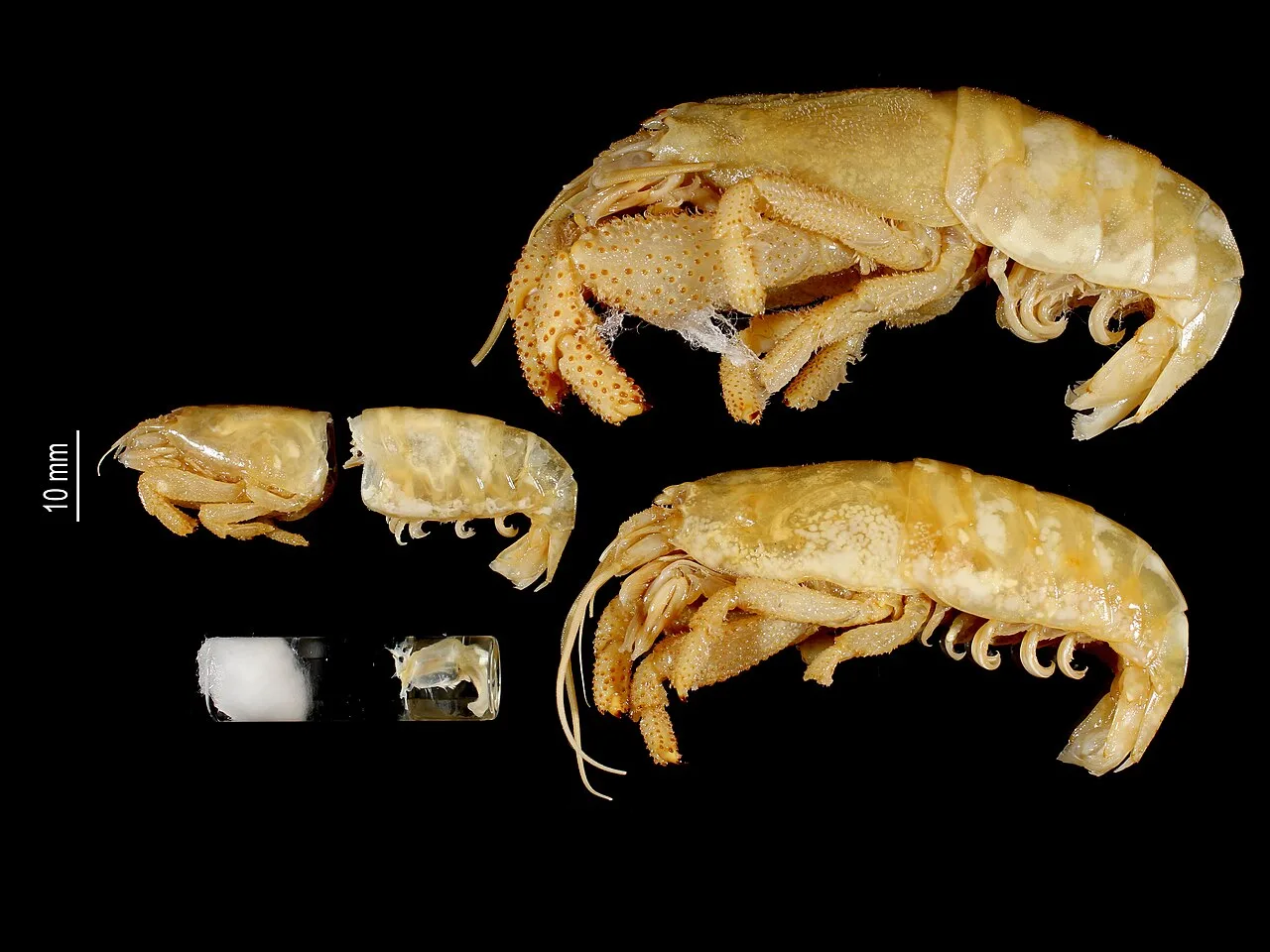
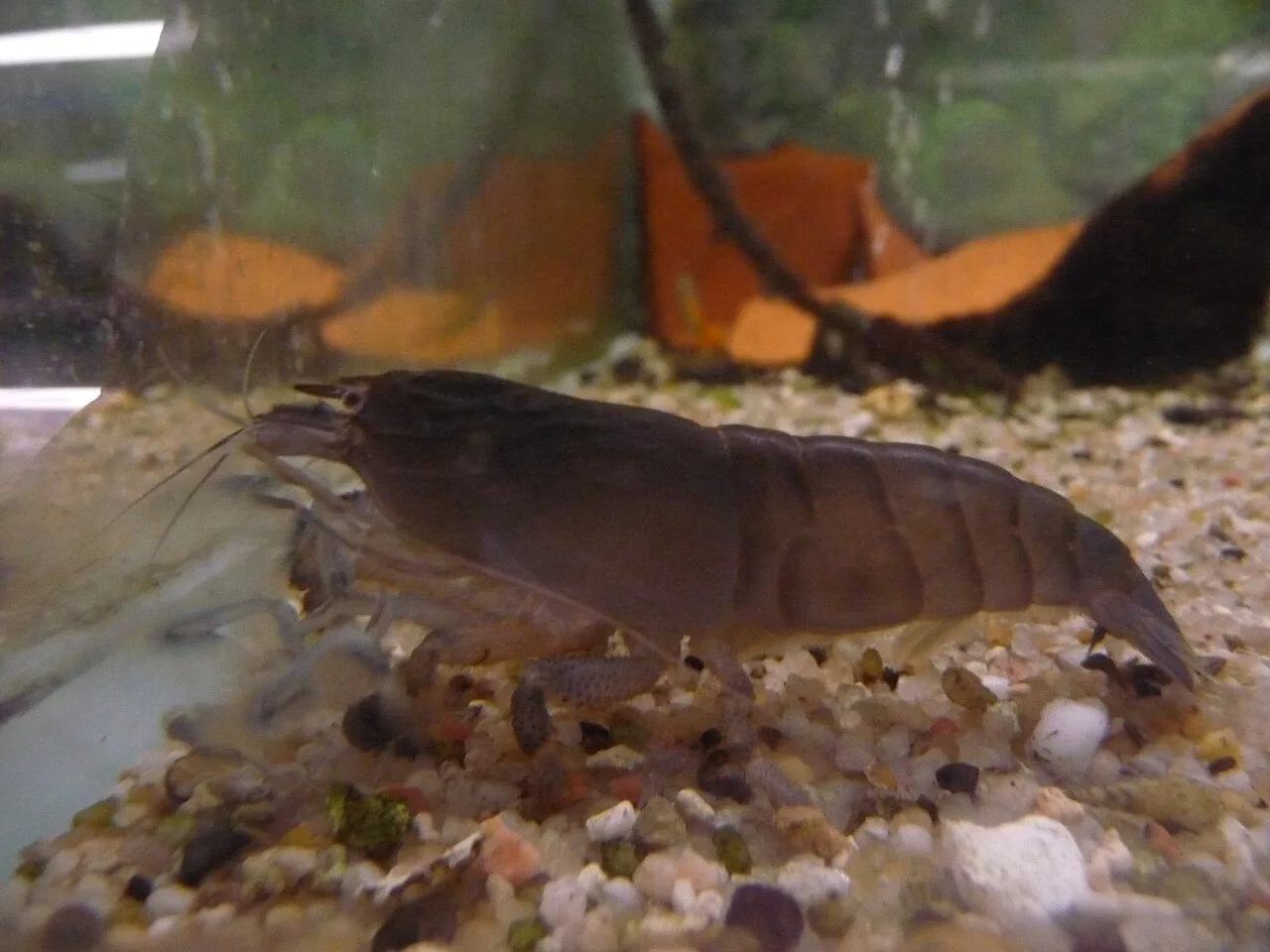
Atyopsis moluccensis, the bamboo shrimp, belongs to the genus Atyopsis. Up to 8.6 cm, very variable in colour, light to dark brown, with side stripes, broken patterns or a pale dorsal stripe. Regional colour types were formerly treated wrongly as separate species. Placing them in one species came late, partly because it does not breed in captivity.
Range and habitat
This describes the origin, not how to furnish the aquarium.
South and Southeast Asia, from India and Sri Lanka through Thailand and the Malay Peninsula and Indonesia to New Guinea. The name comes from the Moluccas. Adults live in flowing water and prefer very strong current. Juveniles stand in calmer water. Despite the name mountain-stream shrimp it lives only in warm lowland, not in the mountains. India, Sri Lanka, Thailand and Indonesia stay coarse. The Malay Peninsula and New Guinea are not added as further national outlines.
Keeping
In the trade it is also called fan-hand shrimp. It needs strongly moving water with many suspended particles, algae and tiny animals. Filters strip the food from the water, so continual small feeds help. Captive animals sometimes grub in the substrate or take sessile food. Whether they do that in the wild is unknown.
Diet
The first two pairs of walking legs carry long bristles. The fans stand in the current and are drawn under the body at intervals. The bristles are often cleaned. Folded, the legs also serve for walking and bracing.
Behaviour and moulting
Adult animals seek the strongest current and stand there to filter.
Reproduction and larvae
The details are unknown. The larvae probably drift downstream and develop in sea or brackish water before returning to fresh water. Captive breeding has been reported. It must not be released from the aquarium into natural waters.
Gallery
More species in this group
Similar water needs
Species with a similar temperature, a similar pH and a comparable adult size. Whether their behaviour fits as well is what the compatibility check is for.





