Vampire shrimp
Atya gabonensis
33 views
A large fan shrimp on both sides of the Atlantic. The larvae need sea or brackish water. About 14 cm.
- Temperature
- 23 – 29 °C
- pH
- 6.5 – 7.8 pH
- General hardness
- 6 – 15 °dH
- Maximum size
- 14 cm
- Social behavior
- Group
- Diet
- Omnivore
2 min read · 292 words
Fresh water, larvae in salt or brackish water
Quick facts
Further published values
- Minimum tank size
- 50 L
Place in the aquarium
Highlighted are the water layer and the spots where the species usually stays in the tank.
- Middle water Usually stays in the middle of the tank, between bottom and surface.
- Wood and roots Uses roots as shelter or grazes biofilm from them.
- Rocks and caves Needs caves, crevices or rockwork as hiding place, territory or spawning site.
Home & range
Hatched countries are where the species occurs. It lives in particular waters there, not across the whole country. The points name known waters for orientation, not collection sites.
- Country of origin
- Water for orientation
Native
Overview
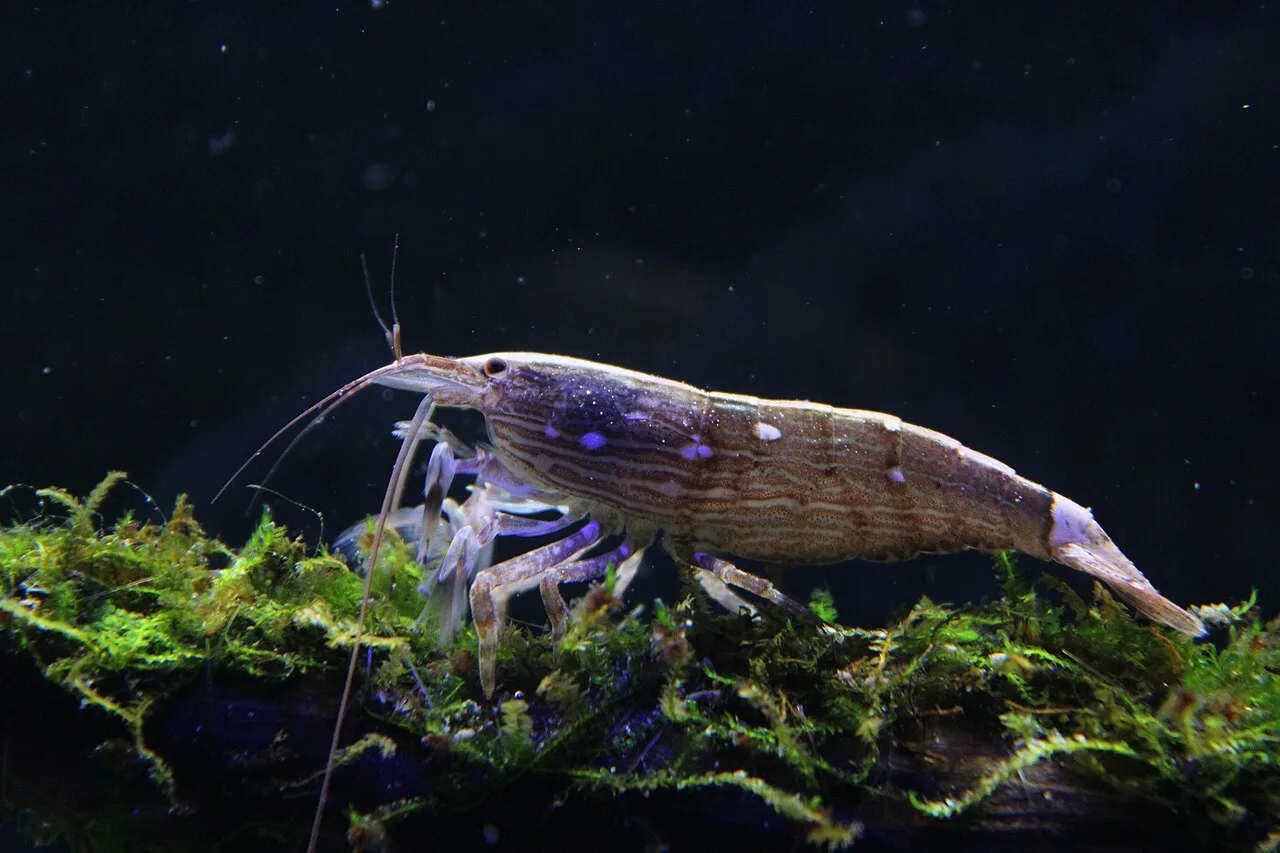
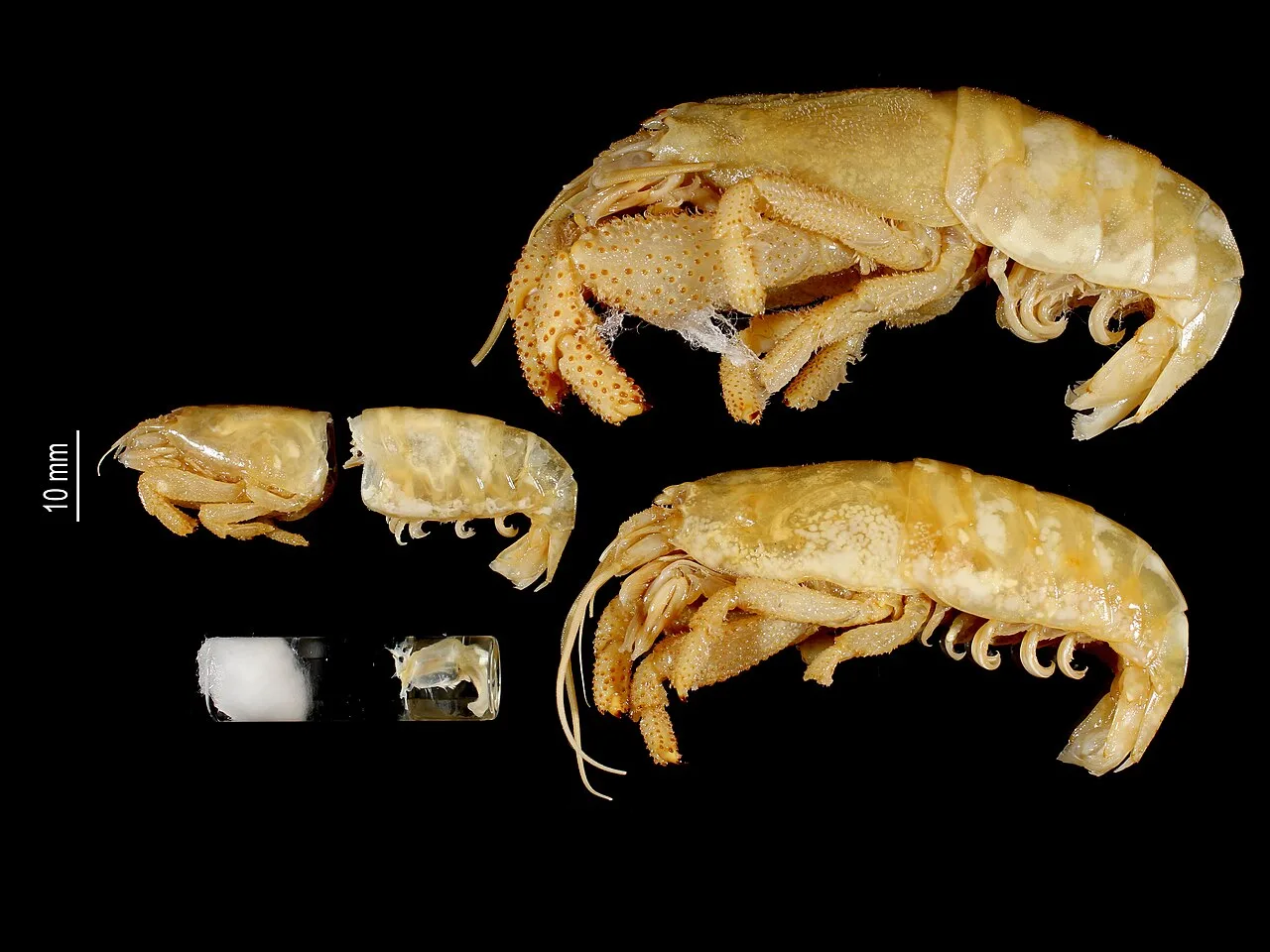
Atya gabonensis, the vampire shrimp, belongs to the genus Atya. It grows to about 14 cm. Females have larger abdominal plates at the start of the abdomen, and their claws are not quite as large as those of the males. Colour runs from whitish and pale blue through reddish brown to a strong blue and depends mainly on the substrate. On a dark ground the animals are the most strongly blue. With each moult the colour moves closer to the substrate. The greatly enlarged third walking legs of the males and the wrinkled carapace gave the German name monster shrimp. Atya crassa carries rows of spines on the folds and is a different species. Juveniles are often bluish, older animals often brownish.
Range and habitat
This describes the origin, not how to furnish the aquarium.
Both sides of the Atlantic. West Africa from Senegal south to the Congo, South America from Venezuela to Brazil. Rocky and stony streams up into the headwaters. Senegal, Venezuela and Brazil stay coarse. Congo stays in the text, because it is unclear which state is meant.
Keeping
With the third walking legs it holds on in the strongest current. It is harmless to other tank inhabitants.
Diet
Like the other fan shrimp it filters plankton with bristles on the first two pairs of walking legs. The fans stand in the current and are drawn under the body. The bristle apparatus is cleaned often.
Behaviour and moulting
The colour change with the substrate is tied to the moult, not to a food.
Reproduction and larvae
Spawning in the fresh water of flowing streams. The larvae drift to the estuary and need sea or brackish water. The young then migrate back upstream. In the aquarium females usually carry eggs, but the larvae do not develop without brackish or sea water. It must not be released from the aquarium into natural waters.
Gallery
More species in this group
Similar water needs
Species with a similar temperature, a similar pH and a comparable adult size. Whether their behaviour fits as well is what the compatibility check is for.