Amano shrimp
Caridina multidentata
25 views
A freshwater shrimp from south-central Japan. The larvae need salt water. Caridina japonica is the outdated name.
- Temperature
- 18 – 28 °C
- pH
- 6.5 – 7.5 pH
- General hardness
- 5 – 20 °dH
- Maximum size
- 5 cm
- Social behavior
- Group
- Diet
- Omnivore
2 min read · 289 words
Fresh water, larvae in salt or brackish water
Quick facts
Further published values
- Minimum group size
- 5
- Minimum tank size
- 30 L
Place in the aquarium
Highlighted are the water layer and the spots where the species usually stays in the tank.
- Near the bottom Mostly stays just above the bottom. Food has to reach the substrate.
- Dense plants Looks for dense planting as cover, retreat or grazing ground.
- Wood and roots Uses roots as shelter or grazes biofilm from them.
Home & range
Hatched countries are where the species occurs. It lives in particular waters there, not across the whole country. The points name known waters for orientation, not collection sites.
- Country of origin
- Water for orientation
Native
Overview
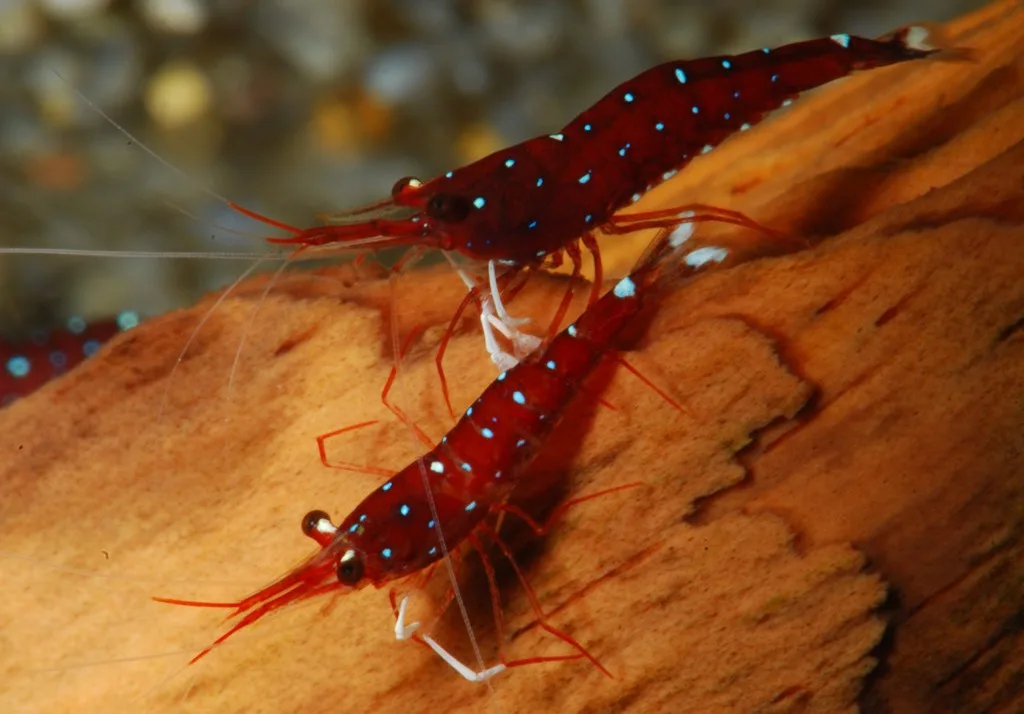
Caridina multidentata, Yamato numaebi in Japanese, is also called Yamatonuma shrimp, Amano shrimp and Japanese freshwater shrimp. It belongs to the Atyidae. Caridina japonica is an older synonym and is still seen in the trade. The body is slightly translucent, with dots in lines along the sides. In water rich in humic substances it can look reddish brown. It grows to at most 5 cm, and males usually stay smaller. In the aquarium it can live up to 15 years.
Range and habitat
This describes the origin, not how to furnish the aquarium.
The southern part of central Japan, in rivers. Newly hatched larvae are washed to the sea and only migrate back up once they reach at least one centimetre. Japan stays a coarse origin, without a filled outline. Reports of breeding in pure fresh water probably concern a similar species from eastern Taiwan. That second species is not listed here as Caridina multidentata.
Keeping
Keeping became known through Takashi Amano. It picks up gravel up to about 0.5 mm and grazes it all over. It does not clean the glass, because it cannot hold on there.
Diet
An omnivore in the habitat. Algae are a main food, which is why it is used against algae. Young animals eat algae, Artemia nauplii or dust food.
Behaviour and moulting
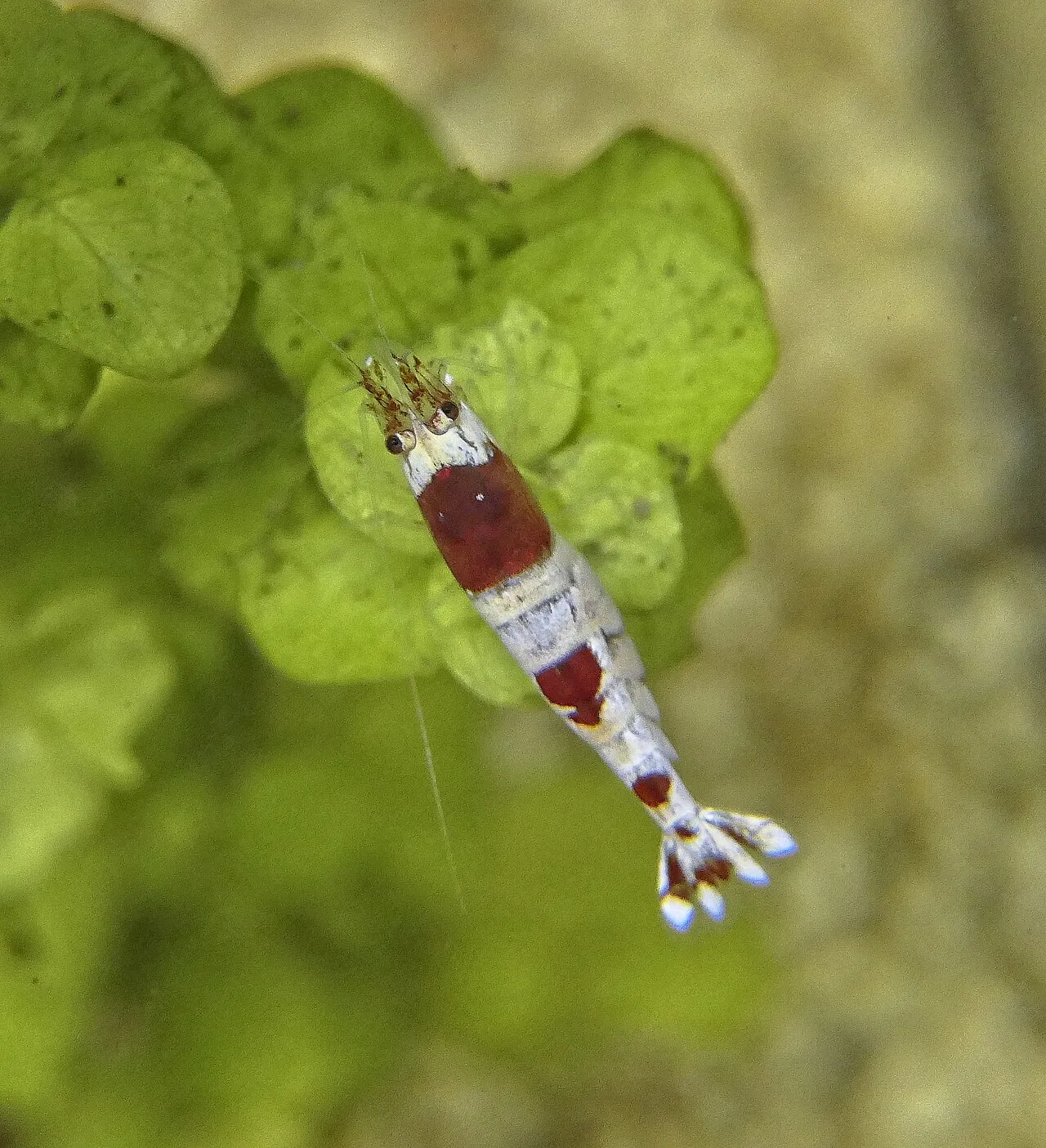
It belongs to the primitive reproductive type with larvae. The crystal red dwarf shrimp, for example, shows the specialised type without free larvae.
Reproduction and larvae
Breeding is not possible in pure fresh water; the larvae need salt water. Move egg-carrying females early. After hatching, remove the mother and salt the water so the larvae can survive and the mother is not left in the salt. The larvae moult almost daily, because the shell does not grow with them. Depending on food and temperature they can move to fresh water after about 40 days.
Gallery
More species in this group
Similar water needs
Species with a similar temperature, a similar pH and a comparable adult size. Whether their behaviour fits as well is what the compatibility check is for.