
Red-nose shrimp
Caridina gracilirostris
2 views
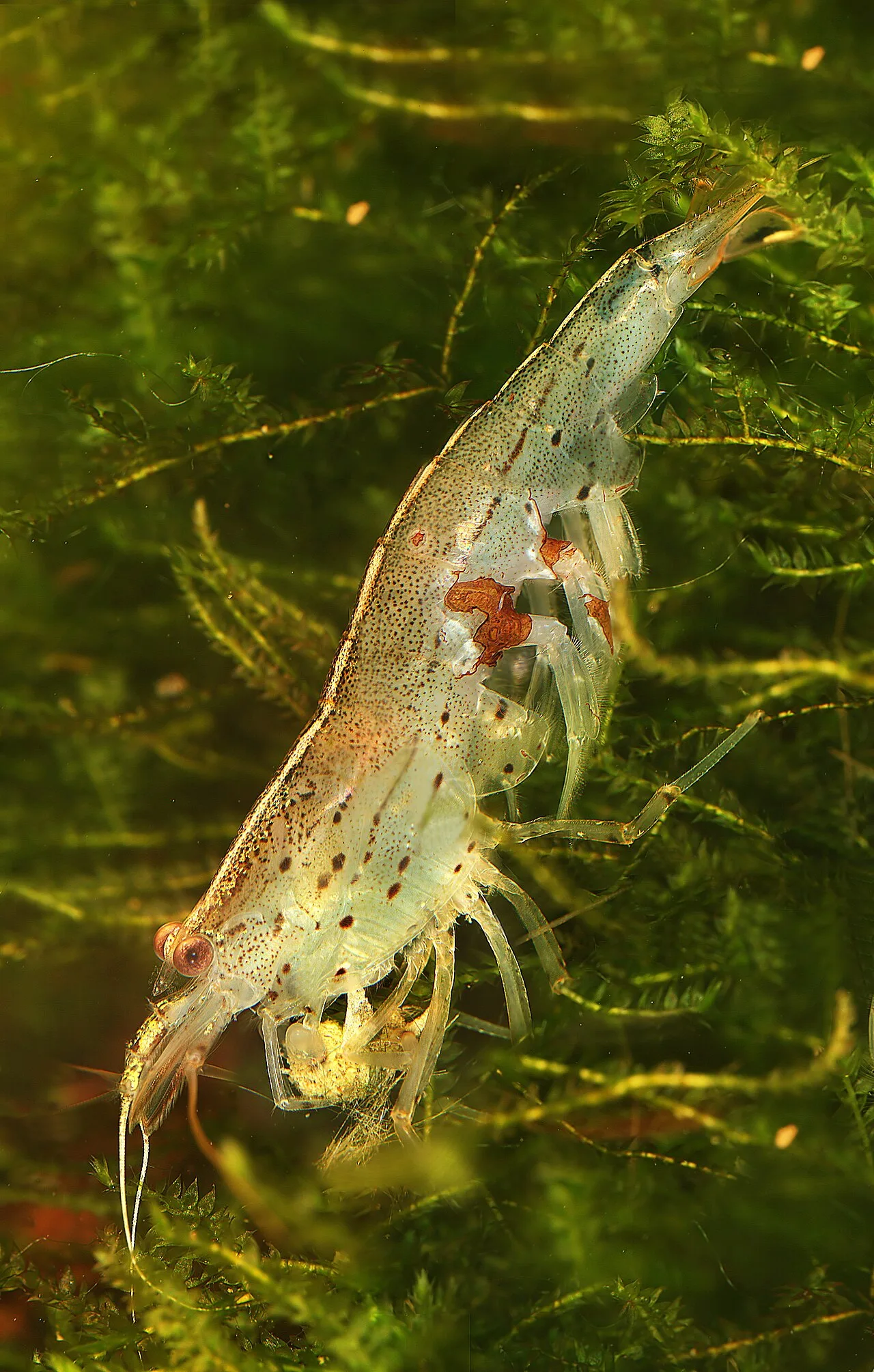
An almost transparent shrimp with a long red rostrum. It lives in mangroves and marshes; the larvae need brackish water.
- Temperature
- 20 – 28 °C
- pH
- 6.5 – 7.5 pH
- General hardness
- 5 – 15 °dH
- Maximum size
- 4 cm
- Social behavior
- Group
- Diet
- Omnivore
2 min read · 239 words
Fresh water, larvae in salt or brackish water
Quick facts
Further published values
- Minimum group size
- 5
- Minimum tank size
- 40 L
Place in the aquarium
Highlighted are the water layer and the spots where the species usually stays in the tank.
- Middle water Usually stays in the middle of the tank, between bottom and surface.
- Near the bottom Mostly stays just above the bottom. Food has to reach the substrate.
- Dense plants Looks for dense planting as cover, retreat or grazing ground.
Home & range
Hatched countries are where the species occurs. It lives in particular waters there, not across the whole country. The points name known waters for orientation, not collection sites.
- Country of origin
- Water for orientation
Native
Overview
Caridina gracilirostris reaches 3.5 to 4 cm. The body is almost transparent; the rostrum is long, narrow and red. This gives it names such as red-nose shrimp, rhino shrimp or mosquito shrimp. Small, dense teeth sit on the underside of the rostrum, larger and more widely spaced ones on the upper side. If the rostrum breaks off, it grows back. Males carry red lines along the sides, females are paler and more transparent. Both have a distinct hump on the abdomen.
Range and habitat
This describes the origin, not how to furnish the aquarium.
Widespread from Japan and Fiji through Indonesia to Madagascar. It lives in mangroves and marshes near the coast, in water of changing salinity.
Keeping
Tank
From about 40 litres with plants, open swimming space and a cover.
Water
20 to 28 °C, pH 6.5 to 7.5. It prefers brackish water but copes well in clear fresh water if there is enough food and vegetation. GH 5 to 15 °dH.
Companions
With other shrimp of similar size and calm small fish. It swims a lot in open water, which makes it easy prey for larger fish.
Diet
Algae and biofilm, plus shrimp food, flakes and small frozen food. Many keepers add it for the algae. It rarely gets enough from them alone.
Behaviour and moulting
Peaceful and lively. Unlike many dwarf shrimp it often swims freely through the tank.
Reproduction and larvae
Mating takes place only in brackish water. Females often carry hundreds of green eggs. The larvae need brackish water to develop. In a freshwater aquarium there are therefore no offspring; breeding is difficult.
More species in this group
Similar water needs
Species with a similar temperature, a similar pH and a comparable adult size. Whether their behaviour fits as well is what the compatibility check is for.





