Bee shrimp
Caridina logemanni
3 views
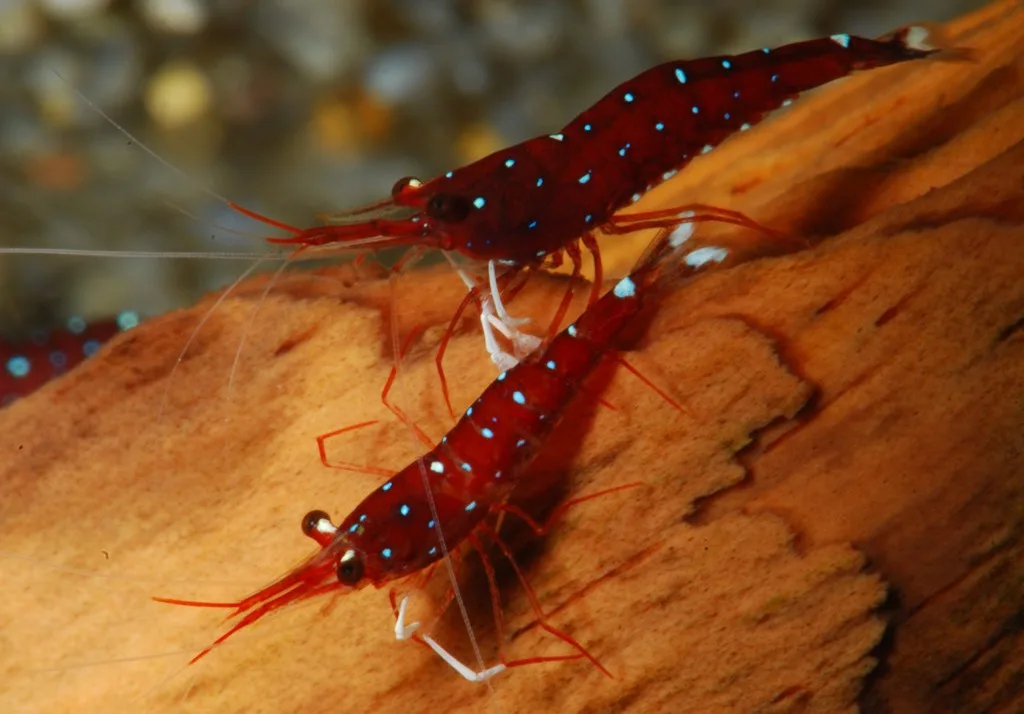
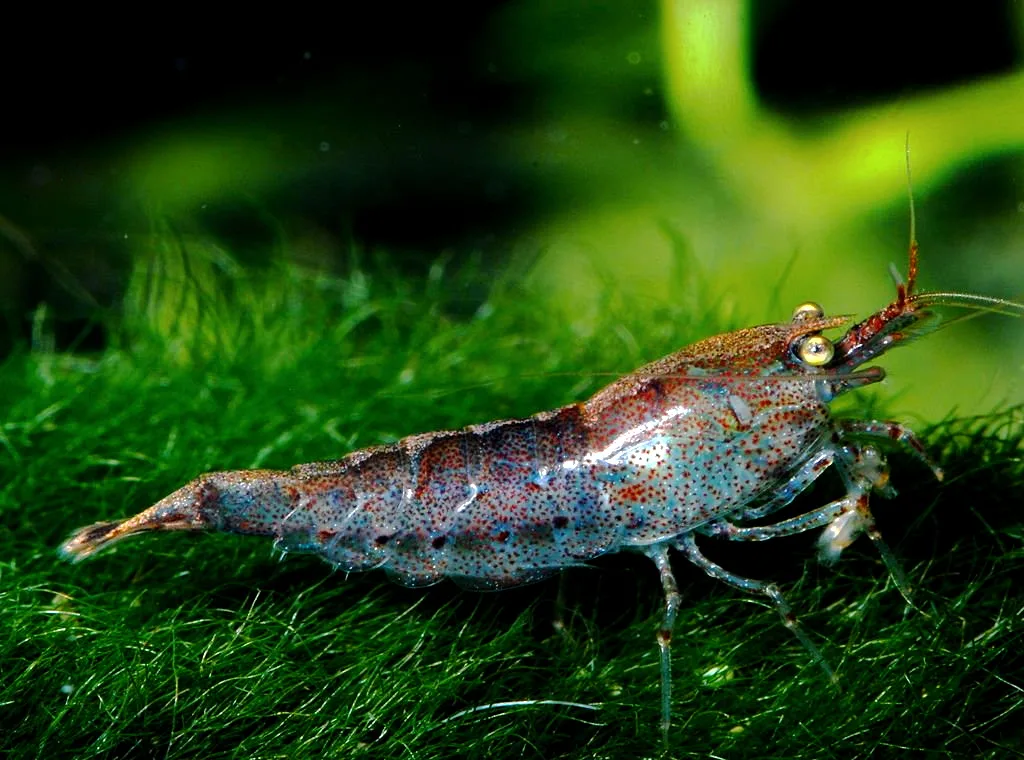
A dwarf shrimp from three mountain streams in Hong Kong. Crystal Red and other colours are cultivated forms; the species identity is not fully settled.
- Temperature
- 22 – 25 °C
- pH
- 5.8 – 7.2 pH
- General hardness
- 4 – 6 °dH
- Maximum size
- 2 cm
- Social behavior
- Group
- Diet
- Omnivore
3 min read · 456 words
Fresh water
Quick facts
Further published values
- Lifespan
- 1 – 1.5 a
- Minimum group size
- 10
- Minimum tank size
- 25 L
Place in the aquarium
Highlighted are the water layer and the spots where the species usually stays in the tank.
- Near the bottom Mostly stays just above the bottom. Food has to reach the substrate.
- Dense plants Looks for dense planting as cover, retreat or grazing ground.
- Wood and roots Uses roots as shelter or grazes biofilm from them.
Home & range
Hatched countries are where the species occurs. It lives in particular waters there, not across the whole country. The points name known waters for orientation, not collection sites.
- Country of origin
- Water for orientation
Native
- Hong Kong, New Territories
- Only three mountain streams in the north-east of the New Territories.
Overview
The bee shrimp (Caridina logemanni) is a freshwater shrimp of the family Atyidae from the Hong Kong region. Because of its striking cultivated forms and fairly unproblematic care it is kept frequently.
Wild form
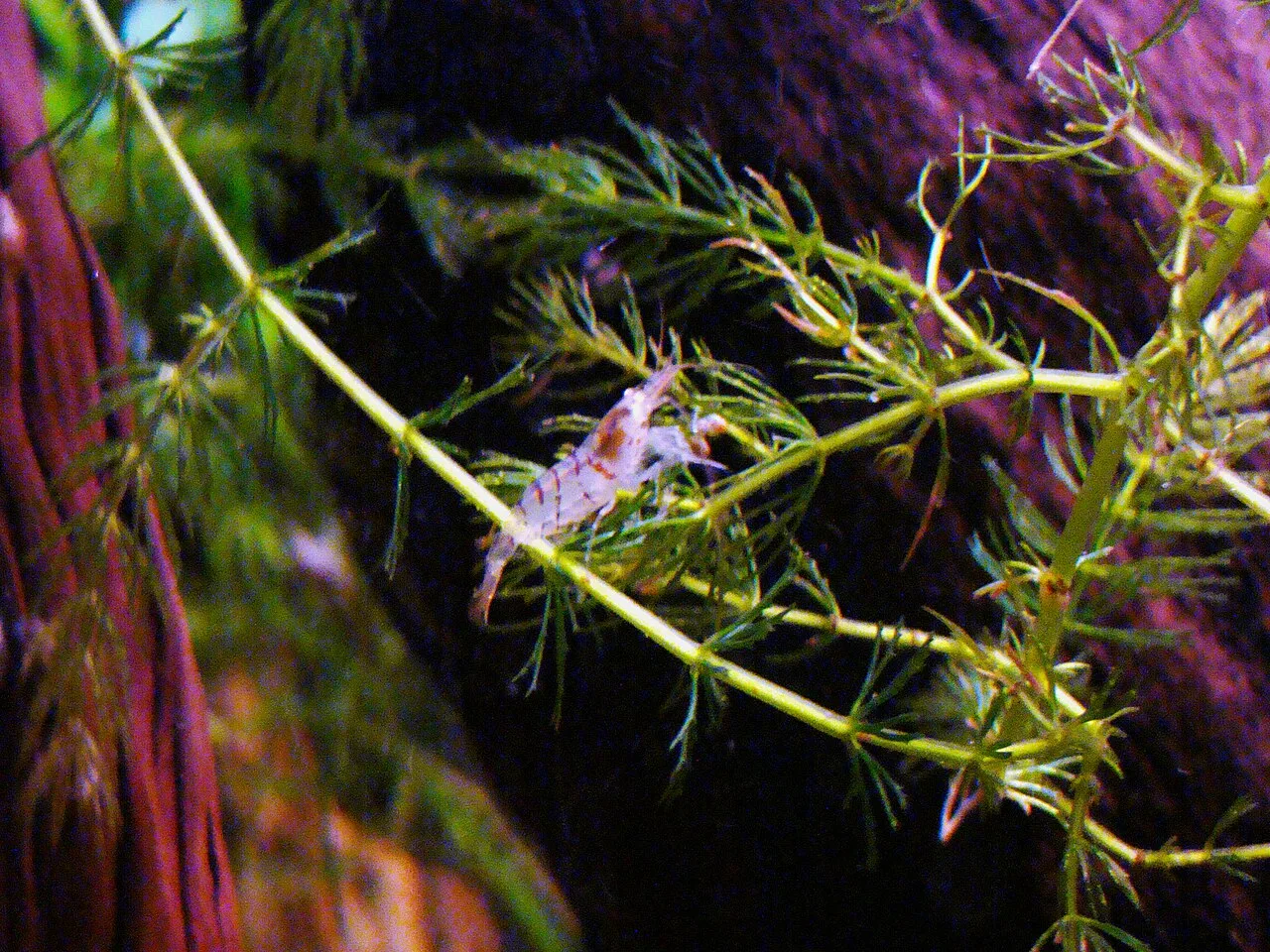
It grows to about two centimetres, with females usually slightly larger. Adult females look fuller and their abdomen extends deeper. Both sexes carry a pattern of black and two to four white to transparent bands across the abdomen. Colour and pattern vary strongly, as in all dwarf shrimp, even within one population. Identification is more reliable using the teeth of the rostrum.
Cultivated forms
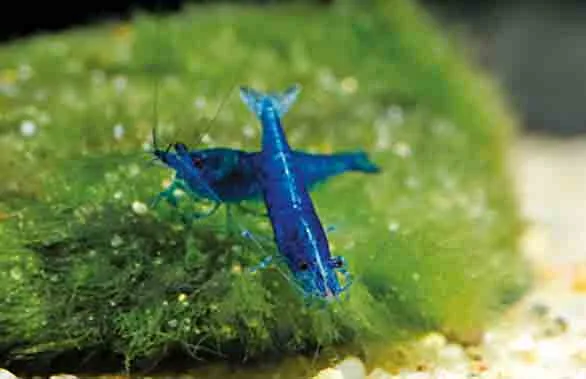
Various colour forms have been bred from the bee shrimp. Whether all arose through selection or partly through crossing with other species is not entirely clear. The Crystal Red colour probably goes back to the Japanese breeder Hisayasu Suzuki, who bred it from a small number of red animals from 1996 onwards. Colour forms are not separate profiles here.
Range and habitat
This describes the origin, not how to furnish the aquarium.
The species occurs only in three mountain streams in the north-east of the New Territories in Hong Kong, where it is the only shrimp species. The animals live in shallow water between rocks and dead leaves. On the map Hong Kong is listed as a coarse origin, not the whole of China.
Keeping
Keeping it is considered fairly unproblematic. From the habitat one can take over what the animals find there: stones and leaf litter as ground and cover, with biofilm growing on them. Life expectancy is at most one to one and a half years, so a population renews itself constantly through offspring.
Diet
It eats biofilm on stones and rotting plant material as well as very small insect larvae. Leaf litter in the tank also provides a surface for the biofilm.
Behaviour and moulting
The bee shrimp is peaceful. Since it grows to only about two centimetres, the same applies as for other dwarf shrimp: fish with a big enough mouth can eat it and especially the young.
Reproduction and larvae
Mating follows directly after the female moults. The male turns her on her back and places a sperm packet near her genital opening with the modified inner branches of the first pair of swimmerets. A few hours later 15 to 50 eggs of about 1 by 0.7 millimetres emerge and are fertilised as they pass out. The female carries them on her swimmerets and fans oxygen-rich water over them; unfertilised eggs are shed after a few days.
Young and systematics
Depending on temperature, young of one and a half millimetres hatch after three to four weeks, already very similar to their parents in shape and colour. There is no larval stage in salt water. The species identity is not fully settled. The closest match is with Caridina trifasciata; for now it is placed close to Caridina cantonensis.
Gallery
More species in this group
Similar water needs
Species with a similar temperature, a similar pH and a comparable adult size. Whether their behaviour fits as well is what the compatibility check is for.