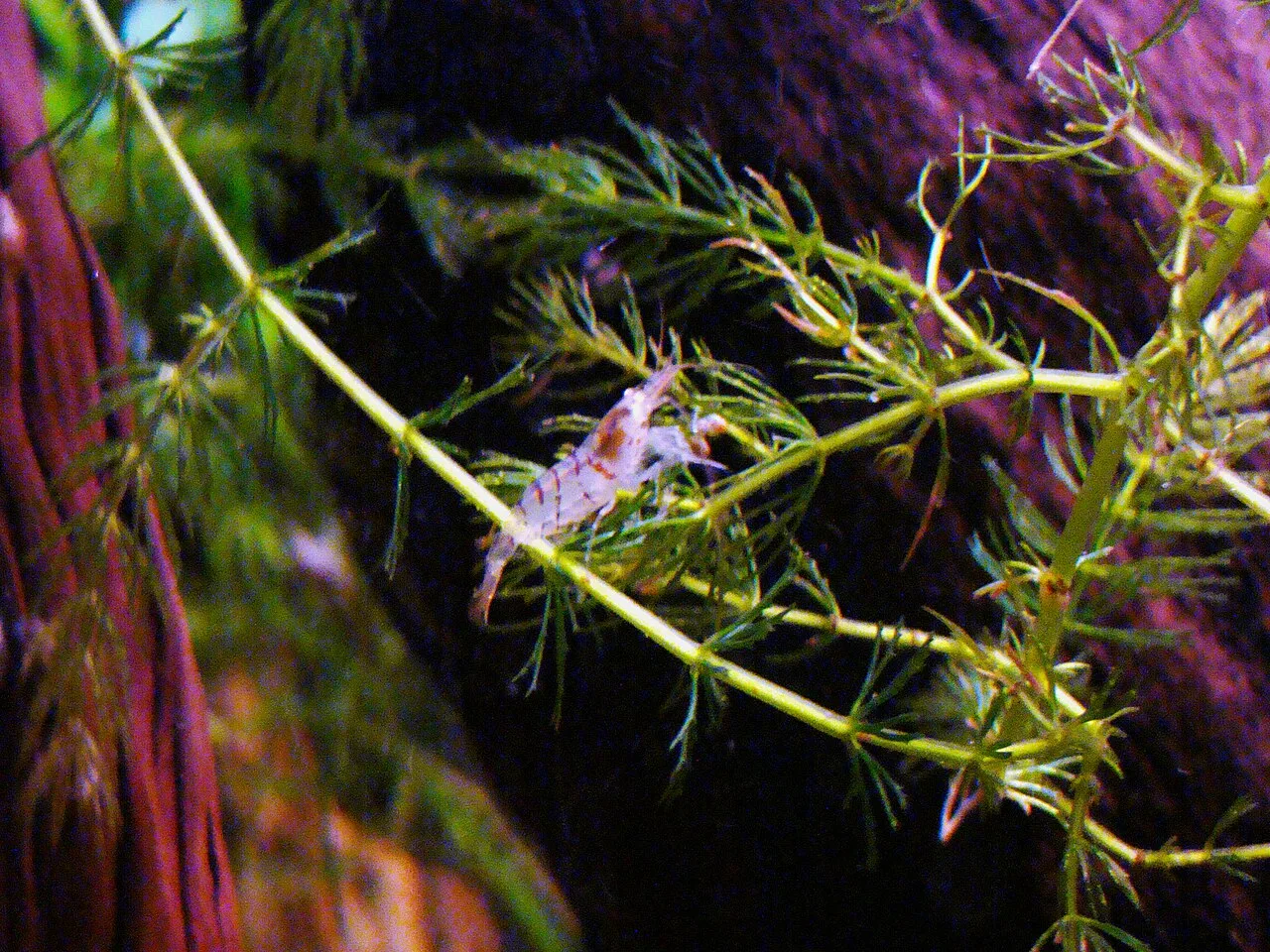
White pearl shrimp
Neocaridina palmata
2 views
A dwarf shrimp from China that is very similar to the cherry shrimp. White pearl, marble, nectarine and blue Hong Kong shrimp belong to it.
- Temperature
- 18 – 26 °C
- pH
- 6.5 – 8 pH
- General hardness
- 6 – 15 °dH
- Maximum size
- 2.8 cm
- Social behavior
- Group
- Diet
- Omnivore
3 min read · 363 words
Fresh water
Quick facts
Further published values
- Lifespan
- 2 – 2.5 a
- Minimum group size
- 10
- Minimum tank size
- 20 L
Place in the aquarium
Highlighted are the water layer and the spots where the species usually stays in the tank.
- Near the bottom Mostly stays just above the bottom. Food has to reach the substrate.
- Dense plants Looks for dense planting as cover, retreat or grazing ground.
- Wood and roots Uses roots as shelter or grazes biofilm from them.
Home & range
Hatched countries are where the species occurs. It lives in particular waters there, not across the whole country. The points name known waters for orientation, not collection sites.
- Country of origin
- Water for orientation
Native
Overview
Neocaridina palmata reaches up to about 2.8 cm. With the naked eye it is practically impossible to tell apart from the cherry shrimp Neocaridina davidi. The two can only be separated reliably under a microscope, by the structure of the males' swimming legs.
Colour forms
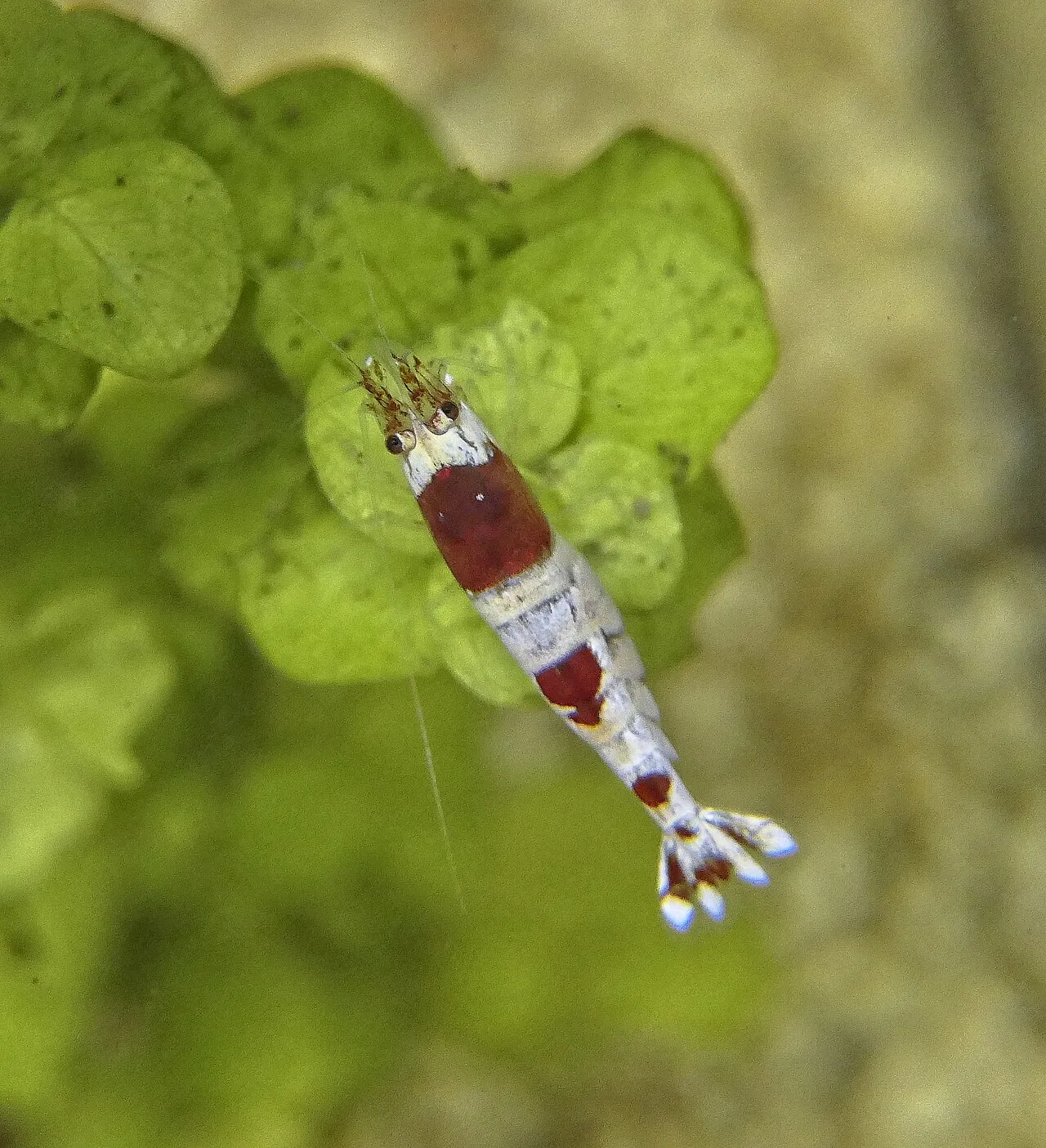
Four forms are traded: the grey-brown marble shrimp, the orange-red nectarine shrimp, the blue Hong Kong shrimp and the white pearl shrimp. The white form is a cultivated form. It was at times sold as Neocaridina cf. zhangjiajiensis because it resembles that species. Its name comes from the eggs, which show through the half-transparent body like small white pearls. White pearl shrimp reach about 2.5 cm and live up to 2.5 years.
Subspecies
Four subspecies are described: palmata, bosensis, luodianica and meridionalis.
Range and habitat
This describes the origin, not how to furnish the aquarium.
Running and still waters in China. The described subspecies come from different provinces in the south of the country. China remains the coarse origin.
Keeping
Tank
From about 20 litres, with plants, moss and some leaves. A sponge on the filter intake protects the young.
Water
The species copes with room temperature. 18 to 26 °C, pH 6.5 to 8, GH 6 to 15 °dH. It is sensitive to pathogenic germs. Especially on warm days regular water changes help. A small snail population burdens the water less than a large one.
Companions
With small, peaceful fish or on their own. It should not live together with the cherry shrimp if the lines are to stay pure, because Neocaridina can cross with each other.
Diet
Shrimp food, leaves and biofilm. Walnut leaves are eaten quickly, Indian almond leaves rather hesitantly. Dead conspecifics are eaten as well but should still be removed early because they burden the water.
Behaviour and moulting
Peaceful and adaptable. The animals are active by day and constantly graze surfaces.
Reproduction and larvae
The eggs first form in the female's neck and then move under the abdomen, where they are carried between the swimming legs. They are fertilised during this move. After three to four weeks finished small shrimp hatch. Often new eggs are already visible in the back while the old clutch still hangs under the belly. Females show their first unfertilised eggs from about ten to twelve weeks and 15 mm length. Breeding succeeds in fresh water.
Gallery
More species in this group
Similar water needs
Species with a similar temperature, a similar pH and a comparable adult size. Whether their behaviour fits as well is what the compatibility check is for.