Cherry shrimp
Neocaridina davidi
26 views
A freshwater shrimp from eastern China. Red, yellow and patterned trade animals are colour forms of this species, not further species.
- Temperature
- 20 – 25 °C
- pH
- 6.5 – 7.5 pH
- General hardness
- 8 – 15 °dH
- Maximum size
- 2.85 cm
- Social behavior
- Group
- Diet
- Omnivore
2 min read · 313 words
Fresh water
Quick facts
Further published values
- Lifespan
- 1 – 2 a
- Minimum group size
- 10
- Minimum tank size
- 30 – 40 L
Place in the aquarium
Highlighted are the water layer and the spots where the species usually stays in the tank.
- Near the bottom Mostly stays just above the bottom. Food has to reach the substrate.
- Dense plants Looks for dense planting as cover, retreat or grazing ground.
- Wood and roots Uses roots as shelter or grazes biofilm from them.
Home & range
Hatched countries are where the species occurs. It lives in particular waters there, not across the whole country. The points name known waters for orientation, not collection sites.
- Country of origin
- Introduced
- Water for orientation
Native
Introduced
- Hawaii
- Range: Hawaii as a release, not the mainland of the United States.
Overview
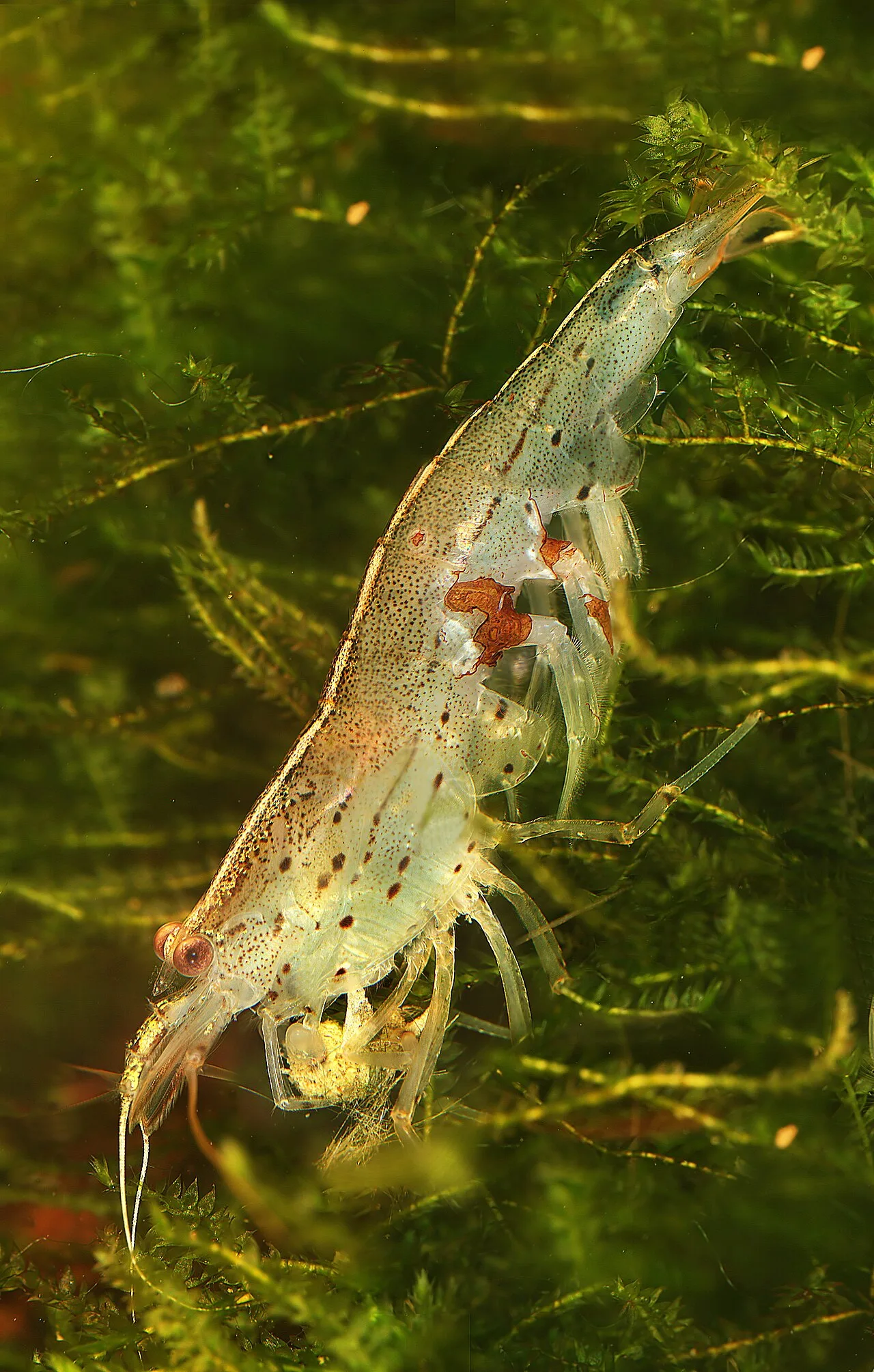
Neocaridina davidi, synonym Neocaridina heteropoda, belongs to the freshwater shrimp. Common German names include Rückenstrichgarnele, Algengarnele, Invasionsgarnele and Guppygarnele. Total length reaches 28.5 mm, of which up to 6.5 mm is the carapace. Males usually stay smaller and less full-bodied. Colour runs from black, brown, red and dark green to pale white and full transparency. A dorsal stripe on females also occurs in other freshwater shrimp and does not separate the species. In the trade several Neocaridina and Caridina are sold under the same German name. The species is then not readable from the label.
Range and habitat
This describes the origin, not how to furnish the aquarium.
Originally lakes and small to medium streams of eastern China. Now also in other parts of China, in Japan, Taiwan and Hawaii. Inside China it was moved with stocked fish from Tai Lake. In Hawaii it spread from animals sold as ornamental-fish food and released. In Taiwan it is also bred as fish food. China, Japan and Taiwan stay a coarse origin. Hawaii is not filled as the United States. It must not be released from the aquarium into natural waters.
Keeping
Keeping and breeding are considered uncomplicated. The species is robust towards low temperatures. Lifespan is about 1.5 years. A previously transparent shrimp that turns milky usually dies soon afterwards.
Diet
Biofilm on rotting plant material, very small invertebrates and insect larvae.
Behaviour and moulting
Peaceful and adaptable. Red Fire, Yellow Fire, Sakura, Neon, Orange Sakura, Rili and Green Jade are cultivated forms of the same species. Whether Black Sakura breeds true is open.
Reproduction and larvae
Breeding in the warmer season. 20 to 50 eggs, about 0.55 to 0.58 by 0.85 to 1 mm. The young hatch at about 3 mm and already have the adult shape. They stay on the bottom. The upper body is white at first, the lower body transparent. After a few days they take on colour. The species belongs to the specialised reproductive type without free larvae, unlike the Amano shrimp. Breeding therefore succeeds in fresh water.
Gallery
More species in this group
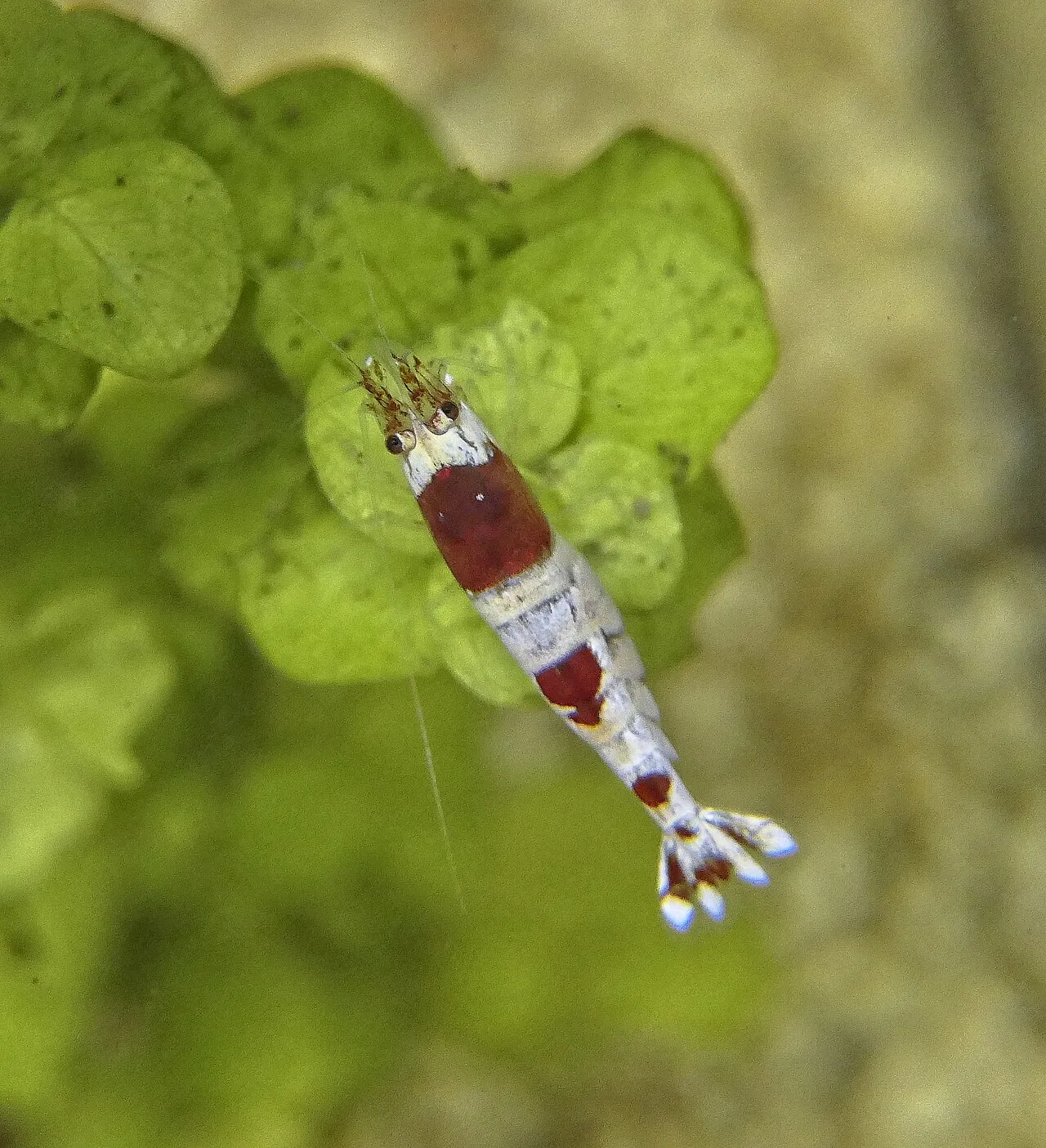
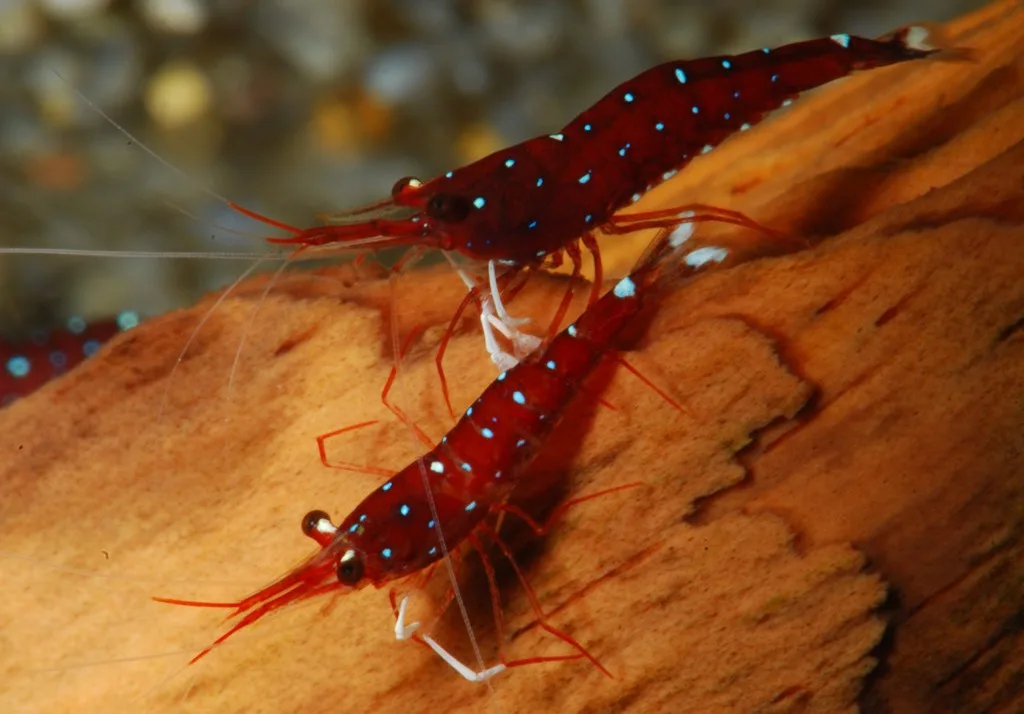
Similar water needs
Species with a similar temperature, a similar pH and a comparable adult size. Whether their behaviour fits as well is what the compatibility check is for.