Tiger shrimp
Caridina mariae
2 views
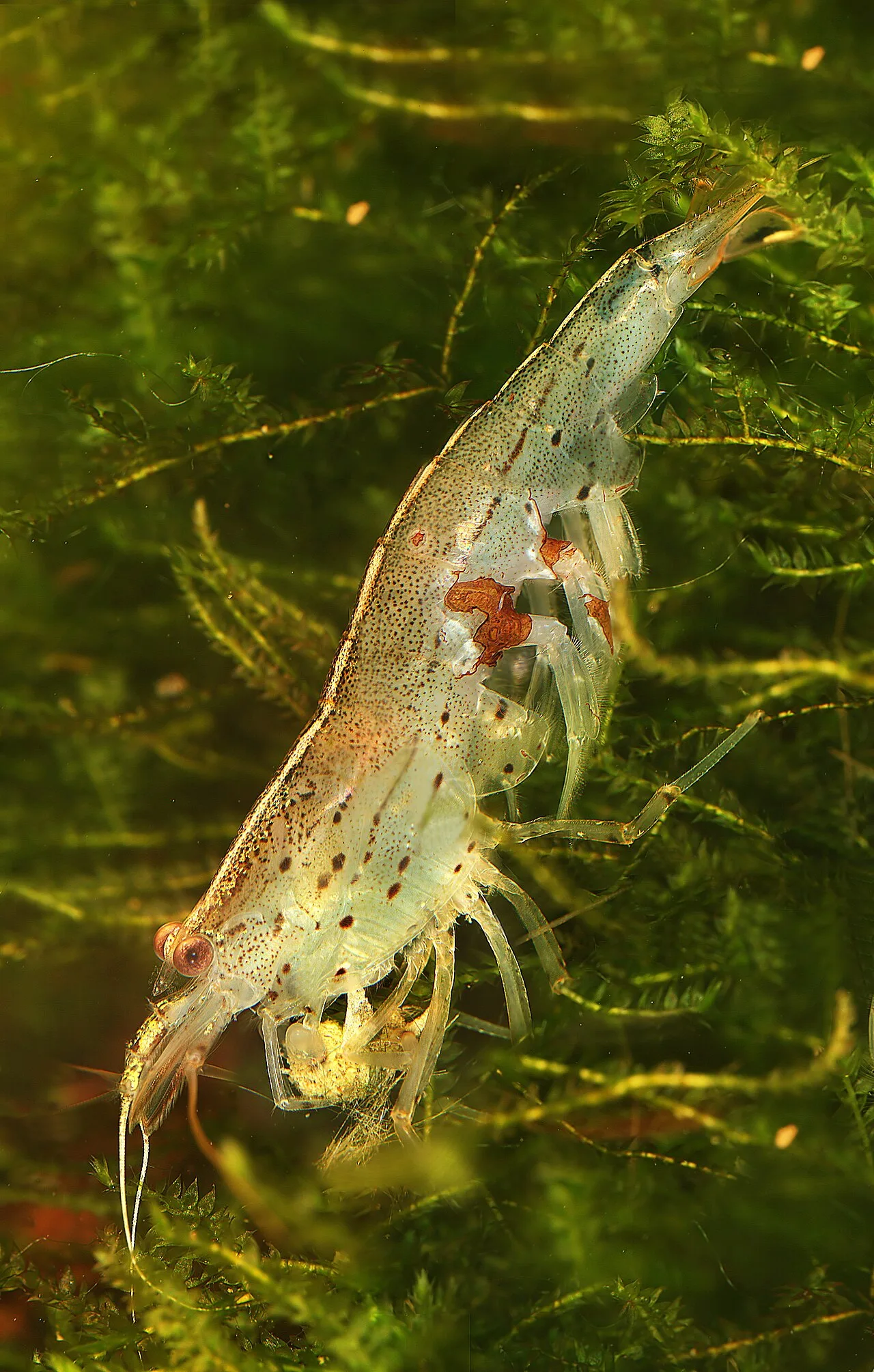
A dwarf shrimp from southern China with narrow dark crossbands. Next to the bee shrimp it is one of the most popular Caridina in the aquarium.
- Temperature
- 18 – 25 °C
- pH
- 6.5 – 7.5 pH
- General hardness
- 4 – 12 °dH
- Maximum size
- 2.2 cm
- Social behavior
- Group
- Diet
- Omnivore
3 min read · 388 words
Fresh water
Quick facts
Further published values
- Lifespan
- 1.5 – 2 a
- Minimum group size
- 10
- Minimum tank size
- 20 L
Place in the aquarium
Highlighted are the water layer and the spots where the species usually stays in the tank.
- Near the bottom Mostly stays just above the bottom. Food has to reach the substrate.
- Dense plants Looks for dense planting as cover, retreat or grazing ground.
- Wood and roots Uses roots as shelter or grazes biofilm from them.
Home & range
Hatched countries are where the species occurs. It lives in particular waters there, not across the whole country. The points name known waters for orientation, not collection sites.
- Country of origin
- Water for orientation
Native
Overview
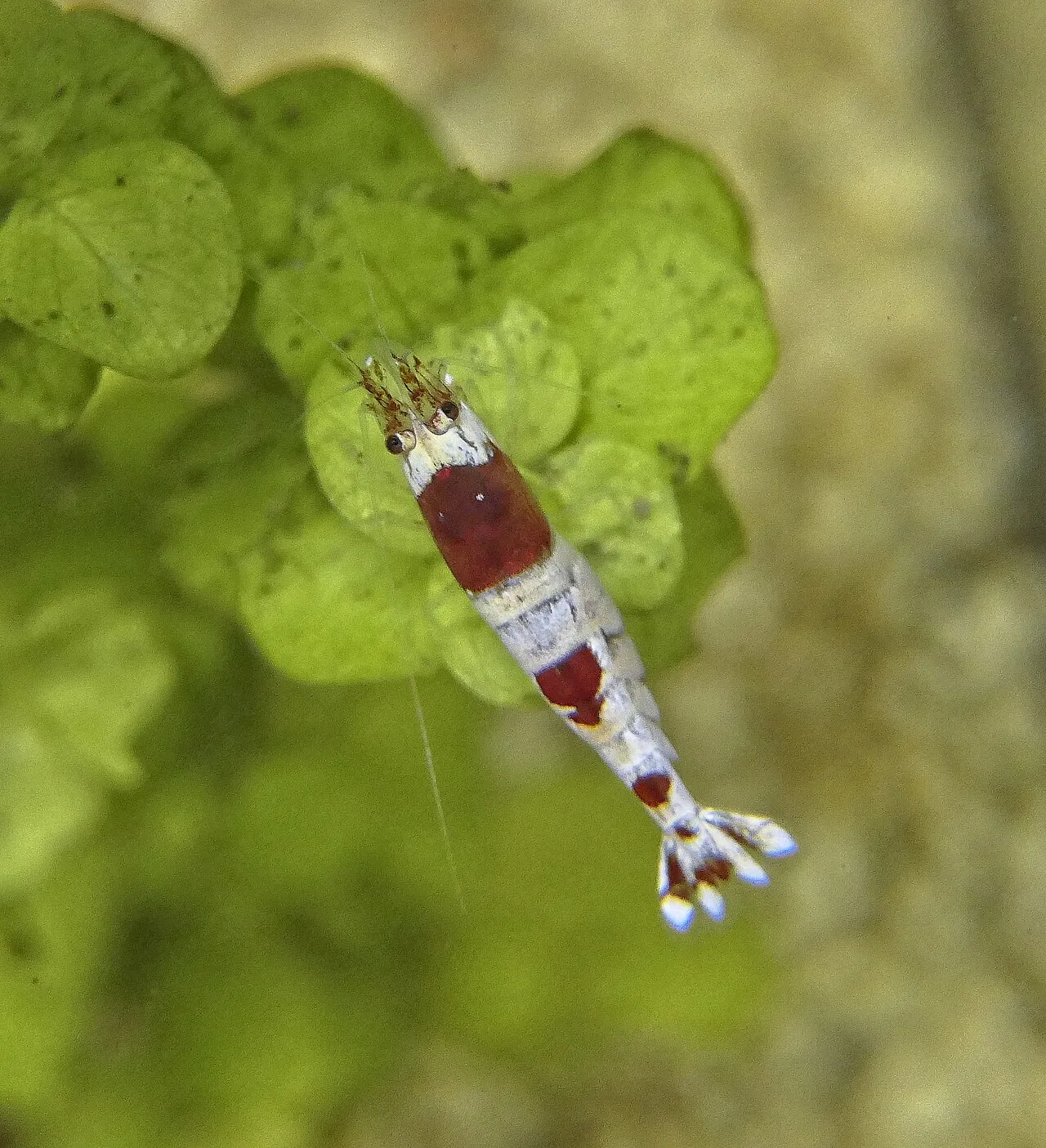
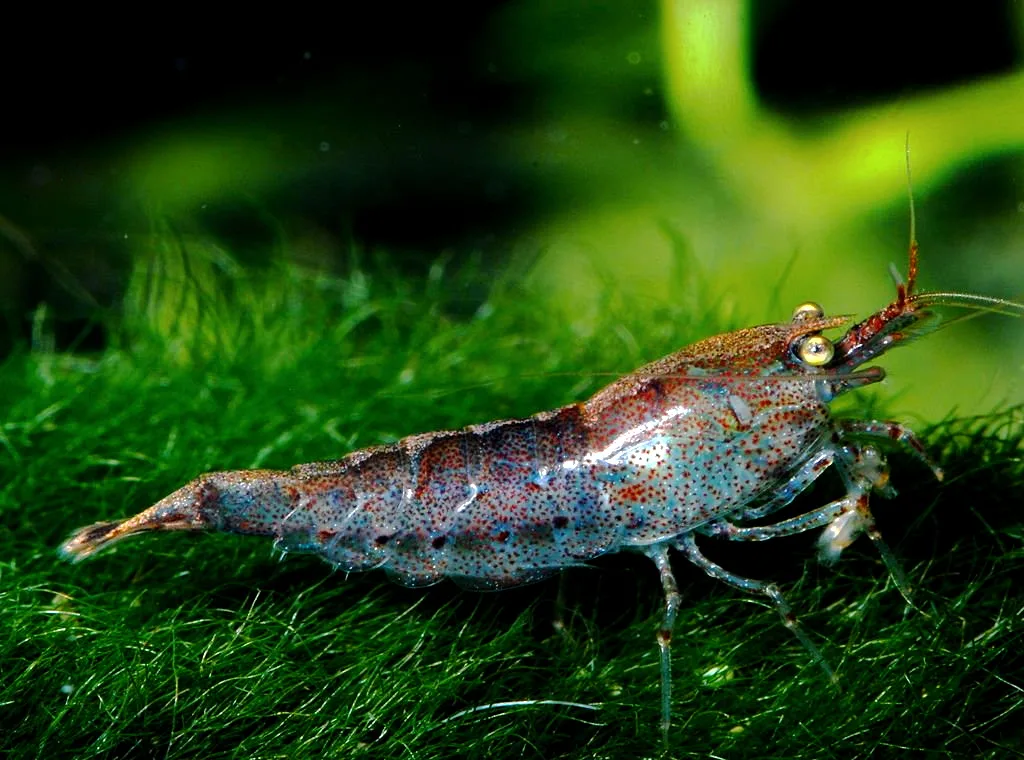
The tiger shrimp reaches about 2.2 cm. Bluish, reddish or brownish crossbands run over a transparent body. They are narrower and more sharply defined than the bands of the bee shrimp. The rostrum is short. Males stay slimmer, females become fuller and carry the eggs under the abdomen.
Name and classification
For a long time the species was sold as Caridina cf. cantonensis. In 2014 it was described as Caridina mariae. In its native region it is still often called Caridina cantonensis. Males from aquarium strains, however, differ from that species in the structure of the first swimming leg.
Colour forms
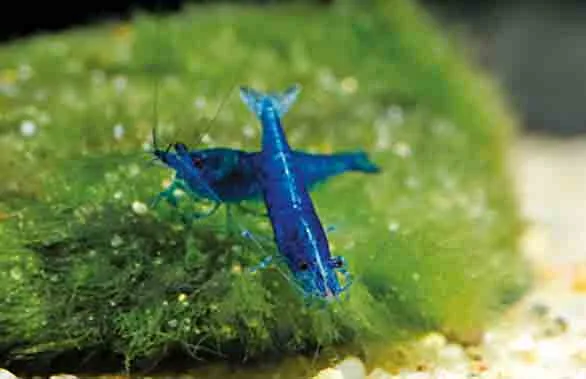
Orange Tail with orange head and tail, Blue Tiger with a dark blue body, often with pale eyes, the almost black Black Tiger and the golden Tangerine Tiger are cultivated forms. The Red Tiger, with red instead of dark stripes, is regarded as a wild form. All belong to the same species.
Range and habitat
This describes the origin, not how to furnish the aquarium.
Streams in southern China. The animals live on stones and among leaf litter and graze biofilm there. China remains the coarse origin.
Keeping
Tank
A tank from about 20 litres is enough for a group. Fine substrate, moss, stones and some leaves give grazing area and hiding places. The filter intake is covered with a sponge so that no young are sucked in.
Water
18 to 25 °C, pH 6.5 to 7.5, GH 4 to 12 °dH. Stable values matter more than any particular target. Water is changed in small amounts; the animals cope badly with large jumps in hardness and temperature.
Companions
With small, calm fish, snails or on their own. It crosses with the bee shrimp. Anyone who wants pure lines keeps the two apart. It does not cross with Neocaridina.
Diet
Biofilm on stones and leaves, rotting plant material and tiny insect larvae. In the tank shrimp food, leaves, some vegetables and fine powder food for the young. Feed little but regularly and remove leftovers after a few hours.
Behaviour and moulting
Peaceful and easy to see by day when the tank is calm. In a larger group the animals show themselves more often than singly.
Reproduction and larvae
In the wild the breeding season lasts from March to October. The eggs measure about 0.9 to 1.0 by 0.6 to 0.7 mm. They hatch into young that already resemble the parents in shape and colour and live on the bottom straight away. There are no free larvae, so breeding succeeds in fresh water.
More species in this group
Similar water needs
Species with a similar temperature, a similar pH and a comparable adult size. Whether their behaviour fits as well is what the compatibility check is for.