Ninja shrimp
Caridina serratirostris
3 views
A shrimp from the Indo-Pacific that changes colour quickly. The larvae need salt water.
- Temperature
- 22 – 28 °C
- pH
- 6.5 – 8 pH
- General hardness
- 5 – 15 °dH
- Maximum size
- 3.5 cm
- Social behavior
- Group
- Diet
- Omnivore
2 min read · 209 words
Fresh water, larvae in salt or brackish water
Quick facts
Further published values
- Minimum group size
- 5
- Minimum tank size
- 30 L
Place in the aquarium
Highlighted are the water layer and the spots where the species usually stays in the tank.
- Near the bottom Mostly stays just above the bottom. Food has to reach the substrate.
- Dense plants Looks for dense planting as cover, retreat or grazing ground.
- Wood and roots Uses roots as shelter or grazes biofilm from them.
Home & range
Hatched countries are where the species occurs. It lives in particular waters there, not across the whole country. The points name known waters for orientation, not collection sites.
- Country of origin
- Water for orientation
Native
- Madagascar
- Western edge of a range that reaches Fiji.
- Northern Queensland
- The Australian animals may belong to a separate subspecies.
- Fiji
- Eastern edge of the range.
Overview
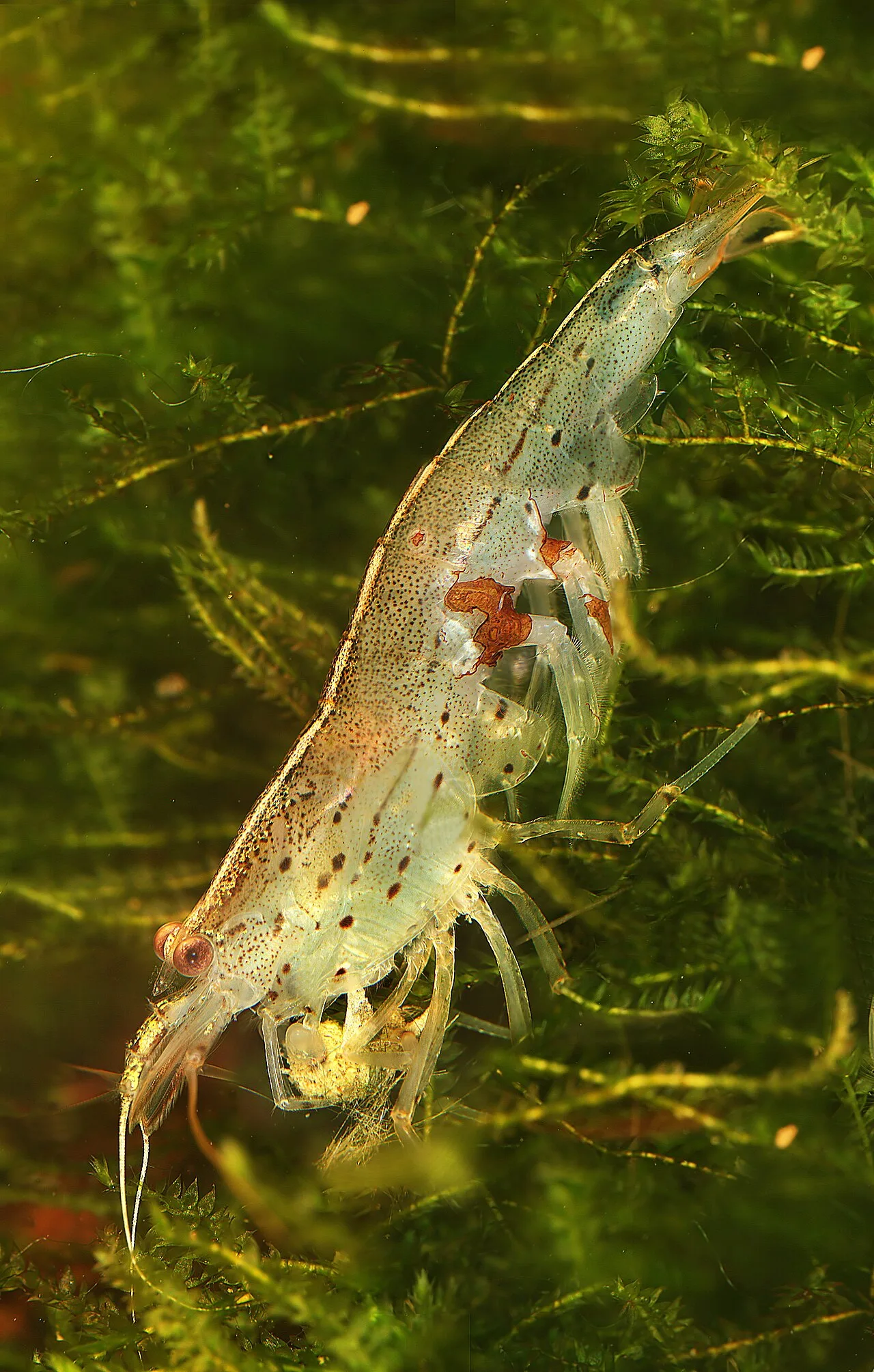
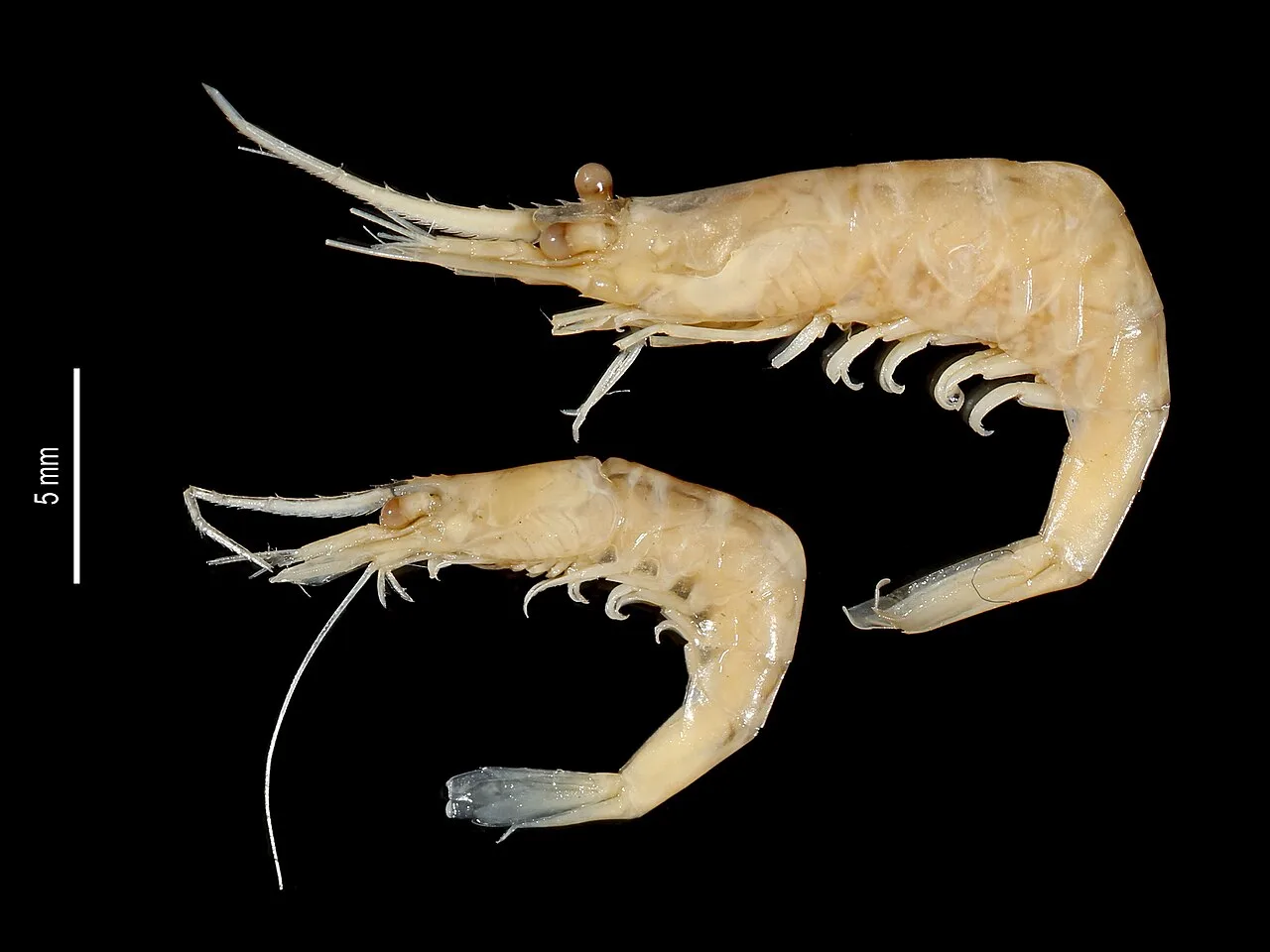
Caridina serratirostris reaches 2.5 to 3.5 cm. It owes its trade name to its ability to change colour within a short time and blend into the background. The same shrimp can look red, brown, greenish, striped or almost transparent. A particular colour at purchase is therefore no promise.
Range and habitat
This describes the origin, not how to furnish the aquarium.
Indo-Pacific from Madagascar to Fiji, including northern Queensland in Australia. The Australian animals may belong to a separate subspecies. The adults live in coastal rivers and streams; the larvae drift into the sea.
Keeping
Tank
From about 30 litres, with plants, wood, leaves and gentle current. A cover prevents animals from climbing over the rim.
Water
22 to 28 °C, pH 6.5 to 8, GH 5 to 15 °dH. Pure fresh water is enough for the adults.
Companions
With small, peaceful fish and other shrimp. Larger fish eat it.
Diet
Biofilm, algae and detritus. In the tank shrimp food, leaves and some frozen food.
Behaviour and moulting
Peaceful and rather shy. When disturbed it changes colour and disappears into the background.
Reproduction and larvae
The female carries many small eggs. The larvae hatch free-swimming and need salt or brackish water to develop. In pure fresh water they die after a short time. Breeding in captivity is rare and succeeds only with separate larval rearing in salt water. Almost all animals in the trade are wild-caught.
Gallery
More species in this group
Similar water needs
Species with a similar temperature, a similar pH and a comparable adult size. Whether their behaviour fits as well is what the compatibility check is for.