Red claw crab
Parasesarma bidens
3 views
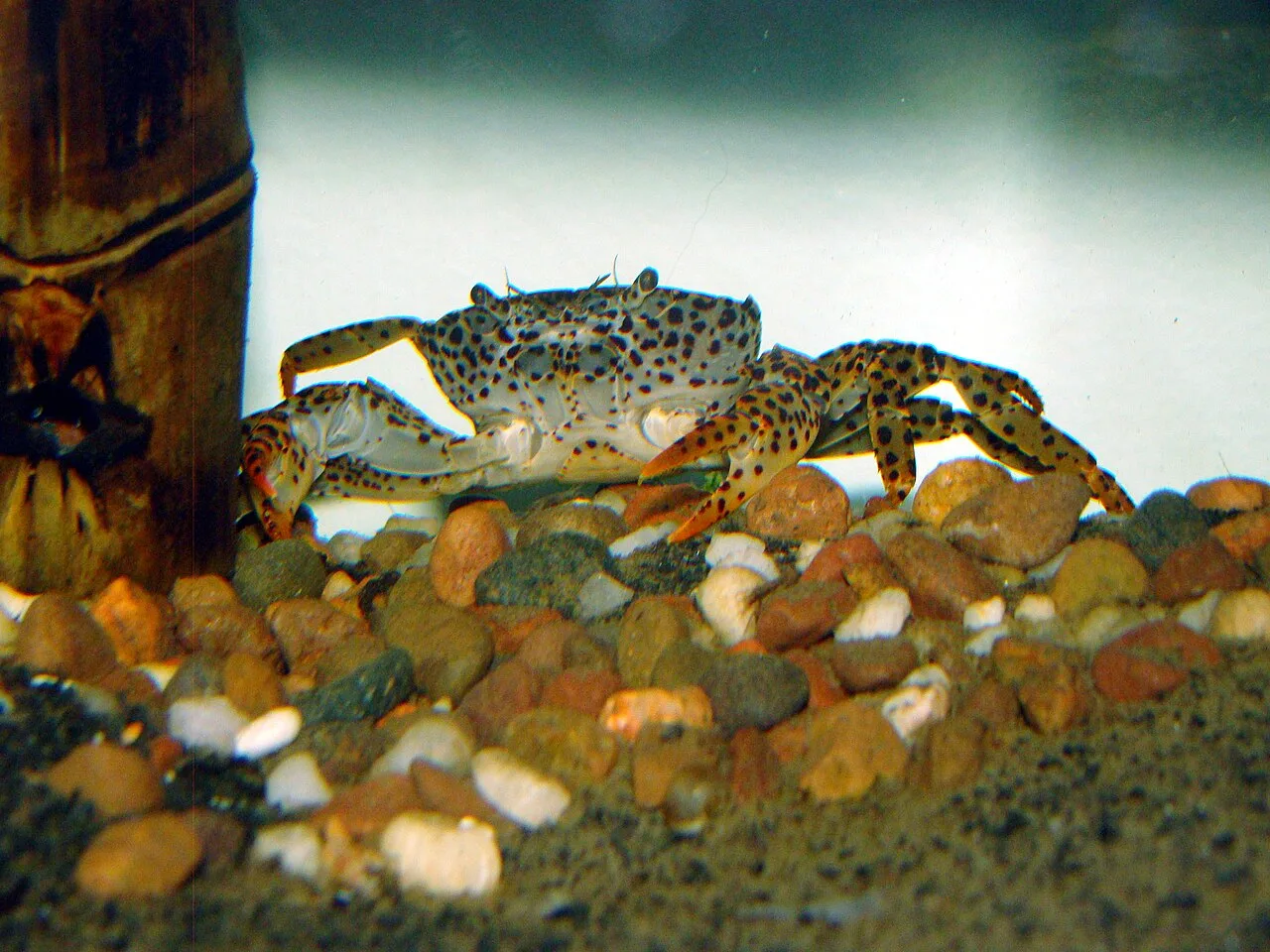
A mangrove crab from the Indo-Pacific with red claws. It needs brackish water and a land section.
- Temperature
- 22 – 28 °C
- pH
- 7.5 – 8.5 pH
- General hardness
- 10 – 25 °dH
- Maximum size
- 10 cm
- Social behavior
- Territorial
- Diet
- Omnivore
1 min read · 163 words
Brackish water
Quick facts
Further published values
- Minimum tank size
- 60 L
Place in the aquarium
Highlighted are the water layer and the spots where the species usually stays in the tank.
- Near the bottom Mostly stays just above the bottom. Food has to reach the substrate.
- Wood and roots Uses roots as shelter or grazes biofilm from them.
- Rocks and caves Needs caves, crevices or rockwork as hiding place, territory or spawning site.
Home & range
Overview
The leg span reaches up to about 10 cm. The red claws stand out; the body is brownish to olive green. In the trade it is often still sold as Perisesarma bidens or Sesarma bidens.
Range and habitat
This describes the origin, not how to furnish the aquarium.
Indo-Pacific from Zanzibar to Japan and Fiji. It lives in mangroves and estuaries with changing salinity.
Keeping
Aquaterrarium
From about 60 litres, about one third land with stones, roots and sand, the rest water. A tightly closing cover; the crabs escape through the smallest gaps.
Water
Slightly brackish water, 22 to 28 °C, pH 7.5 to 8.5. Pure fresh water shortens its lifespan.
Companions
Quarrelsome among themselves; each animal needs its own hiding place. Fish in the water section are grabbed at night.
Diet
Omnivore. Food tablets, frozen food, vegetables, leaves and pieces of fruit.
Behaviour and moulting
Territorial and mainly active at night. It spends a lot of time on land.
Reproduction and larvae
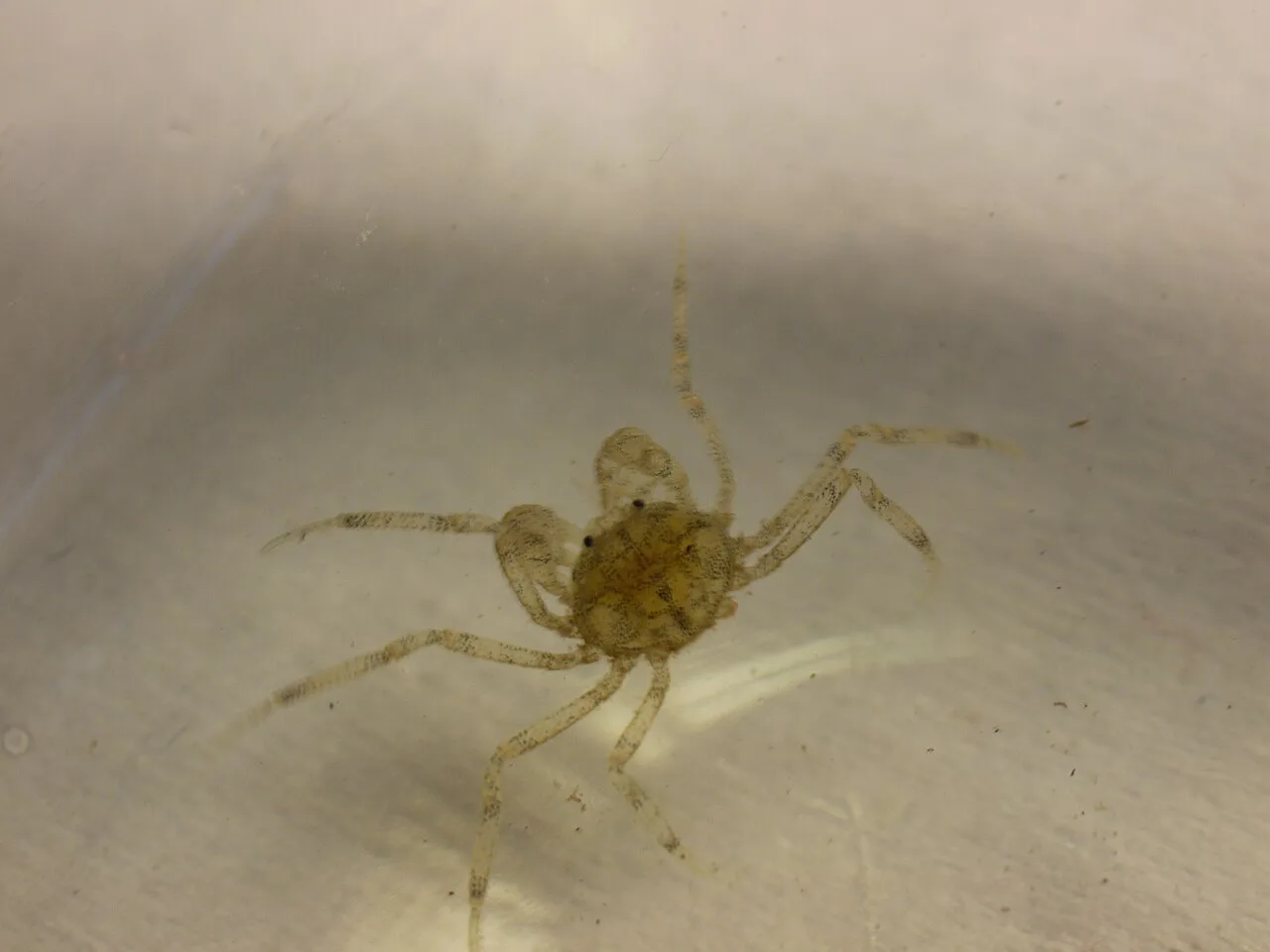
The female carries the eggs under the abdominal flap. The larvae develop in the sea; captive breeding hardly succeeds. Animals in the trade are wild-caught.
Gallery
More species in this group
Similar water needs
Species with a similar temperature, a similar pH and a comparable adult size. Whether their behaviour fits as well is what the compatibility check is for.