Skunk cleaner shrimp
Lysmata amboinensis
35 views
A marine shrimp from the Indo-Pacific and the Red Sea. Keep a pair in the aquarium. After a moult they kill rivals.
- Temperature
- 24 – 27 °C
- pH
- 8 – 8.4 pH
- Maximum size
- 6 cm
- Social behavior
- Pair
2 min read · 289 words
Marine
Quick facts
Further published values
- Lifespan
- 2 a
- Minimum tank size
- 60 L
Place in the aquarium
Highlighted are the water layer and the spots where the species usually stays in the tank.
- Near the bottom Mostly stays just above the bottom. Food has to reach the substrate.
- Rocks and caves Needs caves, crevices or rockwork as hiding place, territory or spawning site.
Home & range
Overview
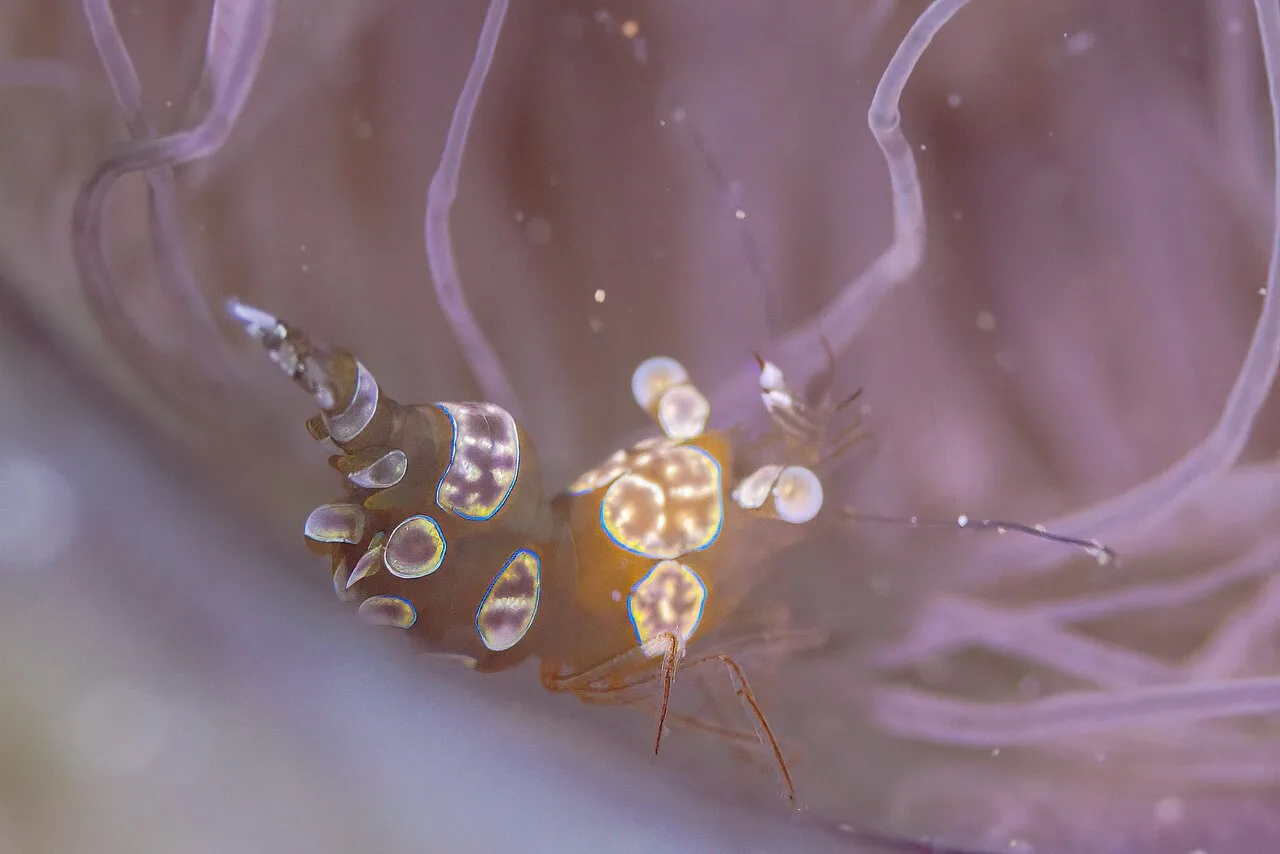
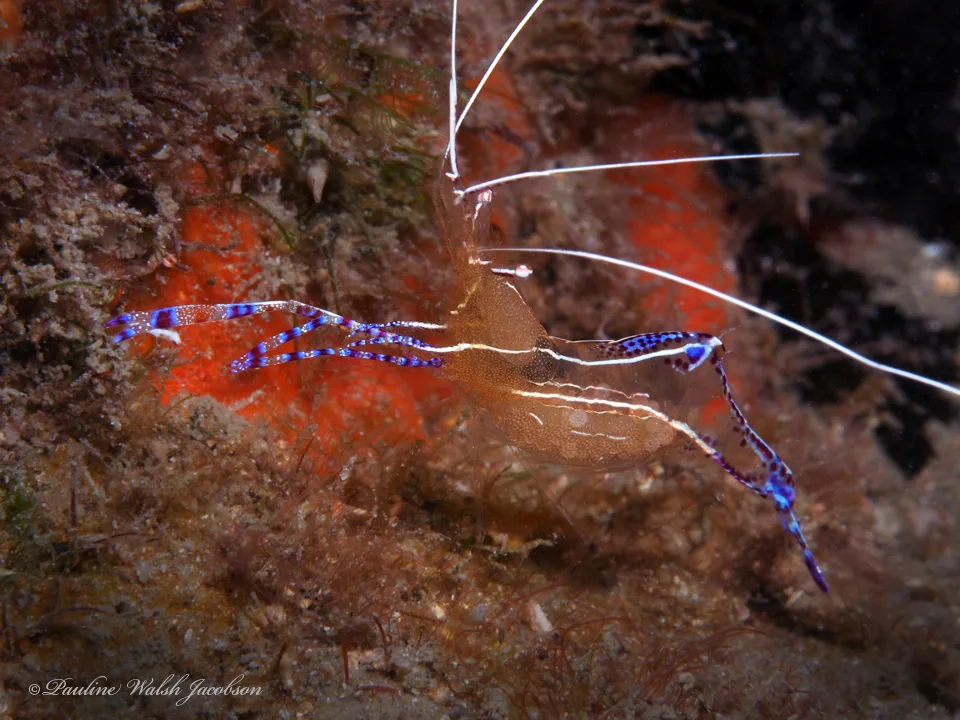
Lysmata amboinensis, the skunk cleaner shrimp, belongs to the cleaner and marble shrimp. Five to six centimetres. Belly, flanks and legs yellow, the back red with a white longitudinal band. The tail fan is red with white marks. That separates it from Lysmata grabhami, the Atlantic sister species. Antennae and the lower segments of the first pair of legs are white. The first two pairs of legs carry small claws. The rostrum is red, white in the middle and serrated above. The white comes from spheres of isoxanthopterin about 300 nm across. Without their spoke structure the stripe would probably be green-blue.
Range and habitat
This describes the origin, not how to furnish the aquarium.
Coral reefs of the Indo-Pacific and the Red Sea, in caves and rock crevices from about ten metres. The range is too wide for a country row.
Keeping
It is the shrimp most often imported for marine aquaria. Peaceful and without harm to other invertebrates. Acclimate carefully, or an osmotic shock follows. In the aquarium it lives about two years. Since a trial in 2011, group keeping is discouraged. Keep a pair. Otherwise peaceful animals remove rivals at night during the moult. At the end of the observation a pair remained.
Diet
They clean fish of parasites and dead skin and eat detritus. They offer the cleaning service with movements of the antennae.
Behaviour and moulting
In the wild in pairs or in groups of up to about 100. In the aquarium, following the 2011 trial, a pair is the right choice, not the wild group.
Reproduction and larvae
Hermaphrodites. Each animal has male and female sex cells. After a moult it can be fertilised in the female role. The eggs are greenish and are carried under the abdomen. After hatching the larvae are sent into open water by beating of the swimmerets. Captive breeding has succeeded.
Gallery
More species in this group
Similar water needs
Species with a similar temperature, a similar pH and a comparable adult size. Whether their behaviour fits as well is what the compatibility check is for.