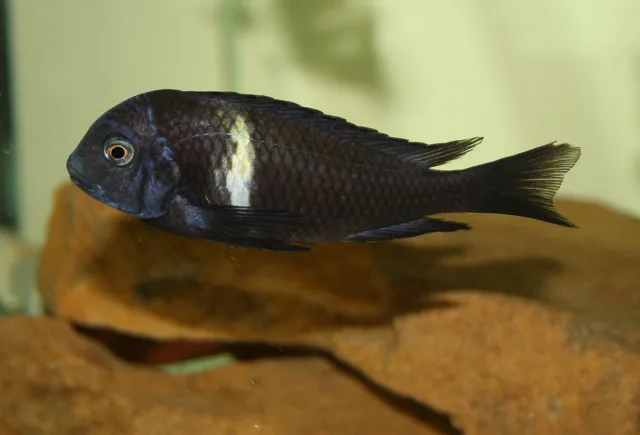
Ocellated shell dweller
Lamprologus ocellatus
22 views
A shell-dwelling cichlid from Lake Tanganyika. Neolamprologus ocellatus is a misspelled variant of the name.
- Temperature
- 23 – 27 °C
- pH
- 8 – 9 pH
- General hardness
- 10 – 20 °dH
- Maximum size
- 6 cm
- Minimum tank size
- 100 L
3 min read · 506 words
Fresh water
Quick facts
Place in the aquarium
Highlighted are the water layer and the spots where the species usually stays in the tank.
- Near the bottom Mostly stays just above the bottom. Food has to reach the substrate.
- Rocks and caves Needs caves, crevices or rockwork as hiding place, territory or spawning site.
- Substrate Sifts through the substrate or burrows into it. Fine, rounded sand without sharp edges suits it.
Shrimp in the tank
Dwarf shrimp at risk
- Not shrimp safe
- Dwarf shrimp at risk
- Shrimplets at risk
- Shrimp safe
- Adult dwarf shrimp
- At risk
- Shrimplets
- Get eaten
- Safe from shrimp size
- about 3 cm
Neolamprologus ocellatus is a risk for small shrimp. Males reach almost 6 cm, and in nature the fish eat small bottom invertebrates and plankton and defend their shell and territory vigorously.
Baby shrimp and small dwarf shrimp under about 3 cm are eaten. Larger shrimp stand a better chance but are chased from the territory. Because the hard, alkaline water of Lake Tanganyika does not suit most dwarf shrimp either, a separate tank makes sense. A small separate tank with moss and leaf litter is the most reliable solution for a stable shrimp colony and needs little effort to run.
Home & range
Overview
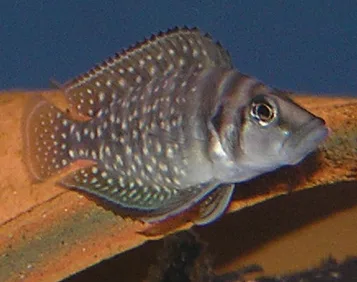
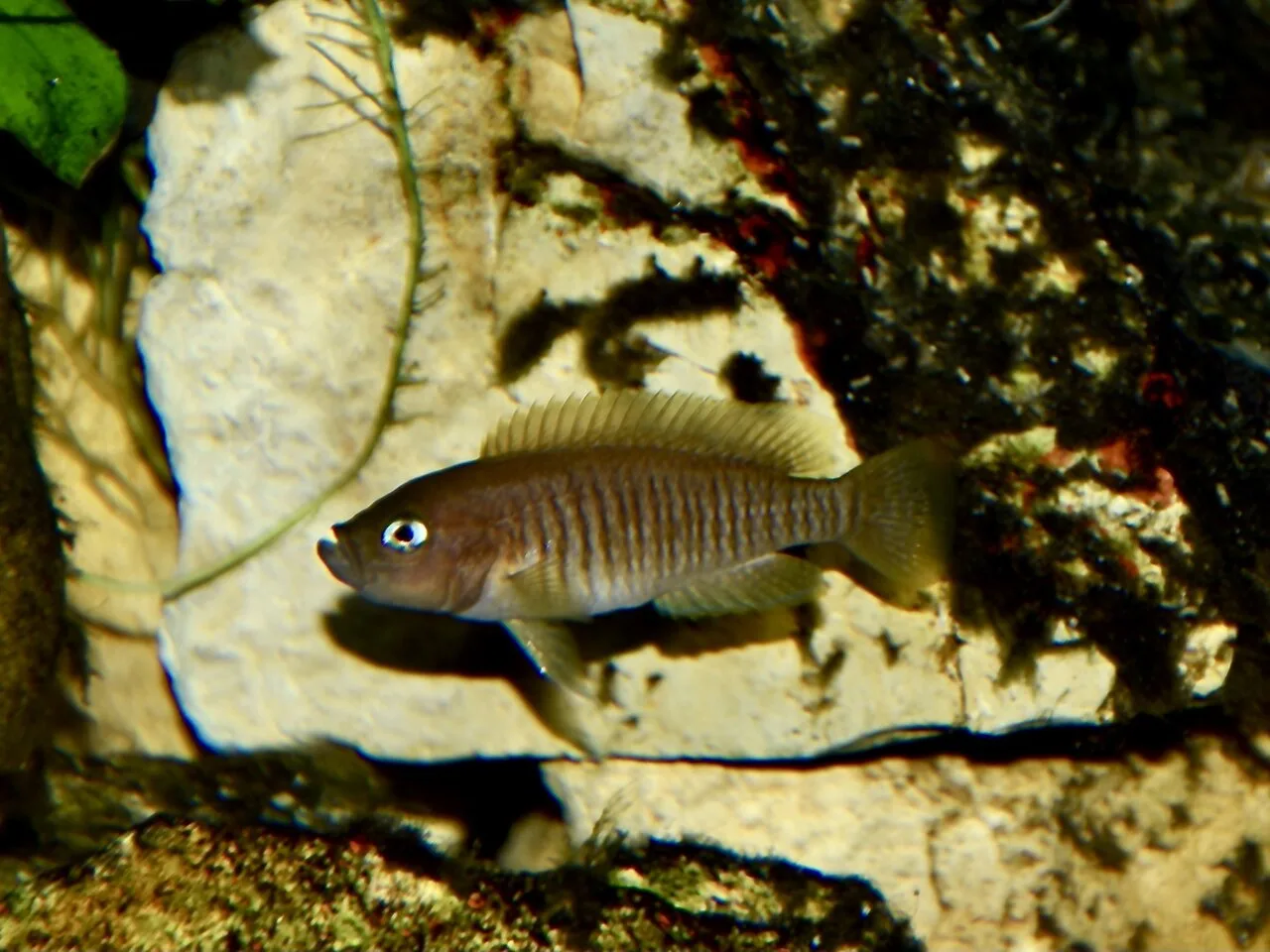
Males almost 6 cm, females to 4 cm. Beige-grey, black-green eye spots on the gill covers.
Features
Neolamprologus ocellatus is a shell-dwelling cichlid. Males grow to almost 6 cm and females to 4 cm. The ground colour is beige-grey to golden yellow, and the scales shimmer towards the belly. Black-green eyespots on the gill covers gave the species its name, ocellatus. Even half-grown fish can be sexed by the dorsal fin: females have a pale edge at the rear, males an orange to yellow edge at the front. Franz Steindachner described the species in 1909. It has been imported to Germany regularly since the late 1970s. The IUCN lists it as least concern.
Origin & habitat
This describes the origin, not how to furnish the aquarium.
Only Lake Tanganyika, at empty Neothauma shells in sand, recorded from 2.5 to 17 m. No riparian state is named.
The species occurs only in Lake Tanganyika. It lives where empty shells of the snail Neothauma lie in the sand, recorded at depths of at least 2.5 to 17 m. Adults and young use the shells as protection from predators.
Care
Imported regularly since the late 1970s. Few demands, without a number.
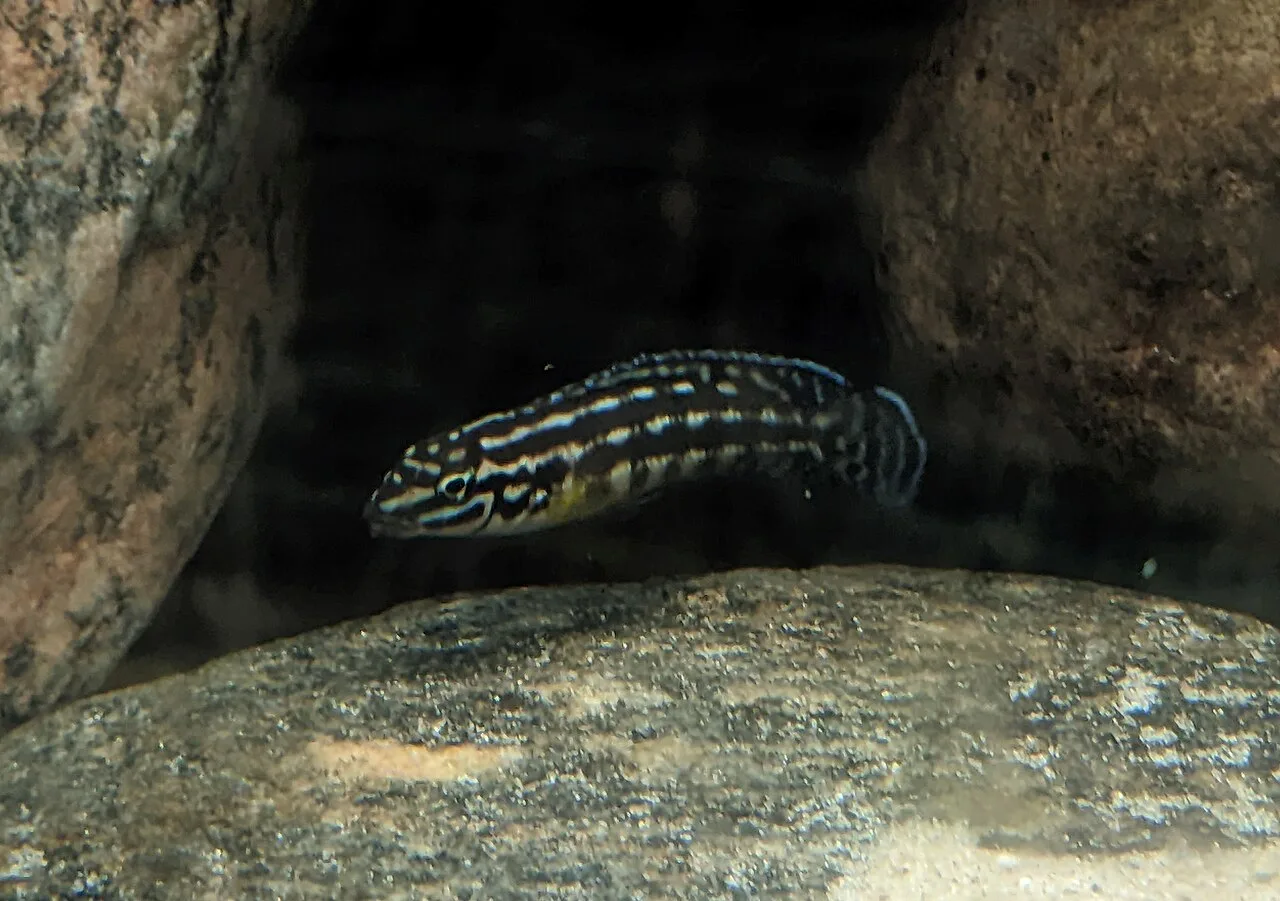
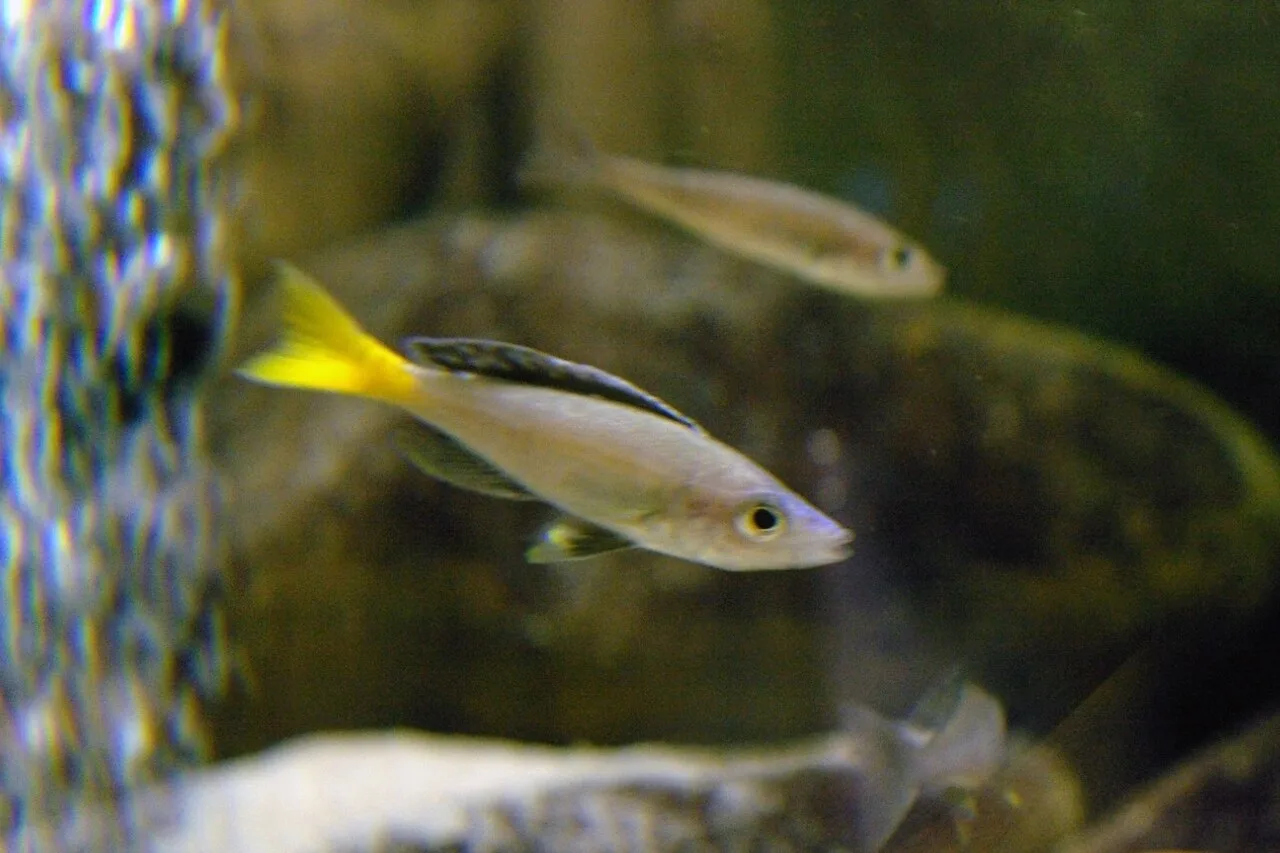
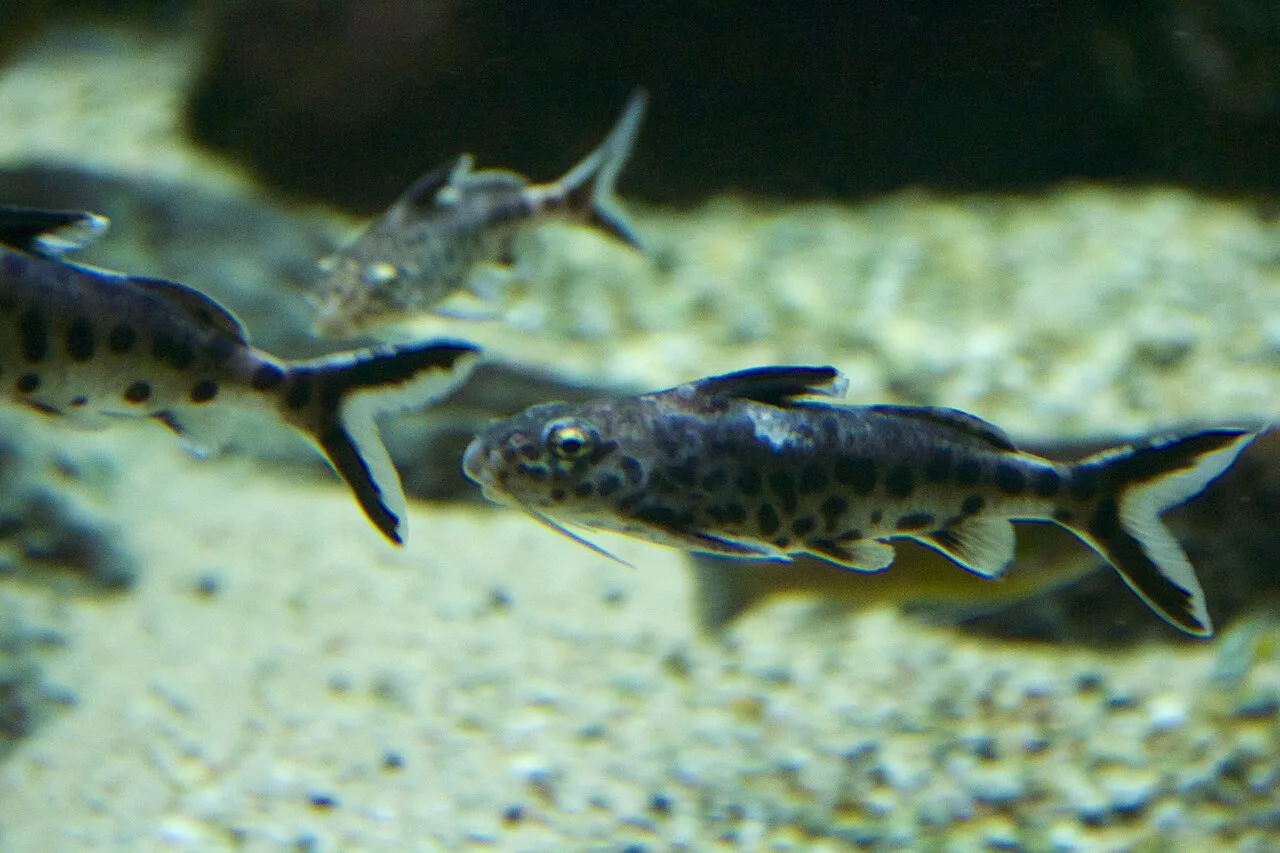
The species is kept at 23 to 27 °C in medium-hard to hard, alkaline water of at least pH 8 to 8.3 and 12 to 14 °KH. The tank should be at least 60 cm long, with a sand bottom and at least one empty, cleaned snail shell per fish, such as from Roman snails. The fish defend their shells and have attacked the hands of keepers. Large, aggressive or predatory fish and mbuna do not fit. Julidochromis, Cyprichromis and Synodontis are named as tankmates.
Sand is needed for natural behaviour, and a thin layer of silica sand is recommended. Feed as much as is eaten in five minutes, with one fasting day a week. Beta-carotene and canthaxanthin support the colour.
Diet
Small invertebrates living on the bottom.
In the wild the species eats small bottom invertebrates and plankton. In aquaria it takes flakes, small pellets, frozen food and live brine shrimp or daphnia. Tubifex and very protein-rich food without plant matter should be avoided.
Behavior
The snail shell is the habitat, not an arbitrary hiding place.
Males defend territories of up to 15 m². Females that occupy shells inside form his harem and defend their shell against other females. The species buries surplus shells so that no competitors settle. Juveniles are territorial from 10 mm and do not form schools.
With a size difference of 5 mm, cannibalism occurred in trials. Females tolerate foreign juveniles unless they are much larger, and almost half the females in the wild had foreign young in their shells. Males spawn with several females at the same time.
Reproduction
Breeding behaviour is the reason it is kept.
The female attaches 20 to 60 eggs about 2 mm in size to the inner wall of the shell, and the male fertilises them from outside. The female fans fresh water over eggs and larvae. After three days the larvae hatch, and after nine to ten days the young show up at the entrance. After 20 to 40 days they leave the shell or are driven out.
Gallery
More species in this group

Similar water needs
Species with a similar temperature, a similar pH and a comparable adult size. Whether their behaviour fits as well is what the compatibility check is for.