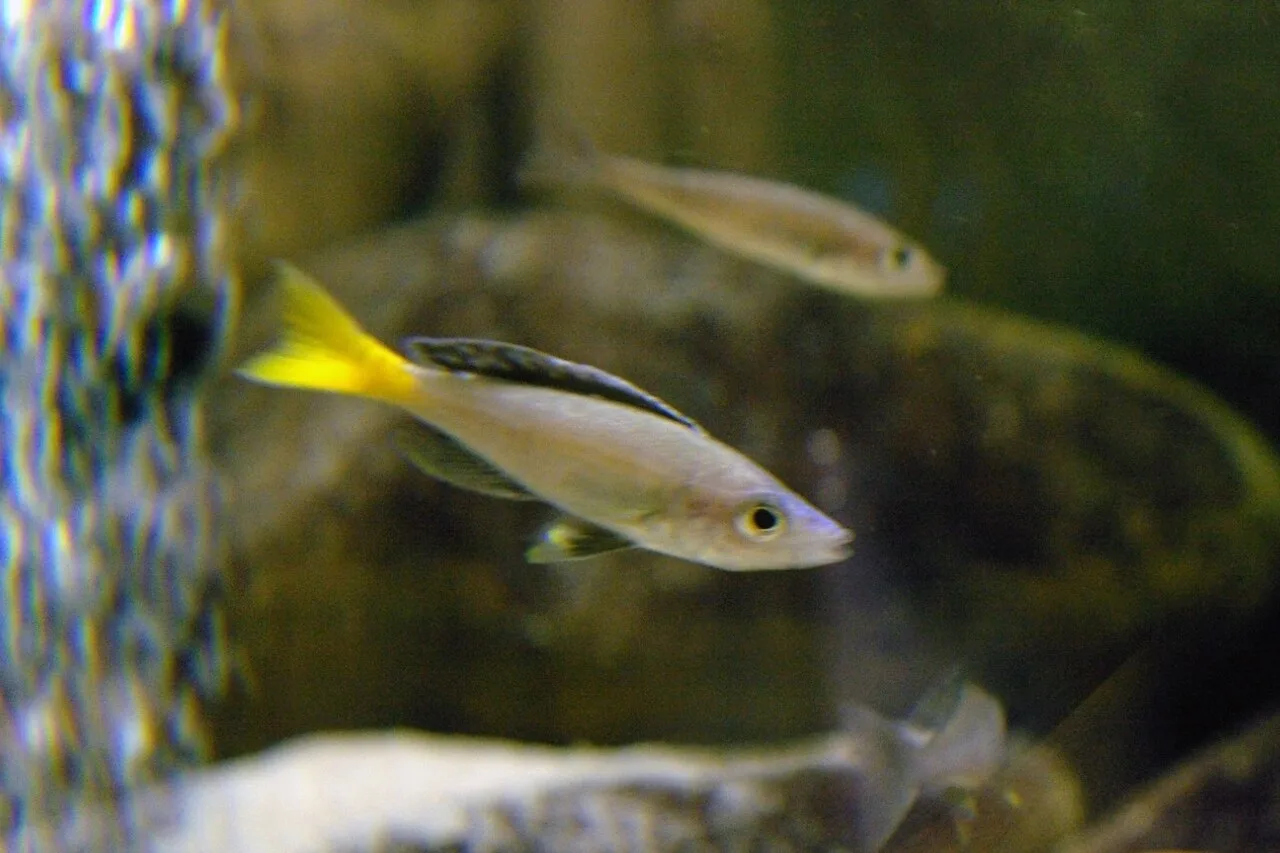
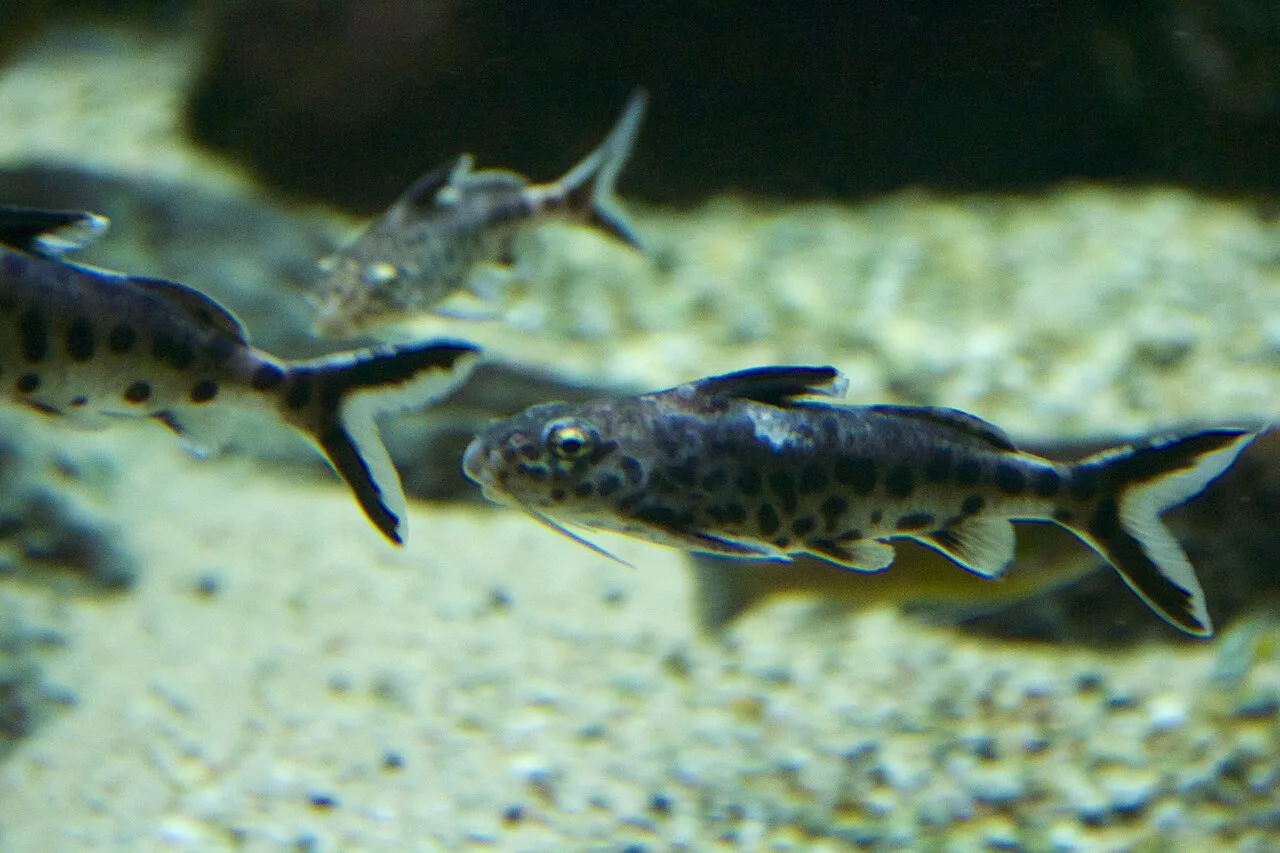
Ornate julidochromis
Julidochromis ornatus
18 views
A slender, yellow-and-black cichlid from Lake Tanganyika. It lives in rock cracks and stays as a pair.
- Temperature
- 24 – 27 °C
- pH
- 8 – 9 pH
- General hardness
- 10 – 20 °dH
- Maximum size
- 8 cm
- Minimum tank size
- 100 L
4 min read · 635 words
Fresh water
Quick facts
Place in the aquarium
Highlighted are the water layer and the spots where the species usually stays in the tank.
- Near the bottom Mostly stays just above the bottom. Food has to reach the substrate.
- Rocks and caves Needs caves, crevices or rockwork as hiding place, territory or spawning site.
Shrimp in the tank
Dwarf shrimp at risk
- Not shrimp safe
- Dwarf shrimp at risk
- Shrimplets at risk
- Shrimp safe
- Adult dwarf shrimp
- At risk
- Shrimplets
- Get eaten
- Safe from shrimp size
- about 4 cm
The golden julie endangers dwarf shrimp. It grows to about 8 cm, lives on the rocky bottom and scrapes crustaceans and microorganisms off the rock with its teeth. It is very aggressive towards tankmates. Young shrimp and Neocaridina or Caridina are eaten. Larger shrimp from about 4 cm stand a better chance but are chased within its territory.
Dwarf shrimp are kept separately. In a Tanganyika tank with hard water, shrimp are rarely a good choice anyway. Hiding places in the rock help only a little.
Home & range
Overview
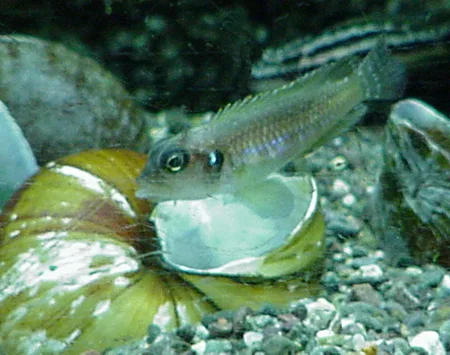
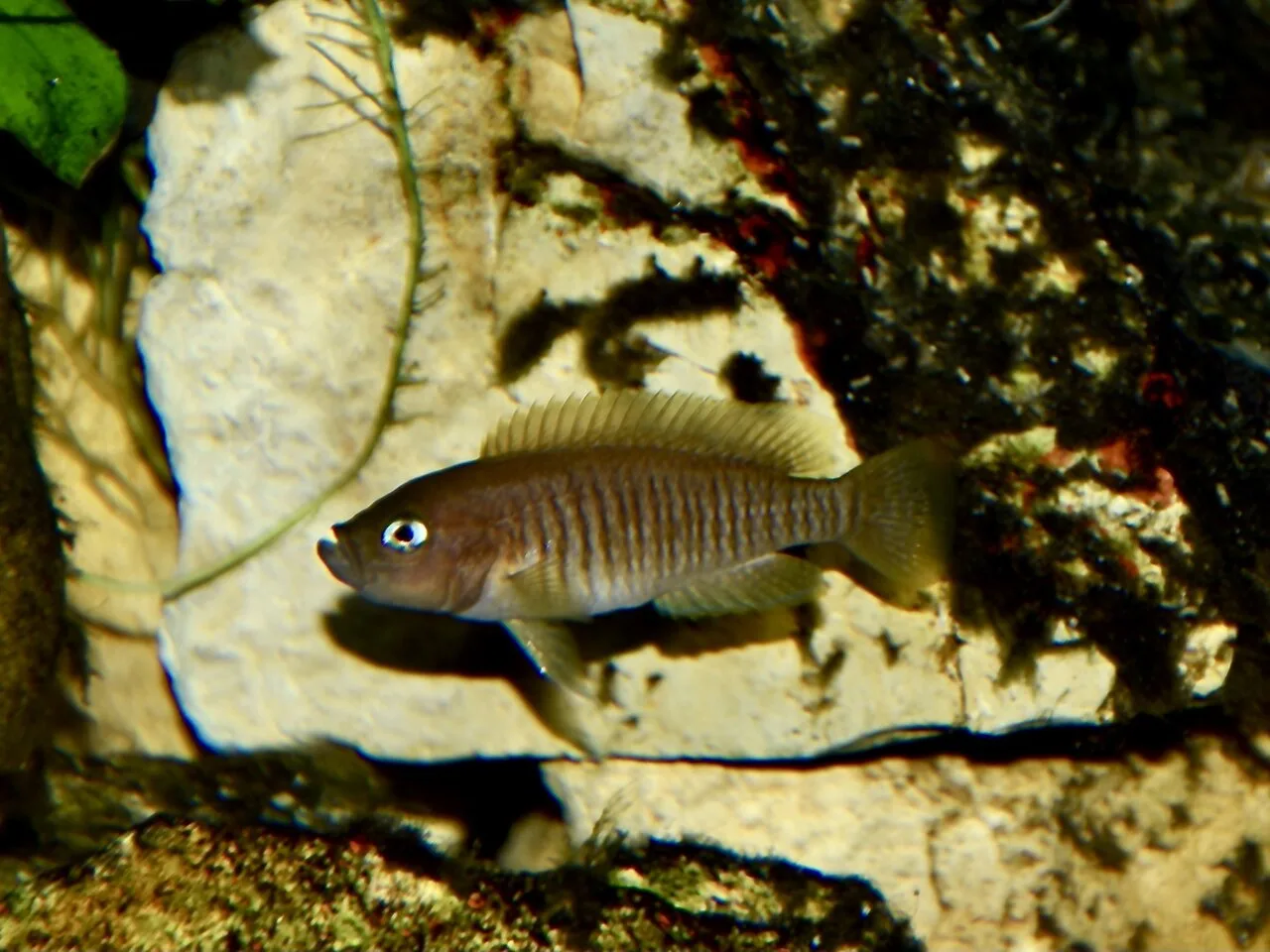
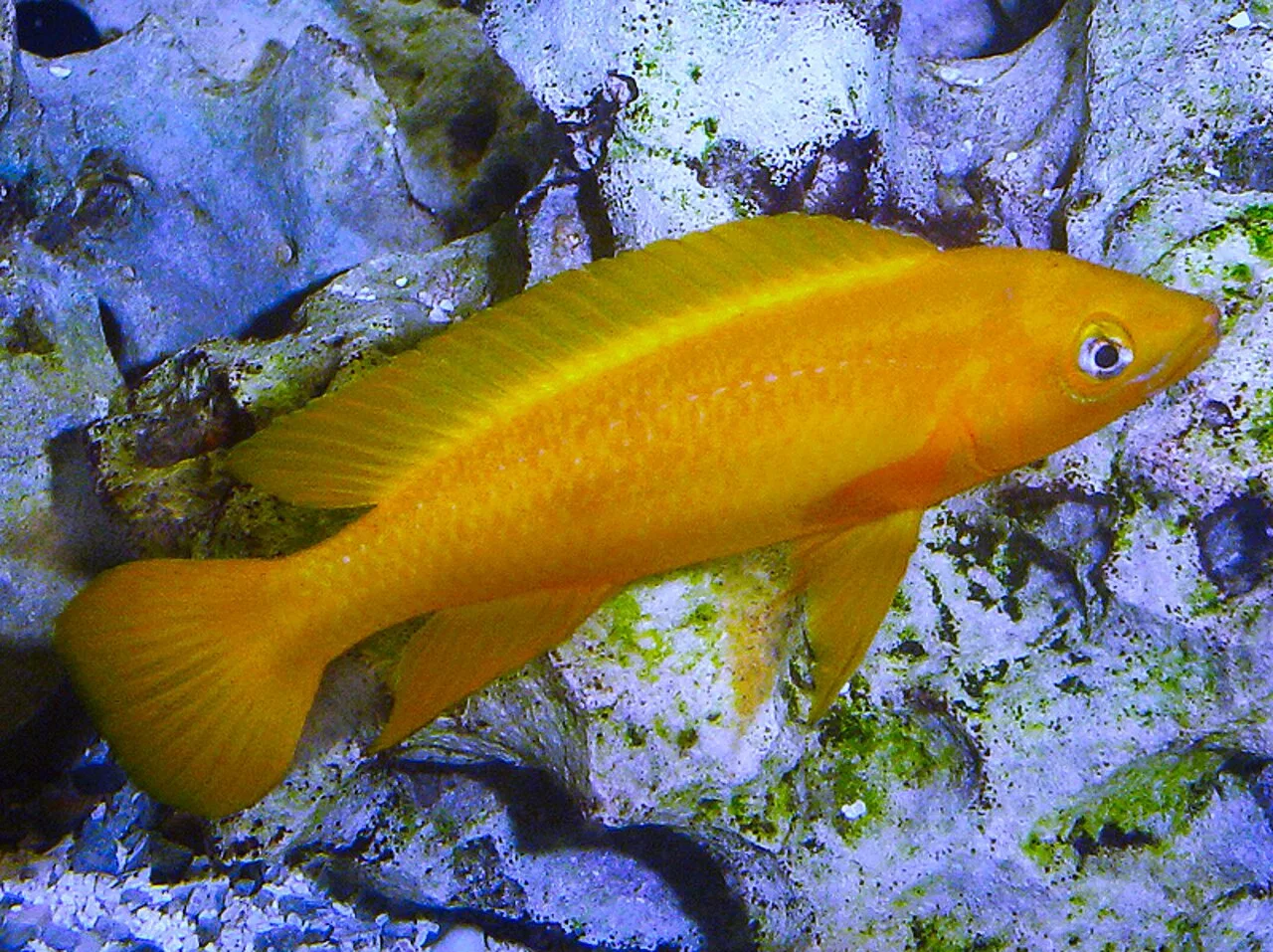
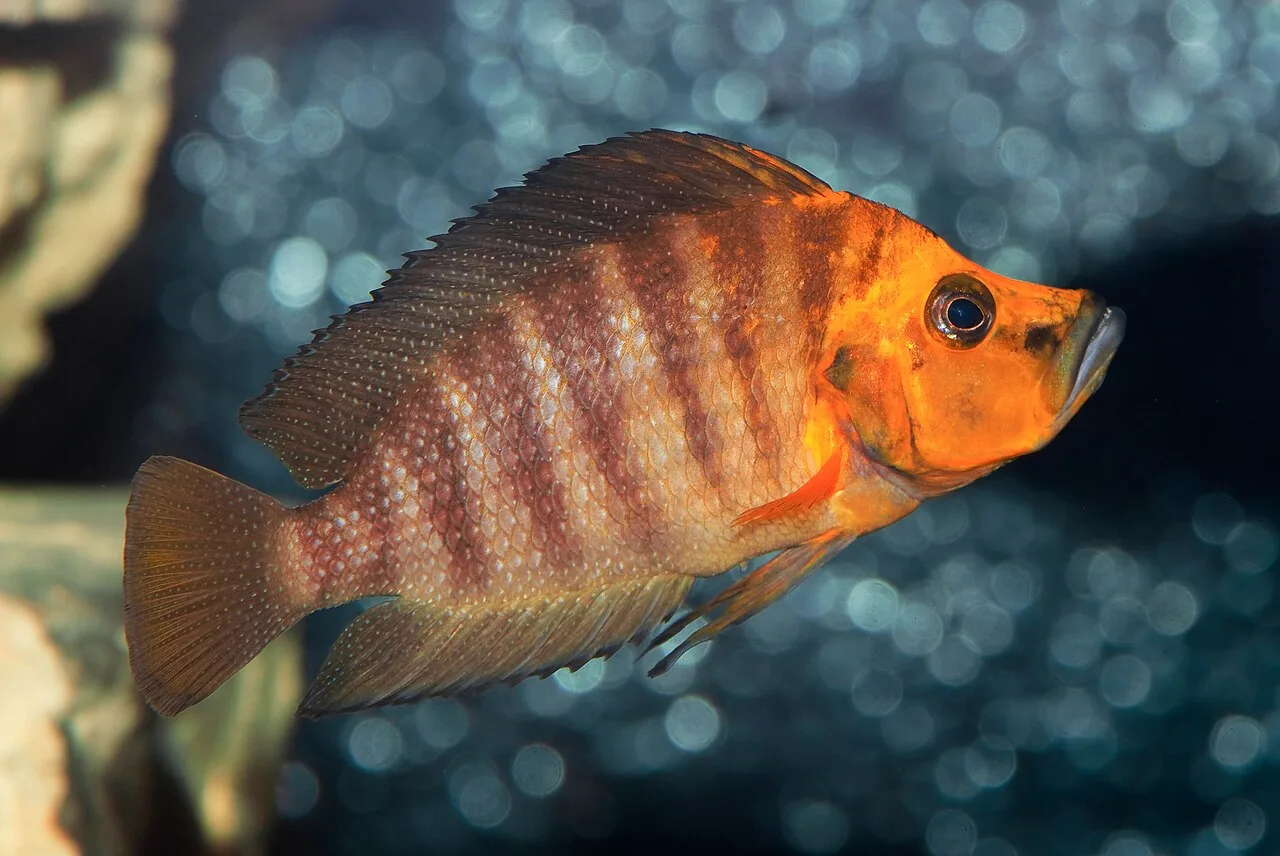
Julidochromis ornatus reaches about 8 cm. The body is elongate, yellow with black longitudinal stripes. The species is not Julidochromis marlieri, the checkerboard julie with a latticed pattern. Both want rock and hard water, but the pattern separates them.
The fish often stand head-down or sideways in a crack. That is the normal posture and not a sign of illness. Illness shows as a clamped pattern and as a fish that is no longer allowed into a crack.
Features
Adults are a mix of yellow and white, with three black bands along the sides and face and a black spot at the base of the rounded tail. Juveniles have a white, adults a yellow dorsal fin, sometimes with black tips. It differs from the similar Melanochromis auratus by less black on the pectoral and pelvic fins and a single tail spot instead of several small dots. Females are a little smaller than males and show submissive gestures because the male is very aggressive. George Albert Boulenger described the species in 1898. Ornatus means decorated.
Origin & habitat
This describes the origin, not how to furnish the aquarium.
The rock zone of Lake Tanganyika, clear, alkaline water, cracks and overhangs. The lake is the origin. Individual stretches of shore are not a point map here.
In the rock each pair has a crack it can retreat into. In the aquarium that crack has to be built, or the fight ends at the glass.
The species occurs only at the extreme northern and southern shores of Lake Tanganyika, on or near the rocky bottom at 4 to 12 m depth. The known range covers only 200 km². The IUCN rates the species as near threatened. A 2020 study showed that warmer water increases aggression, which could weaken cooperative breeding.
Care
Layout
24 to 27 °C, pH 8 to 9, hard. From about 100 litres and 80 cm for a pair, with a rockwork of many cracks. Sand or fine gravel in front. Two pairs need clearly more length and separate layouts out of sight.
Company
Other Tanganyika species that use other zones, such as shell dwellers on the open sand, if the tank offers both. Malawi mbuna and soft-water fish do not belong. Shrimp rarely survive. The julie digs little.
Diet
Small animal food. Brine shrimp, mosquito larvae, frozen food and a granule that sinks into the cracks. The fish feed in front of the entrance and retreat. Food only at the surface misses them.
Several small feeds, so the shyer fish still finds something.
Behavior
A pair with a crack as its centre. A pair that fits shares the entrance. A pair that does not get on does not become one just because they were bought together. Losing fish stand at the top and thin out.
The species is active by day and territorial over a few hands' breadths around its own crack, not over the whole tank.
Breeding in groups
In the wild the species lives in groups that mostly breed cooperatively. Each group uses one rock as nest and shelter, with a dominant breeding pair and zero to six subordinate helpers. Larger breeders have more helpers, and larger groups more offspring. Helpers defended the shelter 94 percent of the time. The species is a bottom-feeding omnivore that scrapes crustaceans and microorganisms off the rock with its teeth.
Reproduction
Cave spawner. The clutch lies in the crack, both parents guard. The young stay nearby for a long time and are tolerated by the parents, often still when the next brood comes. Constantly taking the stones apart destroys that.
In a community tank young are possible if the crack is tight enough that other fish cannot enter.
The female lays about 20 to 50 eggs in a cave, and the young hatch after 48 hours. They stay near the spawning site for a long time and are protected by the parents until the next clutch. Hybrids with Julidochromis marlieri occur, are sterile and resemble J. transcriptus.
More species in this group

Similar water needs
Species with a similar temperature, a similar pH and a comparable adult size. Whether their behaviour fits as well is what the compatibility check is for.