Lemon cichlid
Neolamprologus leleupi
25 views
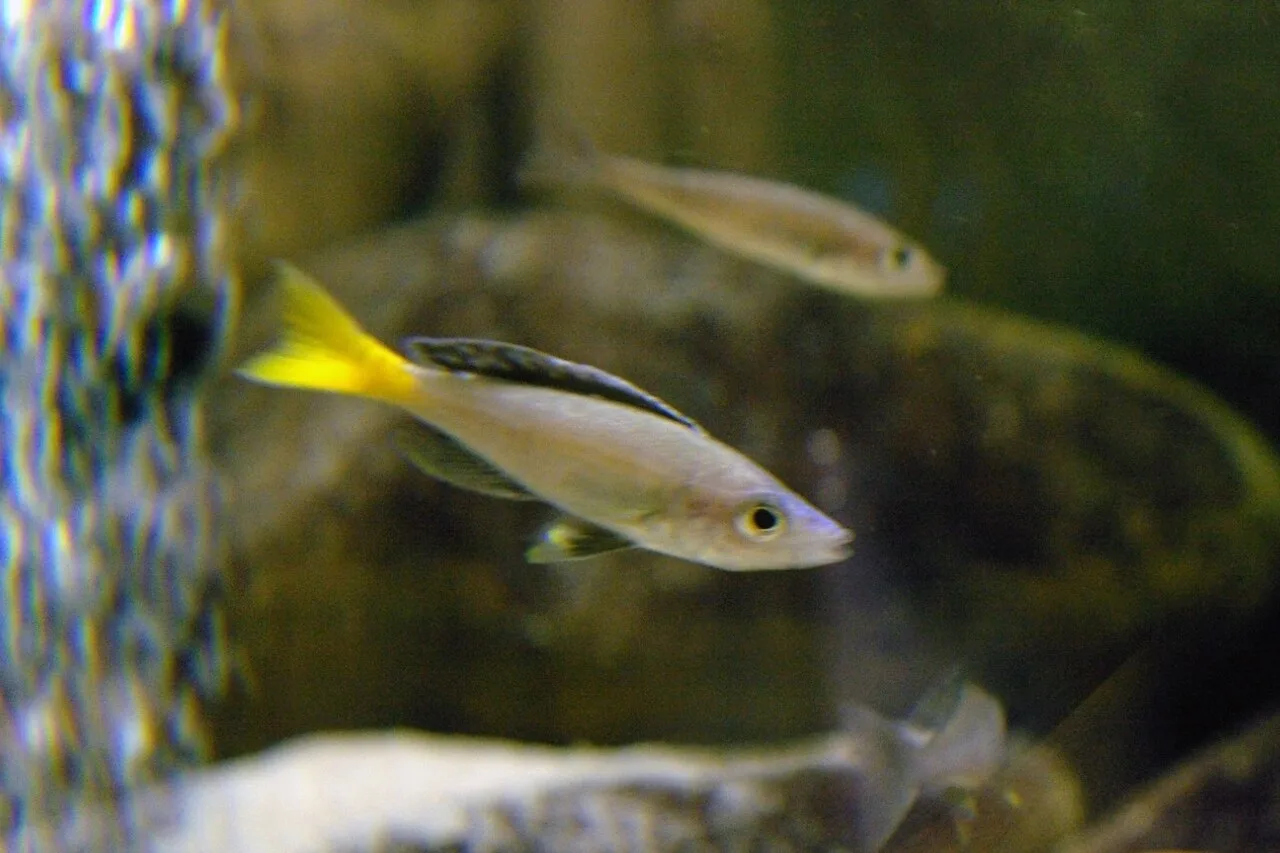
A slender, bright yellow or orange cichlid from Lake Tanganyika. It lives by its cave and stays intolerant of conspecifics in a short tank.
- Temperature
- 24 – 28 °C
- pH
- 8 – 9 pH
- General hardness
- 10 – 20 °dH
- Maximum size
- 10 cm
- Minimum tank size
- 120 L
5 min read · 826 words
Fresh water
Quick facts
Further published values
- Lifespan
- 8 – 10 a
Place in the aquarium
Highlighted are the water layer and the spots where the species usually stays in the tank.
- Near the bottom Mostly stays just above the bottom. Food has to reach the substrate.
- Rocks and caves Needs caves, crevices or rockwork as hiding place, territory or spawning site.
Shrimp in the tank
Dwarf shrimp at risk
- Not shrimp safe
- Dwarf shrimp at risk
- Shrimplets at risk
- Shrimp safe
- Adult dwarf shrimp
- At risk
- Shrimplets
- Get eaten
- Safe from shrimp size
- about 4 cm
The lemon cichlid is dangerous for dwarf shrimp. It grows to 10 cm, lives in cracks and crevices of the rocky shore and searches the growth there for invertebrates. Shrimp use exactly these hiding places, so Neocaridina and Caridina at 2 to 3 cm are easily found and eaten. Young shrimp have no chance. Larger shrimp from about 4 cm are usually no longer overpowered, but the hard, alkaline Tanganyika water suits only a few shrimp species anyway. Dwarf shrimp are therefore better kept in a tank of their own.
Home & range
Overview
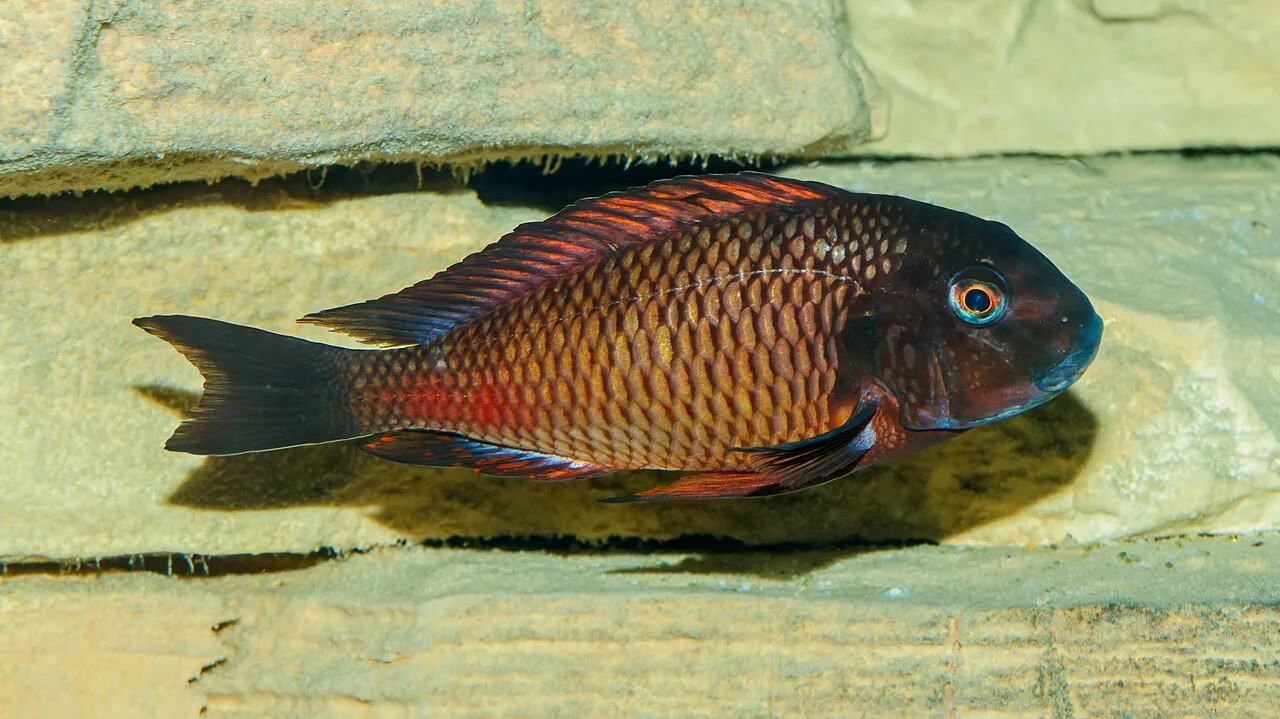
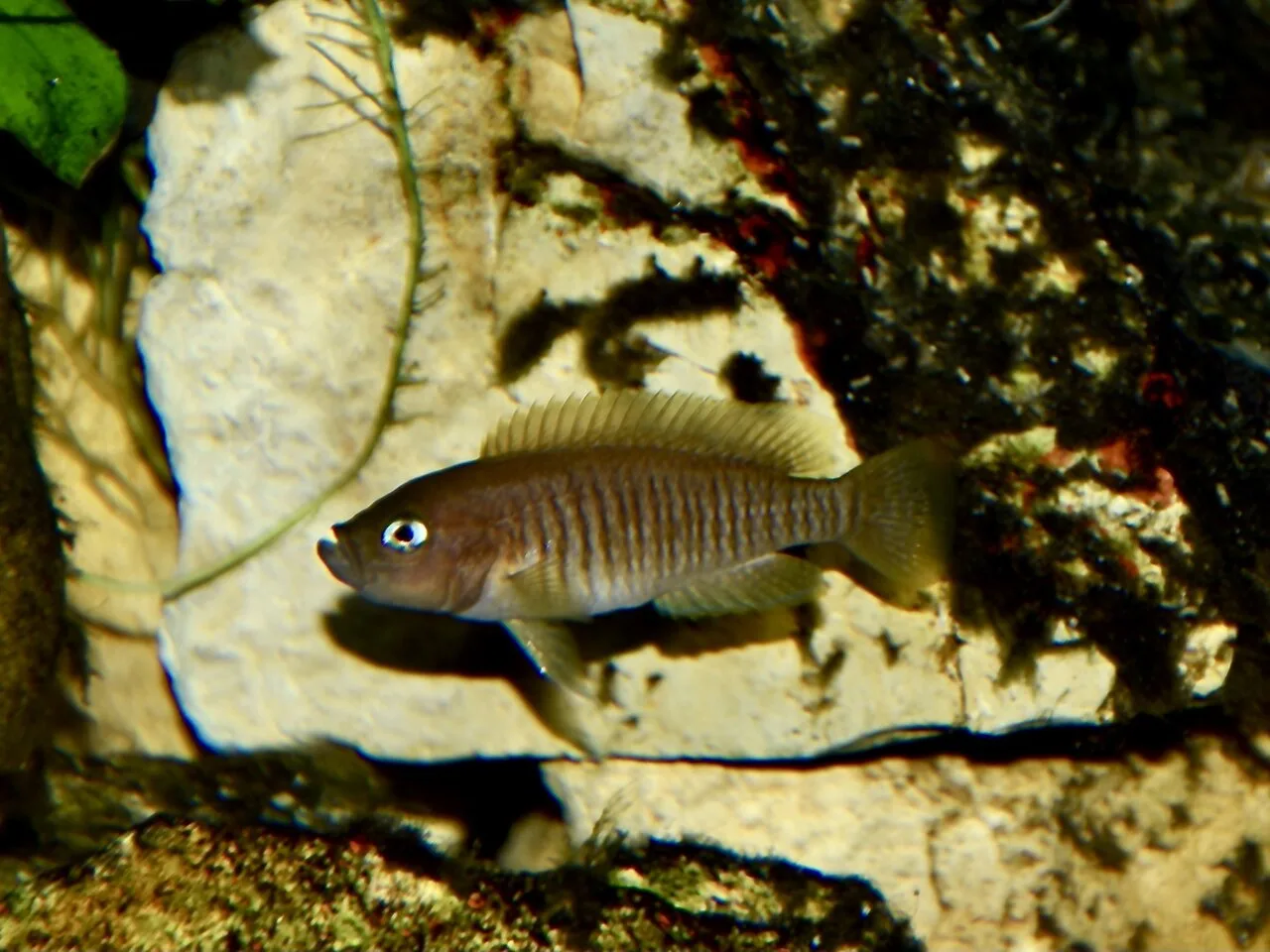
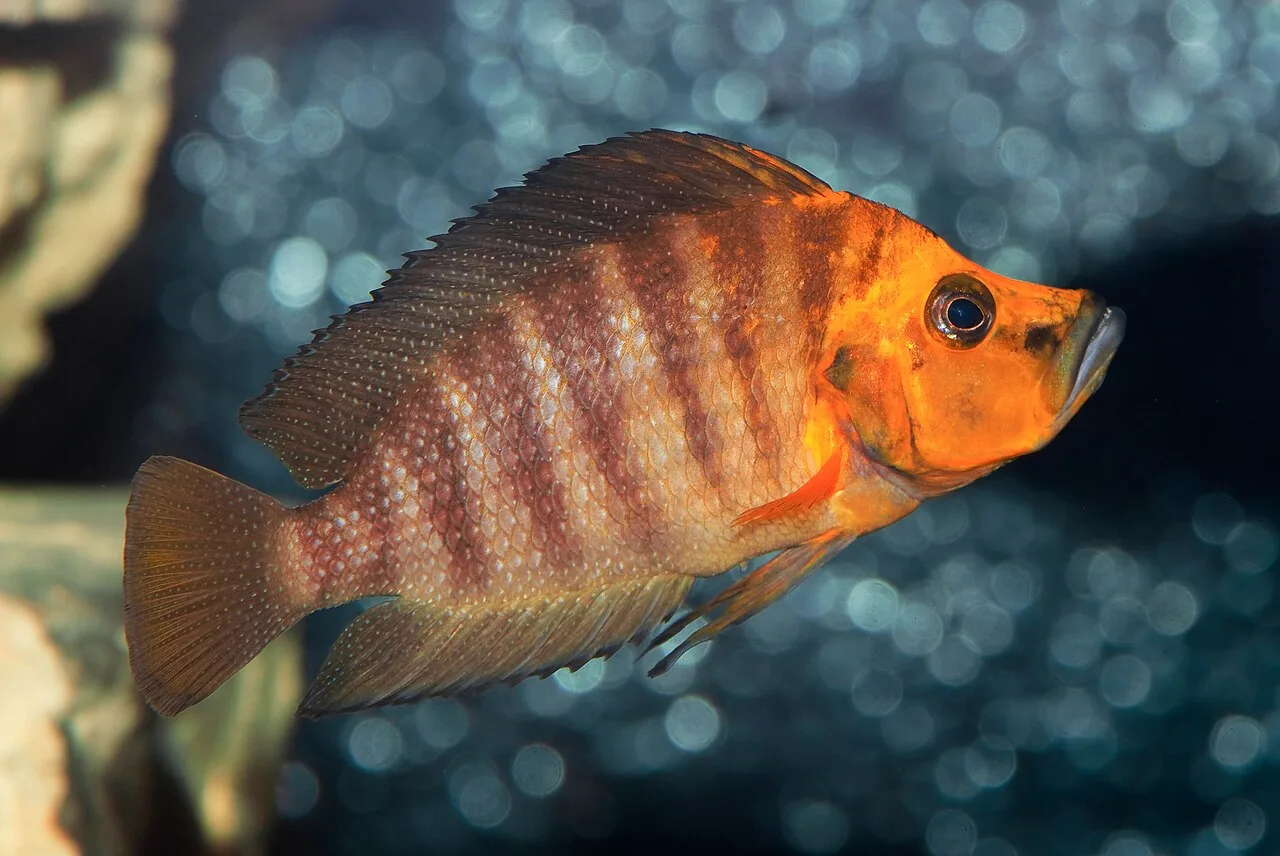
Neolamprologus leleupi reaches about 8 to 10 cm. The body is elongate, the colour lemon yellow to orange depending on the population. Males grow larger and have longer fins. The species is not a school and not a Malawi mbuna, even though the colour suggests a yellow mouthbrooder.
Each fish needs a cave it can treat as its own. One shared tube for two adults is too little. The colour holds only if the fish is not driven off all the time and the water is hard and clear.
Features and confusion
The species is also called Tanganyika gold cichlid or gold cichlid, and the older synonym is Lamprologus leleupi. It is named after the Belgian entomologist Narcisse Leleup, who collected the type specimen. The pectoral fins are relatively long, and the other fins may have a dark or light blue edge. The iris and a narrow stripe below the eye shimmer light blue. With age the yellow fades somewhat, and the fish darkens especially around the mouth. The colour ranges from bright yellow to deep brown, with both colours occurring at the same localities.
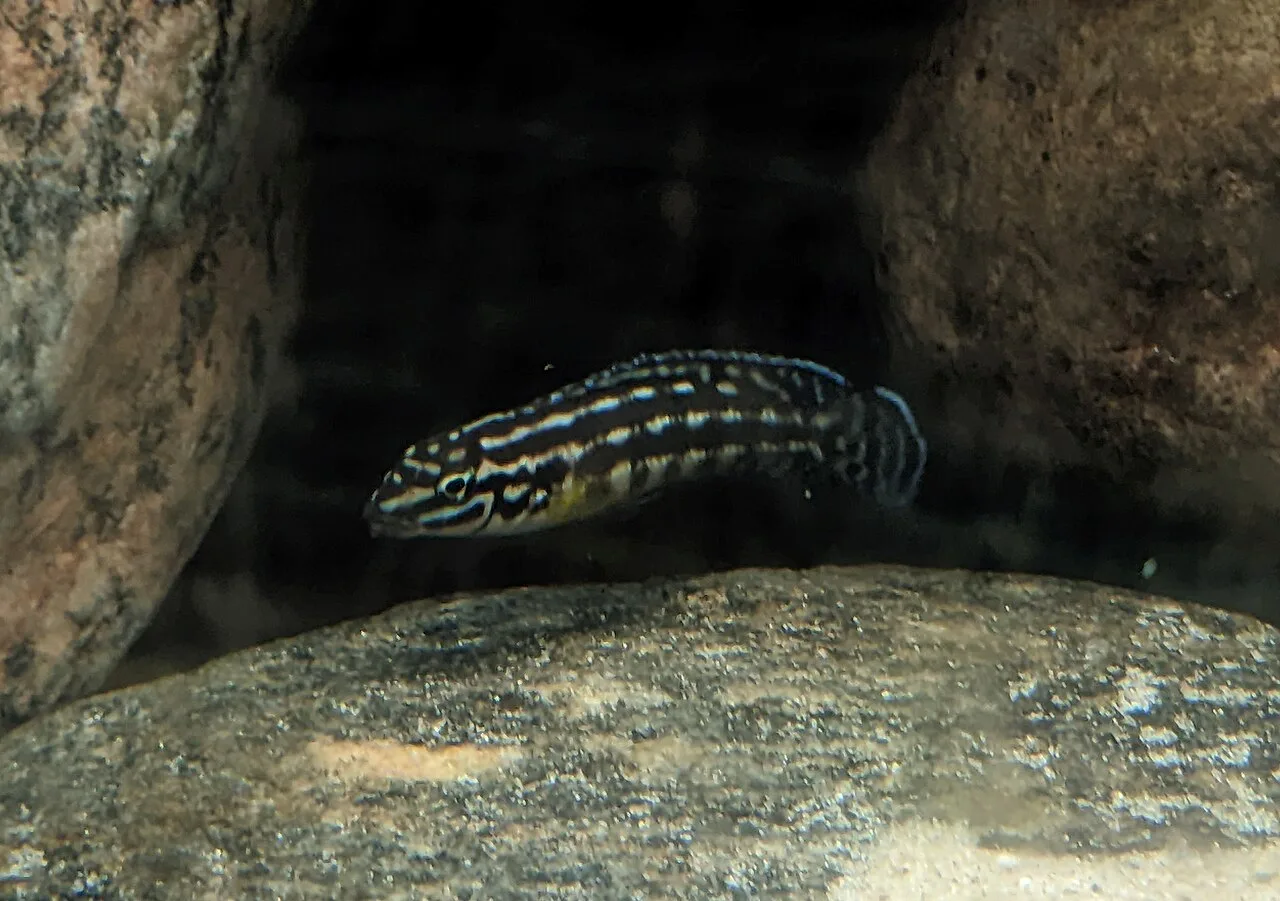
The species is very often confused with Neolamprologus longior, formerly a subspecies and still often sold as leleupi. A clear kink above the eye marks leleupi, and longior lacks it. N. leleupi melas is now regarded only as a colour variant. Despite the similar name, Neolamprologus leloupi looks quite different.
Origin & habitat
This describes the origin, not how to furnish the aquarium.
The rock zone of Lake Tanganyika, clear, alkaline, oxygen-rich shores. The populations differ in shade. The lake is the origin, not a random East African spot. Other Neolamprologus, such as the shell dweller, share the lake and not the behaviour.
In the rock a short fight leads into the next crack. In the aquarium that crack has to be built.
The species occurs throughout the lake but lives only on the rocky shore. There it stays in cracks and crevices and searches the dense growth on the rock for invertebrates.
Care
Layout
24 to 28 °C, pH 8 to 9, hard. From about 120 litres and 80 cm for a pair, with a rockwork of many caves. Sand or fine gravel. For several fish, clearly more length and more caves than fish. A single fish is possible and often more peaceful than two males.
Company
Other Tanganyika species that use other zones, such as shell dwellers on the sand, if the tank offers both. Malawi mbuna and soft-water fish do not belong. Shrimp rarely survive. The species leaves tough epiphytes more alone than an mbuna does, but it does not eat algae as its main food.
Keeping
The advice is to keep only one pair even in larger tanks, because fights are common between males, between females and also between the sexes. Many caves and hiding places give shelter, especially to young fish. When building caves the males dig hard, and poorly secured rockwork can collapse.
Diet
Small animal food. Brine shrimp, mosquito larvae, frozen food and a granule that sinks into the cave zone. The fish feed in front of the entrance and retreat. Food only at the surface misses them.
Several small feeds also keep the shyer fish in the food, without the dominant male clearing everything.
The species is not fussy and takes almost any dry, frozen or live food.
Behavior
A cave territory. The dominant fish stands in the entrance and drives off whoever wants the same crack. Short threats with spread fins are normal. A fish that is no longer allowed into a cave and hangs at the top of the glass has to come out, or it needs a second layout out of sight.
The species is active by day, but not hectic. It patrols a few hands’ breadths around its own cave.
Loner in the wild
In the lake both males and females live as loners without a fixed territory and roam through the habitat. Only for breeding do they form a temporary pair bond and then defend the brood. This sets the species apart from most other Neolamprologus.
Reproduction
Cave spawner. The female lays in the cave, both parents guard. The young stay near the entrance for a long time. In a species tank with enough caves a small group grows. In a full community tank the spawn is eaten.
Constantly shining a light into the cave breaks the brood.
Brood and triggers
In the wild the species breeds in caves. In the aquarium it sometimes spawns in quite open places, for example on the front glass just above the bottom. Beforehand the male usually digs a pit and tries to undermine objects, preferably between larger stones and the glass. The eggs stick to the ceiling or walls of the cave. The female guards and fans them, and the male secures the territory. The young hatch after a few days and stay with the female for several weeks. Rearing is described as easy. Several water changes of about 20 percent, or lowering the temperature by 2 to 3 °C for a few days, can encourage spawning.
Gallery
More species in this group

Similar water needs
Species with a similar temperature, a similar pH and a comparable adult size. Whether their behaviour fits as well is what the compatibility check is for.