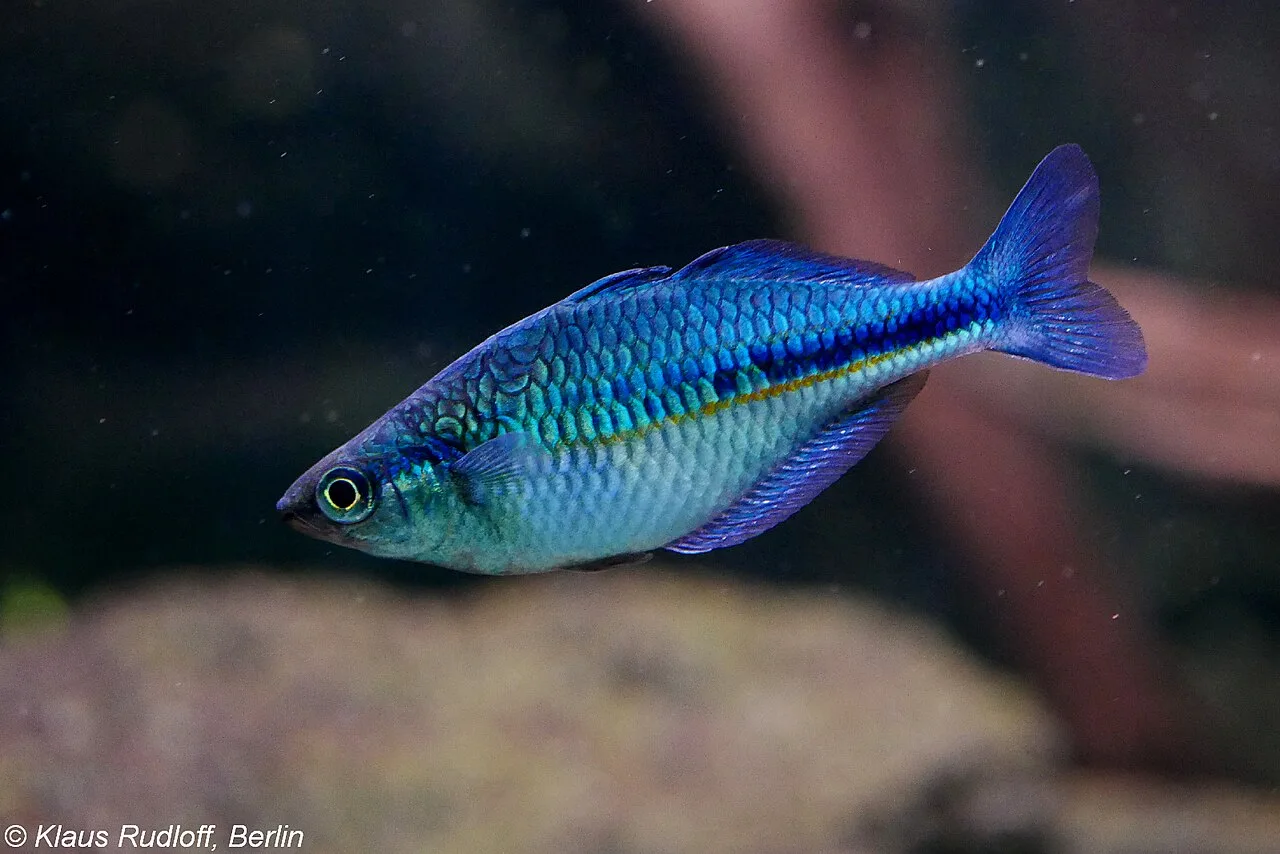
Peppermint shrimp
Lysmata wurdemanni
3 views
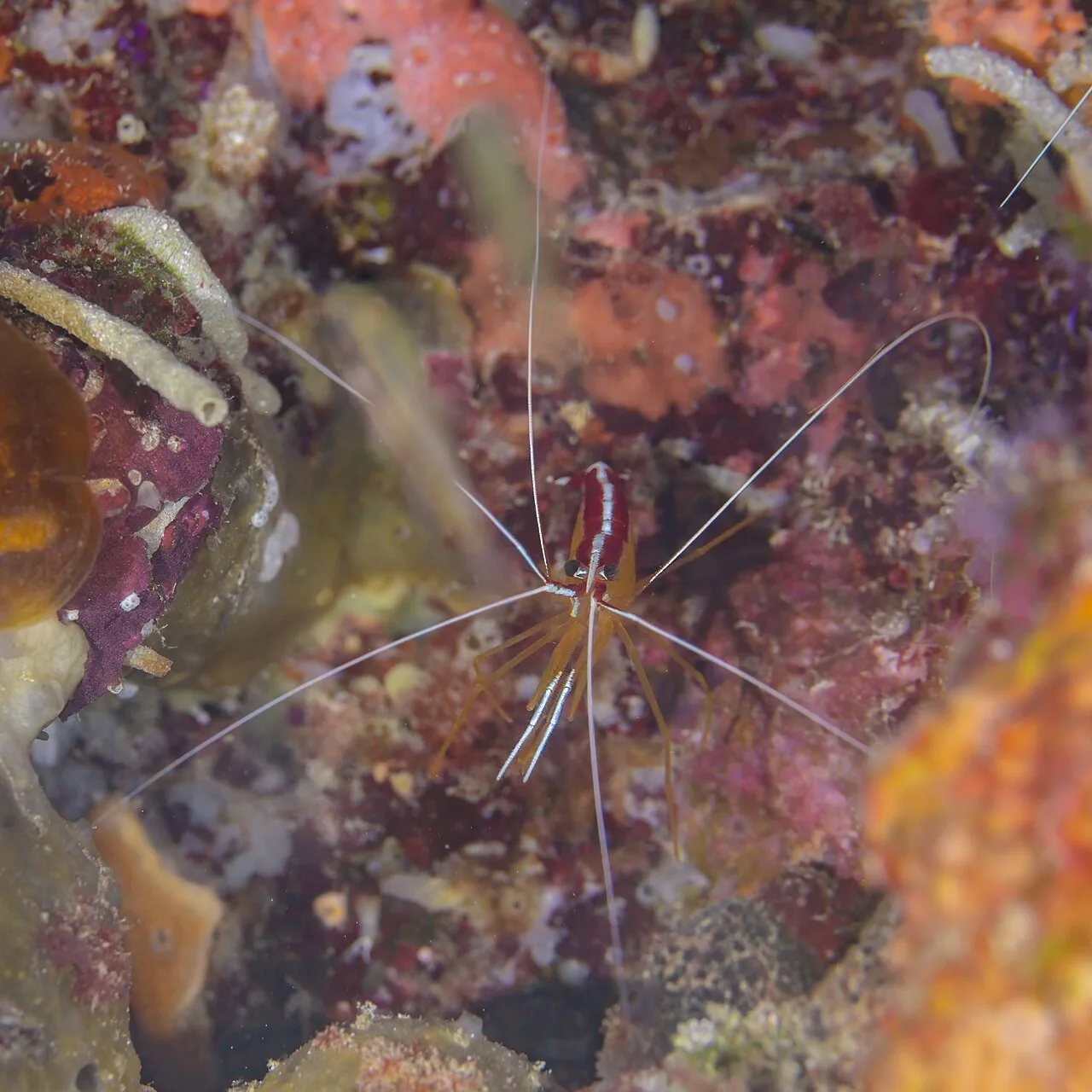
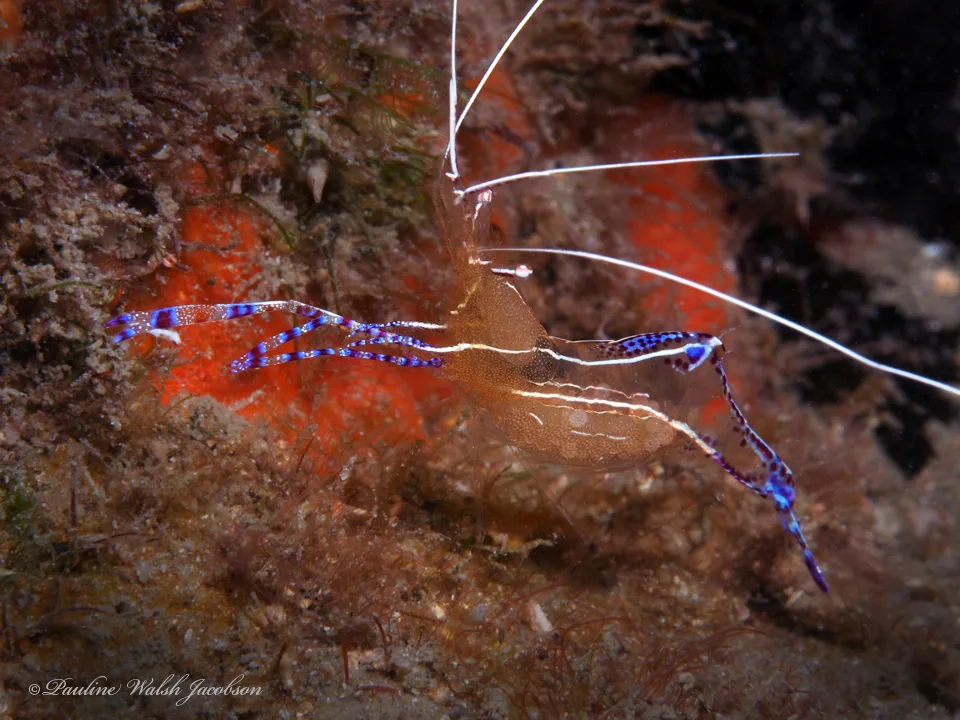
A translucent marine shrimp with red stripes from the Atlantic coast of the United States. Several species are sold under its trade name.
- Temperature
- 22 – 27 °C
- pH
- 8 – 8.4 pH
- Maximum size
- 7 cm
- Social behavior
- Group
- Diet
- Omnivore
2 min read · 206 words
Marine
Quick facts
Further published values
- Minimum group size
- 2
- Minimum tank size
- 60 L
Place in the aquarium
Highlighted are the water layer and the spots where the species usually stays in the tank.
- Near the bottom Mostly stays just above the bottom. Food has to reach the substrate.
- Rocks and caves Needs caves, crevices or rockwork as hiding place, territory or spawning site.
Home & range
Hatched countries are where the species occurs. It lives in particular waters there, not across the whole country. The points name known waters for orientation, not collection sites.
- Country of origin
- Water for orientation
Native
- Atlantic and Gulf coast of the United States
- From Long Island to Florida and along the Gulf to Texas.
Overview
Lysmata wurdemanni reaches up to 7 cm. Strong red stripes run over the translucent body, reminiscent of peppermint candy. The eggs are bright green.
Not every peppermint is a peppermint
Many shrimp formerly identified as Lysmata wurdemanni belong to other species, such as Lysmata boggessi and Lysmata rathbunae. The shrimp used in reef tanks against glass anemones (Aiptasia) is usually Lysmata boggessi. Anyone who wants to fight glass anemones looks for that name.
Range and habitat
This describes the origin, not how to furnish the aquarium.
Atlantic coast of the United States from Long Island to Florida and the Gulf of Mexico from Florida to Port Aransas in Texas. An occurrence in the northern Caribbean is not confirmed.
Keeping
Tank
Marine tank from about 60 litres with rockwork and crevices.
Water
22 to 27 °C, pH 8.0 to 8.4. Acclimate slowly to the density. No copper.
Companions
In small groups or pairs, with peaceful fish.
Diet
Omnivore and scavenger. Frozen food, flakes, granules, detritus.
Behaviour and moulting
Nocturnal, in crevices by day. Usually tolerant of each other.
Reproduction and larvae
An animal is male at first and usually becomes a hermaphrodite after four moults. As a hermaphrodite it acts as a male between moults and as a female directly after a moult. Female animals release scent two to eight hours before the moult, which the males follow. The larvae live in open water.
Gallery
More species in this group
Similar water needs
Species with a similar temperature, a similar pH and a comparable adult size. Whether their behaviour fits as well is what the compatibility check is for.