Sexy shrimp
Thor amboinensis
34 views
A small marine shrimp, often on sea anemones. Protandric: male first, female later. Up to 2.5 cm.
- Temperature
- 24 – 27 °C
- pH
- 8 – 8.4 pH
- Maximum size
- 2.5 cm
- Social behavior
- Group
- Diet
- Omnivore
2 min read · 281 words
Marine
Quick facts
Further published values
- Lifespan
- 3 a
- Minimum tank size
- 40 L
Place in the aquarium
Highlighted are the water layer and the spots where the species usually stays in the tank.
- Near the bottom Mostly stays just above the bottom. Food has to reach the substrate.
- Rocks and caves Needs caves, crevices or rockwork as hiding place, territory or spawning site.
Home & range
Overview
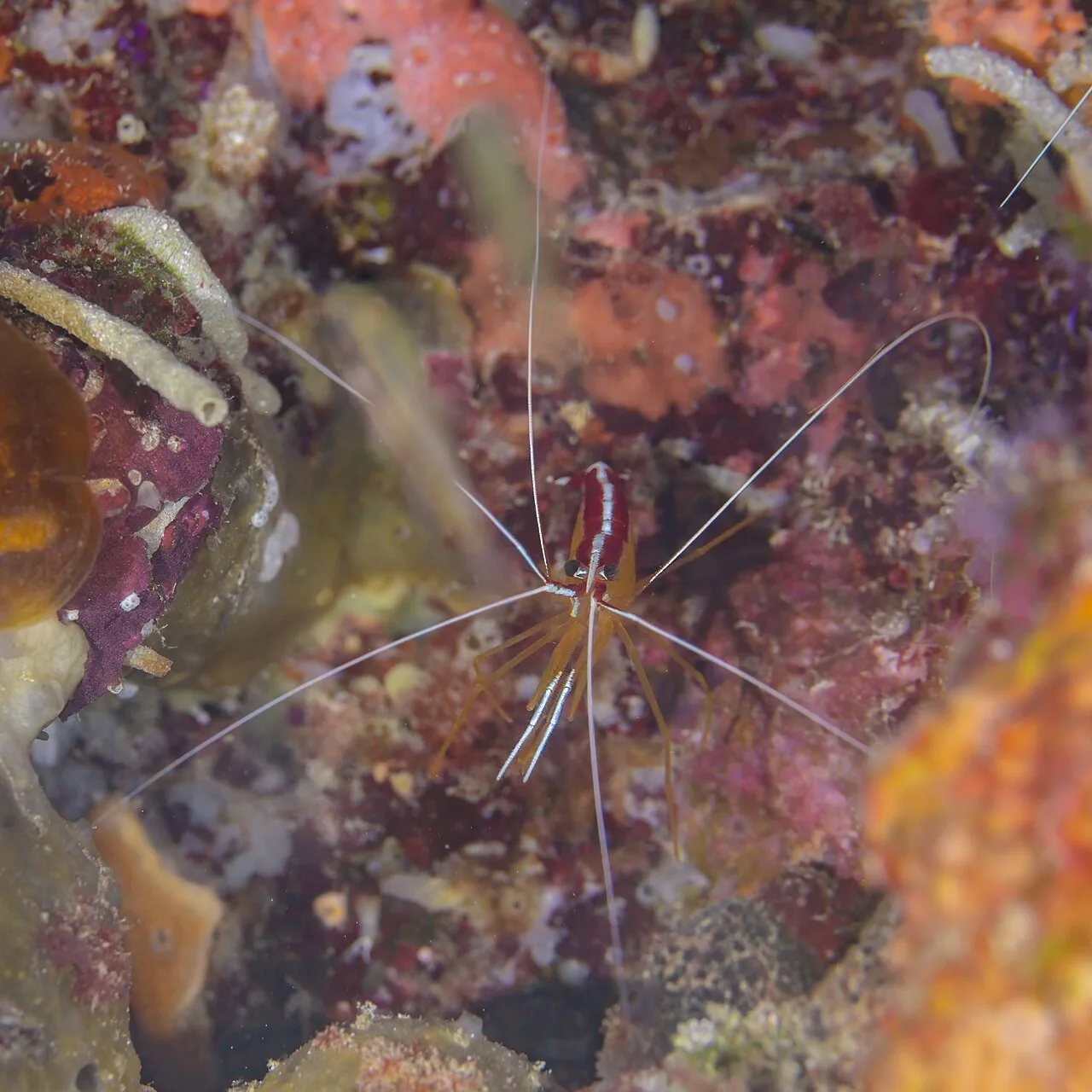
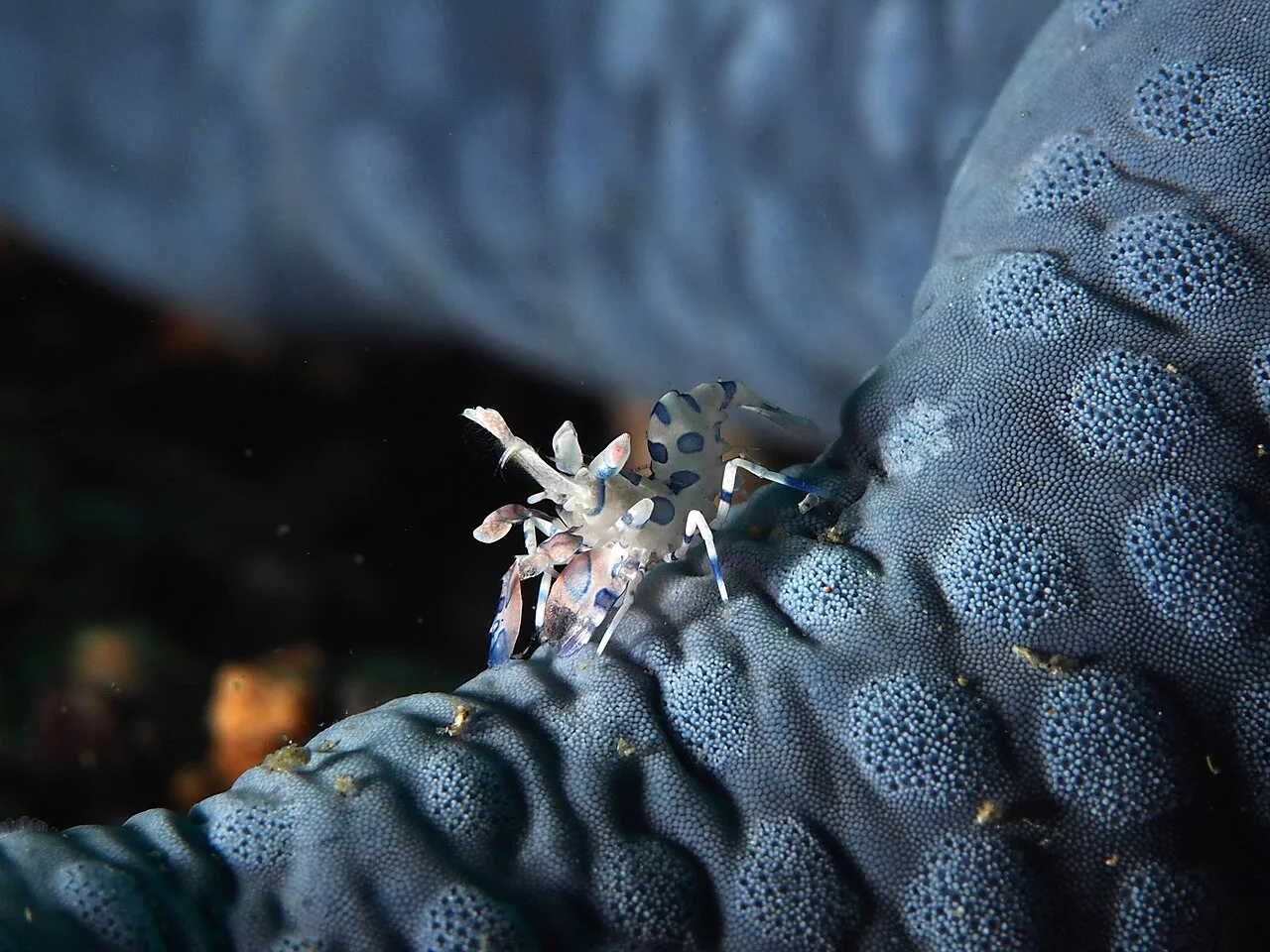
Thor amboinensis belongs to the cleaner and marble shrimp. Up to 2.5 cm. White or yellowish white spots, thinly edged white or blue, on a pale brown ground. The abdomen is usually held upward, which gives the German name. In English it is the sexy shrimp, because the animals wag the rear. In 1888 Johannes Govertus de Man mentioned an egg-carrying female from Ambon, which he placed with doubt in Hippolyte paschalis. Differences were in the teeth of the rostrum and the spines of the antennae. Thor paschalis is a different species.
Range and habitat
This describes the origin, not how to furnish the aquarium.
Shallow subtropical and tropical coasts of the eastern Atlantic and of the western and central Pacific. In pairs or groups, in symbiosis with sea anemones, more rarely with corals.
Keeping
Popular with marine aquarists and easy to keep, also in small reef tanks, usually in threes or more. It tolerates a density of 1.021 to 1.024 and 24 to 27 °C. Acclimation should take at least an hour using the drip method, because it copes poorly with changes in salinity and pH, as well as with copper-based medication and high nitrate. Calcium and carbonate hardness are important for a successful moult. An anemone matches its natural habitat; without one it also accepts certain corals.
Diet
Omnivore. On the anemone it eats the mucus of the tentacles and removes organic debris and detritus. It also eats small fish, clams and copepods. In the aquarium it takes mysis, artemia, clam meat, dry food and macroalgae. Regular feeding matters, otherwise it may nibble off tentacles of its anemone or coral.
Behaviour and moulting
Wagging the rear is typical behaviour, not a sign of illness.
Reproduction and larvae
Protandric hermaphrodites. They mature as males and later change to the female sex. Captive breeding has succeeded.
Gallery
More species in this group
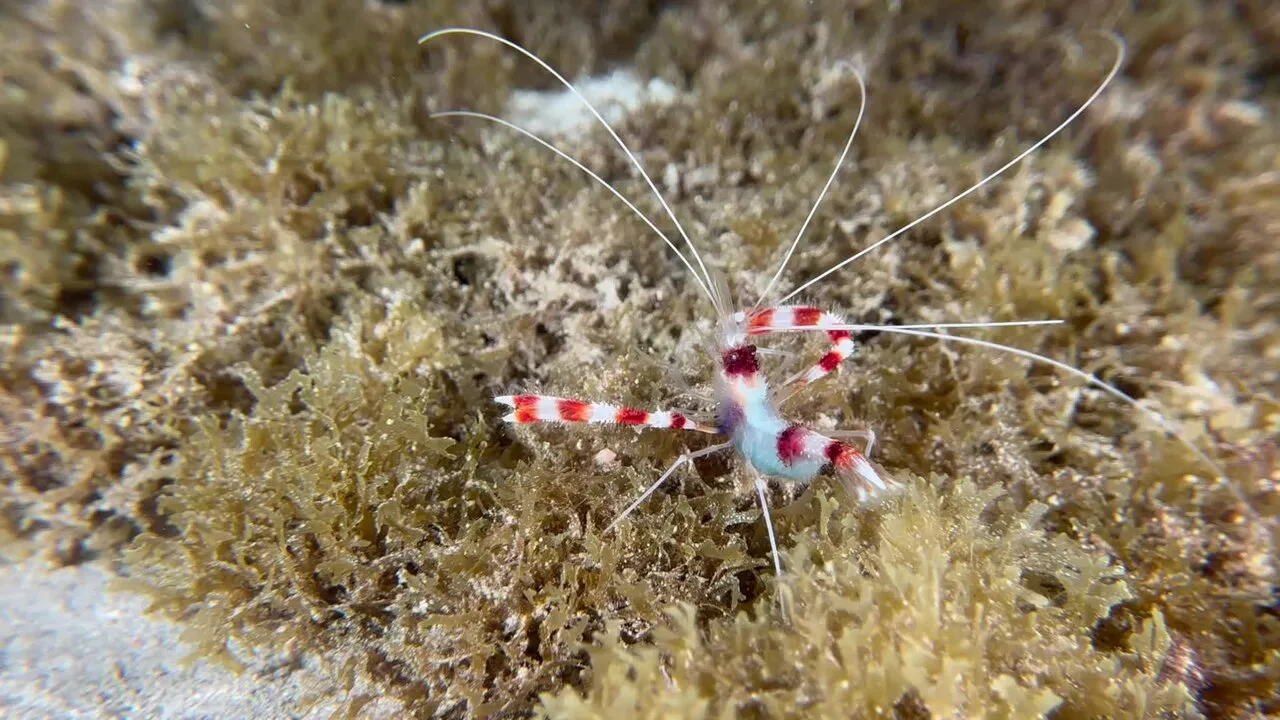
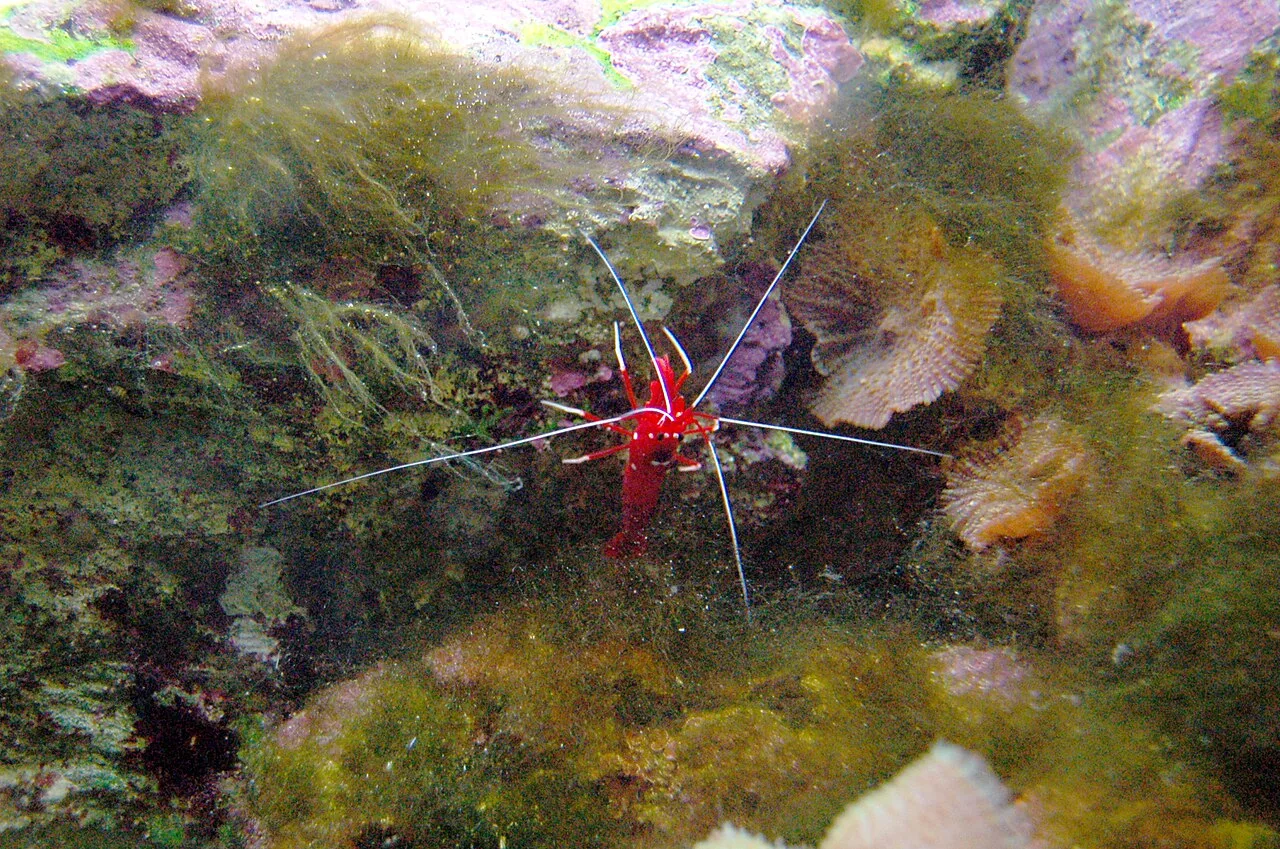
Similar water needs
Species with a similar temperature, a similar pH and a comparable adult size. Whether their behaviour fits as well is what the compatibility check is for.