Fire shrimp
Lysmata debelius
3 views
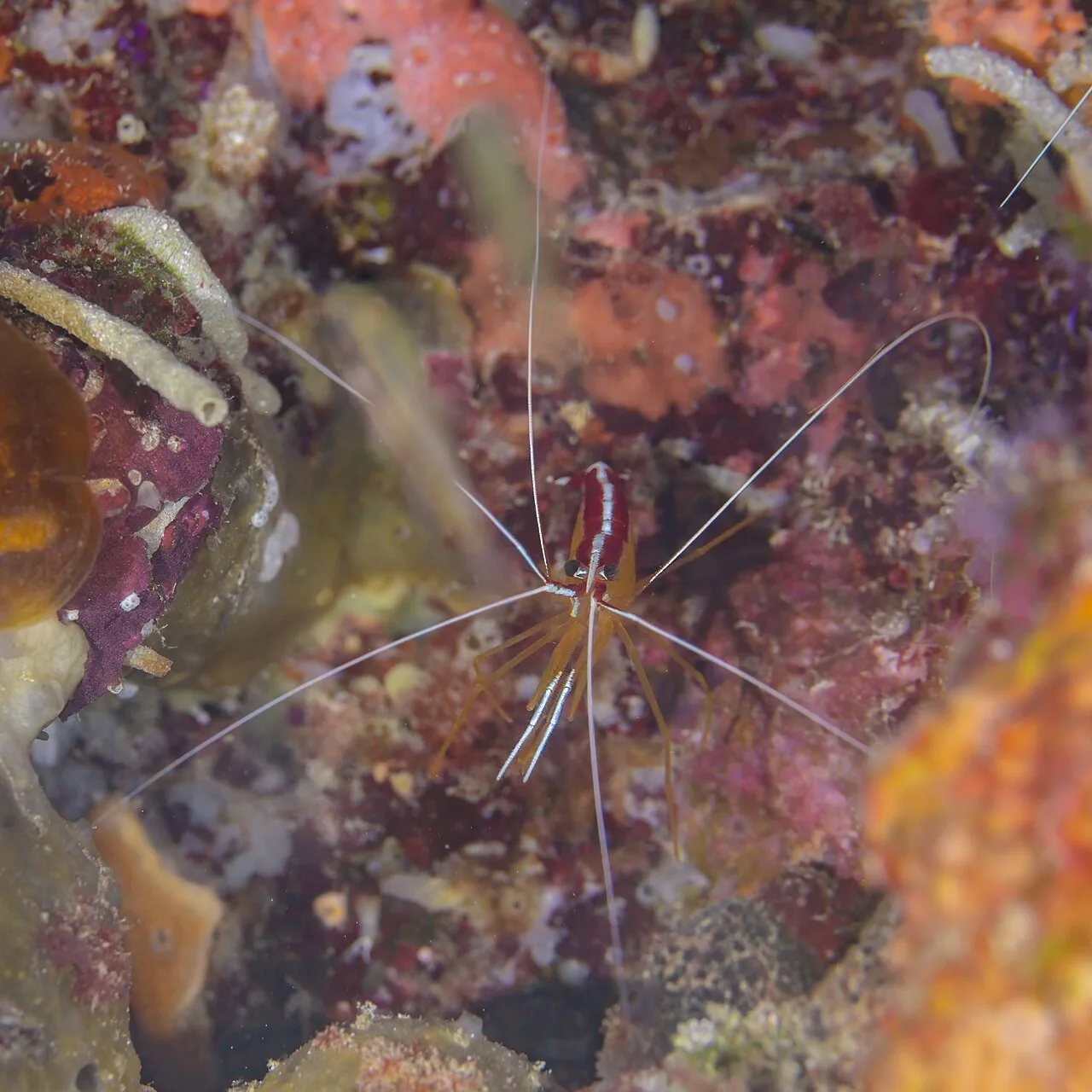
A bright red cleaner shrimp from the Indo-Pacific, also called fire shrimp. It lives more hidden than the skunk cleaner shrimp.
- Temperature
- 24 – 27 °C
- pH
- 8 – 8.4 pH
- Maximum size
- 5 cm
- Social behavior
- Pair
- Diet
- Omnivore
2 min read · 246 words
Marine
Quick facts
Further published values
- Minimum tank size
- 50 L
Place in the aquarium
Highlighted are the water layer and the spots where the species usually stays in the tank.
- Near the bottom Mostly stays just above the bottom. Food has to reach the substrate.
- Rocks and caves Needs caves, crevices or rockwork as hiding place, territory or spawning site.
Home & range
Hatched countries are where the species occurs. It lives in particular waters there, not across the whole country. The points name known waters for orientation, not collection sites.
- Country of origin
- Water for orientation
Native
- Maldives
- Part of the Indo-Pacific, plus the central Pacific.
Overview
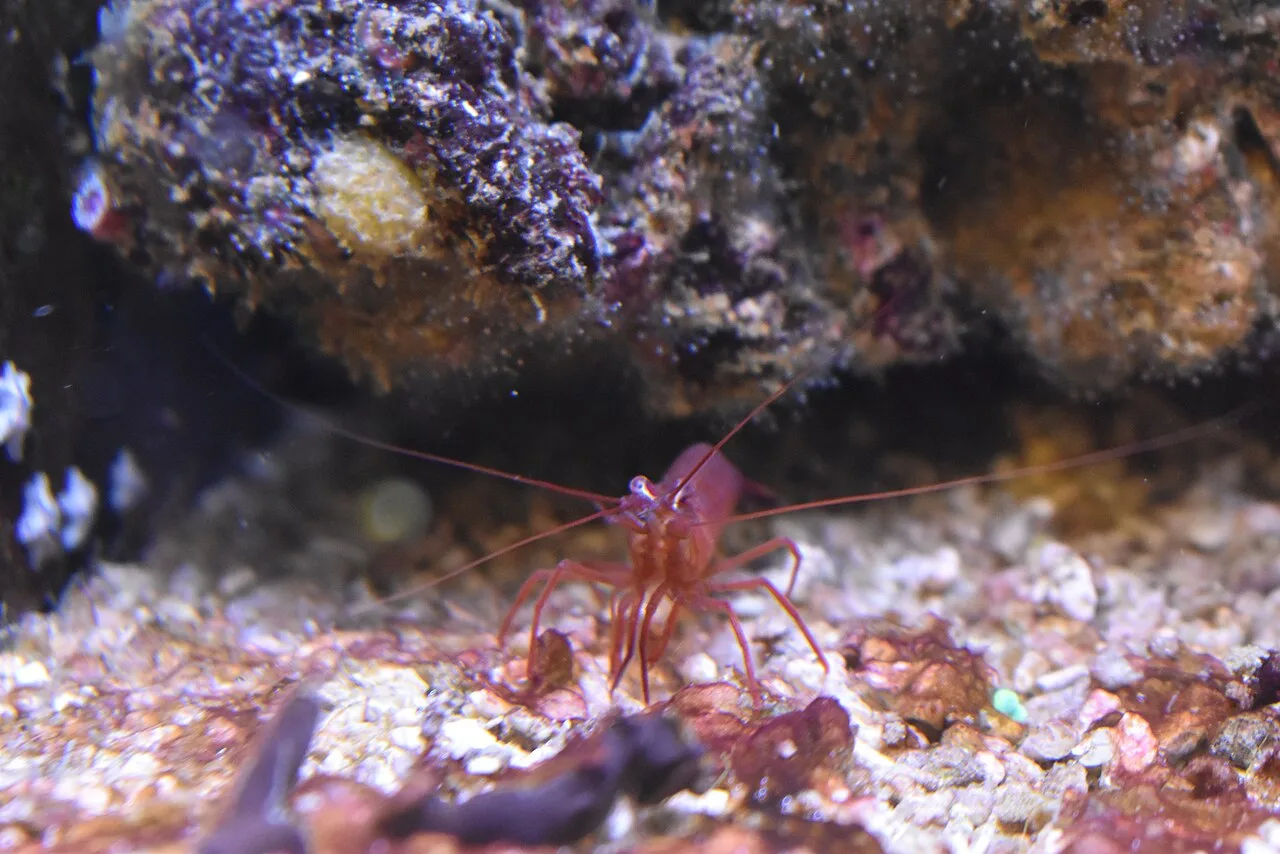
The fire shrimp reaches about 5 cm. The body is red to dark red; the long antennae and the legs are white for about two thirds. Pacific animals carry several white spots on the carapace, animals from the Indian Ocean on the abdomen as well. Animals from the Line Islands have red legs.
It is not the cardinal shrimp Caridina dennerli from the fresh water of Sulawesi.
Range and habitat
This describes the origin, not how to furnish the aquarium.
Indo-Pacific, especially around the Maldives and in the central Pacific. It lives in caves and crevices of coral reefs, usually somewhat deeper than the skunk cleaner shrimp.
Keeping
Tank
Marine tank from about 50 litres with many caves and overhangs.
Water
24 to 27 °C, pH 8.0 to 8.4, reef density. Shrimp are acclimated very slowly to the density of the tank water. Copper and many fish medicines are toxic to them.
Companions
As a pair or singly, with peaceful fish. Large wrasses, pufferfish and triggerfish eat shrimp.
Diet
Omnivore. Artemia, mysis, frozen food, flakes, mussel meat and other seafood. Like all species of the genus it cleans fish, but less eagerly than the skunk cleaner shrimp.
Behaviour and moulting
Often in caves by day, more visible in the evening and at night. Peaceful towards fish.
Reproduction and larvae
Like other Lysmata it is a hermaphrodite: young animals are male at first and later become hermaphrodites that can carry eggs as females and fertilise as males. Two animals therefore almost always form a pair. The larvae hatch into open water and hardly survive in the tank, because filters and fish catch them.
Gallery
More species in this group
Similar water needs
Species with a similar temperature, a similar pH and a comparable adult size. Whether their behaviour fits as well is what the compatibility check is for.