Pederson's cleaner shrimp
Ancylomenes pedersoni
8 views
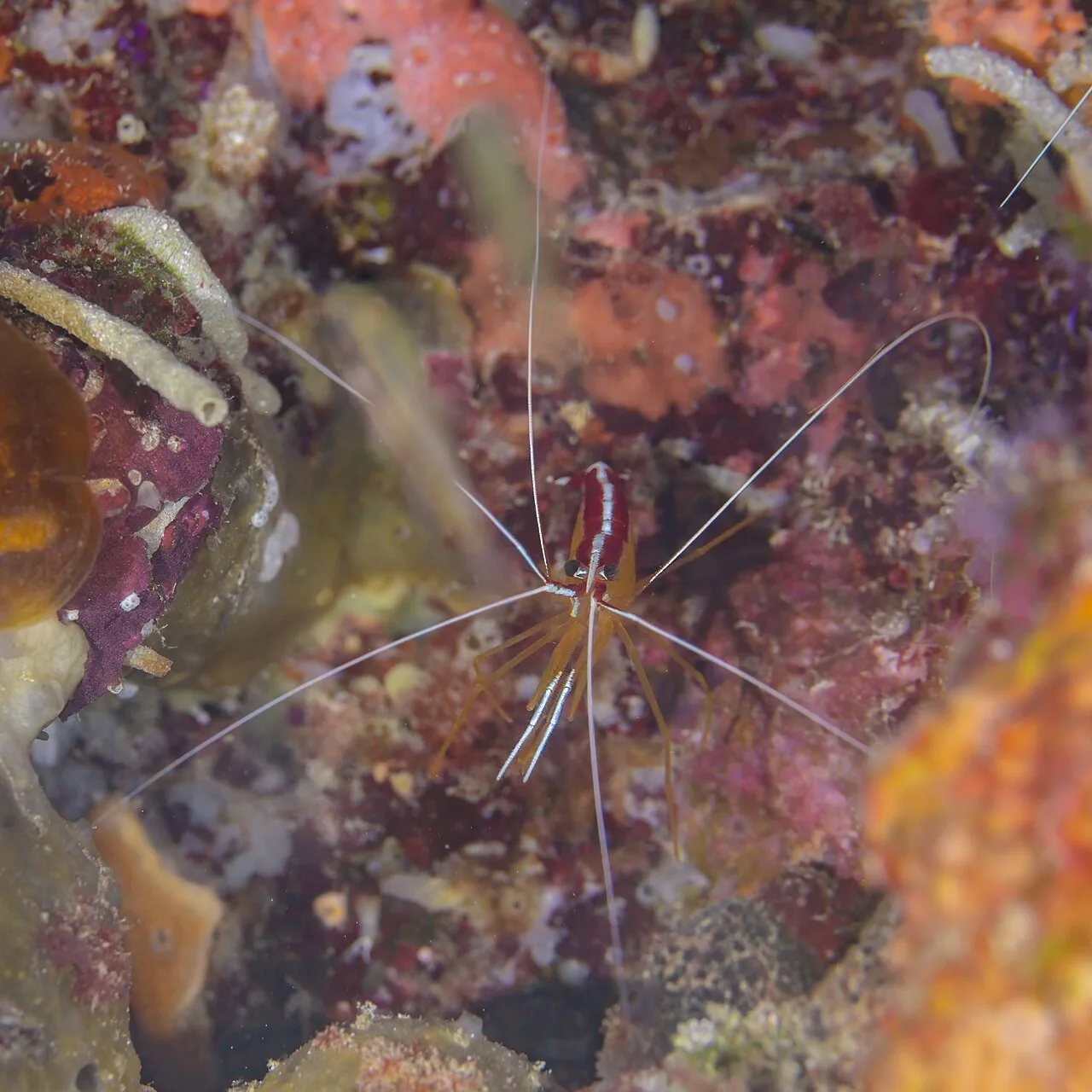
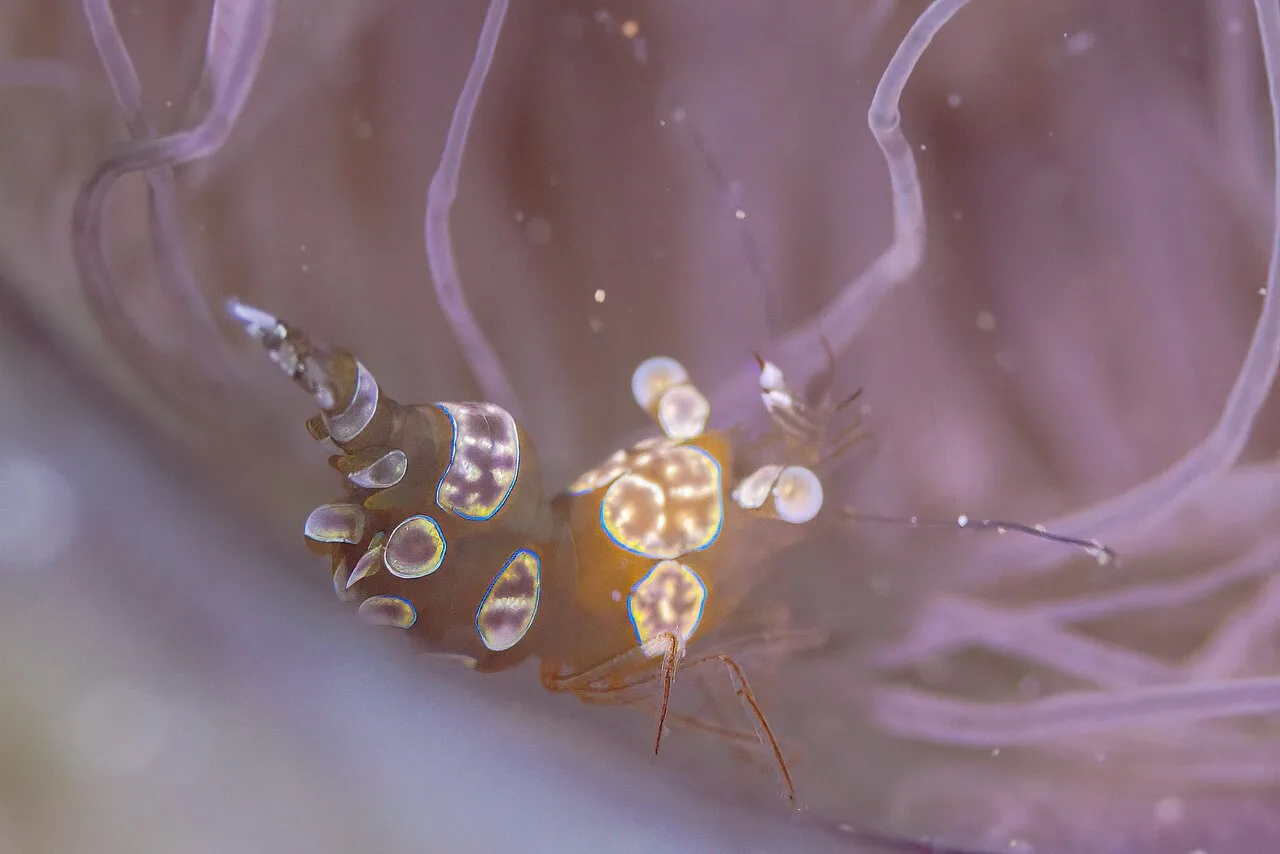
A small, transparent cleaner shrimp from the Caribbean that lives among the tentacles of sea anemones.
- Temperature
- 24 – 27 °C
- pH
- 8 – 8.4 pH
- Maximum size
- 2.5 cm
- Social behavior
- Pair
- Diet
- Carnivore
2 min read · 185 words
Marine
Quick facts
Further published values
- Minimum tank size
- 60 L
Place in the aquarium
Highlighted are the water layer and the spots where the species usually stays in the tank.
- Near the bottom Mostly stays just above the bottom. Food has to reach the substrate.
- Rocks and caves Needs caves, crevices or rockwork as hiding place, territory or spawning site.
Home & range
Hatched countries are where the species occurs. It lives in particular waters there, not across the whole country. The points name known waters for orientation, not collection sites.
- Country of origin
- Water for orientation
Native
- Bermuda
- Plus the Caribbean, on sea anemones at one to 15 metres.
Overview
The shrimp is small and transparent, with bluish to violet markings and long white antennae. Within its range it is hard to confuse. It was described in 1958 as Periclimenes pedersoni.
Range and habitat
This describes the origin, not how to furnish the aquarium.
Caribbean and Bermuda, at one to 15 metres depth, almost always on a sea anemone, the corkscrew anemone Bartholomea annulata or Condylactis gigantea.
Keeping
Anemone first
Without a suitable anemone it lacks protection. Before it can live among the tentacles, it gets used to the anemone by pressing against the stinging arms for increasing periods. If it is separated for a few days, it has to repeat this.
Tank
Marine tank from about 60 litres in which an anemone thrives. 24 to 27 °C, pH 8.0 to 8.4.
Companions
Peaceful fish. Not large wrasses or shrimp eaters.
Diet
Parasites of fish, and in the tank fine frozen food and leftovers.
Behaviour and moulting
It offers cleaning to passing fish and lures them with lashing antennae. The clients keep still while it collects parasites from skin, gills and even the mouth. Usually one or two animals live on an anemone; up to 26 have been counted.
Reproduction and larvae
The larvae develop in open water. Breeding in the tank is rare.
Gallery
More species in this group
Similar water needs
Species with a similar temperature, a similar pH and a comparable adult size. Whether their behaviour fits as well is what the compatibility check is for.