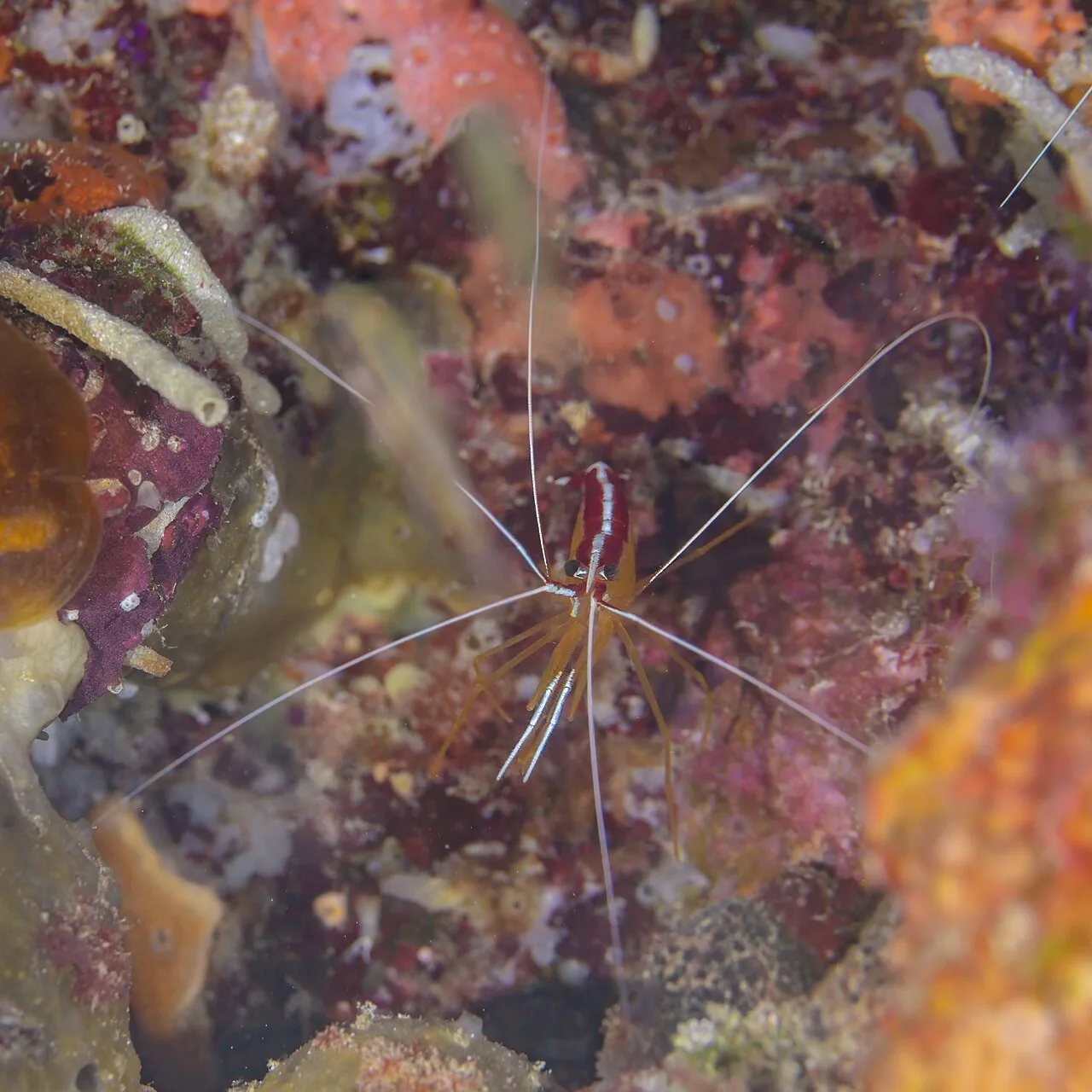
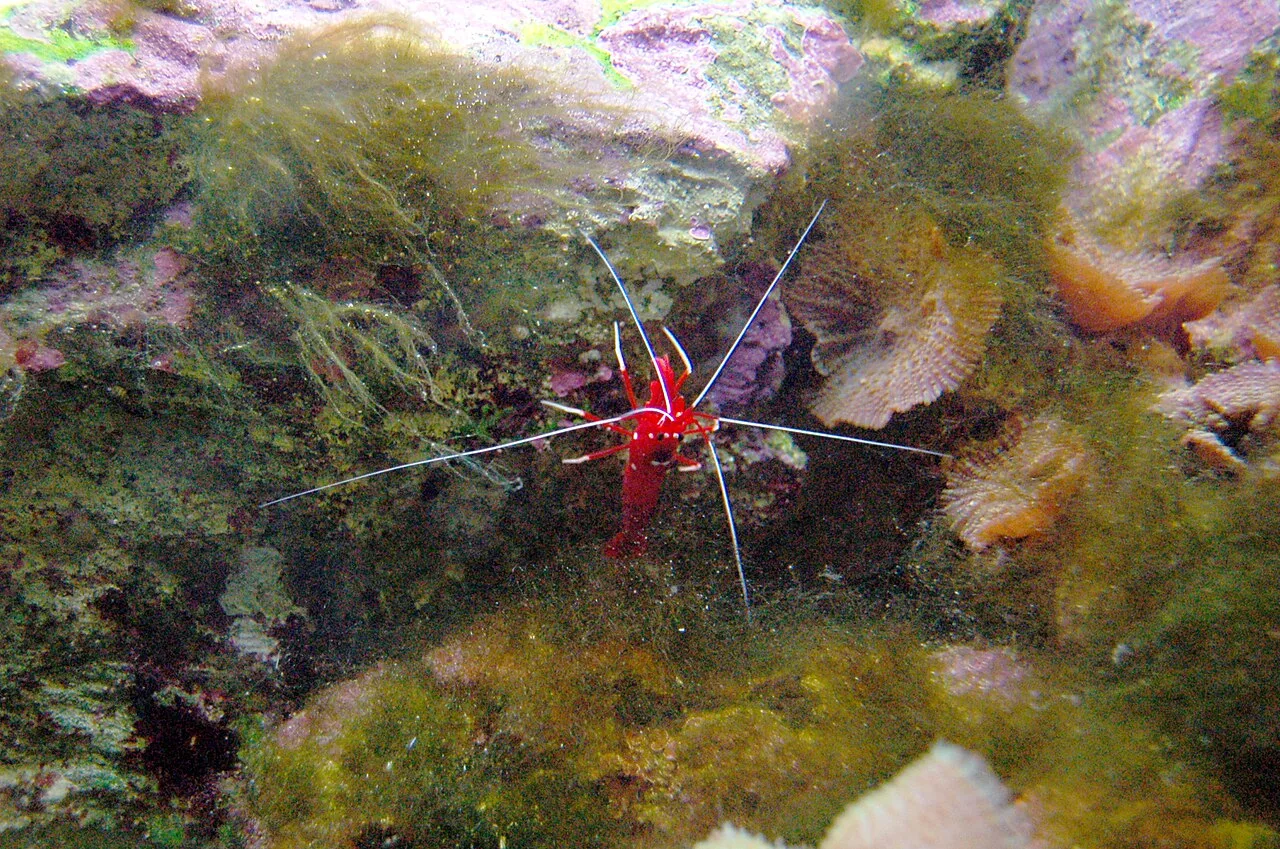
Banded coral shrimp
Stenopus hispidus
3 views
A red and white banded cleaner shrimp from tropical seas. Pairs stay together; it does not tolerate other shrimp.
- Temperature
- 24 – 27 °C
- pH
- 8 – 8.4 pH
- Maximum size
- 6 cm
- Social behavior
- Pair
- Diet
- Omnivore
2 min read · 206 words
Marine
Quick facts
Further published values
- Minimum tank size
- 100 L
Place in the aquarium
Highlighted are the water layer and the spots where the species usually stays in the tank.
- Near the bottom Mostly stays just above the bottom. Food has to reach the substrate.
- Rocks and caves Needs caves, crevices or rockwork as hiding place, territory or spawning site.
Home & range
Overview
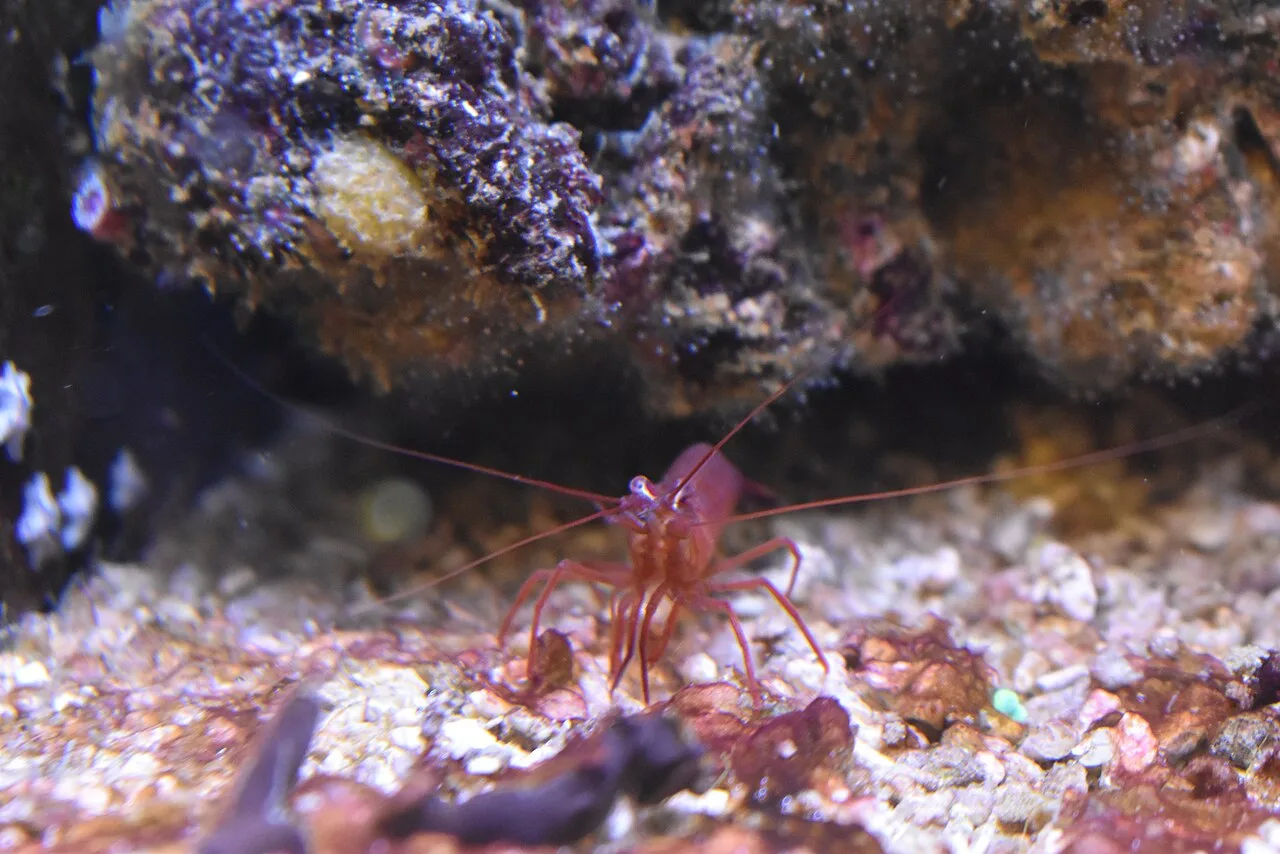
Stenopus hispidus reaches about 6 cm. The body is transparent; carapace, abdomen and the large third pair of legs with the claws are banded red and white. Antennae and the other legs are white. Carapace and claw legs are spiny. It does not belong to the true shrimp but to a separate group of decapods.
Range and habitat
This describes the origin, not how to furnish the aquarium.
Almost worldwide in tropical seas, in places reaching temperate latitudes: Atlantic, Indian Ocean and Pacific. It lives below the intertidal zone on coral reefs, down to 210 metres.
Keeping
Tank
Marine tank from about 100 litres with caves. One animal or a pair.
Water
24 to 27 °C, pH 8.0 to 8.4. Acclimate slowly, no copper.
Companions
Not with other banded coral shrimp and not with small shrimp, which are attacked. Compatible with peaceful fish. Large predatory fish eat it.
Diet
Cleans fish and removes parasites, fungi and dead tissue. In the tank frozen food, mysis, mussel meat and granules.
Behaviour and moulting
It advertises to fish with slowly waving white antennae and dances sideways in front of its hiding place. Pairs live faithfully together and defend a territory of one to two metres. It probably recognises conspecifics by smell.
Reproduction and larvae
Females are usually larger than males. The animals are monogamous. The larvae develop in open water and hardly grow up in the tank.
Gallery
More species in this group
Similar water needs
Species with a similar temperature, a similar pH and a comparable adult size. Whether their behaviour fits as well is what the compatibility check is for.