Randall's pistol shrimp
Alpheus randalli
3 views
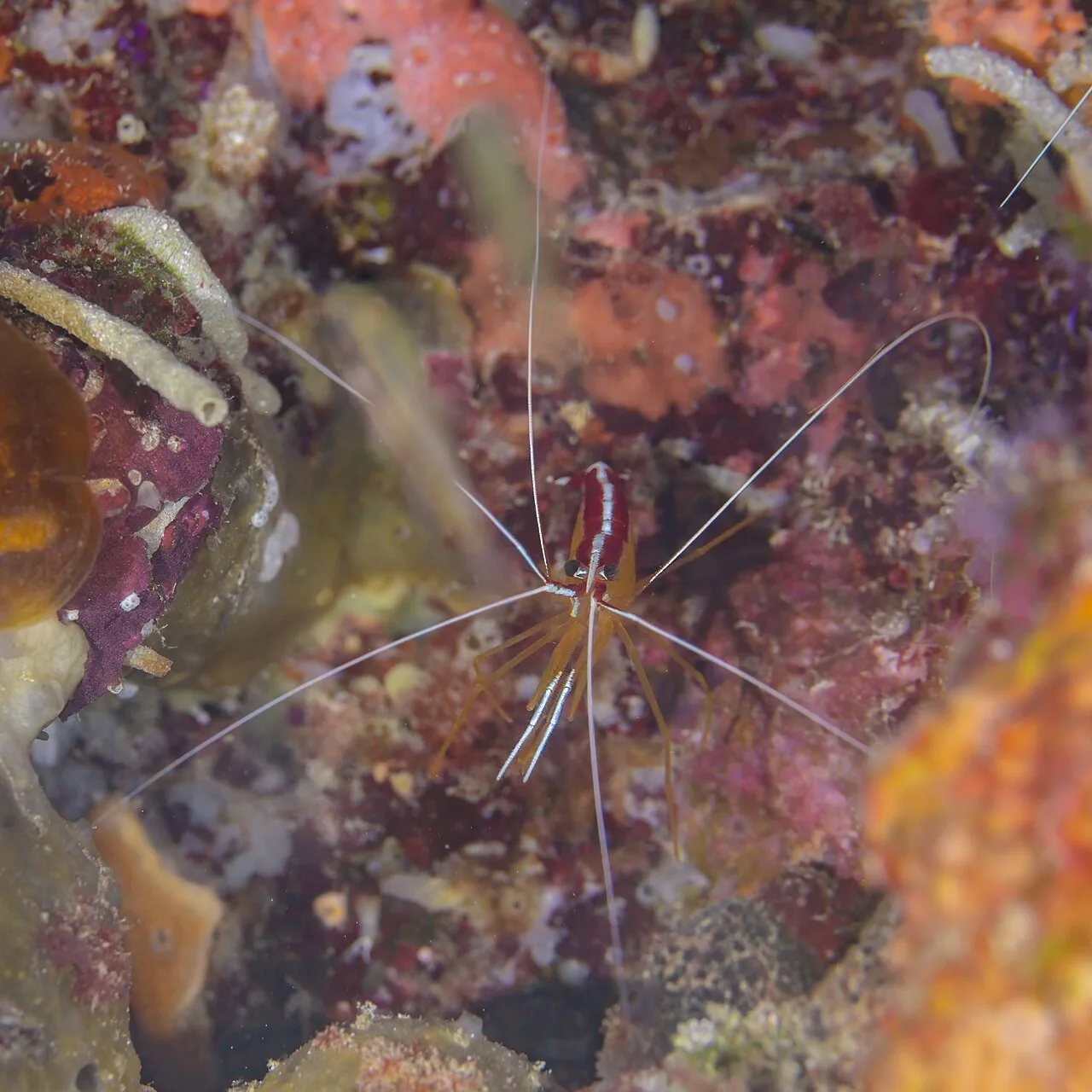
A red and white banded snapping shrimp that shares a burrow in the sand with a watchman goby.
- Temperature
- 24 – 27 °C
- pH
- 8 – 8.4 pH
- Maximum size
- 3 cm
- Social behavior
- Pair
- Diet
- Detritivore
2 min read · 232 words
Marine
Quick facts
Further published values
- Minimum tank size
- 60 L
Place in the aquarium
Highlighted are the water layer and the spots where the species usually stays in the tank.
- Near the bottom Mostly stays just above the bottom. Food has to reach the substrate.
- Substrate Sifts through the substrate or burrows into it. Fine, rounded sand without sharp edges suits it.
Home & range
Hatched countries are where the species occurs. It lives in particular waters there, not across the whole country. The points name known waters for orientation, not collection sites.
- Country of origin
- Water for orientation
Native
Overview
Alpheus randalli reaches about 3 cm. The body is white or transparent with red bands and spots, also on both claws. The claws are unequal; one is a powerful snapping claw. With it the shrimp produces a sharp crack that is clearly audible in the tank.
Range and habitat
This describes the origin, not how to furnish the aquarium.
Pacific and parts of the Indian Ocean, including the Seychelles. It was described in 1981 from the Marquesas, where it lived at 18 metres depth together with a goby of the genus Amblyeleotris. It lives on sand and silt bottoms.
Keeping
Partner
Best with a suitable watchman goby, such as Amblyeleotris or Stonogobiops. Without a goby it lives more hidden.
Tank
Marine tank from about 60 litres with at least 5 cm of deep, mixed sand and small stones so that the burrow holds. Rockwork stands on the glass bottom, not on the sand, because it undermines it. 24 to 27 °C, pH 8.0 to 8.4.
Companions
Peaceful fish. Small shrimp may be attacked.
Diet
Mainly detritus. In the tank frozen food and granules that sink to the burrow entrance.
Behaviour and moulting
Shrimp and goby share a burrow that the shrimp digs and constantly rebuilds. The shrimp sees poorly and keeps contact with the goby with one antenna. If the goby flees, the shrimp disappears at once. At night both seal the entrance.
Reproduction and larvae
The shrimp lives alone in its burrow. For mating it probably digs an opening to the burrow of a partner. The larvae live in open water.
More species in this group
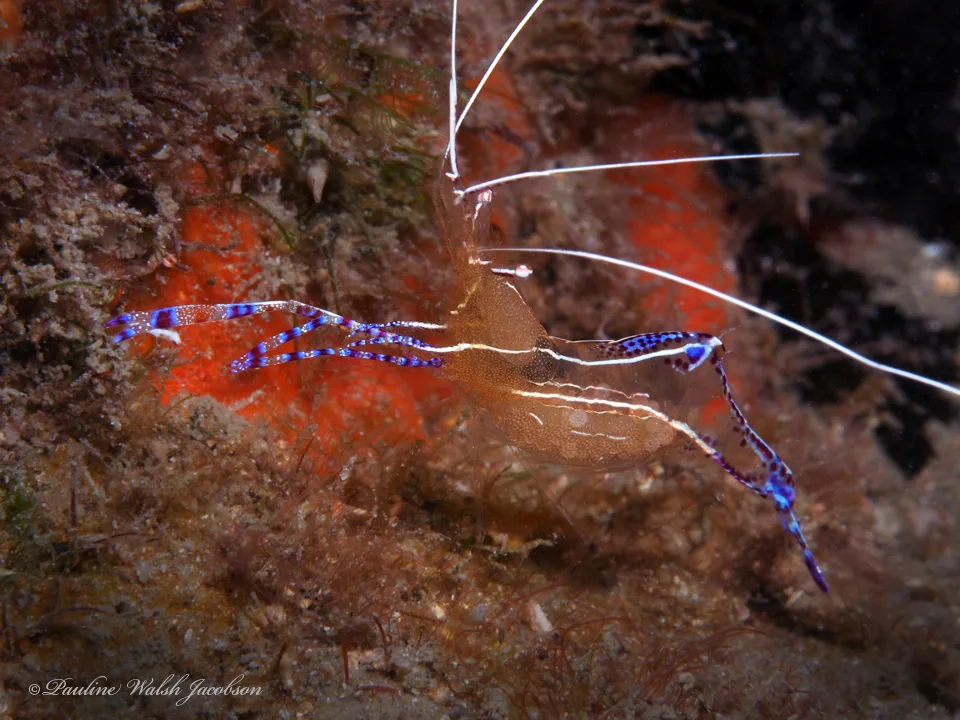
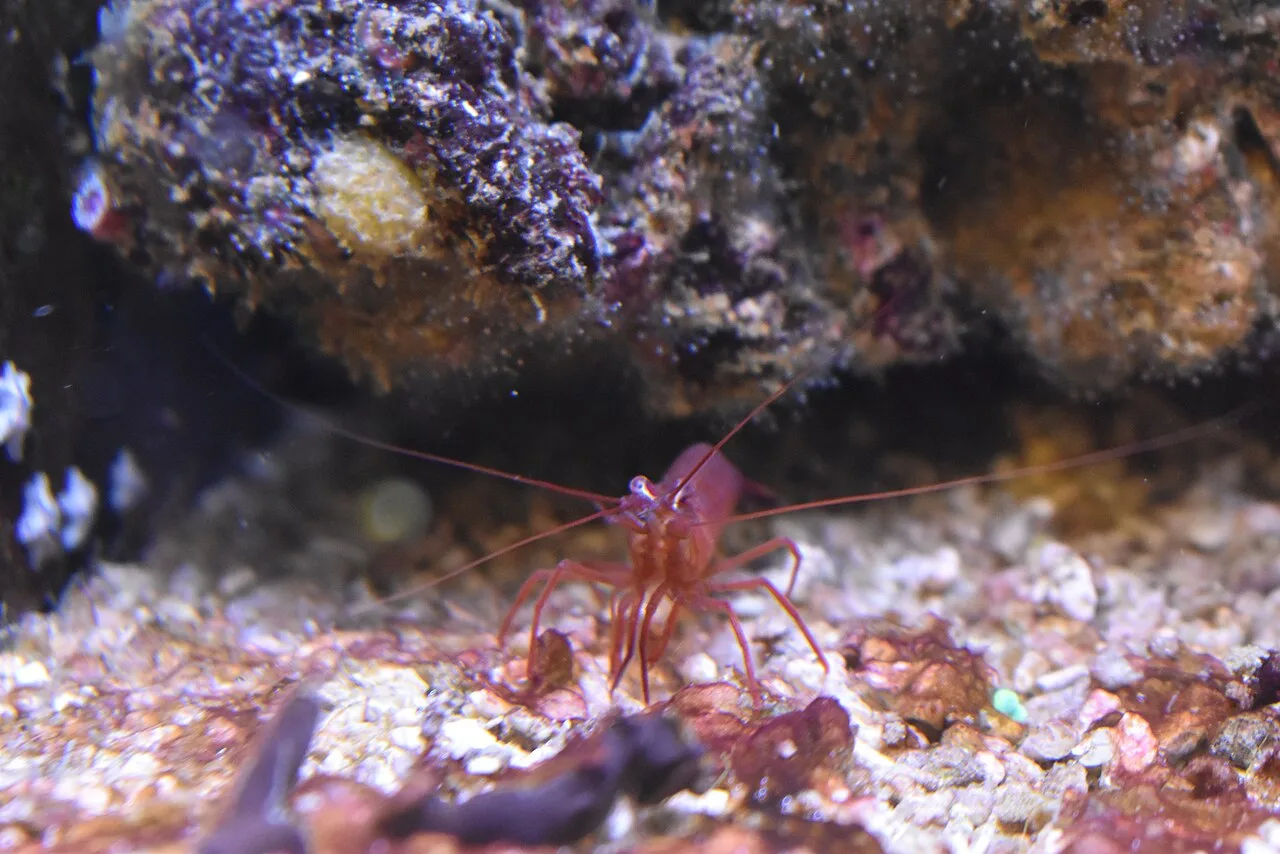
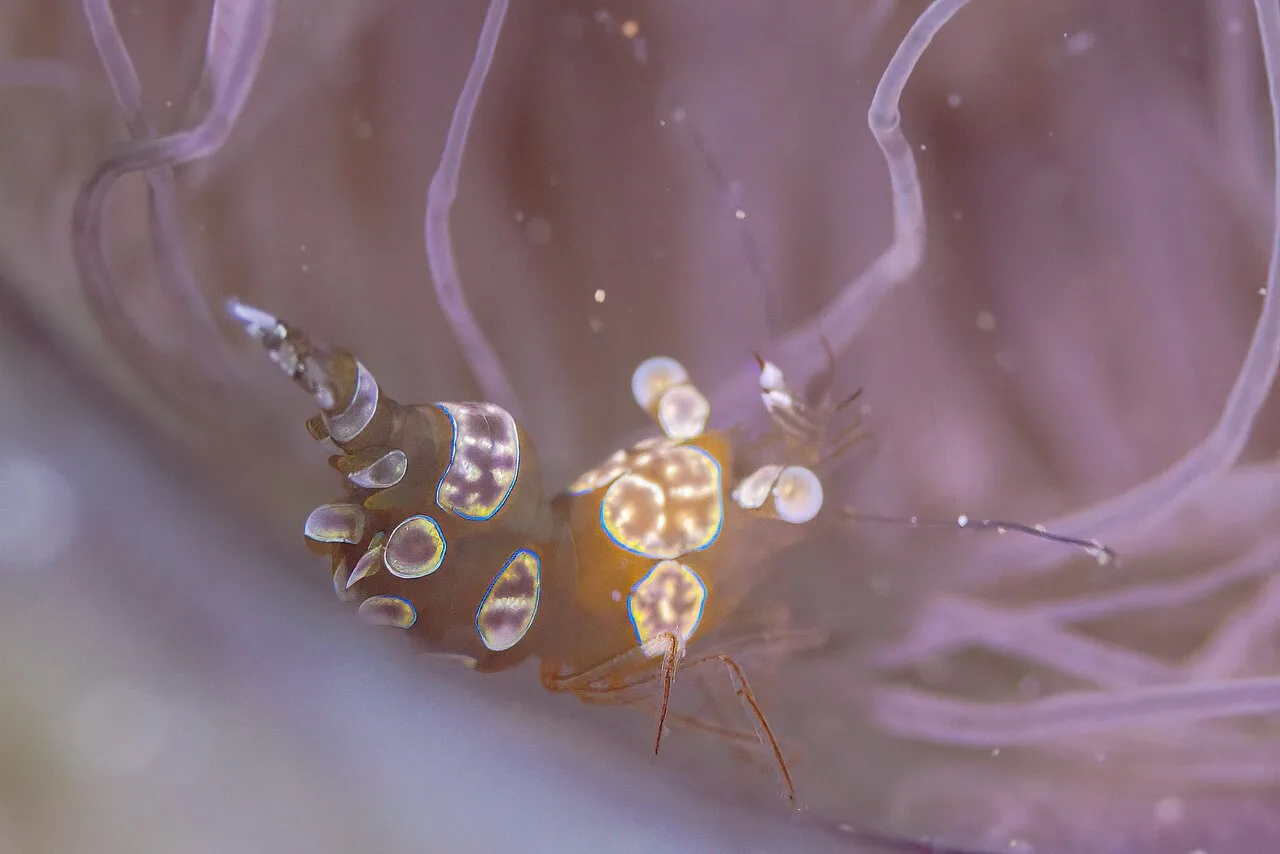
Similar water needs
Species with a similar temperature, a similar pH and a comparable adult size. Whether their behaviour fits as well is what the compatibility check is for.