Malaysian trumpet snail
Melanoides tuberculata
9 views
A small turreted snail from East Africa to Southeast Asia. It often arrives unnoticed on plants and spends the day in the substrate.
- Temperature
- 18 – 32 °C
- pH
- 6.5 – 8.5 pH
- General hardness
- 6 – 20 °dH
- Maximum size
- 3 cm
- Social behavior
- Group
- Diet
- Omnivore
3 min read · 463 words
Fresh water
Quick facts
Further published values
- Lifespan
- 2 a
- Minimum tank size
- 20 L
Place in the aquarium
Highlighted are the water layer and the spots where the species usually stays in the tank.
- Near the bottom Mostly stays just above the bottom. Food has to reach the substrate.
- Substrate Sifts through the substrate or burrows into it. Fine, rounded sand without sharp edges suits it.
Home & range
Overview
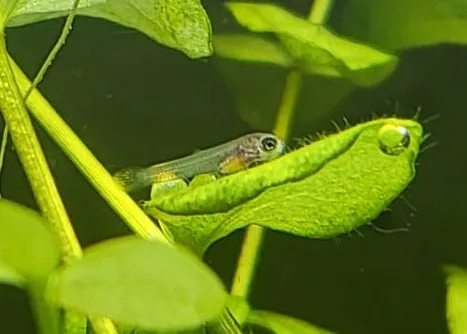
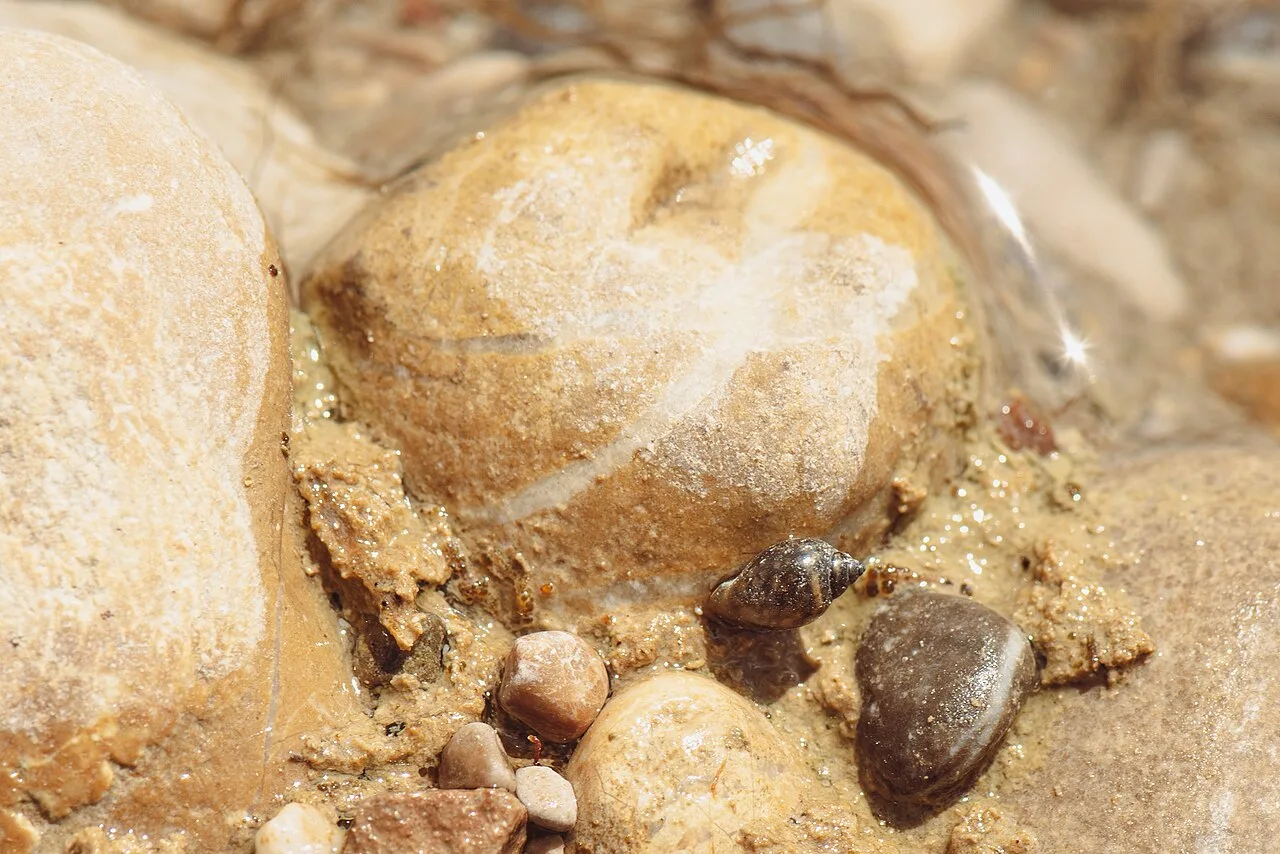
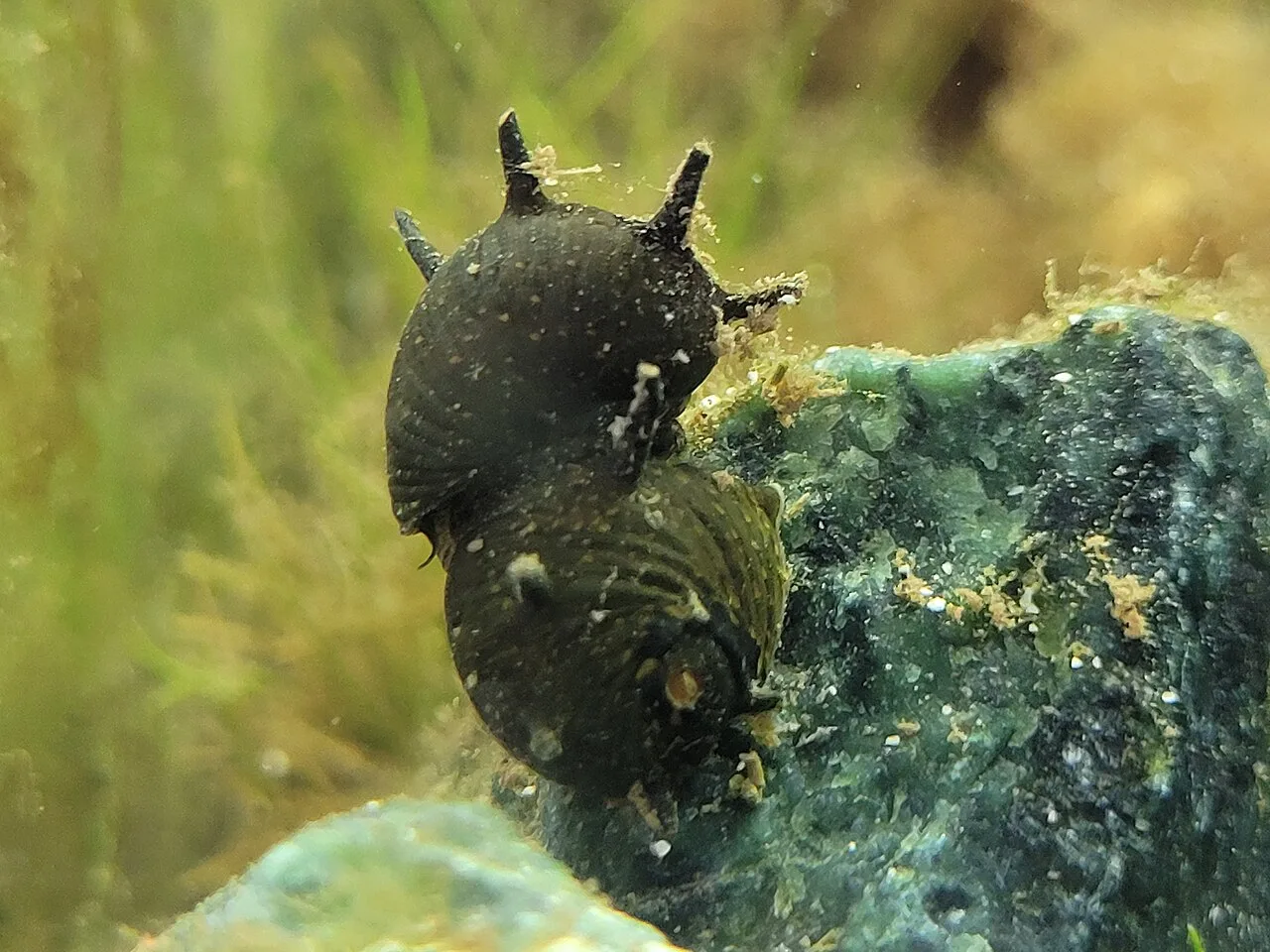
The red-rimmed melania (Melanoides tuberculata) is usually called the Malaysian trumpet snail in the aquarium hobby. Its shell is tall and coiled like a tower, reaches about three centimetres in length and up to one centimetre in width, and usually has eight to 15 whorls. The snail breathes through gills and therefore needs no access to the surface. It is nocturnal and prefers to stay in the substrate during the day. Because it is so common in aquariums, it is often not bought on purpose but comes along as a hitchhiker on plants from the trade.
Classification
Originally the species ranges from East Africa to Southeast Asia. Today it also occurs in Europe as an introduced species.
Range and habitat
This describes the origin, not how to furnish the aquarium.
The native range runs from East Africa to Southeast Asia. On the Gulf coast of Mexico it has been recorded since 1952, having arrived there as an aquarium snail. There it is regarded as invasive and displaces native snails of the same habitat.
Role as an intermediate host
For people and livestock another point matters more: the snail serves many flukes as an intermediate host. A compilation from 2011 lists 37 species, eleven of which can also infect humans, among them the Chinese liver fluke. The small intestinal fluke Haplorchis pumilio spreads further in the Americas along with it. Animals from the aquarium must therefore never reach natural waters. No country is filled on the map, because the range can only be described as the broad region from East Africa to Southeast Asia.
Keeping
The species is widespread in aquariums. Some keepers add it on purpose because it loosens the substrate and eats leftover food and plant debris.
Indicator of water quality
The snail is regarded as a good indicator of water condition. If many animals leave the substrate during the day or gather on the glass towards the surface, this can point to poor water, for example nitrite. That is a reason to test the water, but not a replacement for testing.
Diet
In the aquarium it eats leftover food and dead plant parts. When there are very many animals, healthy plants are nibbled as well.
Behaviour and moulting
With calm companions, such as other snails or dwarf shrimp, it is often visible during the day. With lively tank mates and in very fine substrate it mostly stays hidden in the ground and comes out mainly at night. It causes no trouble for fish or shrimp.
Reproduction and larvae
The animals have separate sexes but reproduce mainly by parthenogenesis. They give birth to live young. Depending on the size of the mother, one to five young snails are born, measuring 1.5 to at most 4.3 millimetres. Under favourable conditions the population grows quite quickly. Anyone who wants to limit numbers should feed sparingly. There are no free-swimming larvae, which is why breeding succeeds in pure fresh water.
Gallery
More species in this group
Similar water needs
Species with a similar temperature, a similar pH and a comparable adult size. Whether their behaviour fits as well is what the compatibility check is for.