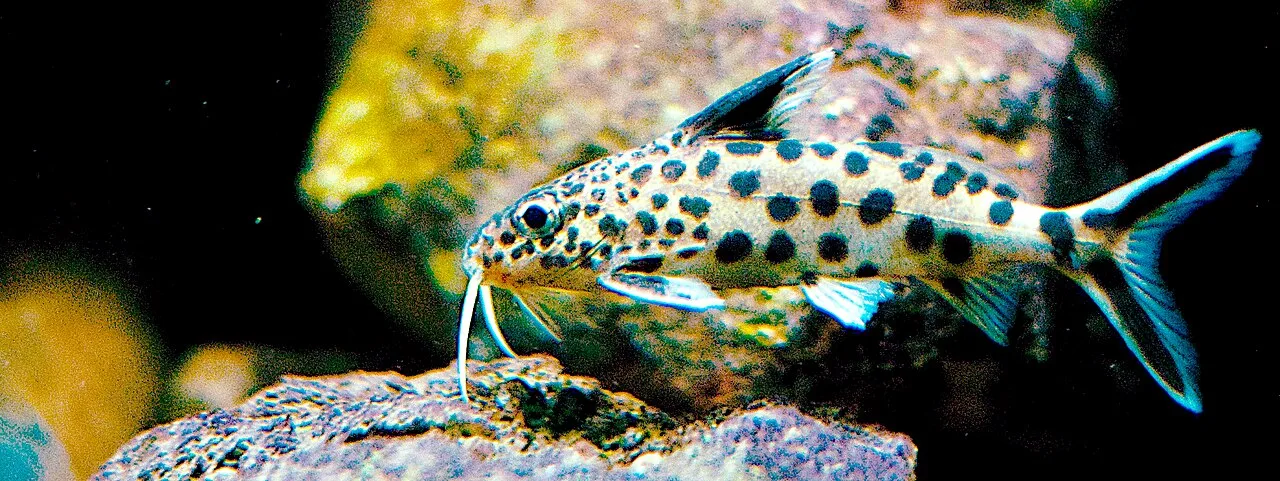
Assassin snail
Clea helena
3 views
A predatory freshwater snail from Southeast Asia. It eats carrion and other snails and is kept to keep snail numbers in check.
- Temperature
- 22 – 28 °C
- pH
- 7 – 8.5 pH
- General hardness
- 8 – 20 °dH
- Maximum size
- 2.8 cm
- Social behavior
- Group
- Diet
- Carnivore
3 min read · 463 words
Fresh water
Quick facts
Further published values
- Minimum tank size
- 20 L
Place in the aquarium
Highlighted are the water layer and the spots where the species usually stays in the tank.
- Near the bottom Mostly stays just above the bottom. Food has to reach the substrate.
- Substrate Sifts through the substrate or burrows into it. Fine, rounded sand without sharp edges suits it.
Home & range
Hatched countries are where the species occurs. It lives in particular waters there, not across the whole country. The points name known waters for orientation, not collection sites.
- Country of origin
- Water for orientation
Native
Overview
The assassin snail (Clea helena, synonym Anentome helena) belongs to the family Nassariidae and feeds as a carnivore. In the trade the older name Anentome helena is still common. Anentome is now treated as a subgenus of Clea.
Shell and body
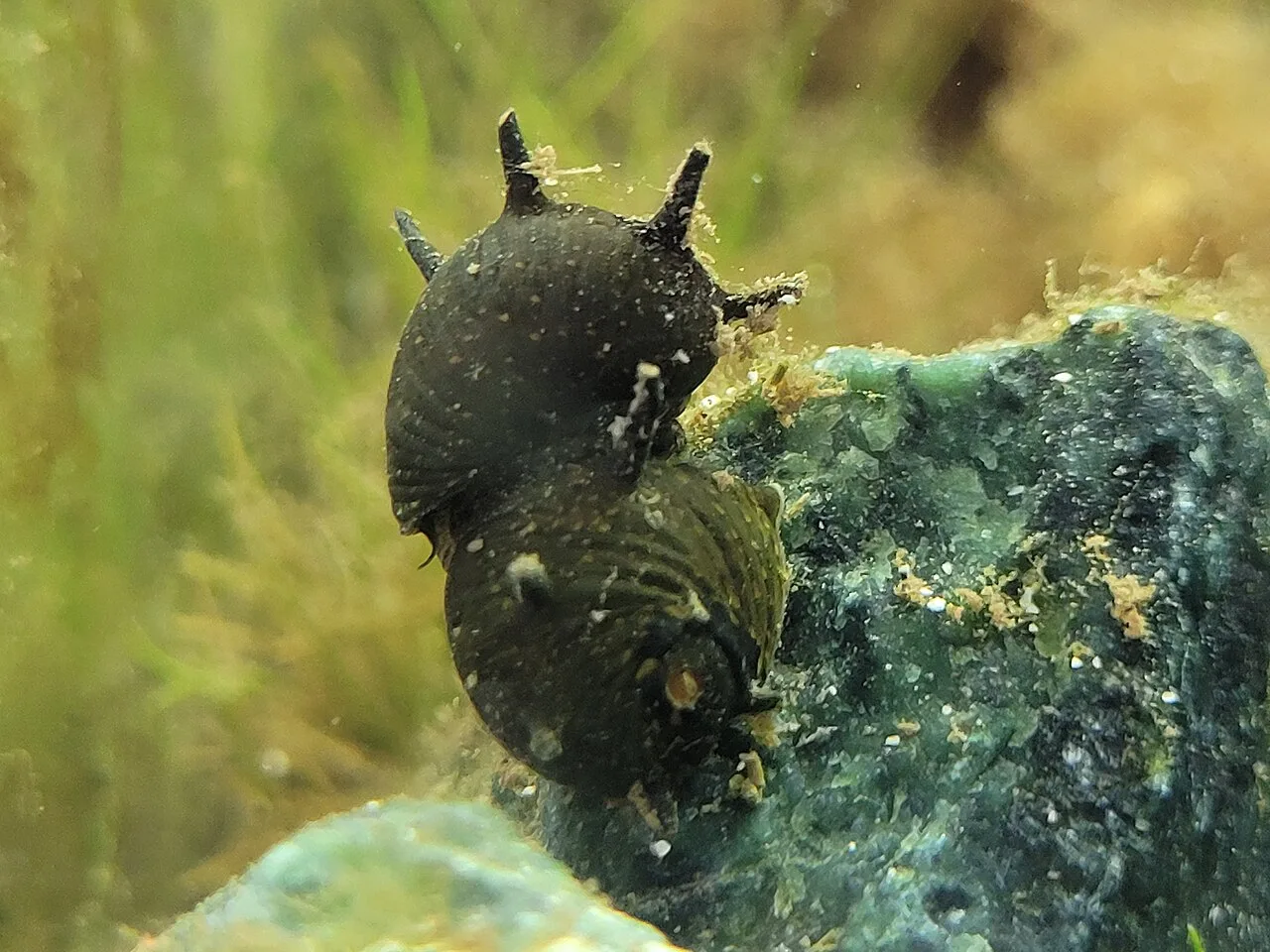
The shell is conical to slenderly turreted. In adults it measures 18 to 28 millimetres in height and seven to 13 millimetres in diameter. The base colour is yellow to olive brown, plain or with one to three brown spiral bands: below the suture, at the periphery and at the base of the whorl. Shape, ribs and pattern vary strongly within the species. The six to eight whorls usually carry axial ribs, which are absent only very rarely. The last whorl ends in a broad, short siphonal canal. The aperture is large and oval, with a sharp lip. With an almond-shaped operculum the snail can close the aperture. The soft body is brownish and the large foot white. A striking feature is the proboscis, which it can stretch far forward. The eyes sit at the base of the slightly curved tentacles.
Range and habitat
This describes the origin, not how to furnish the aquarium.
The species is widespread in Southeast Asia. It is known from Indonesia, Malaysia and Thailand. It lives in flowing and still waters, mainly on the bottom. It prefers fine-grained substrates but also occurs on hard ground. The three countries are a coarse origin and are not filled as areas.
Keeping
The assassin snail is popular in freshwater aquariums and is used to limit snail populations. That is also the most important planning question: anyone who wants to keep nerites, ramshorns or other ornamental snails should not add it, because it eats other aquatic snails and their eggs. Since it lives on the bottom and prefers fine ground, a sandy or fine-grained substrate suits it.
Diet
It lives mainly on carrion. In addition it eats other aquatic snails and their egg clutches as well as worms. Once the snail prey is used up, carrion remains as food, which in the aquarium means animal food that sinks to the bottom.
Behaviour and moulting
The species lives on the bottom. With its long proboscis it reaches food that is not directly under its foot. Its prey are snails, snail eggs and worms.
Reproduction and larvae
The animals have separate sexes, and the male fertilises the female. A few days later clutches are laid on hard surfaces, often with just one egg. Depending on temperature the young hatch after two to six weeks. Because each clutch holds so few eggs and both sexes are needed, a population grows far more slowly than that of the snails it eats.
Systematics
The radula has three teeth per transverse row. The central tooth has seven cusps, one to three of which may be missing. Besides the nominate subgenus, the genus Clea contains the African subgenus Afrocanidia.
Gallery
More species in this group
Similar water needs
Species with a similar temperature, a similar pH and a comparable adult size. Whether their behaviour fits as well is what the compatibility check is for.