Colombian ramshorn apple snail
Marisa cornuarietis
5 views
A large apple snail with a flat-coiled shell from northern South America. It eats many plants and does not suit a planted tank.
- Temperature
- 21 – 28 °C
- pH
- 7 – 8.5 pH
- General hardness
- 8 – 20 °dH
- Maximum size
- 5 cm
- Social behavior
- Peaceful
- Diet
- Omnivore
3 min read · 503 words
Fresh water
Quick facts
Further published values
- Minimum tank size
- 100 L
Place in the aquarium
Highlighted are the water layer and the spots where the species usually stays in the tank.
- Near the bottom Mostly stays just above the bottom. Food has to reach the substrate.
- Dense plants Looks for dense planting as cover, retreat or grazing ground.
Home & range
Hatched countries are where the species occurs. It lives in particular waters there, not across the whole country. The points name known waters for orientation, not collection sites.
- Country of origin
- Water for orientation
Native
Overview
Marisa cornuarietis is a large freshwater snail with an operculum in the apple snail family Ampullariidae. Its common name is the Colombian ramshorn apple snail; the German name used here is a translation of it. The species is popular in aquariums and is also used in the wild as a biological control agent.
Shell and confusion
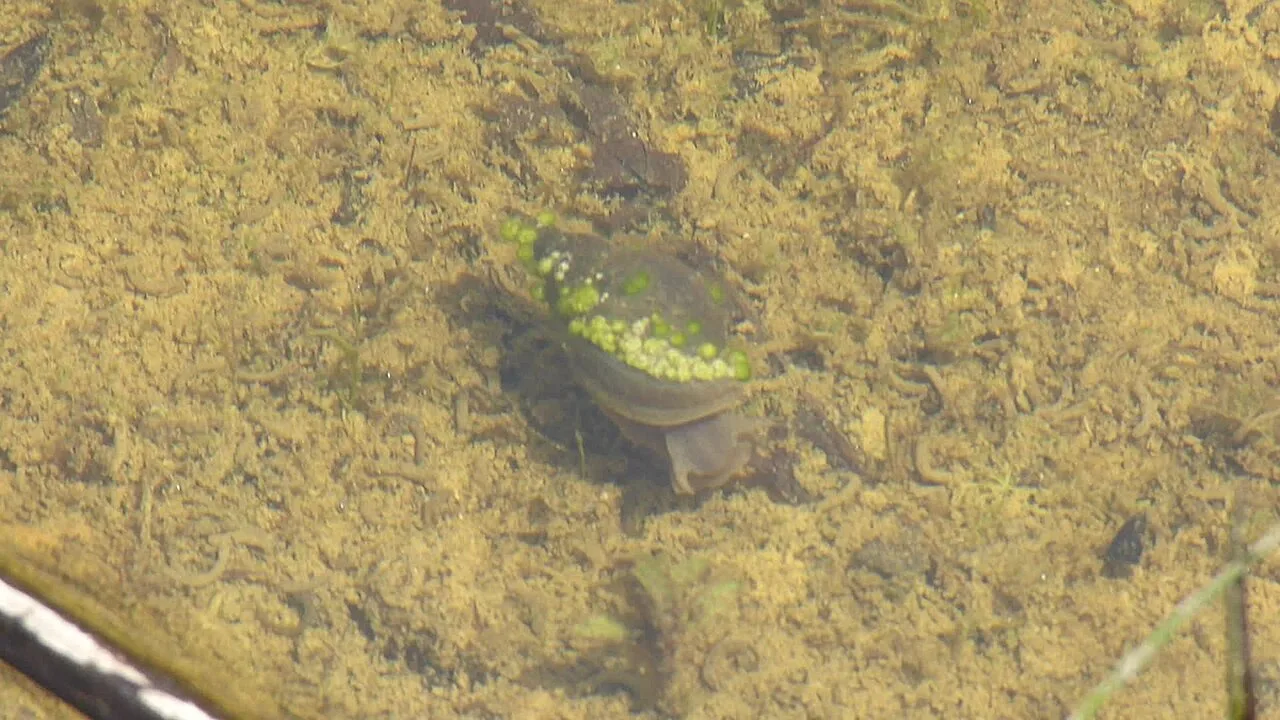
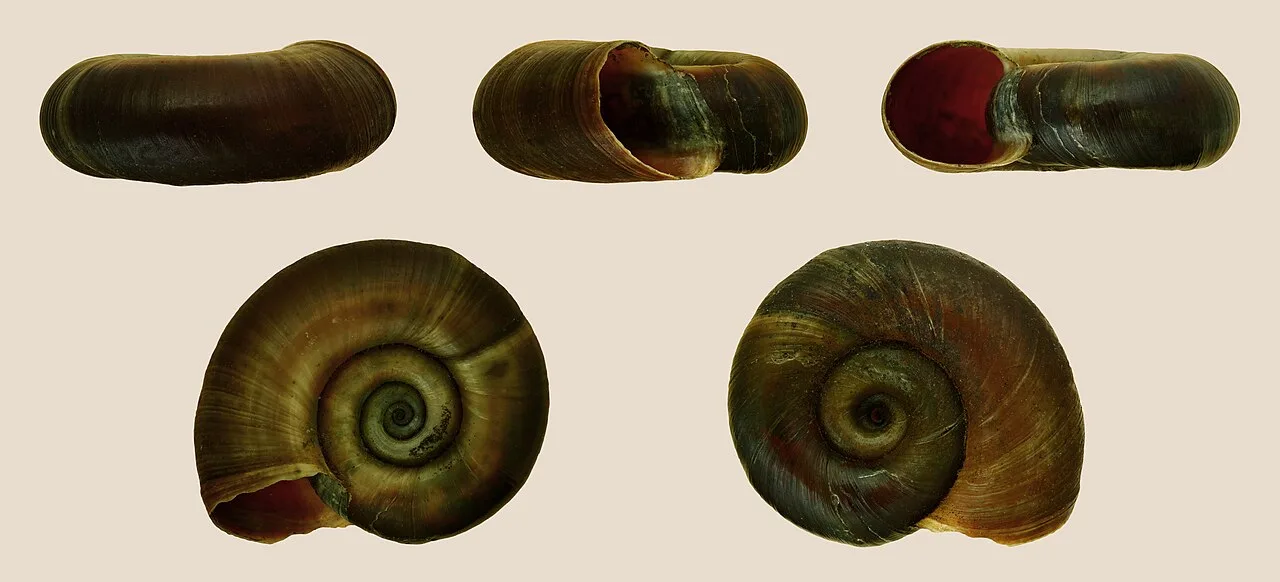
The shell is coiled flat in one plane. Its colour ranges from pale to darker red or brown, and it is often striped. The diameter is usually 35 to 50 millimetres or more. Because of its shape it recalls ramshorn snails, but it is not closely related to the true ramshorns of the family Planorbidae. In the trade it is misleadingly also called the giant ramshorn snail. The spelling Columbian is a mistake: the name refers to Colombia, not to Columbus.
Range and habitat
This describes the origin, not how to furnish the aquarium.
The species is native to northern South America and Central America. These include Bolivia, Brazil, Colombia, Costa Rica, French Guiana, Guyana, Panama, Suriname, Trinidad and Tobago and Venezuela. The type locality is unknown. It prefers still or slow-flowing fresh water, depending on whether aquatic plants grow there as food.
Introduced
In the United States it was found in 1957 in Coral Gables, Florida, and has become established in several counties of southern Florida, probably after aquarium animals were released. Further records come from Texas, California, geothermal springs in Idaho, Puerto Rico and Cuba. In a ranking from 2018 it stands at about 74th place among the worst alien species in Europe.
Keeping
The snail adapts easily to captivity. It grows much larger than true ramshorn snails and eats large amounts of plants. It is therefore not suitable for a planted aquarium, where it can damage the plants. Besides gills it has a lung and so copes even with little dissolved oxygen.
Legal situation in the EU
Since 2025 Marisa cornuarietis has been on the Union list of invasive alien species. Keeping, breeding, selling, exchanging and releasing it are therefore banned in the EU. Animals already kept before the listing may stay until their natural death, provided they cannot reproduce or escape. Clutches are then removed, and animals are never passed on or released.
Diet
It eats aquatic plants, algae, dead fish and snails and is practically an omnivore that uses animal and plant debris. As long as there are not too many animals it is useful as a scavenger. Studies show that it slows the growth of water hyacinths because it eats their roots.
Behaviour and moulting
In the aquarium it stands out mainly for its appetite for plants. In the wild it displaces Biomphalaria snails, which are intermediate hosts of schistosomiasis: it competes with them for food and eats their eggs. That is why it is used to control them, and in some areas also against the water plant Hydrilla. It is no danger to healthy fish.
Reproduction and larvae
The species has separate sexes. It lays its eggs in characteristic disc-shaped clutches that stick to various surfaces. Unlike some other apple snails it lays below the waterline, so no space above the water is needed.
Gallery
More species in this group
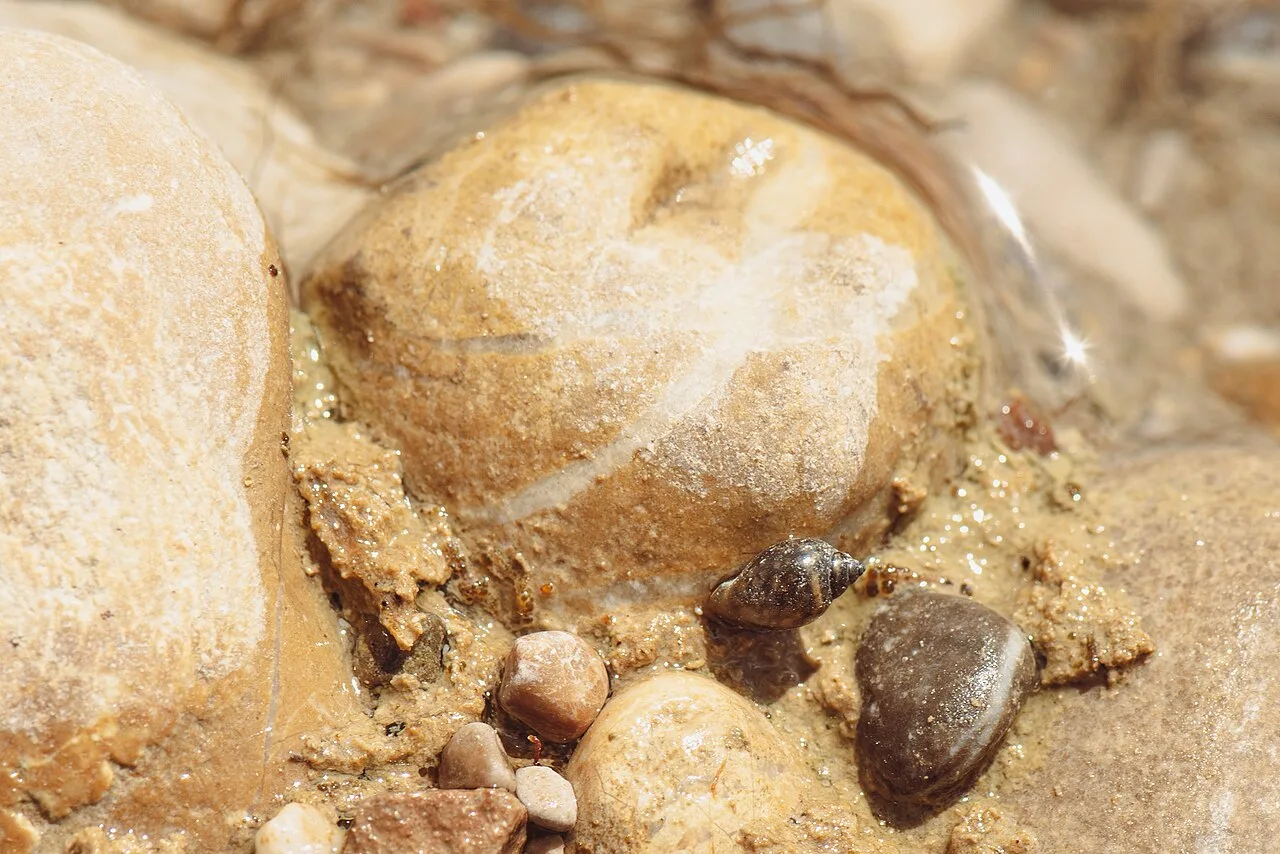
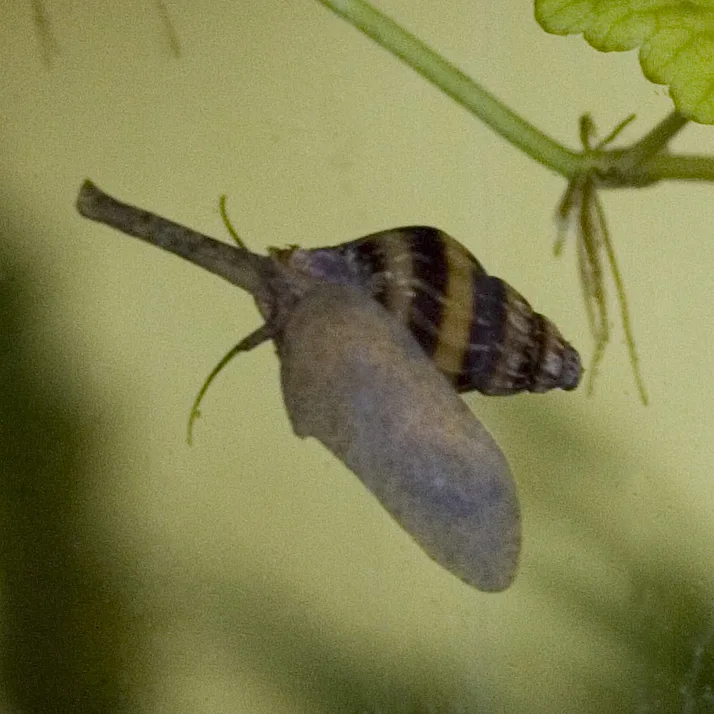
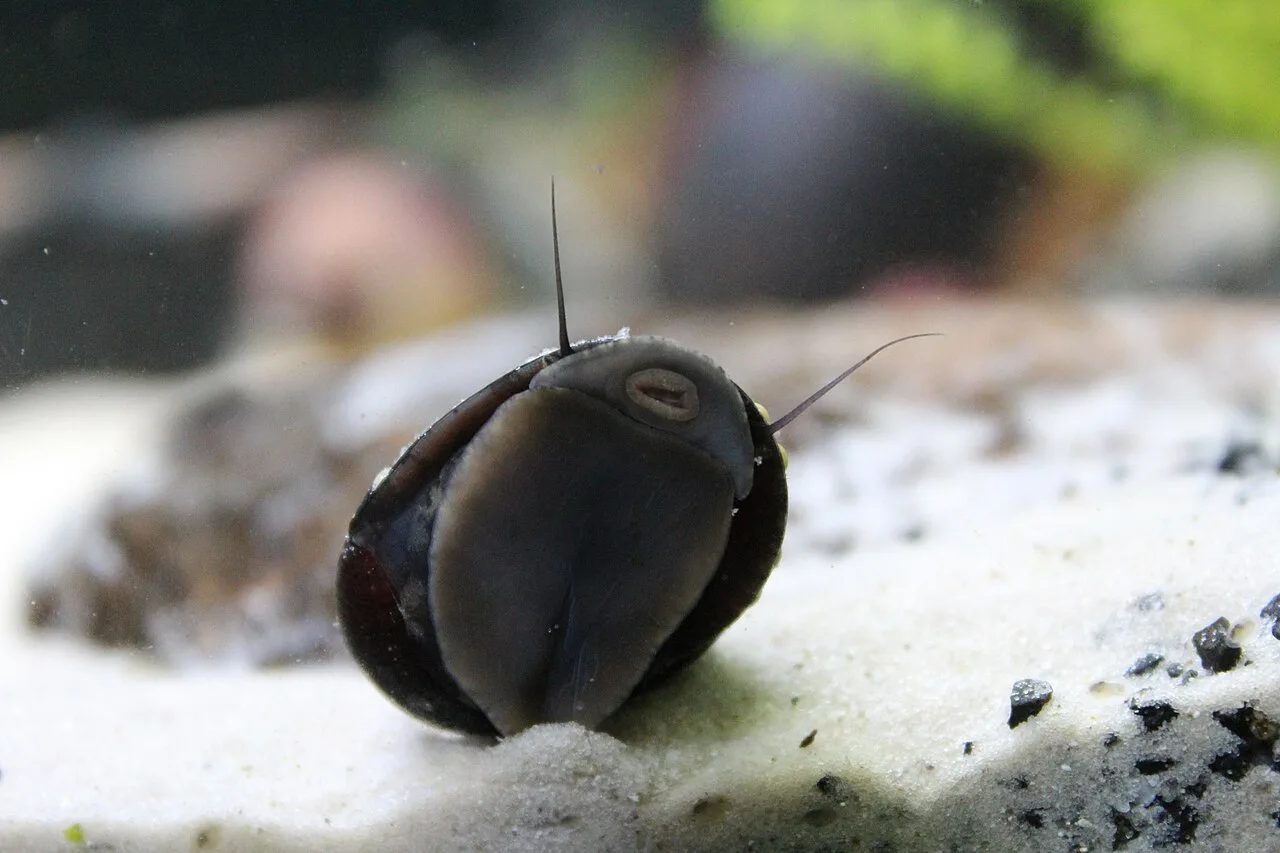
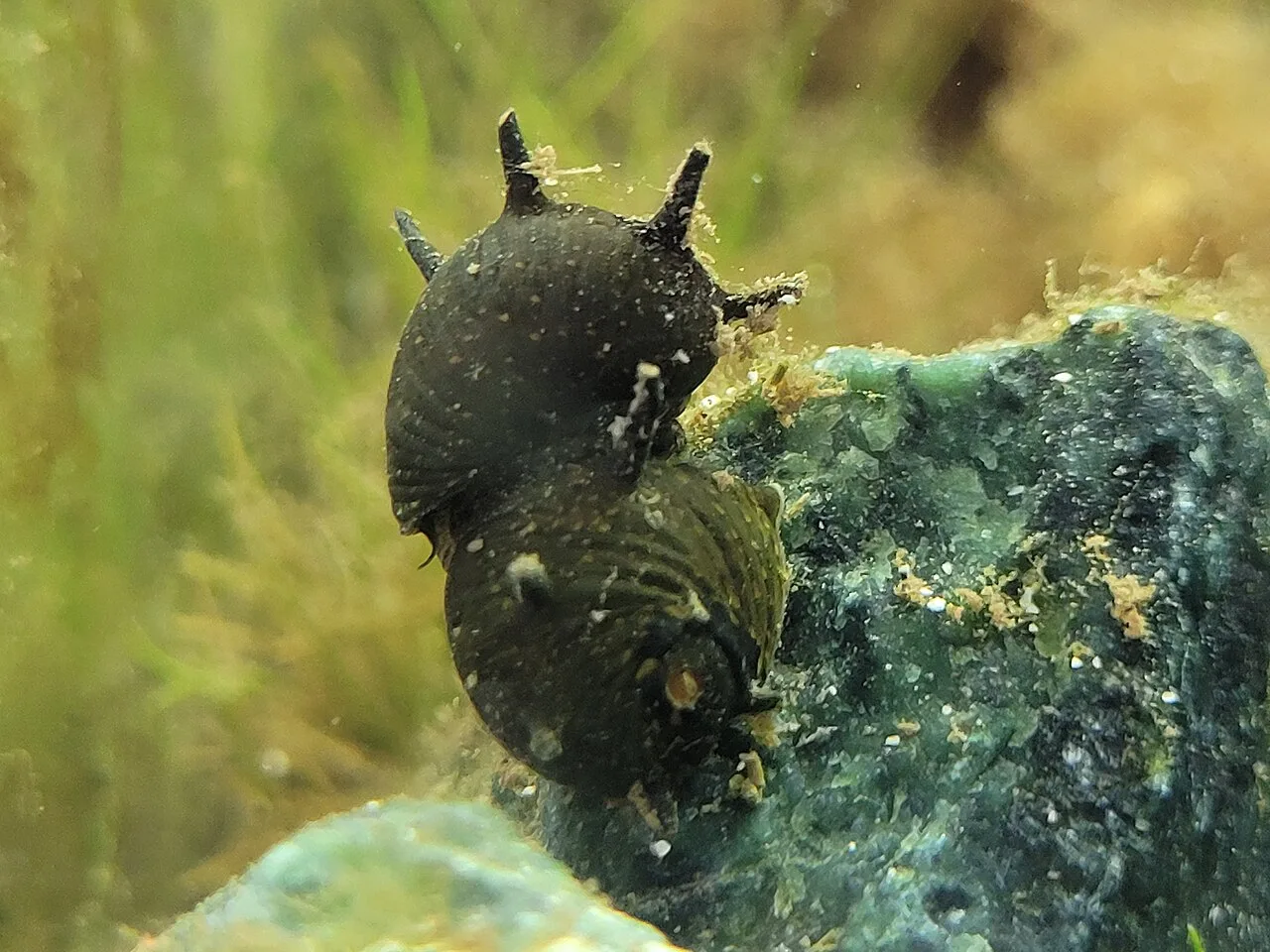
Similar water needs
Species with a similar temperature, a similar pH and a comparable adult size. Whether their behaviour fits as well is what the compatibility check is for.