Great ramshorn snail
Planorbarius corneus
3 views
A European ramshorn snail with red blood. It eats algae, carrion and dead plant parts, and living plants only when food is short.
- Temperature
- 20.5 °C
- pH
- 6 – 8 pH
- General hardness
- 6 – 20 °dH
- Maximum size
- 4 cm
- Social behavior
- Group
- Diet
- Omnivore
3 min read · 461 words
Fresh water
Quick facts
Further published values
- Lifespan
- 3 a
- Minimum tank size
- 30 L
Place in the aquarium
Highlighted are the water layer and the spots where the species usually stays in the tank.
- Near the bottom Mostly stays just above the bottom. Food has to reach the substrate.
- Dense plants Looks for dense planting as cover, retreat or grazing ground.
Home & range
Overview
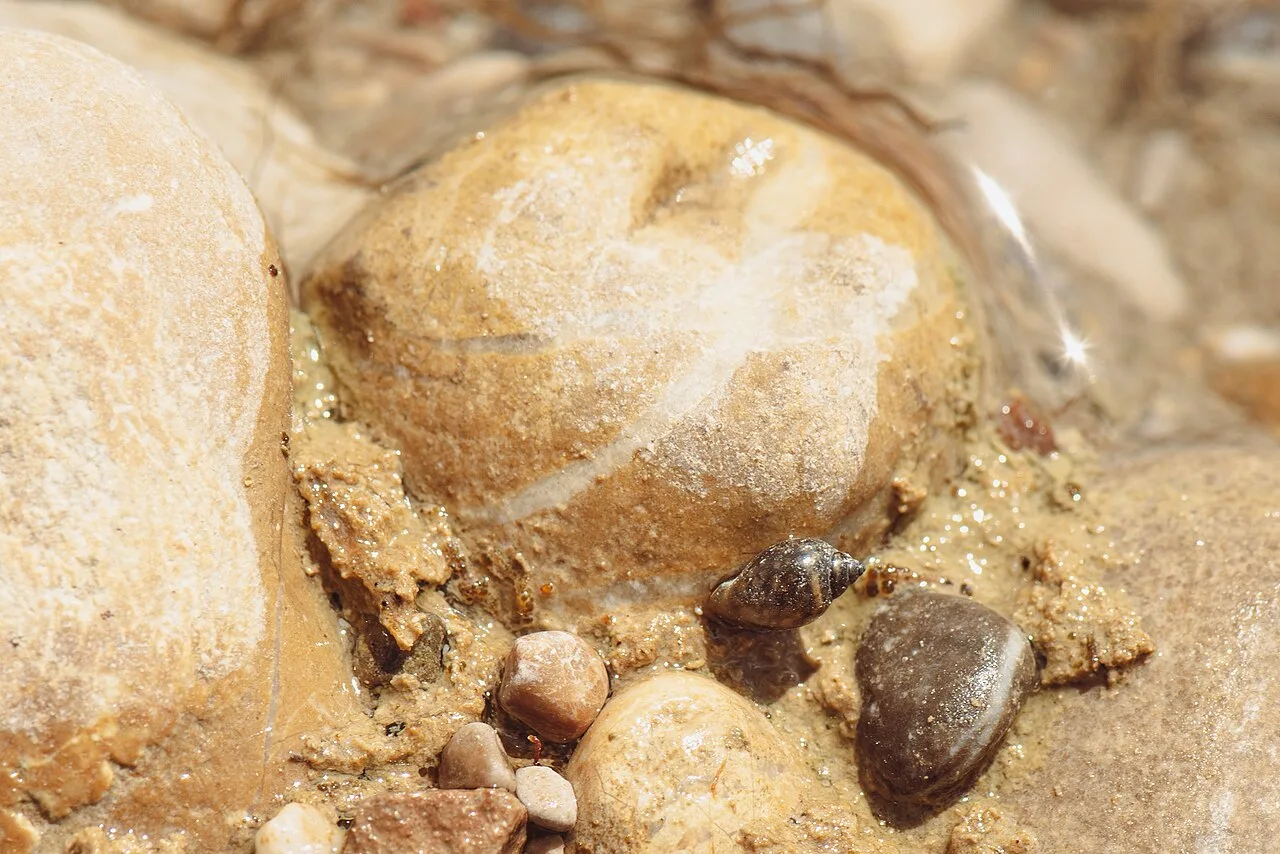
The great ramshorn snail (Planorbarius corneus) is a freshwater pulmonate and belongs to the family Planorbidae. It should not be confused with the smaller ramshorns of the genus Gyraulus in the same family. The left-coiled, flatly wound shell reaches up to four centimetres in diameter, has 4.5 to five whorls and is firm and thick-walled. Growth lines are clearly visible, sometimes with marked constrictions. The body is dark brown to reddish black. Empty shells turn chalk white after some time.
Red blood
It is the only European snail that uses haemoglobin as its blood pigment. Because this haemoglobin binds oxygen strongly, it survives even very oxygen-poor water. Although it is a pulmonate, it takes little air at the surface. Most gas exchange happens through the skin and a lobe-shaped secondary gill in the mantle cavity, which often protrudes in active animals. Albino animals lack the dark pigment, so their bodies look red.
Range and habitat
This describes the origin, not how to furnish the aquarium.
It lives in fresh water and prefers still and slow-flowing waters. It spends the winter in mud. The range covers all of Europe and extends east into Siberia and north to southern Norway, southern Sweden and Finland. The saprobic index of the species is 2.0. In Austria and Switzerland it is classed as threatened. No individual states are filled on the map, because it inhabits almost all of Europe.
Keeping
The great ramshorn snail is firmly established in the aquarium hobby. There, however, the native species has been largely displaced by the smaller, warmth-loving Planorbella duryi from North America. Stable colour forms are sold, above all blue and pink animals. Egg laying needs at least 12 °C. Since it also tolerates oxygen-poor water it is robust, but that does not replace caring for the water.
Diet
The great ramshorn snail is an omnivore. It mainly eats algae, dead plant parts and carrion. It takes living plants only when food is short. In a planted tank that is a hint to check the feeding.
Behaviour and moulting
The species is active by day. Because it lives on algae, plant debris and carrion, it is kept in community tanks as a scavenger.
Reproduction and larvae
Like most freshwater pulmonates it is a hermaphrodite. During mating both animals usually fertilise each other. The animal in the female role stores sperm and can later produce offspring on its own. Pure self-fertilisation without a partner is possible, but on average only three percent of those offspring survive.
Spawn and young
The eggs lie in a flat, jelly-like clump on the undersides of leaves, on stems or on stones. Depending on the size of the snail it contains about ten to 20 or more eggs. The young snails already use their radula inside the jelly and feed on it until they hatch. Lifespan is up to three years.
Gallery
More species in this group
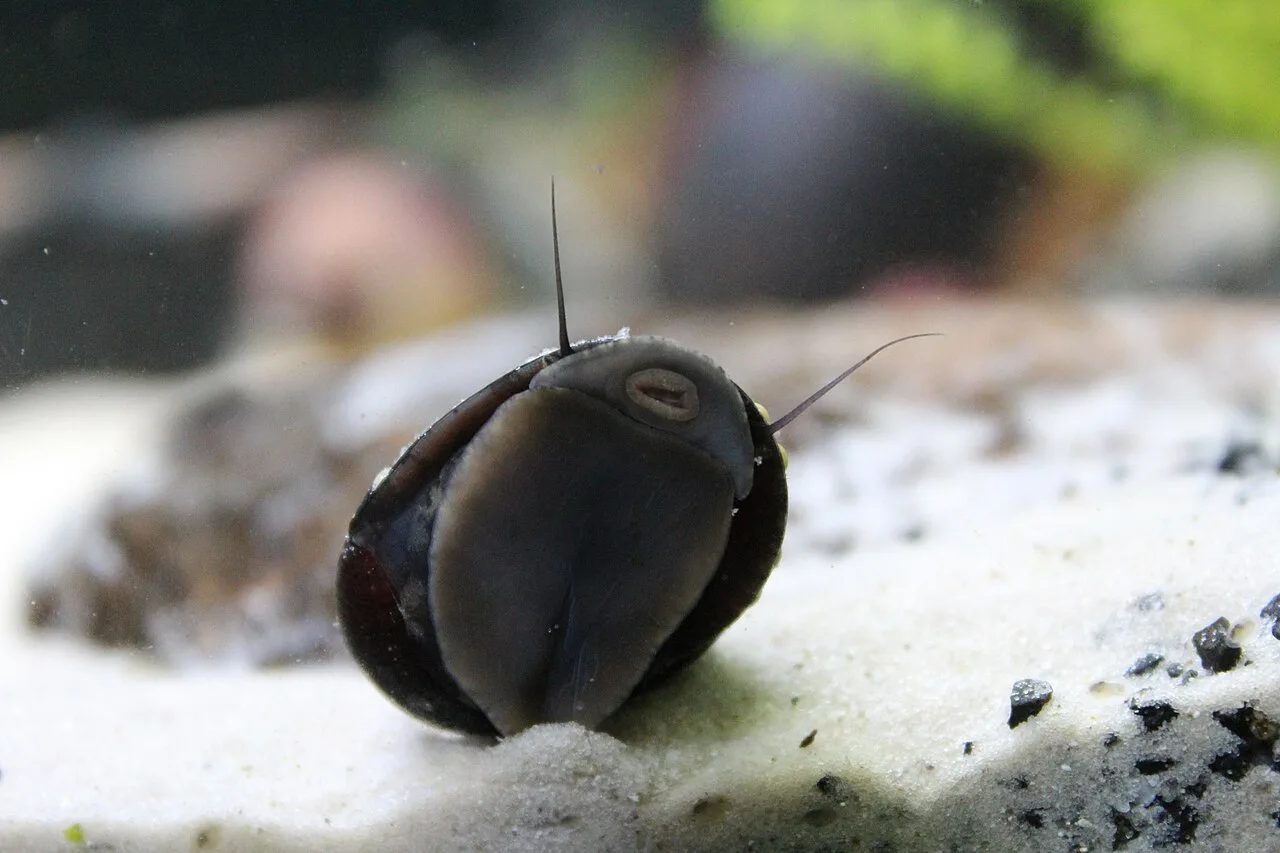
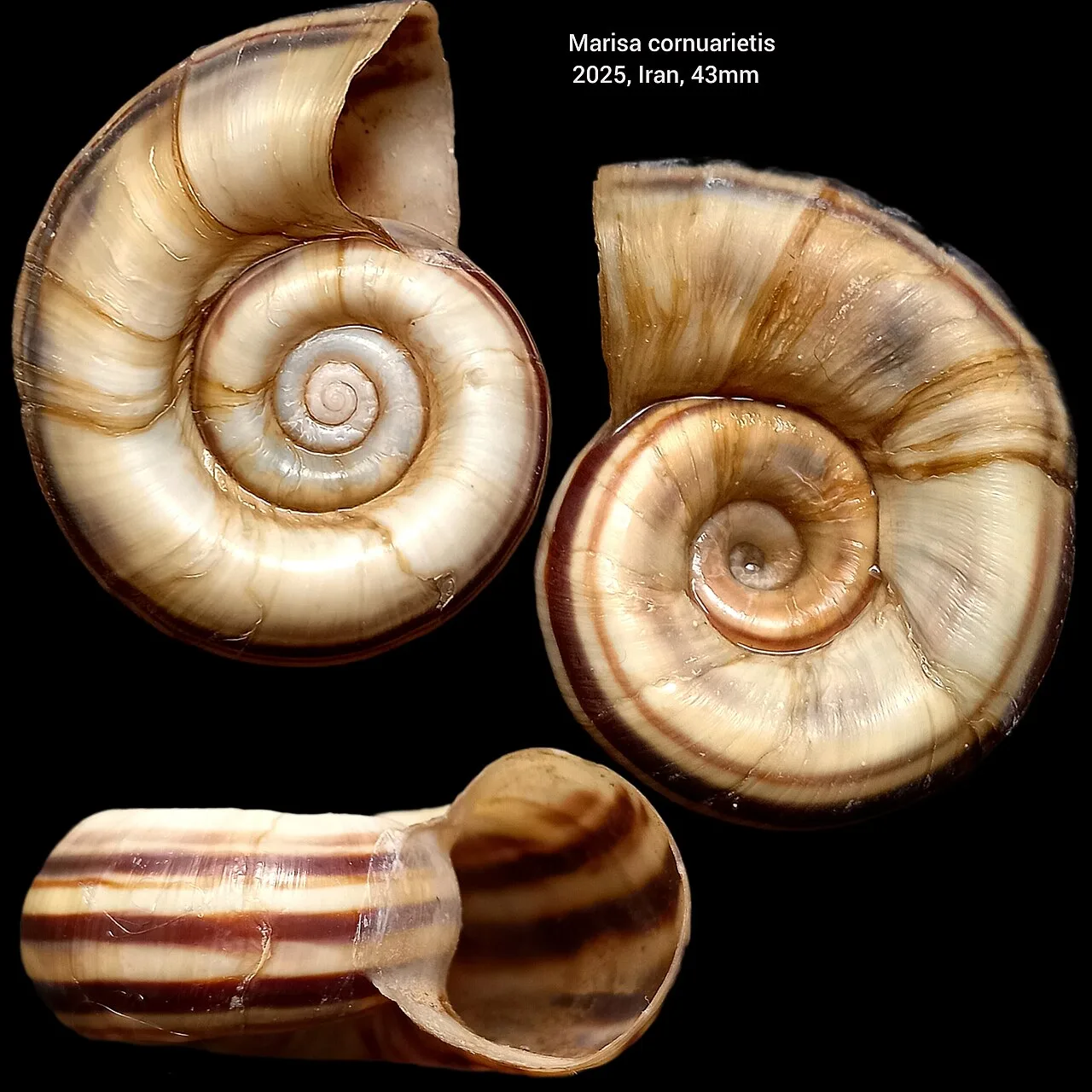
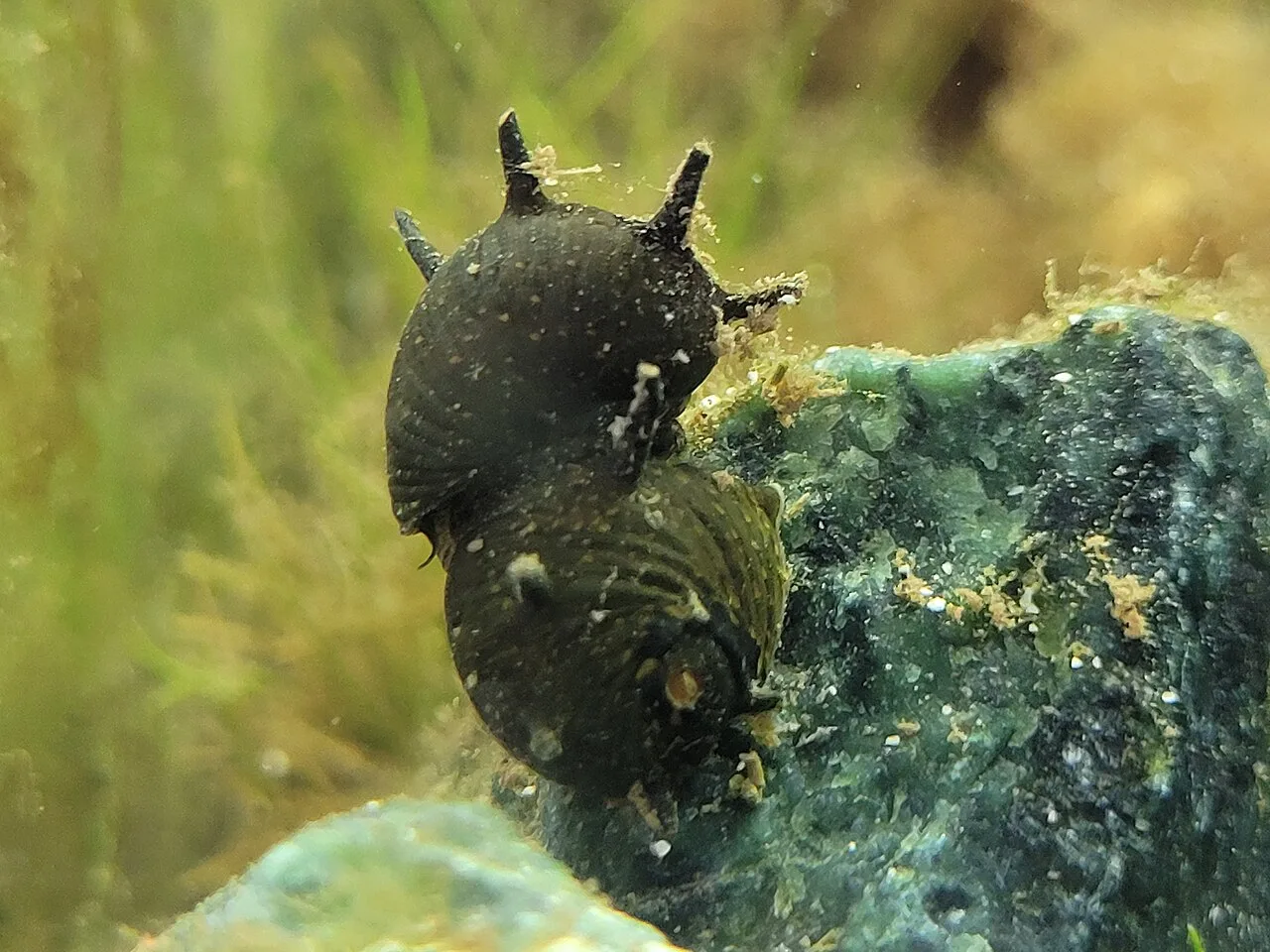
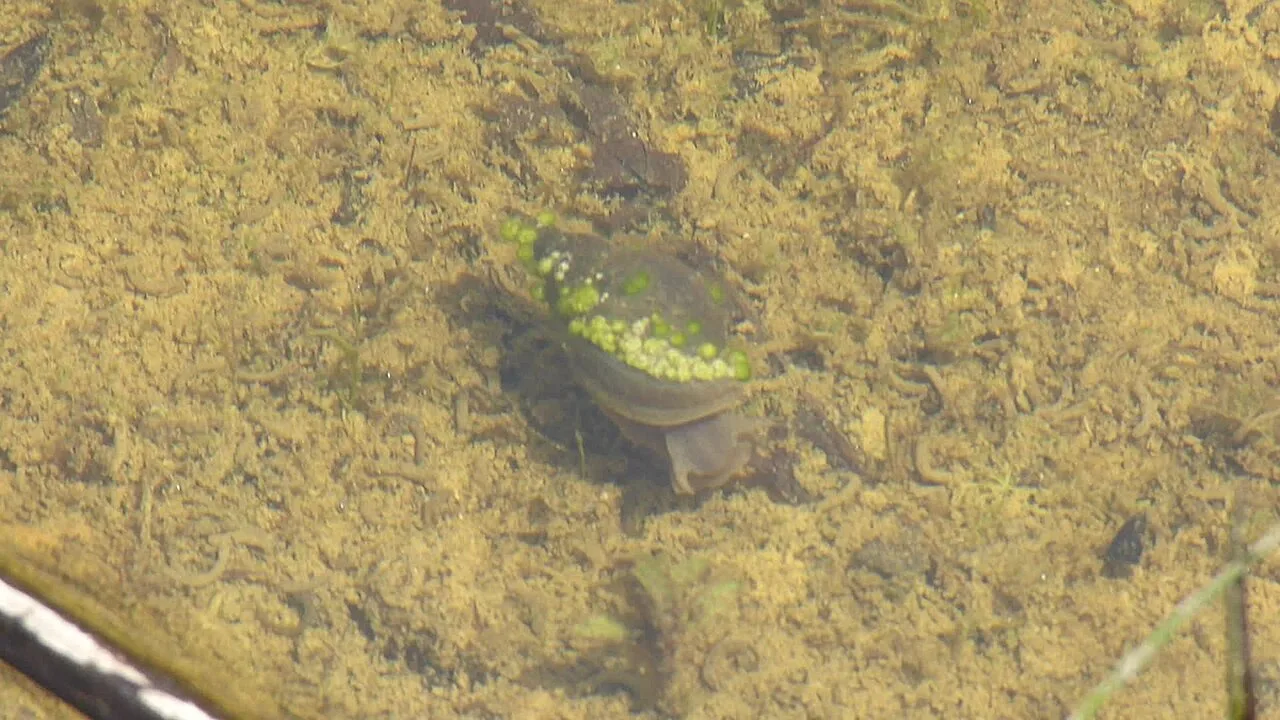
Similar water needs
Species with a similar temperature, a similar pH and a comparable adult size. Whether their behaviour fits as well is what the compatibility check is for.