Acute bladder snail
Physella acuta
2 views
A small, left-coiled pulmonate snail from North America that reaches almost every aquarium on plants. Its numbers follow the food supply.
- Temperature
- 10 – 28 °C
- pH
- 6.5 – 8.5 pH
- General hardness
- 5 – 20 °dH
- Maximum size
- 1.2 cm
- Social behavior
- Group
- Diet
- Omnivore
2 min read · 316 words
Fresh water
Quick facts
Further published values
- Minimum tank size
- 10 L
Place in the aquarium
Highlighted are the water layer and the spots where the species usually stays in the tank.
- Near the bottom Mostly stays just above the bottom. Food has to reach the substrate.
- Dense plants Looks for dense planting as cover, retreat or grazing ground.
Home & range
Overview
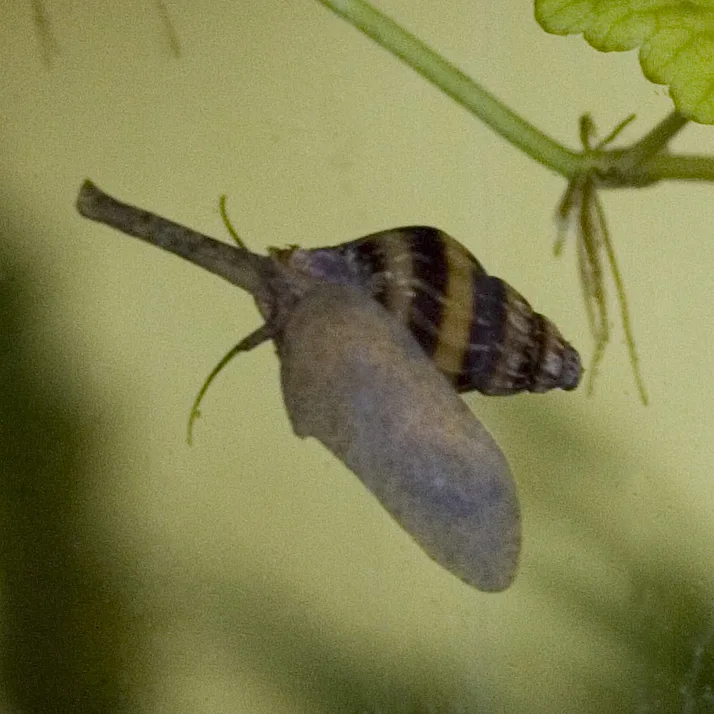
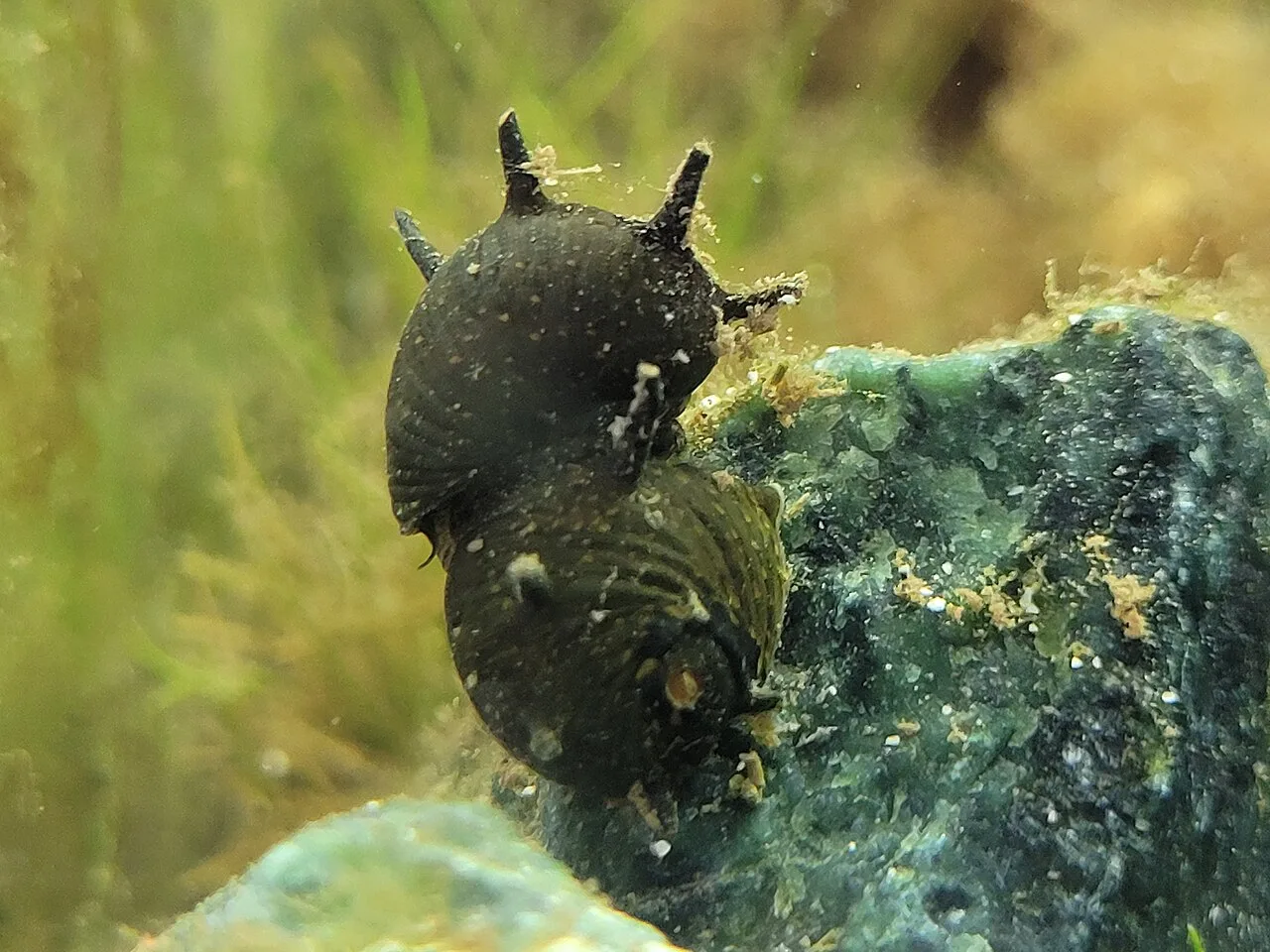
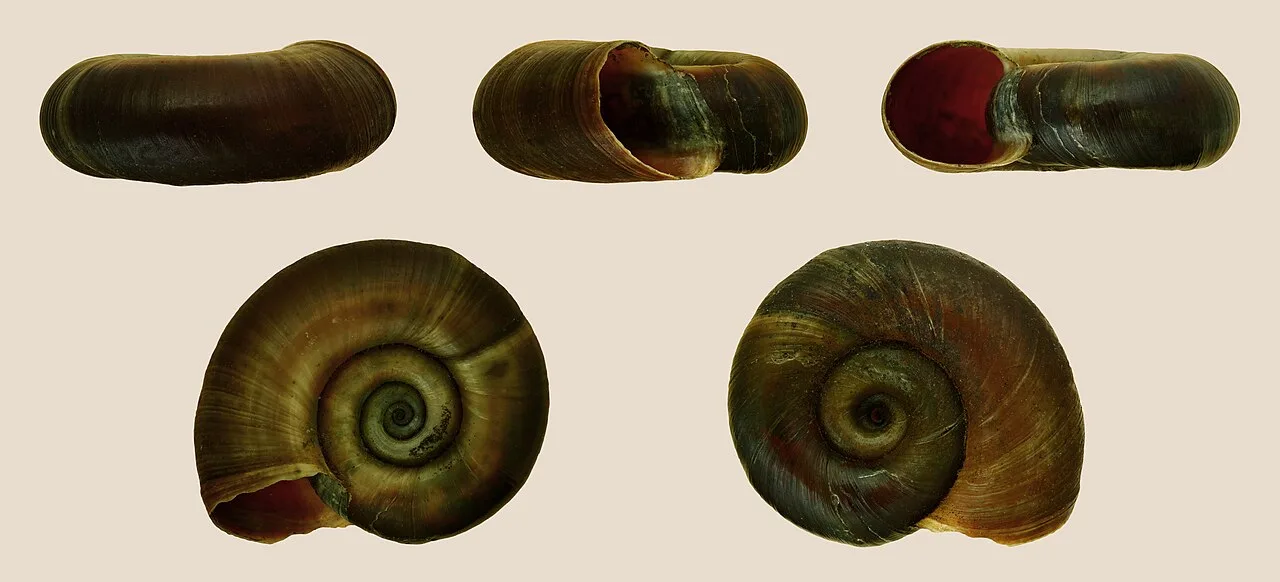
The shell is eight to twelve millimetres high and five to seven millimetres wide. It is left-coiled, has six whorls and a pointed apex. The thin but firm shell is yellowish horn-coloured. A mantle lobe reaches over the shell from the right. Holding the aperture towards the viewer with the apex up, the opening lies on the left.
Origin
Because it was described in France in 1805, it was long regarded as a European species. Studies of anatomy, crossbreeding and DNA show that it comes from North America. Today it occurs on every continent except Antarctica.
Range and habitat
This describes the origin, not how to furnish the aquarium.
Originally North America, where there is a good fossil record. From France it spread over the last two centuries across northern and central Europe to Central Asia, probably with the aquatic plant trade. In Germany it is widespread through releases; in many regions of Spain it is the most common freshwater snail. It colonises running and still waters and makes hardly any demands on water quality. It is regarded as an indicator of heavily polluted waters.
Keeping
Usually unplanned
It almost always arrives as spawn or juveniles on plants. A tank from about 10 litres is enough for it. It hardly harms healthy plants.
Controlling numbers
Many bladder snails show that too much food is given. Less food, siphoning leftovers and picking out animals reduce numbers. Assassin snails eat them as well. Chemical snail killers harm shrimp too.
Water
Very adaptable, roughly 10 to 28 °C, pH 6.5 to 8.5.
Diet
Algae, biofilm, leftovers, dead plant parts and carrion.
Behaviour and moulting
Fast and constantly on the move. It breathes air and comes to the surface to do so. On a mucus thread it can rise and sink in the water.
Reproduction and larvae
Hermaphrodite; a single animal can produce offspring. The eggs lie in small, transparent jelly clumps on plants, glass and stones. The young snails hatch fully formed. With plenty of food the population grows strongly within a few weeks.
Gallery
More species in this group
Similar water needs
Species with a similar temperature, a similar pH and a comparable adult size. Whether their behaviour fits as well is what the compatibility check is for.