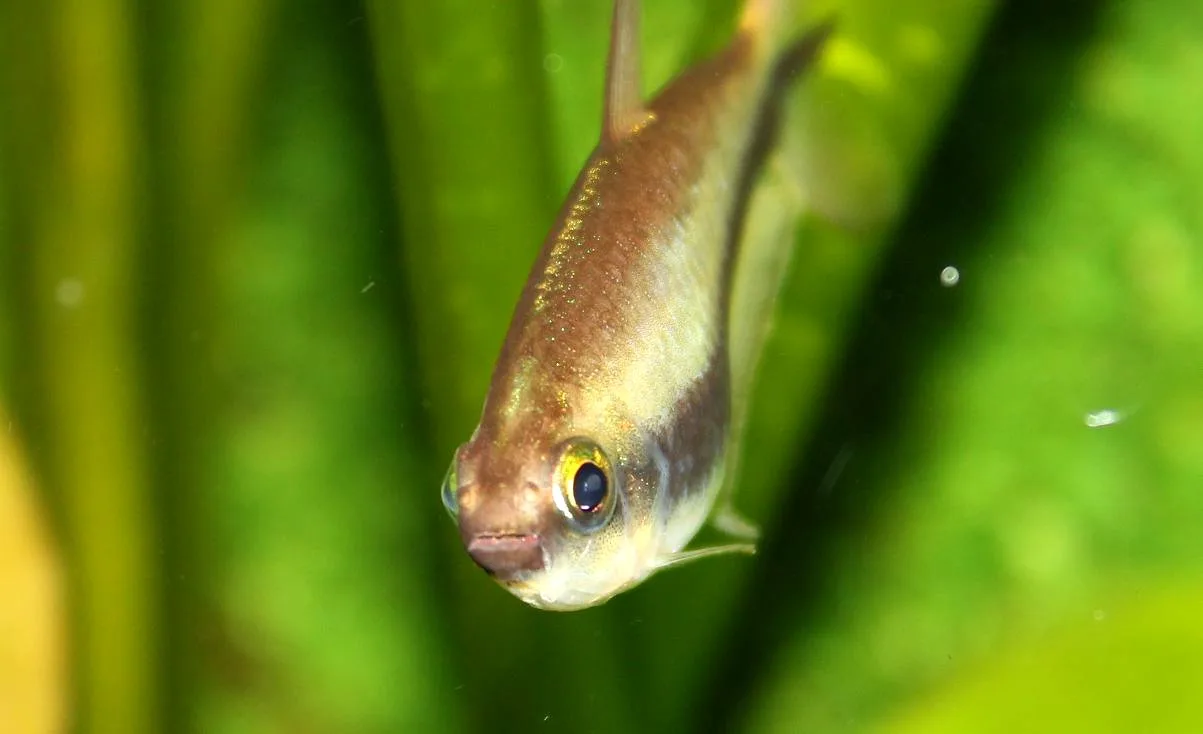
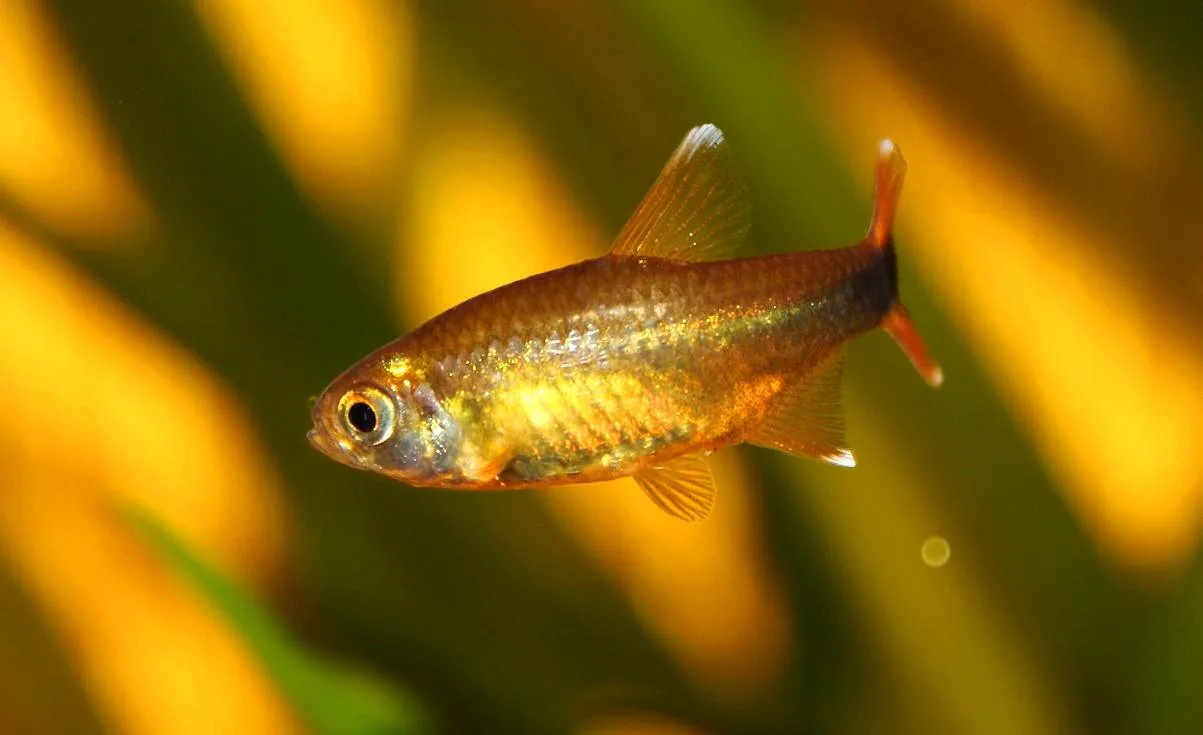
Diamond tetra
Makunaima pittieri
26 views
Endemic to Lake Valencia in Venezuela, 6 cm. Moenkhausia pittieri is the synonym.
- Temperature
- 23 – 27 °C
- pH
- 6 – 7.5 pH
- General hardness
- 4 – 15 °dH
- Maximum size
- 6 cm
- Minimum group size
- 8
- Minimum tank size
- 80 L
2 min read · 330 words
Fresh water
Quick facts
Place in the aquarium
Highlighted are the water layer and the spots where the species usually stays in the tank.
- Middle water Usually stays in the middle of the tank, between bottom and surface.
- Open swimming space Needs an open area without plants or decor to swim at length. Tank length matters more than height.
Shrimp in the tank
Shrimplets at risk
- Not shrimp safe
- Dwarf shrimp at risk
- Shrimplets at risk
- Shrimp safe
- Adult dwarf shrimp
- Safe
- Shrimplets
- Get eaten
- Safe from shrimp size
- about 2.5 cm
Adult dwarf shrimp are usually safe from the diamond tetra, their young are not. At up to 6 cm it is one of the larger tetras and eats small crustaceans, insects and their larvae. Shrimp from about 2.5 cm are usually too large for it, while smaller ones and freshly hatched young are eaten.
In a community tank dense moss and plants along the edges help. Anyone who wants to breed dwarf shrimp keeps them in a separate tank. Several small feeds help as well.
Home & range
Hatched countries are where the species occurs. It lives in particular waters there, not across the whole country. The points name known waters for orientation, not collection sites.
- Country of origin
- Water for orientation
Native
- Lake Valencia
- Only Lake Valencia.
Overview
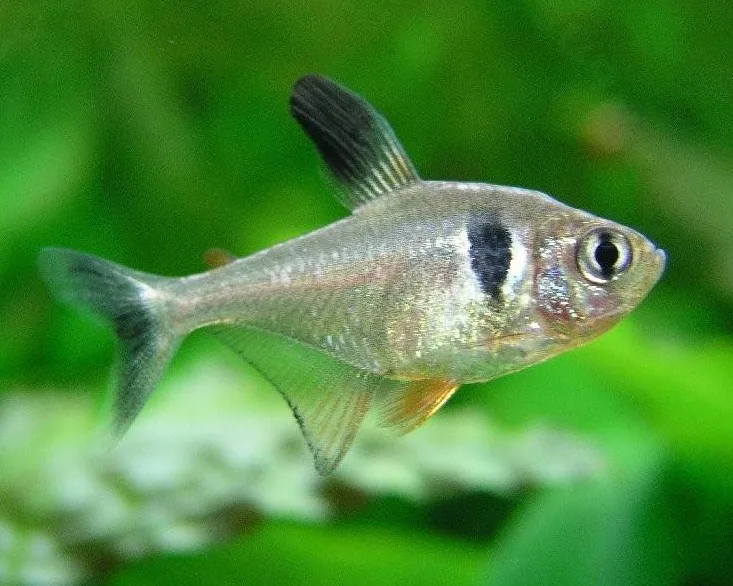
Deep-bodied, strongly flattened, females smaller. Older fish deeper, with longer fins, silver-grey and bluish white. Single scales gold, silver, greenish or copper, fin tips white, upper iris red.
Sexes
Males usually grow larger than females and have more reflective scales. As they mature, the pelvic, dorsal and anal fins lengthen. Males develop a violet sheen, while females stay rather translucent.
Name and taxonomy
Carl H. Eigenmann described the species in 1920 as Moenkhausia pittieri. He gave the Río Tiquirito near Concejo in Venezuela as the type locality. He did not explain the specific name. Most likely it honours the Swiss-born naturalist Henri Pittier, who lived in Venezuela and collected specimens. Today the species is placed in the genus Makunaima, erected by Terán, Benítez and Mirande in 2020. Makunaima is a creator god in the mythology of several Amazonian peoples who made the animals and a great tree from which the food plants arose. Ernst Ahl's Opisthanodus haerteli of 1935, with a supposed locality in Brazil, was based on an aquarium import and is regarded as a synonym.
Origin & habitat
This describes the origin, not how to furnish the aquarium.
Only Lake Valencia in northern Venezuela. Venezuela stays coarse and is not filled as a country shape.
Besides Lake Valencia between the states of Carabobo and Aragua, the species also lives in its tributaries. The species lives in slow-flowing streams with abundant vegetation and leaf litter. Urban growth destroys and pollutes the habitats. It seems to have disappeared from the lake itself, where it was first collected. In 2009 Ivan Mikolji photographed a population in a stream near the lake. The IUCN rates the species as endangered.
Care
In the trade since 1933. Hatching at 25 to 28 °C is the brood temperature, not keeping.
Origin of aquarium fish
The trade is supplied by captive-bred fish raised for export. The diamond tetra was first imported to Germany in 1933 and is still fairly often available in specialist shops.
Diet
Free-swimming small crustaceans, insects and their larvae.
Reproduction
Up to 400 eggs. Hatch after 30 to 60 hours at 25 to 28 °C.
More species in this group
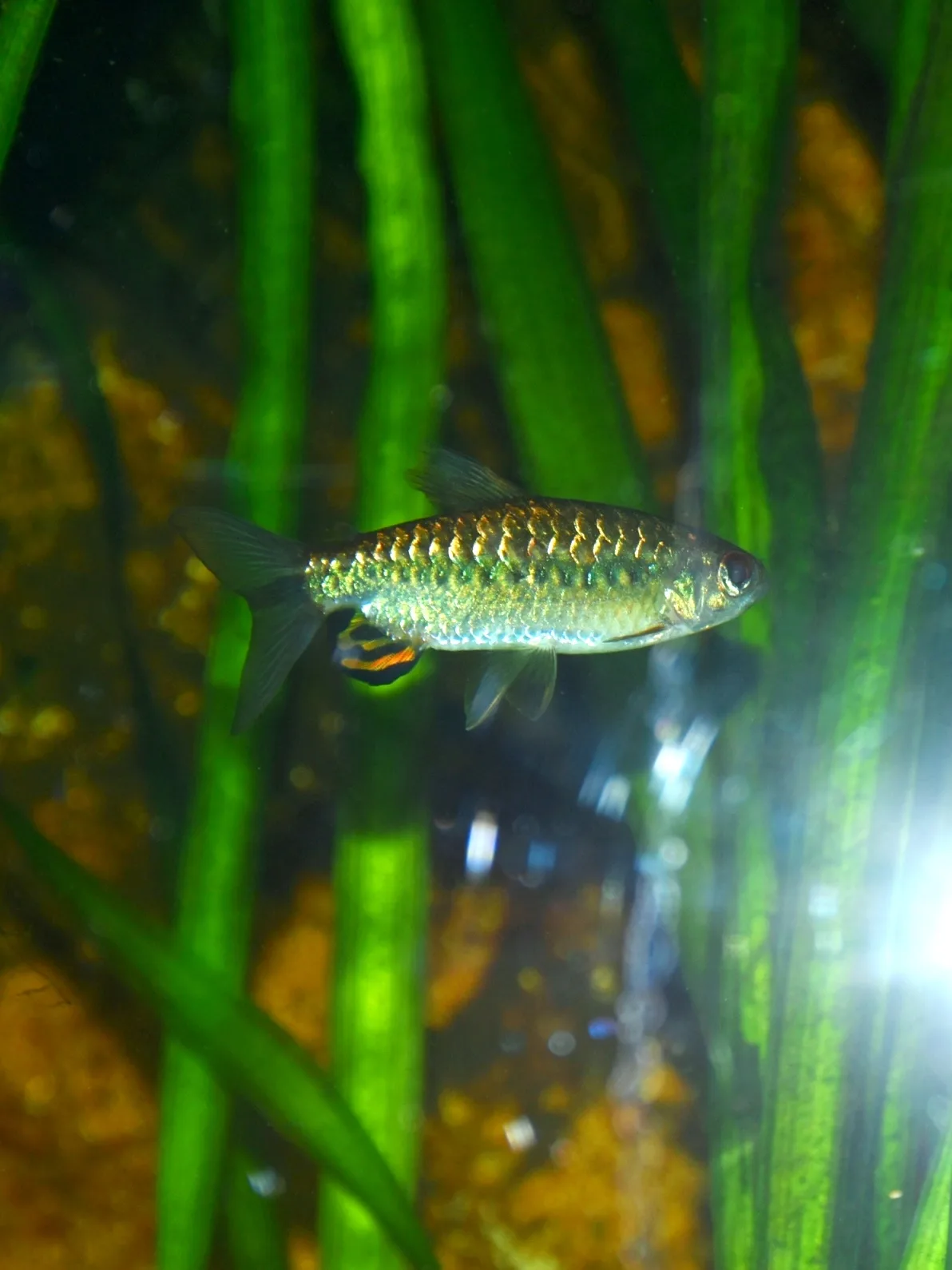
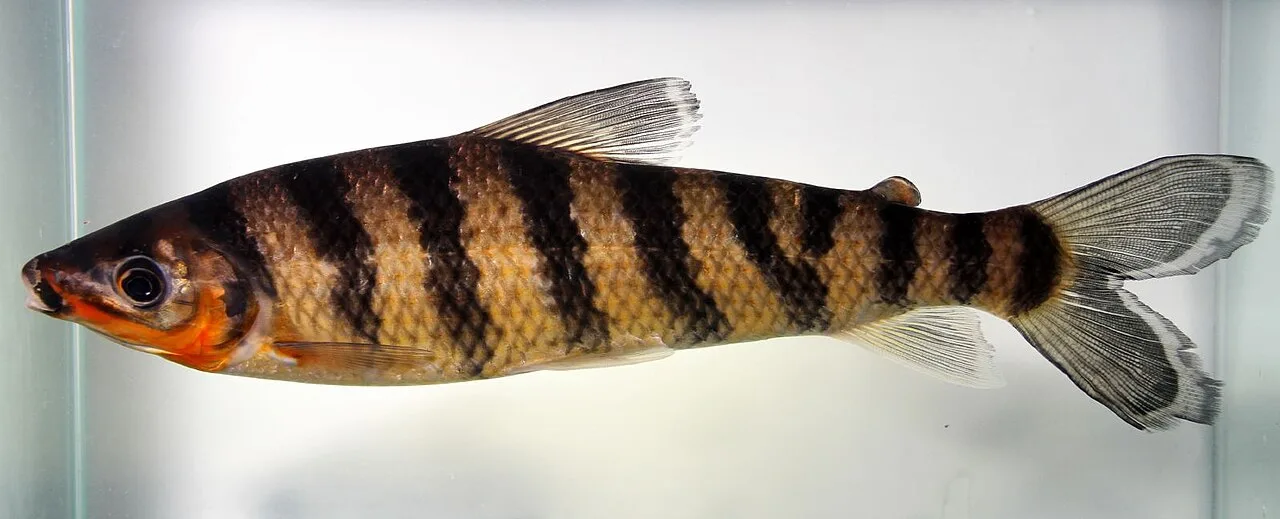



Similar water needs
Species with a similar temperature, a similar pH and a comparable adult size. Whether their behaviour fits as well is what the compatibility check is for.