Highbacked headstander
Abramites hypselonotus
3 views
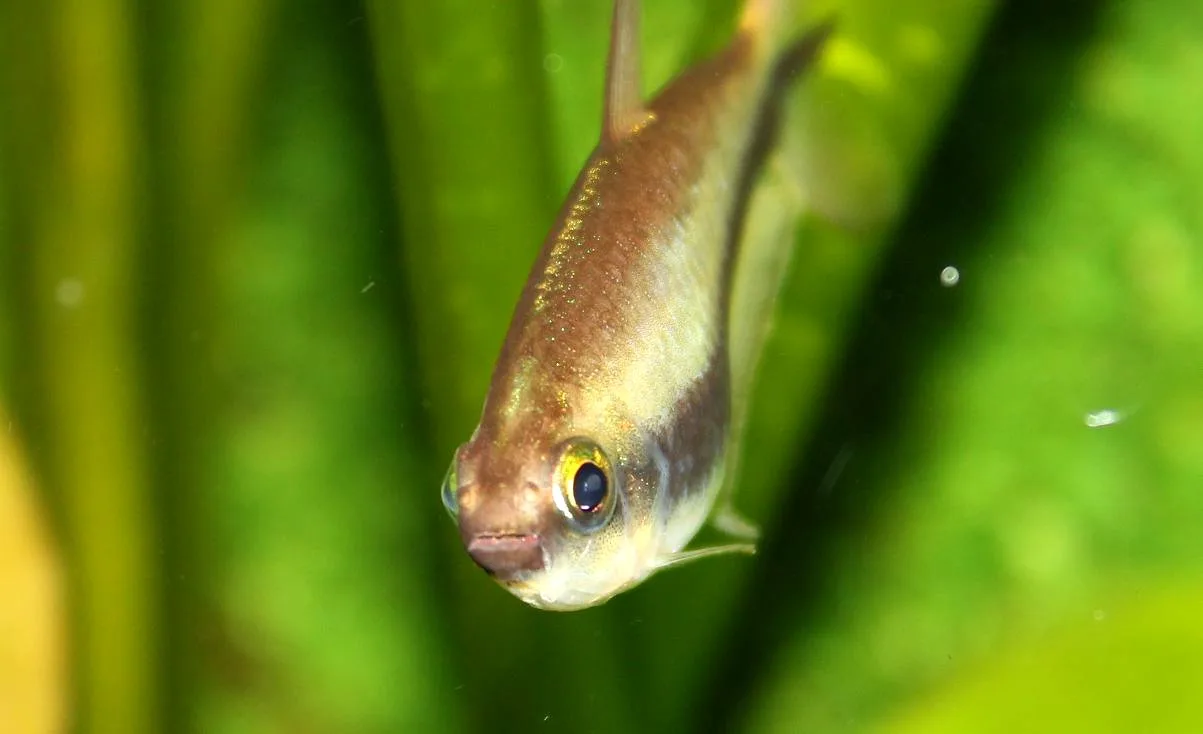
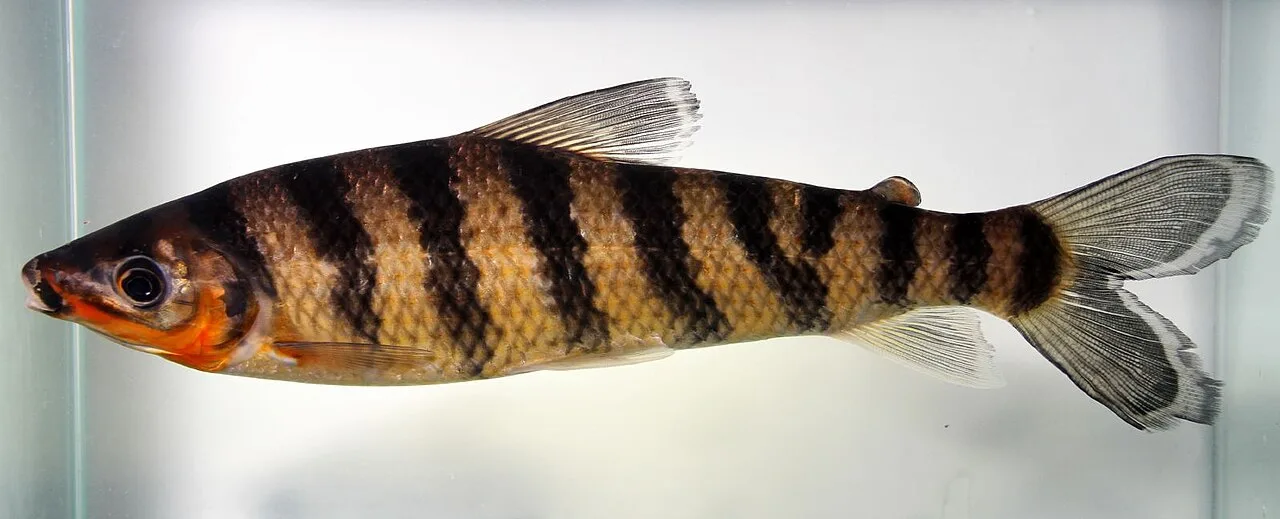
A high-backed headstander with dark bars that swims at an angle with its head down. It turns quarrelsome toward its own kind.
- Temperature
- 23 – 27 °C
- pH
- 6 – 7.5 pH
- General hardness
- 5 – 15 °dH
- Maximum size
- 14 cm
- Minimum tank size
- 250 L
2 min read · 201 words
Quick facts
Place in the aquarium
Highlighted are the water layer and the spots where the species usually stays in the tank.
- Middle water Usually stays in the middle of the tank, between bottom and surface.
- Near the bottom Mostly stays just above the bottom. Food has to reach the substrate.
- Dense plants Looks for dense planting as cover, retreat or grazing ground.
Shrimp in the tank
Dwarf shrimp at risk
- Not shrimp safe
- Dwarf shrimp at risk
- Shrimplets at risk
- Shrimp safe
- Adult dwarf shrimp
- At risk
- Shrimplets
- Get eaten
- Safe from shrimp size
- about 4 cm
The highbacked headstander picks at the bottom and at wood and eats plants, larvae and small invertebrates as it goes. At about 14 cm dwarf shrimp are prey for it. Larger, sturdy shrimp from about 4 cm are usually left alone.
Because it constantly searches the bottom, even hidden juvenile shrimp find little shelter. Dwarf shrimp need a tank of their own.
Home & range
Hatched countries are where the species occurs. It lives in particular waters there, not across the whole country. The points name known waters for orientation, not collection sites.
- Country of origin
- Water for orientation
Native
Overview
Abramites hypselonotus reaches about 14 cm. The back rises steeply behind the head, and broad dark bars run over the pale body. The fish stand at an angle with the head down and pick at the bottom, at wood and at plants. That is the normal posture.
It is not the banded leporinus. The leporinus is slimmer and wears sharper bars. Both grow larger than a juvenile in the shop suggests, and both nibble plants.
Origin & habitat
This describes the origin, not how to furnish the aquarium.
Calm stretches of large rivers in the Amazon and Orinoco basins. The origin stays coarse. Wood, roots and soft water match that.
Care
Space
23 to 27 °C, pH 6 to 7.5. One fish or a larger group from five, tanks from about 250 litres and 120 cm. Wood, stones, sturdy plants, a cover.
Company
Calm fish of the same size. Two or three of them fight. Long fins on other fish get nipped.
Diet
Omnivore with a large plant share. Plant-based granules, vegetables, spirulina, plus frozen food and mosquito larvae. Delicate plants get nibbled.
Behavior
Usually calm on its own, quarrelsome among a few of its kind. In a larger group that spreads out. Toward other species it stays mostly peaceful.
Reproduction
Practically no young in the aquarium. Keeping counts on fish that were bought.
Gallery
More species in this group



Similar water needs
Species with a similar temperature, a similar pH and a comparable adult size. Whether their behaviour fits as well is what the compatibility check is for.