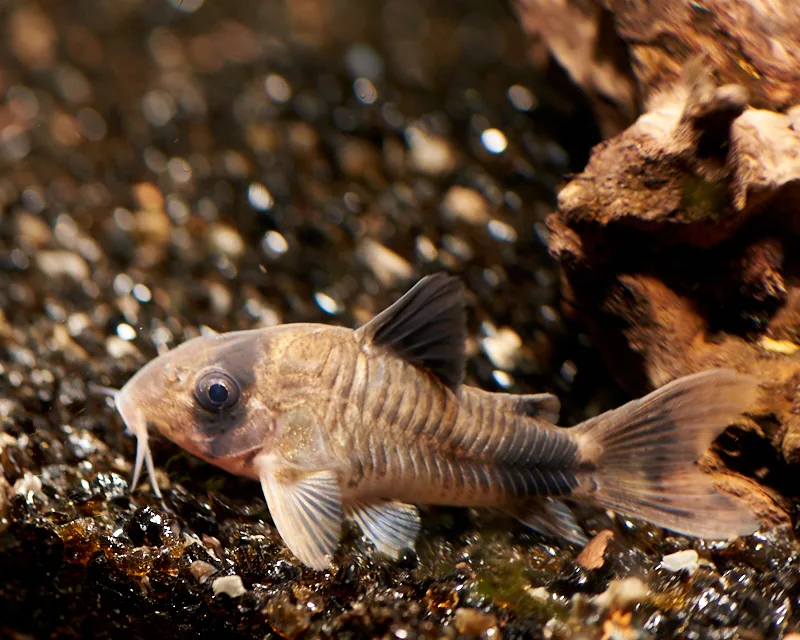
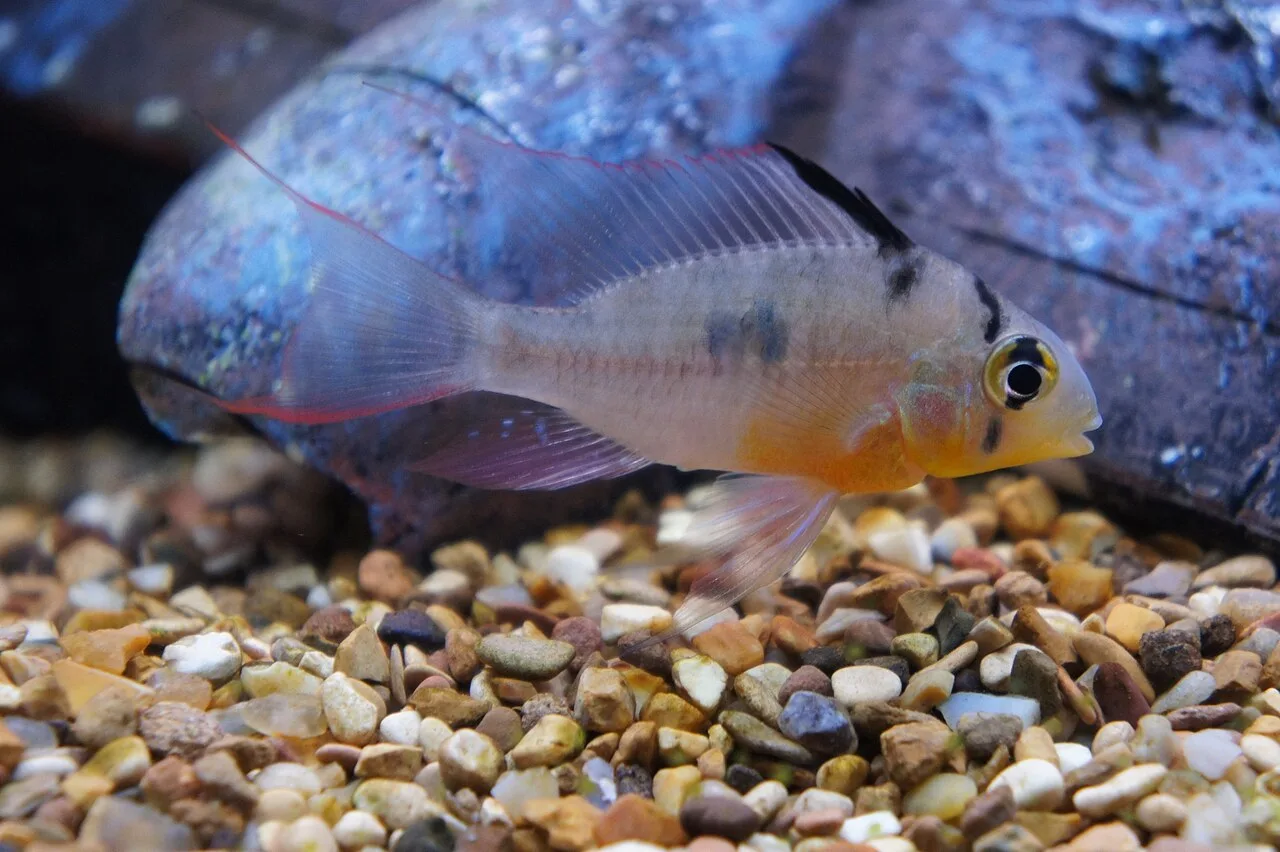
Orange-finned danio
Danio kyathit
17 views
A small schooling fish from Myanmar with orange fins. It jumps and needs a group and a cover.
- Temperature
- 20 – 26 °C
- pH
- 6.5 – 7.5 pH
- General hardness
- 5 – 15 °dH
- Maximum size
- 4 cm
- Minimum group size
- 8
- Minimum tank size
- 60 L
3 min read · 394 words
Fresh water
Quick facts
Place in the aquarium
Highlighted are the water layer and the spots where the species usually stays in the tank.
- Upper water Usually stays in the top third of the tank.
- Open swimming space Needs an open area without plants or decor to swim at length. Tank length matters more than height.
Shrimp in the tank
Shrimplets at risk
- Not shrimp safe
- Dwarf shrimp at risk
- Shrimplets at risk
- Shrimp safe
- Adult dwarf shrimp
- Safe
- Shrimplets
- Get eaten
- Safe from shrimp size
- about 2 cm
Adult dwarf shrimp usually get along with the ocelot danio. It grows to about 6 cm, is a quick schooling fish and keeps mainly to the upper and middle water. Shrimp from about 2 cm are too large for its mouth.
Baby shrimp that wander in the open are eaten, though. With dense moss, leaf litter and fine-leaved plants on the bottom, enough young survive to keep a colony going. For deliberate breeding a separate tank is better.
Home & range
Hatched countries are where the species occurs. It lives in particular waters there, not across the whole country. The points name known waters for orientation, not collection sites.
- Country of origin
- Water for orientation
Native
Overview
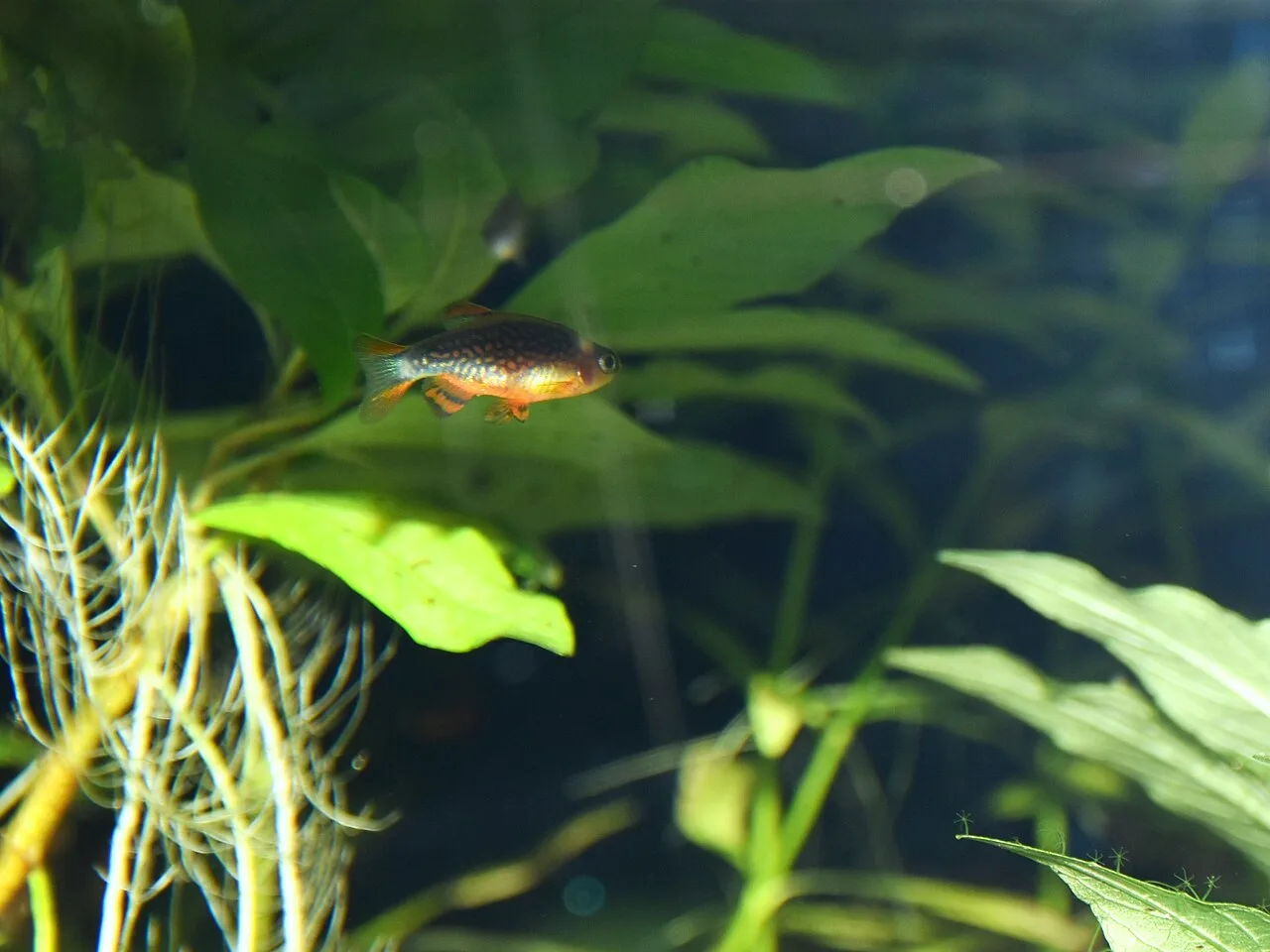
Danio kyathit reaches about 3 to 4 cm. The body is olive with dark spots or broken stripes. The fins of the males glow orange. Females are deeper and paler. It is not a zebrafish and not the glowlight danio. The orange in the fins and the irregular pattern separate it.
It is lively and stands in the upper and middle water. An open tank loses it. The cover has to close at the cable gaps as well.
Spotted or striped
Danio kyathit is the spotted form, also traded as the ocelot danio. It closely resembles the leopard danio, a colour form of the zebrafish Danio rerio, and is closely related to it. The striped form, formerly traded as the orange-finned danio, is now described as a separate species, Danio quagga. It occurs in parts of the same range and is recognised by its stripes. A genetic study from 2021 used both species to examine how stripes and spots develop. The species grows to 6 cm. Females are thicker and less streamlined than males.
Fang Fang described the species in 1998 from Myitkyina in northern Myanmar. Kyathit is the Burmese word for leopard. The name quagga of the sister species recalls the extinct plains zebra. The IUCN lists Danio kyathit as near threatened.
Origin & habitat
This describes the origin, not how to furnish the aquarium.
Streams in Myanmar, clear, with current and gravel. Myanmar stays the coarse origin. The habitat is moving and not very warm. A permanent stay above 28 °C is unfavourable.
The range lies in northern Myanmar, mainly the upper Irrawaddy near Myitkyina, with tributaries such as the Chindwin basin. The species was described from small, fast streams with clear water.
Care
Size
20 to 26 °C, pH 6.5 to 7.5. A school from eight, tanks from about 60 litres and 60 cm, with a cover, some current, plants at the edge and an open middle.
Company
Other small, peaceful schooling fish. Large barbs and cichlids eat or stress them. Shrimp in a dense tank usually survive.
Diet
Fine prepared food. Flakes, small granules, cyclops, brine shrimp. The mouth is small. Several small feeds, because the leading fish otherwise take everything.
Behavior
A fast, peaceful school. Too few fish stand singly and lose the fin colour. Within the species there is short courtship, no injury, as long as the number is right.
Reproduction
Egg scatterer without brood care. Fine plants or a spawning grate and removing the parents are the breeding path. The larvae need dust-fine food.
Gallery
More species in this group

Similar water needs
Species with a similar temperature, a similar pH and a comparable adult size. Whether their behaviour fits as well is what the compatibility check is for.