
Scissortail rasbora
Rasbora trilineata
17 views
A slender schooling fish with black-and-white scissor marks in the tail. It needs length and a real group.
- Temperature
- 22 – 26 °C
- pH
- 6.5 – 7.5 pH
- General hardness
- 5 – 15 °dH
- Maximum size
- 12 cm
- Minimum group size
- 8
- Minimum tank size
- 200 L
3 min read · 495 words
Fresh water
Quick facts
Place in the aquarium
Highlighted are the water layer and the spots where the species usually stays in the tank.
- Upper water Usually stays in the top third of the tank.
- Middle water Usually stays in the middle of the tank, between bottom and surface.
- Open swimming space Needs an open area without plants or decor to swim at length. Tank length matters more than height.
Shrimp in the tank
Dwarf shrimp at risk
- Not shrimp safe
- Dwarf shrimp at risk
- Shrimplets at risk
- Shrimp safe
- Adult dwarf shrimp
- At risk
- Shrimplets
- Get eaten
- Safe from shrimp size
- about 4 cm
The scissortail rasbora is a risk for small dwarf shrimp. It grows to 15 cm and in nature eats mainly insects from the surface, plus crustaceans and worms. Adults have a mouth that a small Neocaridina fits into.
Baby shrimp are eaten, and small adults are not safe either. Larger shrimp from about 4 cm, such as Amano shrimp, are usually ignored. Anyone who wants to keep dwarf shrimp is better off keeping them apart from large scissortails. Anyone who wants to add shrimp should choose robust, larger species and introduce them only once the tank is well run in and densely planted.
Home & range
Overview
The scissortail rasbora reaches about 10 to 12 cm, in the aquarium often a little less. The body is silvery with a dark line, the tail carries two black and white fields that work like scissors when the fish swims. Juveniles do not show this fully yet. Anyone who buys them as small tankmates underestimates the adult size and the run they need.
Males stay slimmer, females deeper. The species is peaceful, but lively and on the move all day.
Features
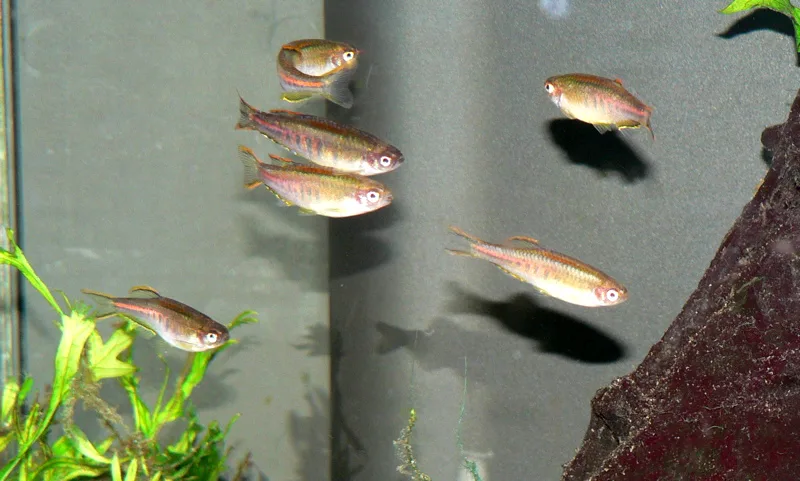
The scissortail rasbora grows to 15 cm. The body is very slender, strongly compressed and translucent, almost fully transparent in juveniles. Adults have a greenish back and silvery, iridescent sides. A dark longitudinal band starts at the pelvic fin, grows stronger towards the rear and reaches into the tail, and a thinner band runs above the anal fin. The tail lobes are white with a broad black crossband, hence the name. Some scales are edged in black. Females are fuller. Trilineata means three-lined. Steindachner described the species in 1870, and it reached Germany in 1932.
The mouth is terminal. The dorsal fin has two unbranched and seven branched rays, the anal fin three and five. The middle longitudinal row holds 29 to 32 scales, with 13 in front of the dorsal fin. The species belongs to the Danionidae.
Origin & habitat
This describes the origin, not how to furnish the aquarium.
Rivers and streams in Southeast Asia, often clear, with current and swimming room. The countries stay a coarse origin. A short tank shows fish that turn at the glass instead of swimming.
The species lives in Southeast Asia in the Mekong and Chao Phraya, on the Malay Peninsula, on Sumatra and on Kalimantan. It keeps to flowing and still water, usually near the surface. The IUCN lists it as least concern.
Care
Size
22 to 26 °C, pH 6.5 to 7.5. A school from eight, tanks from about 200 litres and 100 cm, better longer. Plants at the edge, an open middle, some current, a cover. Permanently very warm water leaves them short of breath.
Company
Other medium-sized, peaceful schooling fish. Tiny Boraras are harassed. Large cichlids, no. The scissor pattern comes only when several fish swim in front of each other.
Diet
A prepared food with a small share of frozen food. Flakes, granules, mosquito larvae. The portions also have to arrive at the back of the group. They feed in midwater and above, rarely on the bottom.
In the wild it eats mainly insects that fall onto the surface, plus crustaceans and worms. It adapts easily to ordinary aquarium foods.
Behavior
An active school. Too few fish lose their calm and stand shy or become fidgety toward long fins. In the right number they are peaceful. The scissor marks are courtship and a school signal, not a warning of aggression.
The scissortail is less lively than other Rasbora species. It often stands motionless among plants and repeatedly folds its tail like scissors.
Reproduction
Egg scatterer without brood care. Fine plants and softer water can allow a spawning if the parents are removed. In a community tank the eggs are eaten.
More species in this group
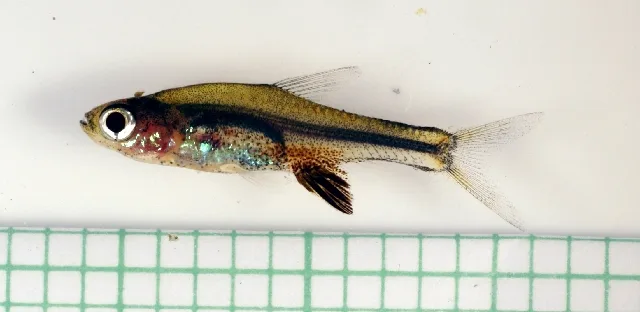
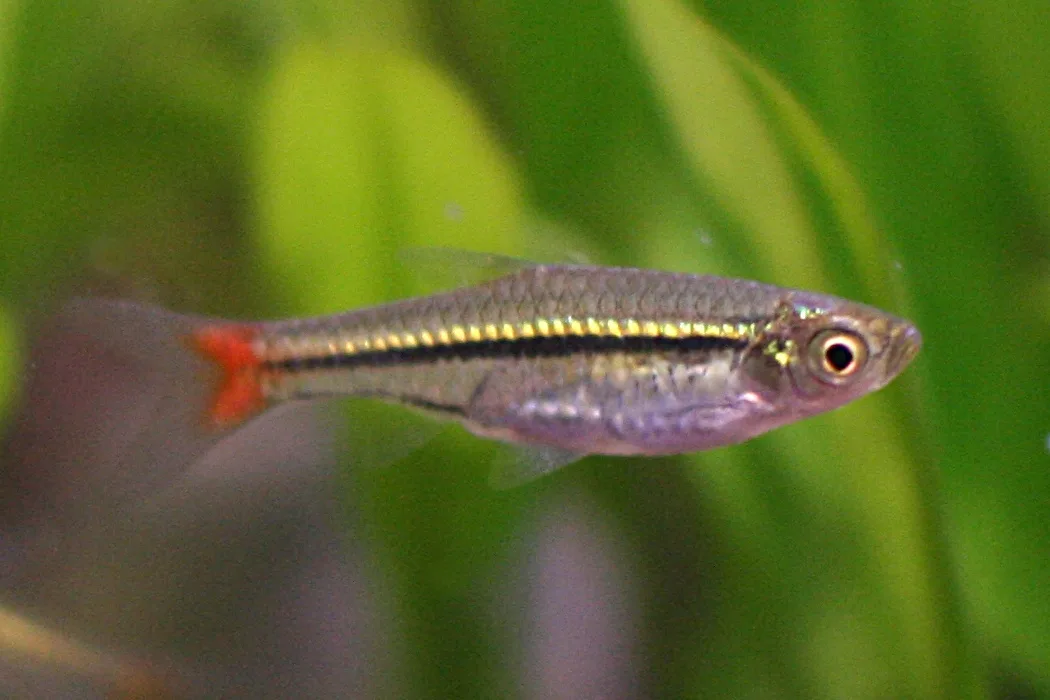
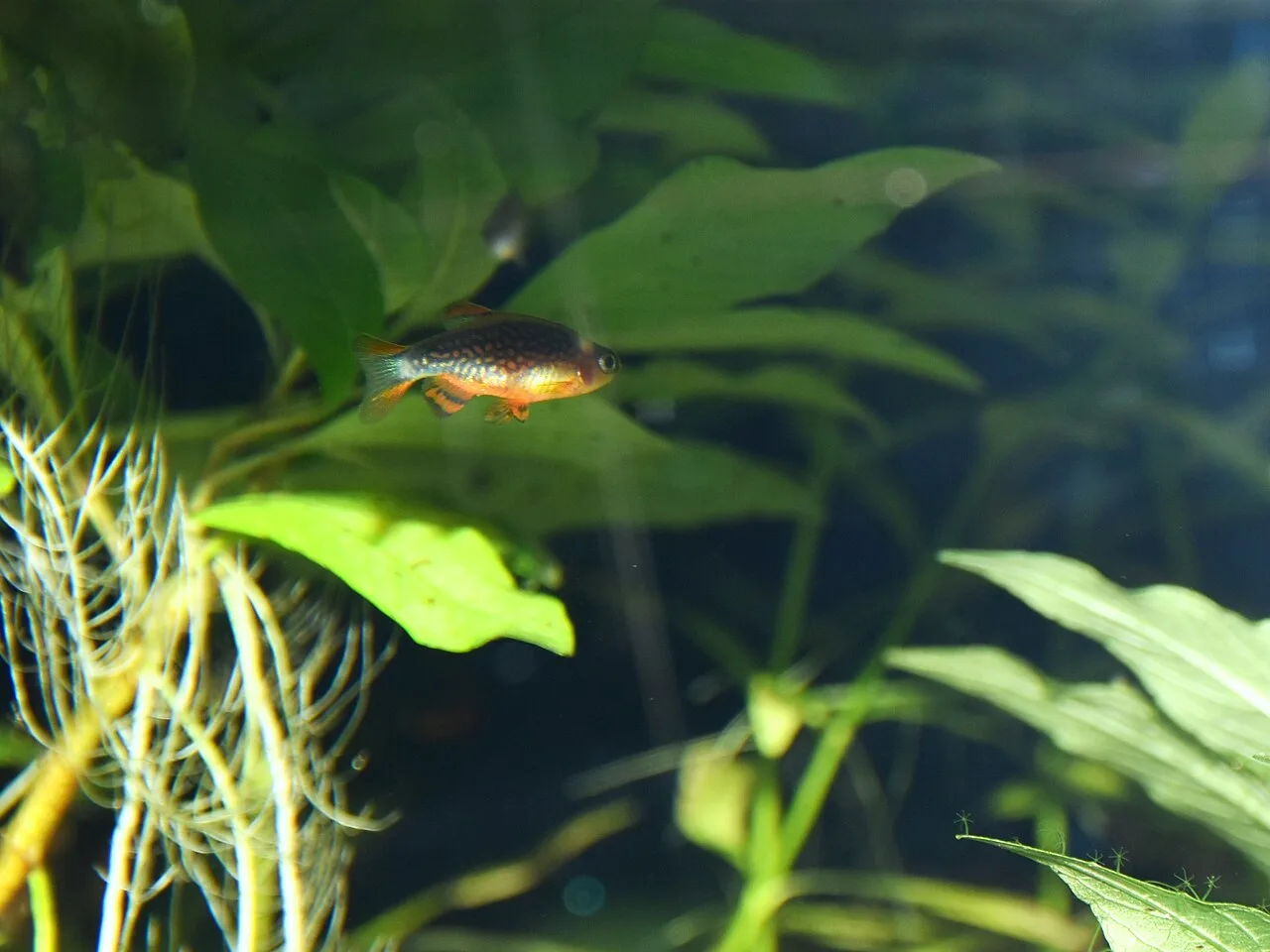
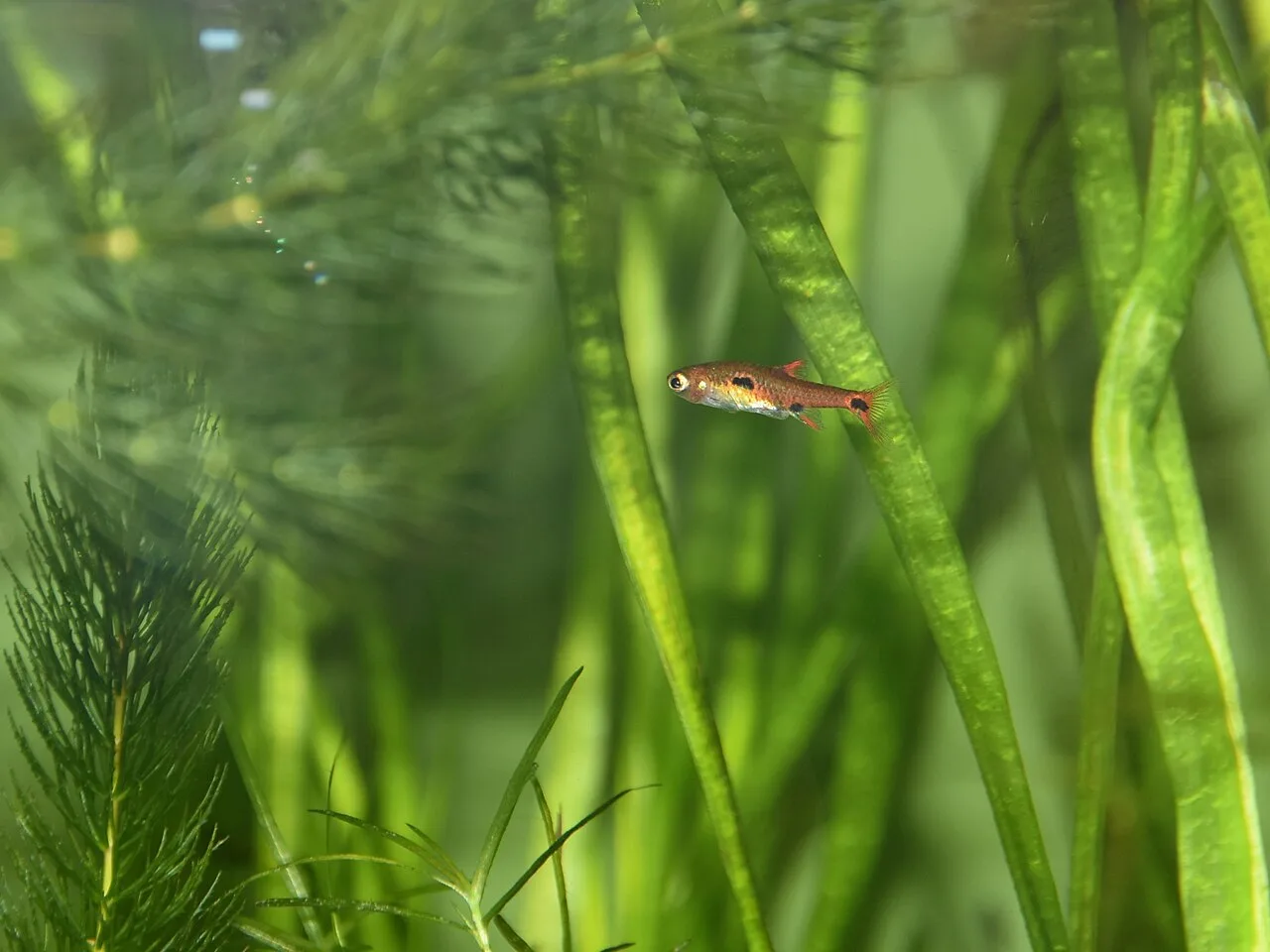

Similar water needs
Species with a similar temperature, a similar pH and a comparable adult size. Whether their behaviour fits as well is what the compatibility check is for.

