Silver hatchetfish
Gasteropelecus sternicla
17 views
A surface fish with a deep chest that jumps out of the water. The tank needs length, a quiet surface and a close cover.
- Temperature
- 24 – 28 °C
- pH
- 6 – 7 pH
- General hardness
- 2 – 12 °dH
- Maximum size
- 6 cm
- Minimum group size
- 6
- Minimum tank size
- 80 L
3 min read · 467 words
Fresh water
Quick facts
Place in the aquarium
Highlighted are the water layer and the spots where the species usually stays in the tank.
- Water surface Stays just below the surface. The top needs a calm current and a cover.
Shrimp in the tank
Shrimplets at risk
- Not shrimp safe
- Dwarf shrimp at risk
- Shrimplets at risk
- Shrimp safe
- Adult dwarf shrimp
- Safe
- Shrimplets
- Get eaten
- Safe from shrimp size
- about 1.5 cm
The common hatchetfish is harmless to adult shrimp. It grows up to 6.5 cm, lives right below the surface and eats insects that fall onto the water. It does not search the bottom for food. Shrimp from about 1.5 cm are safe. Juvenile shrimp are only caught when they rise to the top.
The two groups use separate zones of the tank. Moss and fine plants on the bottom are enough for Neocaridina or Caridina to breed. The tank must be well covered because the fish jump.
Home & range
Hatched countries are where the species occurs. It lives in particular waters there, not across the whole country. The points name known waters for orientation, not collection sites.
- Country of origin
- Water for orientation
Native
Overview
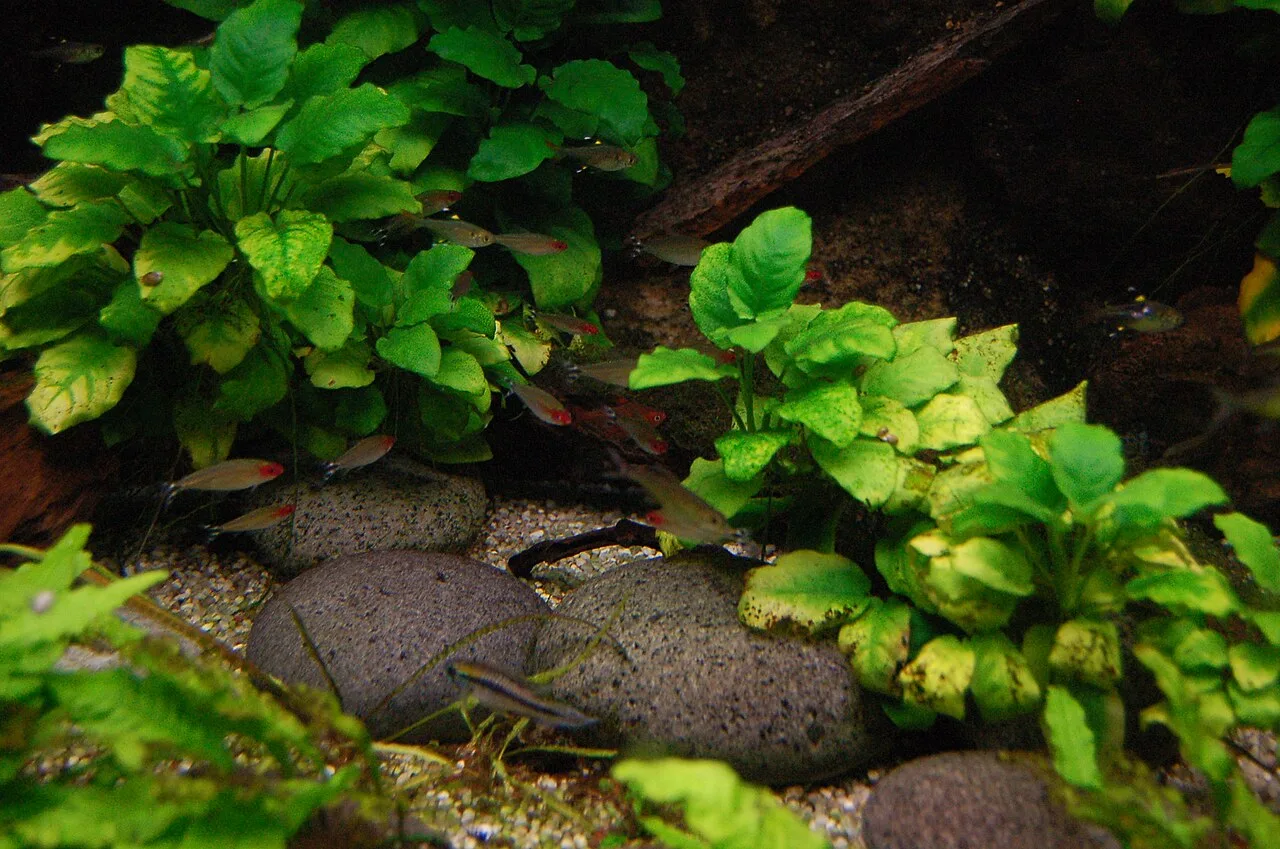
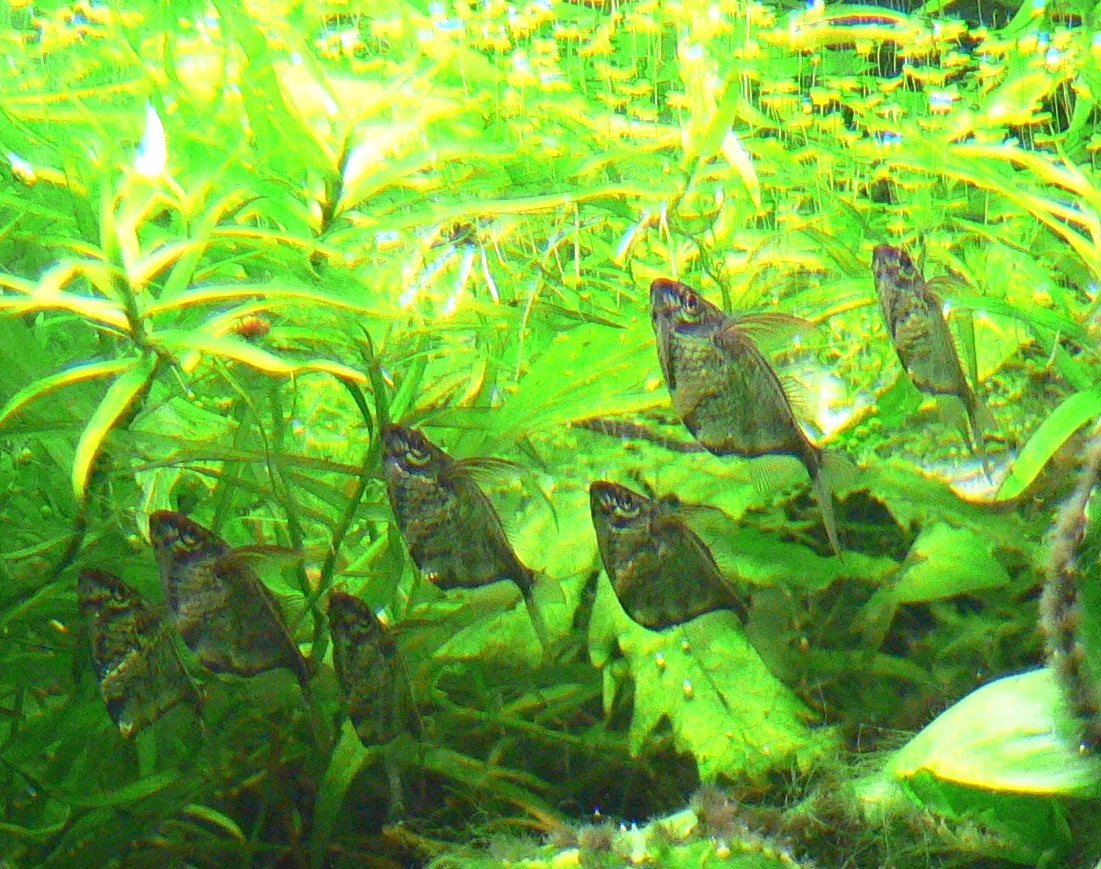
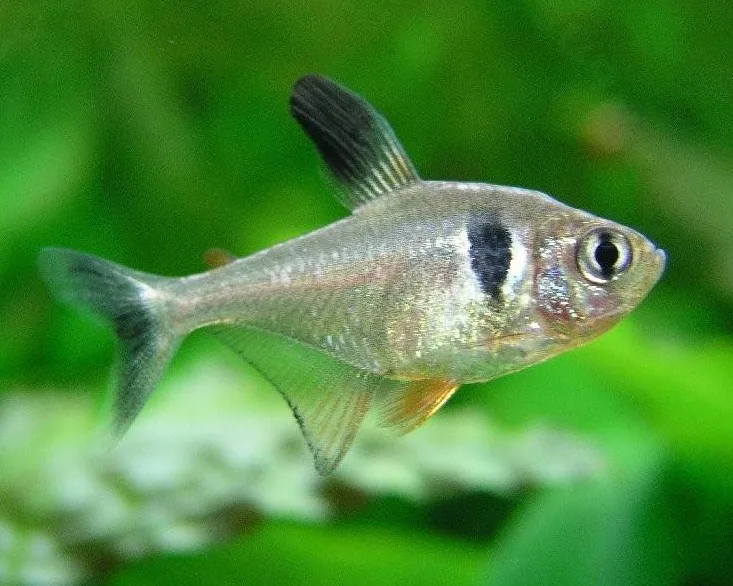
The silver hatchetfish reaches about 6 cm. The chest is deep like a keel, the pectoral fins work like wings. The back is straight, the belly silvery. The species stands directly under the surface and launches upward when startled. A missing cover is not a cosmetic fault. It is the most common loss.
It is not a hatchetfish of the genus Carnegiella, which stays smaller and wears a different pattern. Both want the same zone: above, quiet, covered.
Features
Carl Linnaeus described the species in 1758. It belongs to the freshwater hatchetfishes (Gasteropelecidae). Size figures range up to 6.5 cm, which makes it slightly larger than the marbled hatchetfish. The colouring is a rather plain silver-grey.
Origin & habitat
This describes the origin, not how to furnish the aquarium.
Slow surfaces of Amazonia and the Guianas, often under overhanging vegetation. The origin stays coarse. Current at the surface pushes the fish into a corner. Cover from floating plants and an open run still belong together.
The species lives in the southern tributaries of the Amazon in Brazil and in Guyana and Suriname. The fish move in schools through small to medium-sized streams.
Care
Size
24 to 28 °C, pH 6 to 7. A group from six, tanks from about 80 litres and above all long, not tall. Floating plants at the edge, the middle of the surface open, the filter current not from above onto the fish. The cover close, including at the cable gaps.
Company
Calm midwater fish. Corydoras below. Above, no second surface hunters that need the same run, and no barbs that push into the surface. The hatchetfish do not feed on the bottom.
Water and current
The species is kept in tanks of 80 cm length or more at 23 to 28 °C, pH 6.0 to 7.0 and a hardness up to 15 °dGH. Contrary to a common assumption, there should be enough current at the surface, because the fish like to hold position in the current just below the waterline. The tank must be well covered, because they are excellent jumpers.
Diet
Fine food that stays at the top. Small flakes, brine shrimp, fruit flies, mosquito larvae. If the food sinks at once, they go hungry beside full bottom fish. Several small feeds through the day.
In the wild the species eats insects that fall onto the water surface. In the aquarium fruit flies and other live food work well. Dry food is taken after acclimatisation.
Behavior
A loose group directly under the surface. They do not form a tight ball, but they keep visual contact. A single fish stands shy in a corner. A fright at the tank sends them into the cover. That is the species, not a one-off accident.
Reproduction
Egg scatterer without brood care. The eggs fall into the open or into fine plants. The parents eat them. Breeding is uncommon and needs a separate tank. In a community tank young are not to be expected.
Gallery
More species in this group



Similar water needs
Species with a similar temperature, a similar pH and a comparable adult size. Whether their behaviour fits as well is what the compatibility check is for.